U.S. Stock Exchange [Photo=Yonhap News]
Where Did the Money Flowing Out of Tech Stocks Go?
This week, the core of the market was not the fluctuation of indices but the movement of money. Stock prices can rise and fall, but capital flows are more telling.
This week, money flowed out of tech stocks and semiconductors in the global financial markets and moved into energy, utilities, some industrials, and cash equivalents. However, this movement was not broad and was highly selective. To summarize this week's capital flows in one sentence, it was a shift from aggressive growth premiums to assets with confirmed structures.
The first thing that stood out was the exodus from tech stocks.
This week, the Nasdaq and the semiconductor sector reacted most sensitively to variables such as war, oil prices, and interest rates.
The reason is clear. Tech stocks, especially big tech and semiconductors, are assets that pre-reflect expectations of future earnings. When expectations for interest rate cuts are alive, they rise the fastest, but conversely, when the interest rate path wavers, their premium also shrinks first.
This week's market directly confronted the very structure where the receding expectation of interest rate cuts first shakes the premium on tech stocks.
In addition, sector-specific negative factors were also at play.
Google's TurboQuant announcement raised expectations for increased AI infrastructure efficiency, but it also stimulated concerns about a slowdown in memory demand. With the addition of semiconductor security issues following the SMCI incident, the market reacted more strongly to the immediate decrease in hardware requirements rather than the overall increase in AI diffusion.
While the logic that AI can spread more broadly in the long term is possible, this week's capital moved towards short-term risk management rather than such long-term optimism. The market first reduced leverage before interpreting the technology.
The money that left tech stocks first headed to energy.
With the combination of war and rising oil prices, oil refining and energy-related assets occupied a structurally advantageous position. The energy sector is relatively less sensitive to interest rates, and rising commodity prices directly translate into earnings expectations.
This week's energy rally was not just a preference for defensive stocks. Rather, it was closer to a capital shift towards sectors that can most directly convert price increases into profits.
The second destination was utilities and power infrastructure.
This part is particularly important in this week's trend. While utilities traditionally have a defensive nature, this week's inflow is difficult to explain solely by defensive logic. Power grids, transmission and distribution lines, and energy transfer networks are likely to maintain demand regardless of the economic cycle, and the point that power demand will structurally increase in the AI era is also being highlighted.
In other words, capital did not flee uncertainty but moved to areas with relatively certain demand. This is a preference for the visibility of cash flow rather than risk aversion.
The third was some industrials and defense.
However, the important point here is "some." In times of war, defense, shipbuilding, nuclear power, and heavy industries are often brought into focus together. However, actual capital did not move that broadly.
Capital selectively flowed only into stocks where actual orders, policy support, and pricing power were confirmed. What the market showed this week is that security premiums do not automatically translate into industry-wide premiums.
Meanwhile, some capital moved to cash equivalents such as MMFs, strengthening a wait-and-see attitude. This is a very important signal.
This is because this week's capital movement, rather than being a rotation with strong conviction, showed characteristics of reducing risk exposure and limited reallocation. The market did not strongly buy new leading stocks but chose to lighten up on existing leading stocks and diversify into areas that were relatively less volatile.
Ultimately, this week's capital flows can be summarized in three ways.
First, capital flowed out of tech stocks and semiconductors.
Second, that money moved selectively to energy, utilities, some industrials, and defense.
Third, the remaining funds retreated to cash equivalents.
This is closer to an orderly retreat in a period of increased volatility rather than a strong risk-on rally.
Looking deeper into this trend, the market was not just changing sectors but changing its evaluation criteria.
If the market's standard last quarter was future growth rate, this week, currently verifiable cash flow became more important. Therefore, the answer to the question of where the money that left tech stocks went is not simple.
Money did not move to a specific theme but moved from uncertain premiums to confirmed structures.
Whether this trend continues next week depends on three factors.
Whether oil prices rise again, whether expectations for interest rate cuts further recede, and whether the negative news for tech stocks remains a temporary shock.
If oil prices and interest rates continue to be unstable, the exodus from tech stocks may continue. Conversely, if oil prices stabilize and interest rates calm down, this week's capital movement could end as a short-term rotation.
This week, money moved significantly but not broadly.
Funds exiting tech stocks headed towards areas with visible structures, not necessarily popular ones. Energy, power infrastructure, some industrials, and cash. That is how capital moved this week.

 [Statement by the Seo-beo-kka Korea Military Academy Save-the-Nation Comrades Association] ㉛ Recount the Votes Publicly, as the Previous Recount Concealed Election Fraud
Tongyeong Mayoral Election Recount [Photo=Yonhap News]South Korea's liberal democracy is dying. The National Election Commission (NEC) and the judiciary, which have plummeted into criminal syndicates
[Statement by the Seo-beo-kka Korea Military Academy Save-the-Nation Comrades Association] ㉛ Recount the Votes Publicly, as the Previous Recount Concealed Election Fraud
Tongyeong Mayoral Election Recount [Photo=Yonhap News]South Korea's liberal democracy is dying. The National Election Commission (NEC) and the judiciary, which have plummeted into criminal syndicates
 What is the significance of the "Trump 2028" red hats that keep making a comeback?
It is noteworthy that President Donald Trump is "intentionally" fueling controversy over whether he can actually run in the 2028 presidential election, even though it is "highly likely he is seriously
What is the significance of the "Trump 2028" red hats that keep making a comeback?
It is noteworthy that President Donald Trump is "intentionally" fueling controversy over whether he can actually run in the 2028 presidential election, even though it is "highly likely he is seriously
 Jin Cummings: “North Korea says it will increase the number of spies, so what is the government doing?”
U.S. political columnist Gene Cummings has publicly questioned the South Korean government, asking, "North Korea is declaring that it will increase its number of spies, so what is the South Kore
Jin Cummings: “North Korea says it will increase the number of spies, so what is the government doing?”
U.S. political columnist Gene Cummings has publicly questioned the South Korean government, asking, "North Korea is declaring that it will increase its number of spies, so what is the South Kore
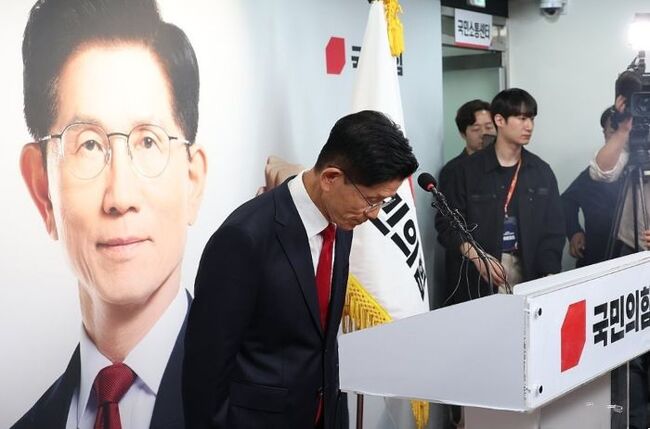 “Too little, too late?…” Kim Moon-soo, who previously conceded his presidential election defeat, now demands a special counsel investigation into ‘allegations of election fraud in the 2025 presidential election’
People Power Party presidential candidate Kim Moon-soo concedes defeat during a press conference at the party headquarters in Yeouido, Seoul, on June 4, 2025. [Joint Press Corps]As allegations emerge
“Too little, too late?…” Kim Moon-soo, who previously conceded his presidential election defeat, now demands a special counsel investigation into ‘allegations of election fraud in the 2025 presidential election’
People Power Party presidential candidate Kim Moon-soo concedes defeat during a press conference at the party headquarters in Yeouido, Seoul, on June 4, 2025. [Joint Press Corps]As allegations emerge
 Stock Market Crash 'Black Tuesday'… KOSPI down 10.8%, KOSDAQ down 7.7%
The KOSPI fell by more than 5% in early trading on the 28th, triggering a sell-side sidecar.On the 28th, the KOSPI plunged by more than 10%.Due to the sharp decline, a sell-side sidecar—a temporary
Stock Market Crash 'Black Tuesday'… KOSPI down 10.8%, KOSDAQ down 7.7%
The KOSPI fell by more than 5% in early trading on the 28th, triggering a sell-side sidecar.On the 28th, the KOSPI plunged by more than 10%.Due to the sharp decline, a sell-side sidecar—a temporary
 [World Heritage Committee] 25 New World Heritage Sites Inscribed in Busan… South Korea Successfully Expands 'Getbol' Listing
The Chairperson of the World Heritage Committee speaks at the plenary session of the 48th session of the World Heritage Committee, held at BEXCO in Busan on the 20th. [Photo: Yonhap News]A total of 25
[World Heritage Committee] 25 New World Heritage Sites Inscribed in Busan… South Korea Successfully Expands 'Getbol' Listing
The Chairperson of the World Heritage Committee speaks at the plenary session of the 48th session of the World Heritage Committee, held at BEXCO in Busan on the 20th. [Photo: Yonhap News]A total of 25
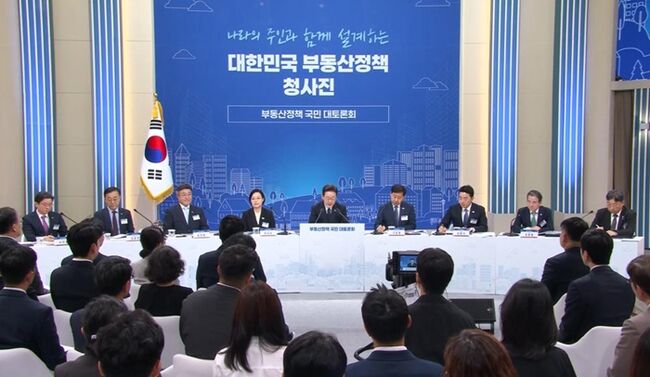 [Liberal Democratic Party Statement] Calling it a Grand Real Estate Debate… It Was Nothing More Than a Private Party Among Themselves
The 'National Grand Debate on Real Estate Policy' held on July 23rd and 27th. [Photo=Yonhap News]The 'National Grand Debate on Real Estate Policy,' hosted by the Lee Jae-myung administration under the
[Liberal Democratic Party Statement] Calling it a Grand Real Estate Debate… It Was Nothing More Than a Private Party Among Themselves
The 'National Grand Debate on Real Estate Policy' held on July 23rd and 27th. [Photo=Yonhap News]The 'National Grand Debate on Real Estate Policy,' hosted by the Lee Jae-myung administration under the
 [Photo] Evidence of Election Fraud Flooding U.S. Media… Trump Had 2.7 Million Votes Stolen
 [Video] U.S. Semiquincentennial Air Show... 'Art in the Sky' streaks across New York
 [Editorial Cartoon] A Draconian Law That Undermines Freedom of Expression

 List
List