 Strait of Hormuz. Five oil fields along the Persian Gulf coast of western Iran and the pipeline connecting them to the port of Jask [Photo: Wikimedia Commons] Table of Contents
Prologue
Why Does This War Look Different?
Chapter 1: Why Did the War Start?
Chapter 2: How Did the War Start?
Chapter 3: Why Did the War Seem to Stop?
Chapter 4: Why Were the Nuclear Facilities Left Behind?
Chapter 5: The Same War, Different Calculations
Chapter 6: What Do Negotiations Change?
Chapter 7: The Moment Negotiations Collapse
Chapter 8: How Does Act 3 Begin?
Chapter 9: The Meaning of Hitting the Power Grid
Chapter 10: Why Do Oil and Energy Facilities Become the Next Targets?
Chapter 11: What Does the Revolutionary Guard Choose?
Chapter 12: What Do Saudi Arabia and Israel Gain?
Chapter 13: What Does Victory Mean to the United States?
Chapter 14: Conclusion - Where Will This War End?
Prologue This war looks strange. Despite strong airstrikes, it did not immediately escalate into full-scale warfare. Although nuclear facilities are at the center of the conflict, they were not destroyed all at once.
It appears to have stopped, but it has not truly ceased. Negotiations seem to be alive, yet the shadow of the next stage also looms large. Therefore, the core question of this war is not simple. It is not a question of whether the war continues, but rather in what way it is moving toward an end. This report starts from that question. Why did the war begin now? Why does it seem to have stopped? Why were the nuclear facilities left untouched? And what options actually remain between negotiations and Act 3?
Although it appears to have two paths on the surface, a war always moves according to the number of remaining options. What is happening in the Middle East now is precisely the process of those options rapidly diminishing. |
Chapter 1. Why Did the War Start?
It began not with an event, but with a decision.
Nuclear capabilities and the Strait: The two axes of conflict.
Why did the United States move now?
This war is less a sudden military conflict and more a policy decision made after prolonged accumulated tension crossed a certain threshold.
While it could be seen superficially as triggered by specific military actions or regional clashes, the more fundamental reason was that two long-standing issues simultaneously approached their critical points. One is Iran's nuclear program, and the other is the issue of control surrounding the Strait of Hormuz.
Regarding the nuclear issue, the dispute is no longer about whether they already possess nuclear weapons, but whether they have approached a state of readiness that can be converted at any time. Even if nuclear weapons are not yet complete, once enrichment capability, materials, facilities, personnel, and the will reach a certain level, the deterrence balance itself begins to waver.
From the U.S. perspective, the crucial question was no longer "Have they already built it?" but "Can they build it if they don't stop now?" At this point, diplomacy can become a risk of losing time rather than a means of gaining it.
Such calculations have been repeated in the past. In 2007, Israel destroyed Syria's nuclear facility in an airstrike before its completion. At that time, the target was not whether they actually possessed nuclear weapons, but the possibility of completion itself, which was addressed at a point of lower cost.
The 2003 Iraq War was also centered on a preemptive judgment regarding the possibility of developing weapons of mass destruction, regardless of actual possession. While the evaluation of the outcome varies, the idea of "it is more controllable before completion than after completion" has appeared repeatedly.
The second variable, the Strait of Hormuz, is combined with this. This strait is not merely a maritime passage but a gateway for global energy supply. A significant portion of global crude oil trade passes through it, and the moment this flow is disrupted, international oil prices and financial markets react immediately.
When Iran begins to reveal the possibility of controlling the strait amidst heightened military tensions, the issue transcends regional conflict. It immediately transforms into a global risk.
The important point is that Iran does not need to completely blockade the strait to achieve a significant effect. The mere possibility of mine-laying, selective restrictions on passage, threatening military activities, and the deployment of coastal missiles are enough for markets to begin factoring in potential supply disruptions.
Even before actual supply is cut off, maritime insurance premiums rise, transportation costs increase, and oil prices reflect uncertainty preemptively. Hormuz is a space where psychological control is possible even before physical control.
Ultimately, from the U.S. perspective, there were two problems. Leaving the nuclear program unchecked could destabilize the Middle Eastern deterrence order, and tolerating control of the strait could destabilize the global energy order.
Conversely, addressing both issues simultaneously has limitations with diplomatic pressure alone. Especially as time passes, options diminish, and costs increase. At this point, a decision that some level of military pressure is necessary becomes unavoidable.
However, this does not mean the U.S. could immediately opt for full-scale war. Rather, the key to understanding this war lies not only in why the U.S. acted but also in why it acted in a specific manner.
The U.S. has already fully experienced the political and military costs of long-term occupation in Iraq and Afghanistan. It has also learned that removing a regime does not automatically lead to stability, and military victory does not guarantee subsequent order.
Therefore, it is more natural to view this choice as focused from the outset on deterring specific actions and steering the opponent in a certain direction, rather than on occupation or regime change.
At this point, the nature of the war is revealed. This war is less about completely destroying the opponent and more about preventing them from continuing dangerous actions, even if they remain in power.
Slowing down the pace of nuclear development, restricting attempts to control the strait, and if necessary, drawing them back to the negotiating table. These three are closer to the U.S.'s realistic objectives. In other words, this war needs to be understood not as a war of destruction, but as a war to change direction.
This does not mean the war will immediately close with negotiations. However, it is clear that the initial intent was neither simple retaliation nor immediate regime change. Rather than trying to end something through this war, the U.S. is trying to change something.
The problem is that the opponent is also aware of this calculation. Iran is also observing how far the U.S. can go and where it might be reluctant to go.
Therefore, this war, from its inception, is not a simple clash but a process of testing each other's limits. It is not a matter of who backs down first, but of who loses their options first.
In this regard, the beginning of the war does not foreshadow its end. Instead, it leaves only the question of how the war will unfold and at what point it will transition to another phase.
This is how the war began. Not because a clash occurred, but because it was judged that the conditions to avoid a clash had disappeared.
Whether this judgment was correct, and how far it remains valid, will be revealed in the next stage. The aftermath of a war is more important than its beginning. This is why what is actually targeted, what signals are sent, and where it stops become more significant.
The next question is therefore natural:
Why did the United States initiate the war in that manner?
And what was the goal of that first step?
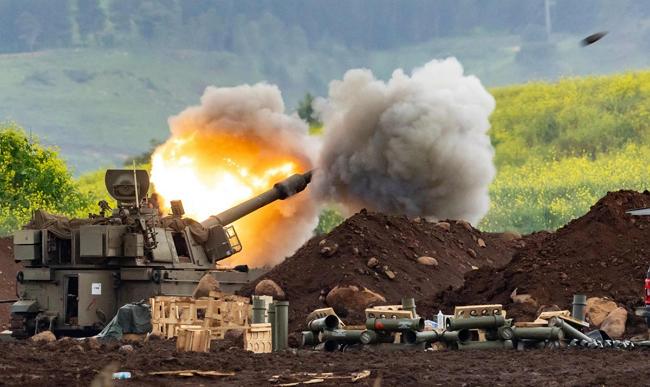
Chapter 2. How Did the War Start?
The first strike sets the order of the battlefield.
Where the first blow lands reveals the objective.
The manner of its beginning reveals the limits of the war.
War does not begin with a declaration. In modern warfare, war is usually revealed by the nature of the first strike. What was hit first, what was deliberately left untouched, and at what level the tempo was controlled all speak to the character of the war.
This war is no different. Looking at the beginning reveals the objective, and looking at the objective reveals the subsequent limitations.
The first characteristic of the initial strikes was that they targeted air defense systems and surveillance networks. This is a method of first blinding and deafening the adversary. By first neutralizing radar bases, communication hubs, and anti-aircraft defense systems, the cost of subsequent strikes is drastically reduced.
The core of initial airstrikes in modern warfare is not about destroying many targets. It is about first destabilizing the opponent's ability to assess the situation and respond.
This method is not unfamiliar. In the 1991 Gulf War, the U.S. military first gained air superiority by primarily targeting Iraq's air defense and command and control systems. The 2003 invasion of Iraq also focused on intensely striking radar, communication, and command facilities in the initial phase, tipping the scales of the battlefield.
The repetition of a similar method this time is not a coincidence. It is a basic sequence for increasing the efficiency of airstrikes and the most realistic option for securing superiority in a short period without resorting to full-scale war.
The second characteristic is that missile bases, coastal defense strongholds, and military command-related facilities were prioritized targets. This goes beyond simply inflicting military damage. It is a method of cutting off the opponent's immediate response capabilities first.
Especially for countries like Iran, where coastal-based missiles and asymmetric capabilities are important, limiting initial response capacity as quickly as possible dictates the entire subsequent phase.
This raises an important question: Why strike these targets before the nuclear facilities? The answer is simple. The first phase of war is not about completely destroying the opponent, but about creating favorable conditions for the war.
Nuclear facilities are targets with high political and military burdens. In contrast, air defense systems, missile bases, and coastal defense facilities are easier to justify militarily and yield immediate practical effects. Striking these targets first is not about ending the war easily, but about controlling the war in a desired manner.
The third characteristic is that despite the strong initial strikes, it did not immediately lead to full-scale expansion. This is important.
A strong initial strike does not automatically lead to total war. Rather, starting strong and then adjusting the tempo afterward is a typical form of limited warfare. It sends a signal to the opponent that "we can go this far," while simultaneously leaving the message that "we can also stop here."
Indeed, in the 1999 Kosovo War, NATO first struck military facilities and air defense systems, and then expanded the scope of strikes incrementally based on the situation. They did not strike everything at once from the beginning but adjusted the intensity while observing the opponent's reaction and international repercussions.
This war, based on its initial approach, is similar. The objective of the first phase is not termination but securing dominance. Only after securing battlefield dominance is there a range of choices for subsequent negotiations or further strikes.
Another aspect worth noting is that the very manner of war's commencement also reveals the U.S.'s constraints.
If the objective had been occupation or regime change, the direction of the initial strikes would have been different. Securing corridors for ground troops, paralyzing the capital region directly, and eliminating the core of the regime would have been higher priorities.
However, this is not the direction of the current commencement. It is closer to first limiting military response capabilities, securing dominance in the air and strait, and creating space for subsequent choices. In other words, the scope of this war was already predetermined from the beginning.
The implications of this are clear.
The first phase of the war is focused not on bringing the opponent to its knees, but on reducing the opponent's options. The order of initial airstrikes is more important than the scale of destruction. Where it hits first tells us what this war aims for.
The prioritization of air defense systems, missile bases, coastal defense facilities, and command-related targets indicates that this war opened from the outset with a grammar of limitation and pressure, not occupation.
However, this does not automatically determine the subsequent flow of events.
Rather, this is where it becomes important. Even with strong initial strikes, if the tempo is adjusted in the next phase, the war can take on a completely different character. It may appear to have stopped, or it may continue longer than it actually is.
Wars often reveal more through subsequent movements than through their beginnings.
Therefore, the next question is natural:
Why did this war seem to stop?
And was that stop an actual halt, or an intended adjustment?
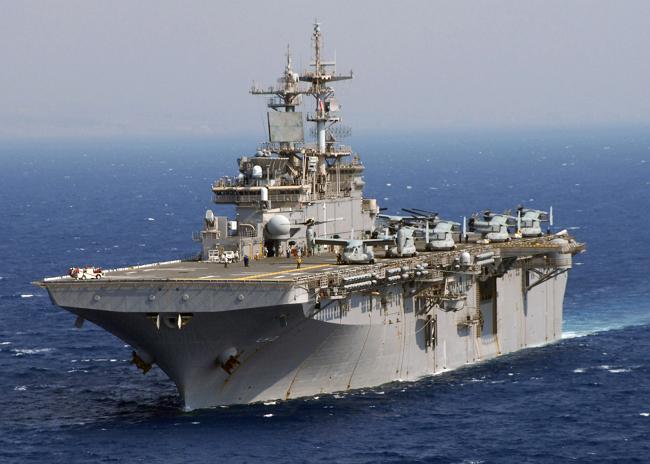
Chapter 3. Why Did the War Seem to Stop?
It did not stop; its tempo was adjusted.
Time that looks like a void is also part of the war.
Limited wars create greater pressure through pauses.
The war is ongoing, but from the outside, it sometimes appears to have stopped. This war is one such case.
Despite a strong initial strike, it did not immediately escalate into full-scale conflict, and after a certain point, the intensity of airstrikes seemed to be moderated.
On the surface, the pace seemed to slow down, and at times, the tension even appeared to be frozen. However, such pauses are usually not actual stops but transitions to different modes.
Modern limited wars do not operate solely through rapid strikes. Instead, after a strong start, there is always a period of intentional slowing down to observe the opponent's reactions.
The seemingly empty intervals in war are not periods of military rest but times for political calculation. It is about determining the next step by observing how the opponent endures, what cards they play, and how markets and allies react.
This method is not unfamiliar. In the 1999 Kosovo War, NATO also did not achieve a conclusion immediately after the initial airstrikes. Airstrikes continued, but their intensity and targets were adjusted incrementally. This was not solely due to military limitations but also due to political considerations.
In fact, some wars are decided in their quietest phases. The intervals between strikes often carry more signals than the intense bombardments themselves.
Similar patterns are observed in this war. Initial strikes focused on neutralizing response capabilities, such as air defense systems, missile bases, and coastal defense facilities. However, thereafter, instead of a move to destroy everything at once, there is an observable effort to manage the situation by slowing down to a certain level.
This point reveals two things simultaneously. One, that options still remain, and two, that the war will not end solely through military action.
What is important here is that the 'pause' is a signal. In limited warfare, a pause can be an expression of control, not weakness. If one can continue to strike but slows down at a certain point, it offers the opponent an opening to "change here" while simultaneously sending a warning that "we can go further if we wish."
In other words, the pause is not the end of the war, but the point at which the war begins to speak a different language.
In fact, such pauses frequently occur in phases where military pressure is combined with negotiations. Pressure is maintained, but irreversible steps are avoided.
In this state, both striking and not striking become messages. Striking certain facilities signals that the next stage is possible, while leaving other facilities untouched signifies that other options are still alive.
The reason the war appears to have stopped is precisely this dual signaling.
Another aspect to consider is the reaction of markets and allies. If the war escalates into full-scale conflict, military costs skyrocket, along with political and economic costs. Conversely, by adjusting the tempo to a certain level, market shocks can be managed, support from allies can be maintained, and diplomatic space can be preserved.
If there have been moments in this war that seemed quieter than they actually were, the political reasons are likely greater than the military ones.
However, it is dangerous to interpret this pause as a signal of peace. A pause could be a halt just before the end, but it could also be an alignment just before moving to the next stage. In limited warfare, both possibilities are open simultaneously. Therefore, a pause is always ambiguous. Although military tension may seem to have decreased, it could actually be a time preparing for a bigger decision.
The core of this war lies here.
It looks like it has stopped, but in reality, it has not stopped at all.
It is more likely to be the phase where the war operates most politically.
What is important is what this pause leaves behind.
If the war did not destroy everything at once, it means there is still a reason to leave something behind.
And what is most important among those remaining things becomes clear in the next chapter.
Why do the key facilities still remain?
And is that remaining presence a simple reprieve, or a deliberate calculation?
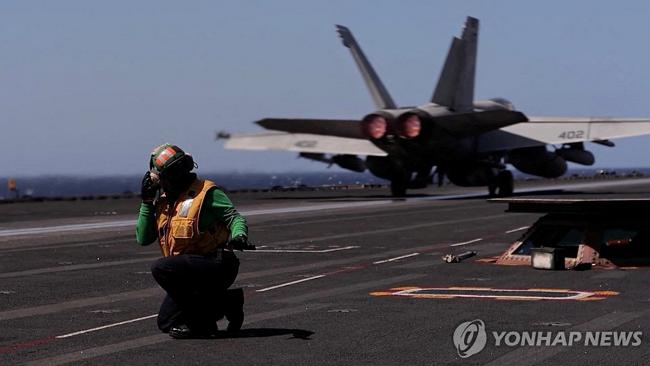
Chapter 4. Why Were the Nuclear Facilities Left Behind?
Why a core objective is not immediately the primary target.
There are moments when the burden becomes greater than destruction.
Leaving something behind can be a calculation, not a weakness.
One of the most peculiar aspects of this war is the issue of nuclear facilities.
On the surface, nuclear facilities seem like the targets that should be eliminated first. If the nuclear issue is a significant background to the war, then intensively destroying those facilities early on appears to be the most direct choice.
However, the actual war does not move that way. While some peripheral facilities may be pressured, the approach does not easily move towards a comprehensive destruction of core enrichment facilities all at once. This seemingly contradictory point actually reveals the nature of this war.
The first thing to consider is that nuclear facilities are not simply military targets.
For typical missile bases, air defense systems, and communication facilities, the effect of destruction is relatively straightforward. Neutralizing them reduces response capabilities and expands military advantage.
However, nuclear facilities are different. Especially attacking facilities that already possess enrichment capabilities or have accumulated nuclear materials does not stop at mere 'destruction.' It can bring about the possibility of radioactive spread, contamination of surrounding areas, international condemnation, and the collapse of subsequent diplomatic space. This means they are targets where military effects and political burdens increase simultaneously.
For this reason, nuclear facilities become "targets that can be hit" and at the same time "targets that are not easy to hit."
For example, when Israel bombed Syria's nuclear facility in 2007, it was before its completion and operation, making the choice possible. An uncompleted facility carries relatively lower political and environmental burdens, and the attack effect is clear.
However, enrichment facilities that are already operational are a completely different matter. The aftermath of an attack can be more problematic than the attack itself. For this reason, nuclear facilities, the more militarily important they are, tend to be closer to being a last resort.
The second reason is the possibility of negotiation.
The moment nuclear facilities are completely destroyed, the substantial objects of negotiation surrounding the nuclear issue also largely disappear. Actions such as the recovery of nuclear materials, cessation of enrichment, resumption of inspections, and sealing of facilities all gain meaning only when 'something remains.'
Conversely, if everything collapses, all that remains is retaliation. In this case, the war is unlikely to conclude with negotiations but is more likely to lead to deeper destruction or long-term instability.
In other words, leaving them intact is not simply hesitation. Rather, it is necessary to leave the core elements behind to be able to trade later, to verify, and to conclude.
In this regard, nuclear facilities become not just targets but 'assets that determine the outcome.' Destroying them might seem strong in the short term, but leaving them intact allows for a political conclusion to the war.
This pattern is also evident in past nuclear negotiation cases. The core of the 2015 Iran nuclear deal (JCPOA) was not to eliminate the existence of the facilities themselves. It was an approach to manage the risk through controlling enrichment, strengthening inspections, and establishing international verification systems while leaving the facilities intact.
While there were debates about subsequent evaluations and sustainability, the important point is that the realistic approach to dealing with the nuclear issue was closer to 'limitation and verification' than 'complete destruction.' It is difficult to see this war operating with a completely different grammar.
This is also where the difference in calculations between the U.S. and Israel becomes apparent.
Israel places more emphasis on eliminating the threat itself. As long as nuclear facilities exist, the possibility of weaponization at any time remains open.
In contrast, the U.S. is more likely to focus on creating a 'manageable state' rather than elimination itself. Controlling nuclear materials, ensuring acceptance of inspections, and keeping them at a certain level might be a more realistic option than completely dismantling the nuclear facilities.
Therefore, the fact that nuclear facilities remain does not immediately mean the war is incomplete.
Rather, it is closer to a clue showing how far this war aims and where it can stop. A war that does not destroy everything may not be a weak war, but a war that calculates how to conclude. Nuclear facilities are at the center of that calculation.
Of course, this does not mean nuclear facilities are permanently safe.
The moment negotiations become completely meaningless, and it is judged that there is no longer any benefit in leaving them, their status can change. However, at the current stage, the interpretation that nuclear facilities are 'targets that can be left behind to create more options' is more persuasive than viewing them as 'targets that must be destroyed immediately.'
Ultimately, the reason nuclear facilities remain in this war is simple.
It is not because they cannot be hit, but because it is still more advantageous to leave them for now.
War does not handle all targets in the same order. The more important the target, the more likely it is to be left until later. This is not because it is militarily weaker, but because it is politically too important.
And it is precisely at this point that the next question arises.
While observing the same war, why are the U.S. and Israel making different calculations?
The difference in their perspectives on nuclear facilities inevitably leads to a difference in the direction of the war.

 Iranian Foreign Ministry: "Continuing Message Exchanges with the U.S. and Activities of Mediating Countries"
Esmaeil Baghaei, Spokesperson for the Iranian Ministry of Foreign Affairs [Xinhua, Yonhap News file photo]Esmaeil Baghaei, spokesperson for the Iranian Ministry of Foreign Affairs, stated on the 26th
Iranian Foreign Ministry: "Continuing Message Exchanges with the U.S. and Activities of Mediating Countries"
Esmaeil Baghaei, Spokesperson for the Iranian Ministry of Foreign Affairs [Xinhua, Yonhap News file photo]Esmaeil Baghaei, spokesperson for the Iranian Ministry of Foreign Affairs, stated on the 26th
 President Yoon: "Do You Think You Are Safe from the Special Counsel?"... Final Statement Video Released
President Yoon Suk Yeol rebuking the special prosecutor on the 24th. [Court video / @birds_justice X account subtitle GIF] A video of President Yoon Suk Yeol's closing statement at his trial rega
President Yoon: "Do You Think You Are Safe from the Special Counsel?"... Final Statement Video Released
President Yoon Suk Yeol rebuking the special prosecutor on the 24th. [Court video / @birds_justice X account subtitle GIF] A video of President Yoon Suk Yeol's closing statement at his trial rega
 President Yoon, regarding the first-instance ruling on the Public Official Election Act: “An excessive political verdict that distorts the facts… We will appeal immediately.”
The first-instance sentencing hearing for President Yoon Suk Yeol regarding violations of the Public Official Election Act is being broadcast live at Seoul Station on the 27th. [Photo=Yonhap News]Pres
President Yoon, regarding the first-instance ruling on the Public Official Election Act: “An excessive political verdict that distorts the facts… We will appeal immediately.”
The first-instance sentencing hearing for President Yoon Suk Yeol regarding violations of the Public Official Election Act is being broadcast live at Seoul Station on the 27th. [Photo=Yonhap News]Pres
 WSJ: "SK Hynix ADR Premium Is a Sign of AI Trading Overheat"
Advertisement for SK Hynix ADR listing in New York's Times Square [Reuters=Yonhap News file photo]The Wall Street Journal (WSJ) has pointed out that the price of SK Hynix’s American Depositary Recei
WSJ: "SK Hynix ADR Premium Is a Sign of AI Trading Overheat"
Advertisement for SK Hynix ADR listing in New York's Times Square [Reuters=Yonhap News file photo]The Wall Street Journal (WSJ) has pointed out that the price of SK Hynix’s American Depositary Recei
 'Godfather of Japanese Mystery Novels' Keigo Higashino Passes Away After Battle with Cancer at 68
Famous Japanese mystery novelist Keigo Higashino [AFP=Yonhap News]It has been belatedly reported that Keigo Higashino, the "godfather of Japanese mystery novels" and author of bestsellers such as "The
'Godfather of Japanese Mystery Novels' Keigo Higashino Passes Away After Battle with Cancer at 68
Famous Japanese mystery novelist Keigo Higashino [AFP=Yonhap News]It has been belatedly reported that Keigo Higashino, the "godfather of Japanese mystery novels" and author of bestsellers such as "The
 [Park Pil-kyu Security Column] To the Ignorant Trying to Clothe a Beast in Sheep's Clothing
Rep. Kim Byung-joo of the Democratic Party of Korea [Photo=Yonhap News]“The Air Force Academy doesn't teach you how to fly a plane!” “The Army, Navy, and Air Force academies are exactly the
[Park Pil-kyu Security Column] To the Ignorant Trying to Clothe a Beast in Sheep's Clothing
Rep. Kim Byung-joo of the Democratic Party of Korea [Photo=Yonhap News]“The Air Force Academy doesn't teach you how to fly a plane!” “The Army, Navy, and Air Force academies are exactly the
 [Issue Diagnosis] Two Effects of the Election Petition Review
 [Photo] Evidence of Election Fraud Flooding U.S. Media… Trump Had 2.7 Million Votes Stolen
 [Video] U.S. Semiquincentennial Air Show... 'Art in the Sky' streaks across New York
 [Editorial Cartoon] A Draconian Law That Undermines Freedom of Expression

 List
List










