
Table of Contents
Prologue
Why Does This War Look Different?
Chapter 1: Why Did the War Start?
Chapter 2: How Did the War Start?
Chapter 3: Why Did the War Seem to Stop?
Chapter 4: Why Were the Nuclear Facilities Left Behind?
Chapter 5: The Same War, Different Calculations
Chapter 6: What Do Negotiations Change?
Chapter 7: The Moment Negotiations Collapse
Chapter 8: How Does Act 3 Begin?
Chapter 9: The Meaning of Power Grid Strikes
Chapter 10: Why Do Oil and Energy Facilities Become the Next Targets?
Chapter 11: What Will the Revolutionary Guard Choose?
Chapter 12: What Do Saudi Arabia and Israel Gain?
Chapter 13: What Does Victory Mean to the United States?
Chapter 14: Conclusion — Where Will This War End?
Prologue This war looks strange. There were strong airstrikes, but they did not immediately escalate into a full-blown war, and although the nuclear facilities were at the center of the conflict, they were not destroyed all at once.
It appears to have stopped, but in reality, it has not, and while negotiations seem alive, the shadow of the next phase is also darkening. Therefore, the core question of this war is not simple. It is not a question of whether the war continues, but in what way it is moving towards its end. This report starts from that question. Why did the war start now, why does it seem to have stopped, why were the nuclear facilities left behind, and what are the actual remaining options between negotiations and Act 3?
Though they may appear to be two divergent paths, a war always moves only as far as the number of remaining options allows. What is happening in the Middle East now is precisely the process of those options rapidly diminishing. |
Chapter 5. The Same War, Different Calculations
Even with the same goal, the outcomes can differ.
Israel aims for elimination; the US aims for management.
The speed of the war diverges based on this difference.
Looking at this war from the outside, it might seem as though the United States and Israel are on the same side, moving toward the same goal.
Indeed, both countries view Iran's nuclear program as a serious threat and agree that Iran's military sphere of action must be limited.
However, it is difficult to say that their war objectives are completely identical. More precisely, while their starting points are similar, the endpoints they seek to reach differ.
Israel's calculations are relatively straightforward.
The nuclear threat is a threat simply by its existence, and therefore, it must be eliminated as much as possible. For Israel, the nuclear issue is not a negotiable risk but a risk that must be delayed or eradicated. This is because "the ability to use it someday" itself changes the security environment, regardless of whether it is actually used.
In this regard, Israel prioritizes reducing or eliminating the threat, including its potential.
This approach has been repeated in past actions. The 1981 airstrike on the Osirak nuclear reactor and the 2007 airstrike on Syrian nuclear facilities were both attempts to eliminate potential threats in their pre-completion stages.
Rather than prolonging the war, the method is to directly block the risk before it is realized. It is natural to view Israel's fundamental stance on the Iranian nuclear issue as an extension of this approach.
On the other hand, the US's calculations are more complex.
While the US cannot tolerate the expansion of Iran's nuclear capabilities, it must also consider the post-war order and its costs. Just as important as how much Iran can be weakened is the level at which the Middle Eastern order can be maintained afterward.
For this reason, the US is more likely to prioritize management over elimination, and a controllable conclusion over termination.
This difference is also reflected in the conduct of the war.
Israel, focusing on reducing the time of the threat itself, may prefer faster and more direct options. Conversely, the US may adjust the pace and observe military, diplomatic, and market reactions concurrently.
While Israel might adopt an attitude closer to "we must eliminate it now," the US's stance is closer to "to what extent should we push now to achieve the most favorable outcome?"
The differing perspectives on nuclear facilities also stem from this.
Israel views nuclear facilities as having the potential for reactivation and rearmament as long as they exist. Conversely, the US may judge that sufficient results can be achieved by recovering nuclear materials, restoring inspections, and limiting their functions, even if the nuclear facilities remain.
In this case, the nuclear facilities remain not as "targets that must be destroyed" but as assets for negotiation for management and verification.
What is important here is not which side is right.
It is the fact that two timelines are simultaneously operating within the same war. Israel's timeline is shorter, and the US's timeline is longer. Israel calculates the probability of the threat arising ahead of time, while the US calculates the manageability of the threat and its subsequent costs. This difference affects the speed, scope, and method of ending the war.
For this reason, this war does not move in a single direction.
While it appears to be a single front from the outside, two different calculations flow internally. One is the timeline for eliminating potential, and the other is the timeline for managing the outcome. The reason the war has appeared to be controlled within a limited scope so far is that these two calculations are operating together, not entirely separately.
The problem is that this difference can lead to a clash at any moment.
When negotiations are alive and military pressure remains at a controllable level, the American approach may prevail. However, if time lengthens, negotiations fail to yield substantive results, and Iran's nuclear capabilities show signs of resurgence, the Israeli approach may gain more strength. In this case, the speed and scope of the war will inevitably change from what they are now.
Ultimately, this war cannot be explained by simply saying "allies fight together."
The US and Israel see the same threat, but they are not envisioning the same outcome.
And as this difference widens, the war will be pressured by new choices once again.
The next question naturally arises here.
What can negotiations actually change while the war is ongoing?
And to what extent can those negotiations remain realistic options?
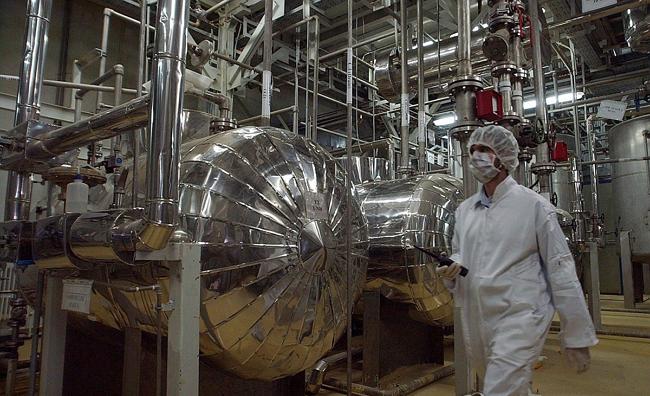 Iran's Isfahan nuclear facility, photographed in 2005. [Photo=AP Yonhap News]
Chapter 6. What Do Negotiations Change?
Negotiations are not the opposite of war; they are an extension of it.
Recovery and verification can yield greater results than destruction.
The issue is not the existence of negotiations, but their conditions for establishment.
When a war reaches a certain stage, talk of negotiations invariably arises. This is not unusual. In modern warfare, negotiations do not only emerge when the war fails; they appear more frequently when the war is pursuing specific objectives. This war is no exception.
Negotiations are less the opposite of war and more a process of translating the results that war aims to achieve into political language.
In this regard, negotiations differ from simple ceasefire discussions.
For negotiations to have meaning in this war, at least three elements must be discussed together: the issue of nuclear materials, the issue of inspections, and the issue of sanctions. Particularly if the option of not completely destroying the nuclear facilities is maintained, the war's outcome will inevitably shift to the question of "what is removed, what remains, and who verifies it."
The most important aspect here is the handling of nuclear materials.
Even if the nuclear facilities remain, the nature of the threat changes if key materials such as highly enriched uranium are removed or controlled. For the US, the key is to prevent Iran from maintaining a "state of immediate convertibility." In this sense, the recovery of nuclear materials can be not just a symbolic gesture but the most substantive outcome.
Even if facilities remain, removing the materials slows down the process and reduces the risk.
However, recovery alone is not sufficient.
There needs to be a guarantee that this situation will not be reversed. This is where international inspections come in. External verification mechanisms like the International Atomic Energy Agency (IAEA) are not mere formalities but crucial instruments for judging whether negotiations are actually working.
The core of the 2015 Iran nuclear deal was not simple promises but the confirmation of their execution through inspections and verification. An agreement is maintained by its verification system rather than its wording.
At this point, the picture of what the US seeks to achieve through negotiations also becomes somewhat clear.
It is a method of achieving results by controlling nuclear materials, restoring inspections, and making adjustments to sanctions, without completely destroying the nuclear facilities. This method involves less cost than occupation and less political burden than outright strikes. Simultaneously, it is attractive because it can show "tangible results." If the war is a means to secure outcomes rather than mere retaliation, negotiations become one of the most realistic ways to conclude it.
For this reason, negotiations are still a viable option.
If the US does not want to commit ground troops, Iran cannot afford to collapse its regime, and surrounding countries, including Saudi Arabia, do not want prolonged instability, then negotiations naturally remain.
Oil prices and financial markets also prefer manageable tension reduction over long-term uncertainty. Considering these conditions collectively, negotiations can become not just an ideal solution but a point where actual interests meet.
However, it is precisely at this point that the difficulty of negotiations begins.
Possibility and establishment are different. Just because a channel is open and a need exists does not mean an agreement will be reached immediately.
For negotiations to be established, what can and cannot be offered must be clarified. The problem is that in this case, both sides are holding their most difficult concessions as core conditions.
From Iran's perspective, nuclear capability is closer to a regime security mechanism than a mere policy tool.
Giving up too much on its nuclear program could weaken its last line of defense against external pressure. Conversely, the US, having gone as far as military action, finds it difficult to stop without visible results.
Simple tension reduction or a declarative agreement would be difficult to explain as political achievements. One side wants to protect its security mechanisms, while the other wants tangible results. This conflict makes negotiations difficult.
Ultimately, the essence of negotiation lies here.
It is a question of whether the pressure created by the war can be converted into a certain level of trade.
Negotiations are entirely possible. However, for those negotiations to actually become a document, be verified, and be maintained, they must pass through a much narrower gate.
Therefore, the most important question at this stage is not "whether negotiations exist."
Negotiations do exist. The question is, to what extent can they bring about change?
The balance that can be struck between the recovery of nuclear materials, inspections, adjustments to sanctions, and regime guarantees will determine the future direction of the war.
And it is precisely at this point that the next question arises.
Despite the existence of negotiations, what can cause them to break down?
The next phase of the war begins not in the absence of negotiations, but from the moment negotiations can no longer hold.
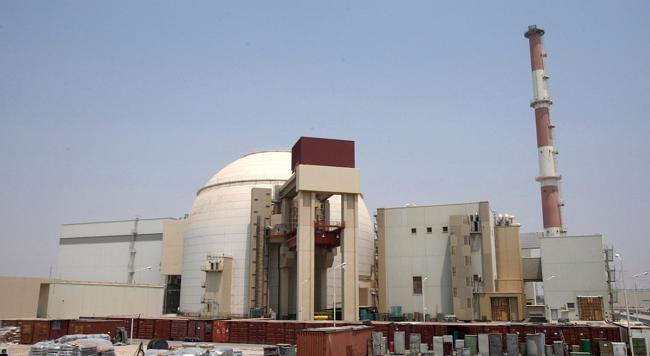 Iran's Bushehr Nuclear Power Plant [Photo=EPA Yonhap News]
Chapter 7. The Moment Negotiations Collapse
Negotiations are sustained by conditions, not just words.
Negotiations that endure and negotiations that are established are different.
The next phase opens when three balances are disrupted.
Negotiations have no meaning simply by existing.
They must be practically sustainable, and more importantly, they must create a judgment in the other party that "it is better to stop now." Therefore, the moment negotiations collapse is closer to the moment the conditions supporting the negotiations first crumble, rather than the moment dialogue ceases.
The reason the war has seemed to be at a standstill until now is also related to this. While military actions continued, the judgment that "a deal is still possible" remained alive.
However, this judgment is very unstable. It rests on a certain balance, and if that balance is disrupted, negotiations are reduced to mere formality. Even if dialogue continues outwardly, it ceases to be substantial negotiations.
The first balance is between the handling of nuclear materials and regime security.
What the US desires is not simple tension reduction but tangible results. Without measures such as the recovery of nuclear materials, limits on enrichment, and international inspections, it is difficult to explain the war's outcome.
On the other hand, for Iran, this point is connected to its last line of defense for the regime. If it gives up too much, the reason for its endurance disappears, and if it gives up too little, the US cannot stop. When this balance is disrupted, negotiations falter first.
The second balance is between the instability of the Strait and the limit of oil prices.
The issue of the Strait of Hormuz is both a military and a market issue. Even if the Strait is not completely blocked, if uncertainty recurs, oil prices, insurance premiums, and transportation costs will react quickly.
The problem is that if this instability exceeds a certain level, even the US will find it difficult to continue "waiting for negotiations."
If the purpose of military strikes is to limit actions, a situation where risks in the Strait continue to grow signals that the current approach is not sufficiently effective. The moment the market can no longer bear the burden, the time for negotiations shortens.
The third balance is the relationship between the effectiveness of military pressure and time.
The airstrikes and limited attacks so far have aimed at reducing the opponent's options. However, if the opponent's core capabilities remain intact over time, the Strait variable persists, and negotiations fail to produce tangible results, the current method of pressure loses its persuasiveness.
Indeed, in the Kosovo War of 1999, initial airstrikes alone were not sufficient, so NATO expanded its targets to include power grids and industrial infrastructure. The moment the same method is judged to no longer produce results, a transition becomes inevitable.
When these three—difficulties in handling nuclear materials, cumulative instability in the Strait, and the limitations of military pressure's effectiveness—overlap simultaneously, negotiations become most precarious.
One alone can be endured. Two overlapping might buy more time. However, when all three begin to operate concurrently, negotiations start to look not like a way out but like a delaying tactic.
From this point on, the reason to "prepare for the next stage" becomes greater than the reason to "continue negotiations."
What is important is that the way negotiations break down is also gradual.
Most people think of the collapse of negotiations as a single event. However, in reality, it is different. First, trust erodes, then the gap in conditions widens, and finally, the formality breaks down.
In other words, negotiations are often already broken before the negotiation tables are empty. The war escalates again not because dialogue has ended, but because it was judged that dialogue could no longer produce results.
At this point, the war once again asks for direction.
Will we wait longer, or will we create results through other means?
And from here, the options rapidly dwindle.
A full-scale attack on nuclear facilities still carries a heavy burden, and committing ground troops is not realistic. So, what remains? This question leads to the next chapter. From this point, the war is no longer the original war. The moment negotiations fail to hold, the war begins to take on a different face.
The next phase is no longer abstract.
All that remains is the question of where the war will move after negotiations collapse, and why that direction is the most realistic.
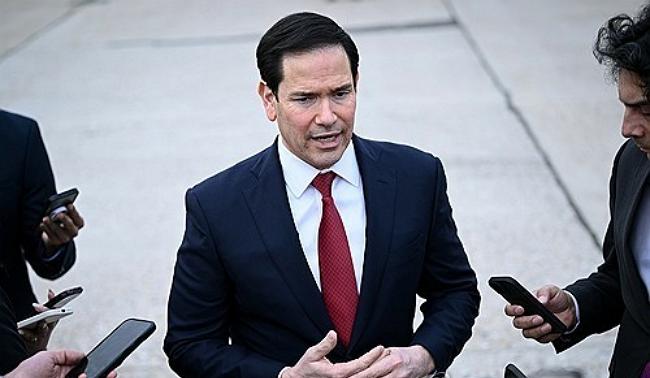 U.S. Secretary of State Antony Blinken explained on March 30 (local time) that the U.S. was considering deploying ground troops during ongoing peace negotiations with Iran to prepare for the failure of those talks. [Photo= Yonhap News]
Chapter 8. How Does Act 3 Begin?
When negotiations cease, war seeks new objectives.
As unavailable options increase, remaining choices narrow.
Act 3 is not a radical decision but the remaining path.
Act 3 of a war is not a new war that opens up suddenly one day.
Rather, it is the next phase that the ongoing war naturally transitions into when it can no longer achieve results in the same manner, following the remaining means available. While it might appear outwardly as a hardliner's choice after negotiation failure, the conditions are actually built up in the preceding stages. Act 3 is a product of constraints rather than will.
The first thing to confirm is what is being excluded.
A full-scale attack on nuclear facilities, while militarily conceivable, is practically very limited. A strong attack on operational enrichment facilities could bring about the spread of radiation, international condemnation, and the collapse of future diplomatic space.
Nuclear facilities are important, but precisely because of their importance, they are not always the easiest targets to choose. As the war prolongs, the gap between "can hit" and "must hit" widens.
Ground troop deployment is similar.
Even if it is a possible scenario militarily, the political and economic costs are at a level that the current US cannot afford. Iraq and Afghanistan have left very clear lessons for the US.
Overthrowing a regime is just the beginning; subsequent governance, security, reconstruction, and withdrawal create much larger burdens. The US's reluctance to easily choose wars involving long-term occupation after these experiences has been confirmed numerous times.
Therefore, ground troops, while a potential threat, are continuously pushed back as a realistic option.
This leaves surprisingly few options.
If nuclear facilities must be preserved until the end and ground troops are effectively excluded, the war must inevitably move towards undermining the opponent's "functions."
This is where power grids, oil and energy infrastructure, and the communication and command support networks come into play. These, unlike nuclear facilities, do not carry international disaster implications, yet they can rapidly weaken the operational capacity of the entire regime.
.
This approach is not unfamiliar.
In the 1999 Kosovo War, NATO expanded its attack targets to include Serbia's power grids and industrial infrastructure, not just its military facilities.
In the 2003 Iraq War, the initial airstrikes' significant objective was not simply the destruction of military facilities but to cripple the command, communication, and power systems, thereby paralyzing their response capabilities.
In modern warfare, the fastest way to bring down a regime is not by capturing its capital, but by making the capital unable to function properly.
At this point, the nature of the war clearly changes.
If Act 1 was about limiting military capabilities, Act 3 is about pressure on the state's functions themselves. This means the issue shifts from "where and how much was hit" to "can the opponent endure in its current state?"
Unlike when only military facilities are targeted, when power, energy, and communications begin to falter, the war alters the timetable of society as a whole. It enters a phase where the internal costs to the regime become greater than external shocks.
What is important is that Act 3 does not necessarily mean immediate total war.
Rather, integrating the discussions so far, Act 3 is likely to operate within the grammar of "coercion without occupation." It is a method of shaking from the outside, compelling self-correction, rather than entering and seizing.
In this sense, Act 3 can be seen not as an abandonment of war but as a phase that pushes the war's objectives more directly.
Therefore, Act 3 is less a radical decision and more a path that realistically emerges as other options weaken.
When negotiations fail to yield substantive results, instability in the Strait accumulates, and current military pressure is insufficient to change the opponent's calculations, the war naturally seeks deeper means of pressure.
At that time, the most readily considered method is to disrupt power grids, energy, and command systems.
Ultimately, Act 3 is closer to a war that "opens up when it is judged that results can no longer be achieved by current means," rather than a war that was "originally desired."
Therefore, this phase is a result of calculation, not emotion. As the number of excluded options increases, the remaining path becomes clearer.
And how that path actually works becomes even clearer in the next chapter.
Why the power grid specifically? Why is electricity more important than nuclear facilities, and energy infrastructure more important than missile bases?
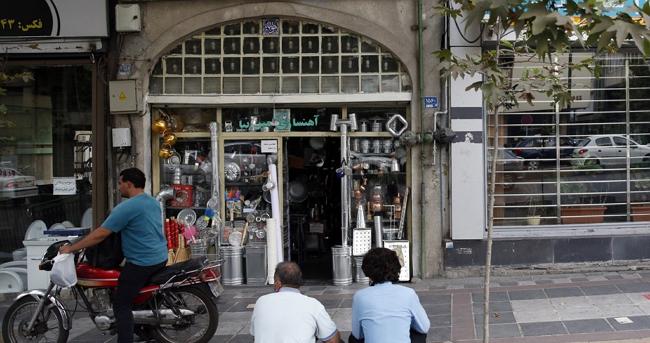 Iranian residents sit in front of a store after a power outage. [Photo=EPA Yonhap News]
Chapter 9. The Meaning of Power Grid Strikes
Electricity powers a nation before its military does.
Invisible paralysis becomes greater pressure.
The most realistic means create the most direct results.
Power grids are often unseen during normal times.
However, the moment war deepens by one stage, electricity becomes a more critical target than military facilities. The reason is simple: military power is a part of a nation's functions, but electricity is the foundation that supports all of those national functions.
The moment electricity stops, not just one military base but industry, communication, administration, finance, transportation, healthcare, and daily life are shaken simultaneously. The power grid is not merely a "background" to war; it is the very condition upon which a modern nation endures.
Therefore, power grids possess both military and political effects.
Militarily, electricity determines the speed of communication and command, detection and response, production, and logistics. When electricity becomes unstable, air defense systems, surveillance networks, and the command's connectivity are also shaken. Since civilian and military power are often not entirely separate, even disrupting a few key points can slow down the reaction speed of the entire system.
In other words, a strike on the power grid is not simply an act of "turning off the lights" but a method of slowing down the opponent's speed of thinking and acting.
Politically, it is even more direct.
Even if a missile base is destroyed, ordinary citizens may not immediately feel its impact. But a power outage is different. Cities react immediately. Air conditioning stops, communications become unstable, the transportation system falters, and hospitals, factories, and schools are simultaneously pressured.
A regime can be more vulnerable to the accumulation of daily discontent than to military damage. For this reason, the power grid becomes not an "invisible military facility" but "the most immediately felt weakness of the regime."
Past examples clearly illustrate this.
In the 1999 Kosovo War, NATO repeatedly attacked Serbia's power generation facilities and transmission systems. The objective at the time was not mere destruction. It was largely intended to shake industrial production and administrative functions simultaneously and to make the population directly feel the costs of the regime.
In the initial airstrikes of the 2003 Iraq War, the disruption of command, communication, and power systems led to a rapid weakening of response capabilities, exceeding military losses. In modern warfare, power has been used as a "medium to accelerate outcomes" rather than just a target.
The particular attractiveness of power grids lies in their "connectivity."
Missile bases or radar bases are individual targets, but a power grid is a system, not a single facility. Power plants, substations, transmission lines, and control systems are interconnected, so even disrupting parts can cause cascading failures.
Therefore, power grid strikes become targets that can create widespread paralysis with the same military resources. This means they are a means of achieving the greatest impact with the least number of strikes.
Furthermore, power grids differ in their political burden compared to nuclear facilities.
Attacks on nuclear facilities carry the possibility of a radioactive international disaster. On the other hand, while civilian damage is certainly an issue with power grids, their direct connection to military and administrative functions provides a rationale for attack.
This makes power grids "risky but choosable targets." In other words, nuclear facilities are too important to strike easily, while power grids are important enough yet practically hittable targets.
At this point, the power grid becomes a pressure mechanism that replaces negotiations, not just infrastructure.
The core is not to immediately collapse the opponent but to make them feel that enduring in their current state is difficult. By disrupting power while leaving nuclear facilities intact, one can create a state where "nuclear capabilities remain, but the regime cannot endure."
In this case, negotiations begin to appear not as abstract options but as realistic exits. This is why power grid strikes become particularly important in Act 3.
In Iran's case, this effect could be even greater.
Major urban areas, including the capital Tehran, have high population densities and are centers of administrative, financial, and political functions. Power instability can lead not just to inconvenience but to administrative paralysis and market chaos.
Especially during periods when summer cooling demands overlap with industrial power demands, even short-term shocks can be felt much more acutely. The moment electricity falters, not just the military front but the entire daily life of the city is incorporated into the war.
Ultimately, the power grid is not just a symbol of Act 3 but its substance.
If military facilities alone are insufficient, nuclear facilities are difficult to strike immediately, and ground troops are excluded, then among the remaining means, the power grid is the most realistic and produces the most direct effect.
This is not an accidental choice. It is because it is the means that can most rapidly pressure the entire regime among the remaining options.
Therefore, the question narrows further.
If Act 3 opens, does it simply end with power outages? Or does it extend to the next stage, namely disrupting energy production and exports themselves?

 Iranian Foreign Ministry: "Continuing Message Exchanges with the U.S. and Activities of Mediating Countries"
Esmaeil Baghaei, Spokesperson for the Iranian Ministry of Foreign Affairs [Xinhua, Yonhap News file photo]Esmaeil Baghaei, spokesperson for the Iranian Ministry of Foreign Affairs, stated on the 26th
Iranian Foreign Ministry: "Continuing Message Exchanges with the U.S. and Activities of Mediating Countries"
Esmaeil Baghaei, Spokesperson for the Iranian Ministry of Foreign Affairs [Xinhua, Yonhap News file photo]Esmaeil Baghaei, spokesperson for the Iranian Ministry of Foreign Affairs, stated on the 26th
 President Yoon: "Do You Think You Are Safe from the Special Counsel?"... Final Statement Video Released
President Yoon Suk Yeol rebuking the special prosecutor on the 24th. [Court video / @birds_justice X account subtitle GIF] A video of President Yoon Suk Yeol's closing statement at his trial rega
President Yoon: "Do You Think You Are Safe from the Special Counsel?"... Final Statement Video Released
President Yoon Suk Yeol rebuking the special prosecutor on the 24th. [Court video / @birds_justice X account subtitle GIF] A video of President Yoon Suk Yeol's closing statement at his trial rega
 President Yoon, regarding the first-instance ruling on the Public Official Election Act: “An excessive political verdict that distorts the facts… We will appeal immediately.”
The first-instance sentencing hearing for President Yoon Suk Yeol regarding violations of the Public Official Election Act is being broadcast live at Seoul Station on the 27th. [Photo=Yonhap News]Pres
President Yoon, regarding the first-instance ruling on the Public Official Election Act: “An excessive political verdict that distorts the facts… We will appeal immediately.”
The first-instance sentencing hearing for President Yoon Suk Yeol regarding violations of the Public Official Election Act is being broadcast live at Seoul Station on the 27th. [Photo=Yonhap News]Pres
 WSJ: "SK Hynix ADR Premium Is a Sign of AI Trading Overheat"
Advertisement for SK Hynix ADR listing in New York's Times Square [Reuters=Yonhap News file photo]The Wall Street Journal (WSJ) has pointed out that the price of SK Hynix’s American Depositary Recei
WSJ: "SK Hynix ADR Premium Is a Sign of AI Trading Overheat"
Advertisement for SK Hynix ADR listing in New York's Times Square [Reuters=Yonhap News file photo]The Wall Street Journal (WSJ) has pointed out that the price of SK Hynix’s American Depositary Recei
 'Godfather of Japanese Mystery Novels' Keigo Higashino Passes Away After Battle with Cancer at 68
Famous Japanese mystery novelist Keigo Higashino [AFP=Yonhap News]It has been belatedly reported that Keigo Higashino, the "godfather of Japanese mystery novels" and author of bestsellers such as "The
'Godfather of Japanese Mystery Novels' Keigo Higashino Passes Away After Battle with Cancer at 68
Famous Japanese mystery novelist Keigo Higashino [AFP=Yonhap News]It has been belatedly reported that Keigo Higashino, the "godfather of Japanese mystery novels" and author of bestsellers such as "The
 [Park Pil-kyu Security Column] To the Ignorant Trying to Clothe a Beast in Sheep's Clothing
Rep. Kim Byung-joo of the Democratic Party of Korea [Photo=Yonhap News]“The Air Force Academy doesn't teach you how to fly a plane!” “The Army, Navy, and Air Force academies are exactly the
[Park Pil-kyu Security Column] To the Ignorant Trying to Clothe a Beast in Sheep's Clothing
Rep. Kim Byung-joo of the Democratic Party of Korea [Photo=Yonhap News]“The Air Force Academy doesn't teach you how to fly a plane!” “The Army, Navy, and Air Force academies are exactly the
 [Issue Diagnosis] Two Effects of the Election Petition Review
 [Photo] Evidence of Election Fraud Flooding U.S. Media… Trump Had 2.7 Million Votes Stolen
 [Video] U.S. Semiquincentennial Air Show... 'Art in the Sky' streaks across New York
 [Editorial Cartoon] A Draconian Law That Undermines Freedom of Expression

 List
List









