In 1969, President Park Chung-hee proposed a supplementary budget of 2.4 billion won for flood damage recovery and relief for disaster victims, and allocated 1.7 billion won as a disaster response reserve fund. [Naver Old Newspaper Search]In spring, even if the lawn catches fire, the flames are not visible. This is because of the heat haze. Spring fires ignite hidden within the heat haze. Without the black trace of burnt ashes, fires on the lawn are difficult to detect.
So, this is about the burial mounds with lawns. It often happened that farmers, while working and smoking on the lawn, would carelessly discard something, and it would start a fire. For this reason, among others, I do not bring any fire-starting tools when I visit the burial mounds.
If the first small spark is missed, it can escalate into a devastating wildfire. Therefore, on windy days, one must be extremely careful with burial mounds that have lawns.
Today, I applied herbicide to the lawn of my parents' burial mounds. Because they are in the middle of the fields, all sorts of spring weeds grow there. Among them are many edible greens. I would say almost all types of edible greens, except perhaps soybean sprouts, like wild garlic, shepherd's purse, and dandelion greens, grow there. Sometimes, barley sprouts also appear.
Caring for a burial mound is essentially the same as removing weeds. Not only do we need to trim the grass, but we also need to use herbicides. Fortunately, selective herbicides are available, so there's no damage to the lawn.
After finishing the work, I take a sip of coffee. I bought it at a convenience store at the Daesan-eup bus stop on my way here. I can't get used to the strong bitter taste of coffee, so I mainly drink lattes. I enjoy the subtle sweetness and gentle bitterness that coat my tongue.
From Mulmeori, I can see the Daesancheon stream stretching across the distant fields. It's the stream that flows between Geumgu Village and our village. In the past, juvenile sea bass and mullet would come up this stream from Beopseong Bay. During high tide, seawater would also come in, and it seems there was a pier back then. There are several place names related to boats. During the stream improvement work, a boat from that era was actually discovered at the bottom of the stream.
The transformation of Daesancheon into a massive embankment was a blessing. Memories drift along the stream path towards a dense forest of willow trees that stretched for about ten ri. Some of those willow trees still remain as natural monuments in Samtae Village. They were willow trees planted to protect the embankment. They were all magnificent, old trees.
At night, will-o'-the-wisps appeared in the dense willow forest along the stream. Seeing them moving back and forth, we would look towards Malbawi Rock in fear. We believed the goblins came out from Malbawi Rock.
Until we learned the true nature of these will-o'-the-wisps later, we genuinely believed that the goblins living in Daesancheon were actually harmful to people, and we lived with our necks tucked in, fearing tales of bag-carrying ghosts and blue goblins abducting people.
Even more mysterious were the snakeheads that climbed up the willow trees. On the morning after a rain, if we went to the stream, we would find snakeheads falling from the willow trees into the stream. It was said that when rainwater flowed down the willow trees, snakeheads would climb them. Thus, when we heard a splash from a distance, we realized it was the sound of a snakehead falling.
"If you put a snakehead in a basket and cover it with willow branches, it won't die for half a day."
Elders often said that snakeheads and willow trees were a perfect match. Therefore, snakeheads were not just ordinary fish but a mystery that occupied a part of my memories.
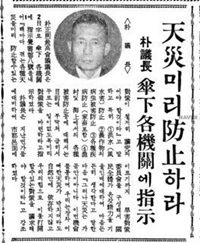 Prevent Floods Before They Happen [Old Newspaper]The problem was floods. After the rice transplanting in May and June, when the rice plants tillered and grew thicker in July and August, floods were almost a certainty. No matter how much the magnificent willow trees protected the embankment, the embankment would break, and the entire field would become a sea of water.
As the riverbed rose each year due to accumulated sand, the embankment could no longer withstand the water. The rice paddies submerged by the overflowing water were buried in sand, and the harvest for that year was ruined. It was a recurring tragedy every year.
The breaking of the embankment was called 'Bangcheon nassda' (the embankment broke). It likely meant that the embankment, built to contain water, had collapsed. When we heard the cry "Bangcheon nassda!", we would watch the immense, red, muddy water rush over the embankment in the pouring rain.
The adults were stunned, and we children trembled with fear. How would we survive the coming winter? Faces gaunt from hunger during the lean months of March. How would we endure?
No matter how much the villagers gathered to repair the embankment, the sudden downpour of floods was irresistible. After the vast fields, which were once prosperous enough to support a wealthy landlord, were battered by floods and droughts, the villagers had to go hungry.
It was around 1968. I was in the second year of middle school, so it was about 60 years ago. That was when we first saw a bulldozer. At that time, there were very few bulldozers in Korea, and only two in Gyeongsangnam-do. We saw that bulldozer felling the willow trees. One pushed from the front, and another pushed from behind, and the giant willow trees were uprooted. The stream improvement project was beginning.
The person who ordered this project was President Park Chung-hee. President Park Chung-hee was on a tour of inspection at the time. When he visited Daesan-eup, local dignitaries told him about the tragedy of Daesancheon, and the President, looking at the vast fields of our village, immediately ordered the project. That's how the bulldozer came to our village.
I understand this stream improvement project lasted for over three years. It was an immense project, connecting to Watanchun, spanning over fifty ri (approximately 20 kilometers).
My father was in charge of supervising this stream improvement project. He entrusted all household matters to my mother and dedicated himself to the stream improvement work. He eliminated the stream path where will-o'-the-wisps used to fly and left behind this massive embankment.
And for over 60 years since then, the village has never experienced a flood. Coincidentally, the planting of the Tongil variety of rice had begun, and harvests of 10 sacks of unhulled rice (5 mal of rice) per 200 pyeong (about 660 square meters) became continuous. This was a time when only two sacks of unhulled rice were harvested per 200 pyeong. However, with the stream improvement project and the Tongil variety of rice, our lives began to change. Thanks to that, children from the village started going abroad for study and pursuing education.
Now, only a filial son remains in this village where my father has passed away. And I look at the Daesancheon embankment stretching down from Deokcheon Village in the distance. It was a massive artery, 3 to 4 meters high. My father, who carried out that project, is now buried in this burial mound here. He remains silent, as if everyone has forgotten about that time.
The old mountain ranges stretch out in the distance. As the mountains become lush, water continuously flows into Daesancheon. Even in times of severe drought, the fields have never become parched.
Once the tomb markers for my great-grandfather and grandfather are completed, I will erect a monument to honor my parents and engrave the story intertwined with Daesancheon to pass it down to future generations. I will surely convey the message that my father, acting on President Park Chung-hee's orders, was the one who drove out floods and droughts from this village. And I will also make sure to tell them that President Park Chung-hee visited this place over 60 years ago.
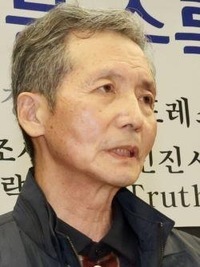
◆ Jeong Jae-hak, Poet
Poet, National Meritorious Person, Columnist, Spokesperson for President Park Chung-hee, 36 years of teaching service in Jeolla Province.

 [Statement by the Seo-beo-kka Korea Military Academy Save-the-Nation Comrades Association] ㉛ Recount the Votes Publicly, as the Previous Recount Concealed Election Fraud
Tongyeong Mayoral Election Recount [Photo=Yonhap News]South Korea's liberal democracy is dying. The National Election Commission (NEC) and the judiciary, which have plummeted into criminal syndicates
[Statement by the Seo-beo-kka Korea Military Academy Save-the-Nation Comrades Association] ㉛ Recount the Votes Publicly, as the Previous Recount Concealed Election Fraud
Tongyeong Mayoral Election Recount [Photo=Yonhap News]South Korea's liberal democracy is dying. The National Election Commission (NEC) and the judiciary, which have plummeted into criminal syndicates
 What is the significance of the "Trump 2028" red hats that keep making a comeback?
It is noteworthy that President Donald Trump is "intentionally" fueling controversy over whether he can actually run in the 2028 presidential election, even though it is "highly likely he is seriously
What is the significance of the "Trump 2028" red hats that keep making a comeback?
It is noteworthy that President Donald Trump is "intentionally" fueling controversy over whether he can actually run in the 2028 presidential election, even though it is "highly likely he is seriously
 Jin Cummings: “North Korea says it will increase the number of spies, so what is the government doing?”
U.S. political columnist Gene Cummings has publicly questioned the South Korean government, asking, "North Korea is declaring that it will increase its number of spies, so what is the South Kore
Jin Cummings: “North Korea says it will increase the number of spies, so what is the government doing?”
U.S. political columnist Gene Cummings has publicly questioned the South Korean government, asking, "North Korea is declaring that it will increase its number of spies, so what is the South Kore
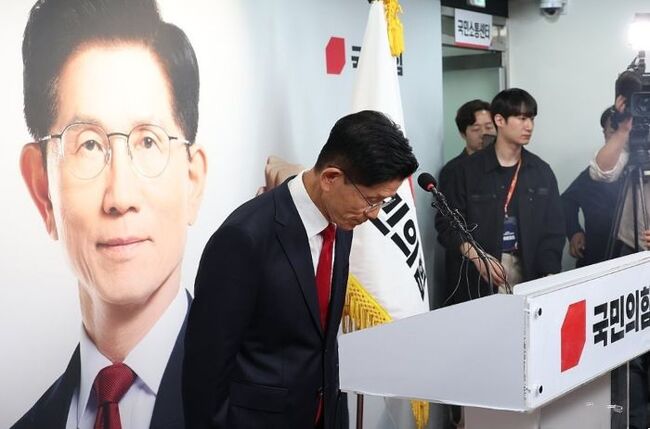 “Too little, too late?…” Kim Moon-soo, who previously conceded his presidential election defeat, now demands a special counsel investigation into ‘allegations of election fraud in the 2025 presidential election’
People Power Party presidential candidate Kim Moon-soo concedes defeat during a press conference at the party headquarters in Yeouido, Seoul, on June 4, 2025. [Joint Press Corps]As allegations emerge
“Too little, too late?…” Kim Moon-soo, who previously conceded his presidential election defeat, now demands a special counsel investigation into ‘allegations of election fraud in the 2025 presidential election’
People Power Party presidential candidate Kim Moon-soo concedes defeat during a press conference at the party headquarters in Yeouido, Seoul, on June 4, 2025. [Joint Press Corps]As allegations emerge
 Stock Market Crash 'Black Tuesday'… KOSPI down 10.8%, KOSDAQ down 7.7%
The KOSPI fell by more than 5% in early trading on the 28th, triggering a sell-side sidecar.On the 28th, the KOSPI plunged by more than 10%.Due to the sharp decline, a sell-side sidecar—a temporary
Stock Market Crash 'Black Tuesday'… KOSPI down 10.8%, KOSDAQ down 7.7%
The KOSPI fell by more than 5% in early trading on the 28th, triggering a sell-side sidecar.On the 28th, the KOSPI plunged by more than 10%.Due to the sharp decline, a sell-side sidecar—a temporary
 [World Heritage Committee] 25 New World Heritage Sites Inscribed in Busan… South Korea Successfully Expands 'Getbol' Listing
The Chairperson of the World Heritage Committee speaks at the plenary session of the 48th session of the World Heritage Committee, held at BEXCO in Busan on the 20th. [Photo: Yonhap News]A total of 25
[World Heritage Committee] 25 New World Heritage Sites Inscribed in Busan… South Korea Successfully Expands 'Getbol' Listing
The Chairperson of the World Heritage Committee speaks at the plenary session of the 48th session of the World Heritage Committee, held at BEXCO in Busan on the 20th. [Photo: Yonhap News]A total of 25
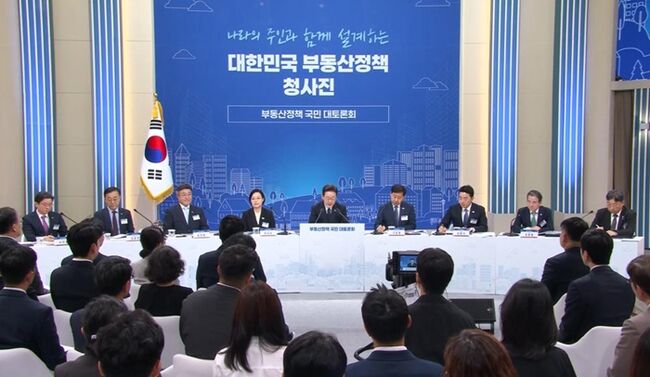 [Liberal Democratic Party Statement] Calling it a Grand Real Estate Debate… It Was Nothing More Than a Private Party Among Themselves
The 'National Grand Debate on Real Estate Policy' held on July 23rd and 27th. [Photo=Yonhap News]The 'National Grand Debate on Real Estate Policy,' hosted by the Lee Jae-myung administration under the
[Liberal Democratic Party Statement] Calling it a Grand Real Estate Debate… It Was Nothing More Than a Private Party Among Themselves
The 'National Grand Debate on Real Estate Policy' held on July 23rd and 27th. [Photo=Yonhap News]The 'National Grand Debate on Real Estate Policy,' hosted by the Lee Jae-myung administration under the
 [Photo] Evidence of Election Fraud Flooding U.S. Media… Trump Had 2.7 Million Votes Stolen
 [Video] U.S. Semiquincentennial Air Show... 'Art in the Sky' streaks across New York
 [Editorial Cartoon] A Draconian Law That Undermines Freedom of Expression

 List
List