The meaning of ‘Resurrection’ can be expanded to signify the awakening of the soul, enlightenment, and the beginning of a new spiritual life.
April 5th was Arbor Day and Easter. It is a day to commemorate the event of Jesus Christ’s resurrection three days after his crucifixion.
Easter is a common holiday for Protestants and Catholics, and it is said to be a day to celebrate Jesus overcoming death and gaining new life.
The Meaning of ‘Resurrection’ Extends to the Awakening of the Soul
What does it mean to gain new life? It is difficult for non-Christians to grasp this profound meaning. For Christians, it would be imperative to believe this event of awakening from death as something that actually happened. Believing this as fact is considered the very entry into the world of Christian faith.
The meaning of ‘Resurrection’ is extended from this and is understood to signify the awakening of the soul, enlightenment, and the beginning of a new spiritual life. In this context, Leo Tolstoy’s (1828.9.9~1910.11.20) late novel ‘Resurrection’ (1899) is often mentioned.
I recall reading this novel with deep interest once. The protagonist of ‘Resurrection’ is Dmitri Nekhlyudov. Nekhlyudov, a nobleman, participates in a trial as a juror, one of the privileges of his class. The person summoned to court that day is Katerina Maslova. She is on trial for the murder of a wealthy merchant.
Nekhlyudov is shocked by Katerina’s state, having fallen into prostitution and now accused of murder. Nekhlyudov, who lived a dissolute life in his youth as a soldier, had ruined the lives of many women, and Katerina, who was one of them, was abandoned after becoming pregnant with Nekhlyudov’s child.
Nekhlyudov is overcome by intense guilt that he is responsible for her situation. Determined to help Katerina in any way he can, Nekhlyudov tries to clear her name but ultimately fails. When Katerina is sentenced to penal servitude in Siberia, equivalent to a life sentence, Nekhlyudov liquidates his assets and accompanies her. It seems that at the time, family and relatives could follow prisoners being exiled.
It doesn’t stop there. Nekhlyudov’s resolve leads to a comprehensive reflection and awakening regarding his own life. Realizing that his entire life is founded on absolute negation, he even goes so far as to divide all his land among the peasants while en route to exile. This idea that one should not possess what one does not labor for reflected the scrupulous disposition of the Russian noble intelligentsia of the time.
Nekhlyudov’s awakening can be seen as a new enlightenment of life itself. The novel ‘Regeneration’ (Dong-A Ilbo, 1924.11.9.~1925.9.28.) by Korean author Yi Gwangsu is a work that well illustrates his resonance with Tolstoy’s philosophy. Is not ‘Regeneration’ synonymous with resurrection?
‘Regeneration’ is the Restoration of Spiritual Values
The protagonists of this novel belong to the generation of the March 1st Movement. The failure of the 1919 March 1st Movement, on one hand, led to the exile of young activists and, on the other, resulted in apostasy and corruption beyond despair and frustration. Then emerged individuals who abandoned the ideal of national independence, compromised with reality, and pursued success, wealth, and desire.
Sun-yeong in ‘Regeneration’ was portrayed as a representative figure of this. When Sun-yeong learned that Bong-gu, who had entered the Incheon Rice Exchange, was subjected to hardship after being implicated in activities related to the independence movement and brought to trial, she contemplated trying to prove his innocence but hesitated due to her own safety concerns. This trial scene shows the novel’s connection to Tolstoy’s ‘Resurrection.’
Now, amidst corruption and turmoil, Sun-yeong gives birth to Baek Yun-hee’s daughter, but tragically, the daughter is born blind. Sun-yeong, who had visited Bong-gu one last time, was unable to change his heart and ultimately decided to save her life by taking her own, heading to Geumgangsan Mountain and throwing herself into the deep pond of Guryongyeon.
Upon receiving Sun-yeong’s letter, Bong-gu belatedly seeks her out, but it is too late. Faced with Sun-yeong’s death, Bong-gu blames himself for being a heartless person, unable to save a life that sought refuge in him while struggling in the water.
‘Resurrection’ and ‘Regeneration’ speak of what it means for a person to live again. It is to abandon a life driven by material and physical desires and to restore a pure life, an ideal and spiritual value. It is to embrace the pain of realizing the truth, abandon comfort, and willingly seek the righteous path. Above all, it is to change one’s heart, to repent and strive to see what is right as right, and to follow what should be followed.
In conjunction with Easter, I looked into a message issued from prison.
“Jesus, in obedience to God’s will, completed his suffering on the cross and resurrected. Jesus’ resurrection showed that if we overcome times of suffering, this land will be fully restored to freedom and truth. I pray that even though the current times are difficult and challenging, this Resurrection Sunday will be a time for us to endure suffering with obedience, hold onto the hope of salvation, and be reborn as children of God.”
“For whatever is born of God overcomes the world. And this is the victory that has overcome the world, our faith.” (1 John 5:4)
If we overcome times of suffering, this land will be fully restored to freedom and truth. Although he did not directly point to the present situation, it is as if he has told us how to approach the reality of this land today.
This spring has arrived, and the cherry blossoms have fully bloomed in Seoul. However, until the true spring arrives, it is not spring. A brutally cold spring is not the true spring.
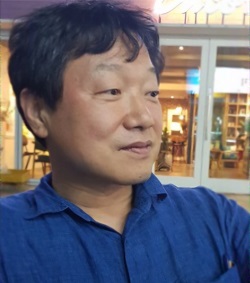
◆ Professor Bang Min-ho
Doctor of Literature, Professor of Korean Language and Literature at Seoul National University. He is currently the editor-in-chief of the quarterly literary magazine ‘Mac’ (since 2022) and is actively engaged as a poet, novelist, and literary critic. His works include ‘Lover Shimcheong’ (2015), ‘The Language of Pain’ (2019), ‘Rethinking Korean Criticism’ (2021), and ‘Seoul Literary Journeys’ (2024).

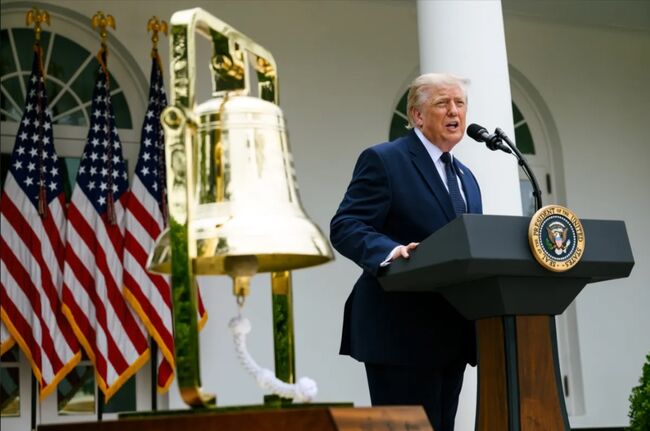 Trump pressures for rate cut again ahead of FOMC... "Should be the lowest in the world"
U.S. President Donald Trump. [Photo = The White House] U.S. President Donald Trump once again pressured the Federal Reserve, the U.S. central bank, to lower interest rates on the 27th (local time
Trump pressures for rate cut again ahead of FOMC... "Should be the lowest in the world"
U.S. President Donald Trump. [Photo = The White House] U.S. President Donald Trump once again pressured the Federal Reserve, the U.S. central bank, to lower interest rates on the 27th (local time
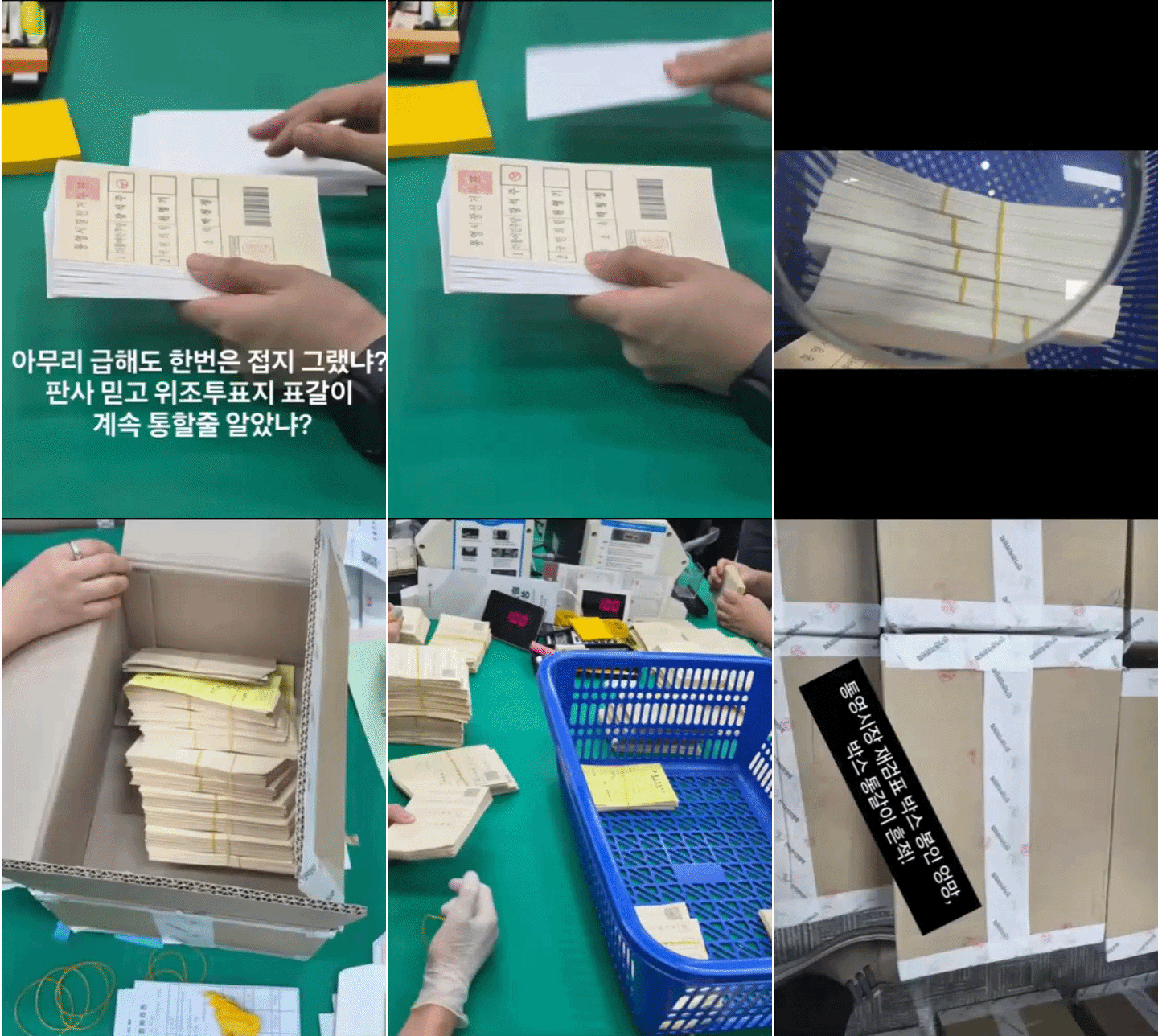 “Ignoring crisp ballots and damaged seals”… Tongyeong mayoral recount concludes with ‘no change in outcome,’ leaving suspicions and public outrage behind
Suspected counterfeit ballots discovered in Tongyeong [GIF from social media of Representative Hwang Kyo-ahn / Attorney Park Joo-hyun]During a recount of the Tongyeong mayoral election in South Gyeong
“Ignoring crisp ballots and damaged seals”… Tongyeong mayoral recount concludes with ‘no change in outcome,’ leaving suspicions and public outrage behind
Suspected counterfeit ballots discovered in Tongyeong [GIF from social media of Representative Hwang Kyo-ahn / Attorney Park Joo-hyun]During a recount of the Tongyeong mayoral election in South Gyeong
 President Yoon, regarding the first-instance ruling on the Public Official Election Act: “An excessive political verdict that distorts the facts… We will appeal immediately.”
The first-instance sentencing hearing for President Yoon Suk Yeol regarding violations of the Public Official Election Act is being broadcast live at Seoul Station on the 27th. [Photo=Yonhap News]Pres
President Yoon, regarding the first-instance ruling on the Public Official Election Act: “An excessive political verdict that distorts the facts… We will appeal immediately.”
The first-instance sentencing hearing for President Yoon Suk Yeol regarding violations of the Public Official Election Act is being broadcast live at Seoul Station on the 27th. [Photo=Yonhap News]Pres
 WSJ: "SK Hynix ADR Premium Is a Sign of AI Trading Overheat"
Advertisement for SK Hynix ADR listing in New York's Times Square [Reuters=Yonhap News file photo]The Wall Street Journal (WSJ) has pointed out that the price of SK Hynix’s American Depositary Recei
WSJ: "SK Hynix ADR Premium Is a Sign of AI Trading Overheat"
Advertisement for SK Hynix ADR listing in New York's Times Square [Reuters=Yonhap News file photo]The Wall Street Journal (WSJ) has pointed out that the price of SK Hynix’s American Depositary Recei
 'Godfather of Japanese Mystery Novels' Keigo Higashino Passes Away After Battle with Cancer at 68
Famous Japanese mystery novelist Keigo Higashino [AFP=Yonhap News]It has been belatedly reported that Keigo Higashino, the "godfather of Japanese mystery novels" and author of bestsellers such as "The
'Godfather of Japanese Mystery Novels' Keigo Higashino Passes Away After Battle with Cancer at 68
Famous Japanese mystery novelist Keigo Higashino [AFP=Yonhap News]It has been belatedly reported that Keigo Higashino, the "godfather of Japanese mystery novels" and author of bestsellers such as "The
 [Park Pil-kyu Security Column] To the Ignorant Trying to Clothe a Beast in Sheep's Clothing
Rep. Kim Byung-joo of the Democratic Party of Korea [Photo=Yonhap News]“The Air Force Academy doesn't teach you how to fly a plane!” “The Army, Navy, and Air Force academies are exactly the
[Park Pil-kyu Security Column] To the Ignorant Trying to Clothe a Beast in Sheep's Clothing
Rep. Kim Byung-joo of the Democratic Party of Korea [Photo=Yonhap News]“The Air Force Academy doesn't teach you how to fly a plane!” “The Army, Navy, and Air Force academies are exactly the
 [Issue Diagnosis] Two Effects of the Election Petition Review
 [Photo] Evidence of Election Fraud Flooding U.S. Media… Trump Had 2.7 Million Votes Stolen
 [Video] U.S. Semiquincentennial Air Show... 'Art in the Sky' streaks across New York
 [Editorial Cartoon] A Draconian Law That Undermines Freedom of Expression

 List
List