From left: Kim Jong-tae, Lee Moon-gyu, and Kim Jil-rak (Kim Jong-tae's nephew), leaders of the Revolutionary Party for Reunification.
Let us recall Seoul in 1964. Only a few years had passed since the fall of the Syngman Rhee regime due to the April 19th Revolution, and Park Chung-hee had seized power through the May 16th military coup in 1961. While the system remained, debates surrounding legitimacy and direction were fierce.
In June 1964, protests against the Korea-Japan talks reached their peak. On June 3rd, an emergency martial law was declared in Seoul, and tens of thousands of university students and citizens took to the streets. This scene was more than just a diplomatic issue; it was an event where distrust in the entire system surfaced.
Led by Kim Jong-tae, who received political and military training in North Korea
North Korea was closely observing this period. Kim Il-sung, after analyzing South Korean society following the April 19th Revolution, concluded that "the regime fell, but the revolution was not completed." The reason was the lack of organization. He judged that spontaneous uprisings could not change the system and that a 'party' was needed to lead it.
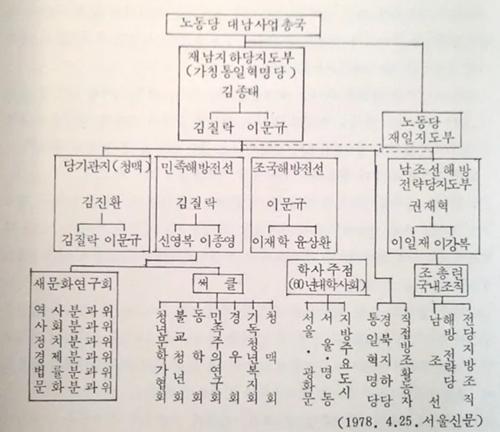 Organizational chart of the Revolutionary Party for Reunification
This conclusion changed the direction of subsequent operations against South Korea. Moving beyond propaganda or espionage, the strategy shifted to establishing direct underground parties within South Korea.
The key figure in this strategy was Kim Jong-tae. After receiving political and military training in North Korea, he descended to South Korea. He was not merely indoctrinated but was trained in the skills of organizational building. He systematically learned the fundamentals of an underground party, including establishing communication networks, using ciphers, managing funds, and operating front organizations. His mission was clear: to create a revolutionary organization within South Korea.
In March 1964, Kim Jong-tae, along with Kim Jil-rak and Lee Moon-gyu, formed an organization to prepare for the establishment of a party. Although this organization did not reveal its official name, it operated internally with the goal of party construction. The direction was already set at this point: an underground party, not a legal one; secret organization, not public politics.
The method they chose was not overt political activity. They expanded their reach through university campuses and intellectual circles. Around Seoul National University, Korea University, and Yonsei University, there were various reading circles and discussion groups where young intellectuals gathered to discuss the era. The Revolutionary Party for Reunification organization infiltrated these spaces, disguising itself as intellectual gatherings rather than political organizations.
Recruitment operations combining drinking sessions and discussions
The magazine "Cheongmaek" played a significant role in this process. Although it was a magazine dealing with literature and thought, it actually served as a channel for connecting people. The relationships formed through writing and reading directly led to organizational connections. Spaces like the Haksa Bar were added to this. These spaces, combining drinking sessions and discussions, naturally served to bind people together. It was a method of growing the organization without revealing its identity.
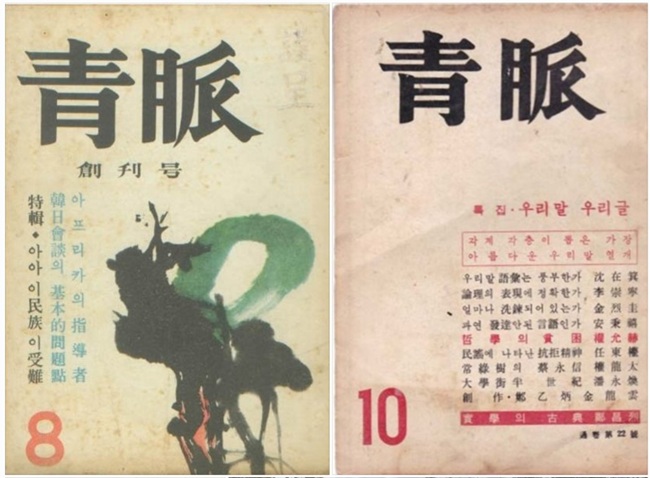 Cheongmaek (靑脈), a popular magazine disguised as legitimate, was instrumental in spreading anti-government ideology to young people and intellectuals and building the underground organization of the Revolutionary Party for Reunification, led by figures like Shin Young-bok and Kim Jil-rak.
The figures emerging during this period also warrant attention. Individuals from various backgrounds, including Shin Young-bok, Im Jung-bin, Lee Jae-hak, and Kim Jin-hwan, were connected. The composition was diverse, including professors, publishers, students, and intellectuals. This is important, signifying a structure that connected multiple strata, not just a specific class.
The 1964 protests against the Korea-Japan talks provided favorable conditions for this organization. Anti-government slogans filled the streets, and criticism of the system spread. The Revolutionary Party for Reunification organization sought to steer this trend beyond mere policy opposition to a rejection of the system itself. It was a process of transforming the language of opposition into the language of revolution.
In November 1965, the organization moved a step further. The Revolutionary Party for Reunification was formed, centered around Kim Jong-tae. The party's goal was "national reunification," but its method was a North Korean-style revolutionary line. It aimed for systemic change, not electoral or institutional reform. At this point, the organization possessed clear political objectives and structure.
The internal structure of the organization was strictly compartmentalized. The core leadership was directly connected to North Korea, mid-level cadres managed regional organizations, and outer-circle organizations handled academic and cultural activities. It was designed so that members did not know the overall structure. It is possible that some members were not even fully aware that they were part of a political organization.
Following the June 8 general election in 1967, the situation intensified again. As controversy over election fraud spread, protests erupted nationwide. The Revolutionary Party for Reunification organization actively intervened in this flow. It sought to unite student protests, labor issues, and political distrust into a single current, leading towards a rejection of the entire system. The chaos of public politics was thus transformed into an opportunity for the underground organization.
Kim Jong-tae revered as a revolutionary martyr in North Korea
Ultimately, in August 1968, the Korean Central Intelligence Agency announced the Revolutionary Party for Reunification incident. A large-scale crackdown ensued, and over 100 individuals were arrested. Key figures were put on trial, and the organization's reality was exposed. Kim Jong-tae was sentenced to death, and his execution was carried out on July 10, 1969.
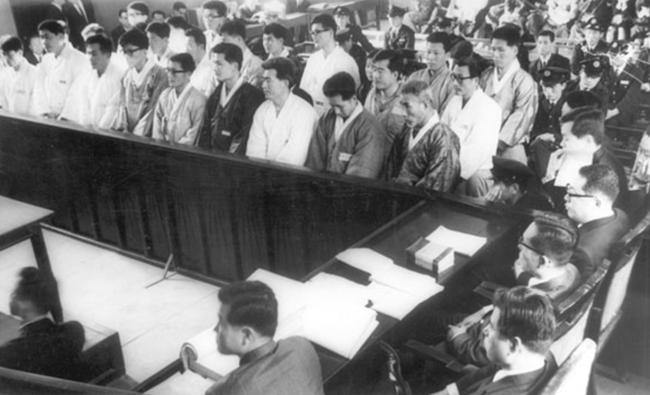 On trial for the Revolutionary Party for Reunification incident in November 1968. Kim Jong-tae is at the far right in the front row of the defendants' seats, next to him is Kim Jil-rak.
North Korea's response after this incident was highly symbolic. Kim Jong-tae was revered as a "revolutionary martyr," and a major factory in Pyongyang was named after him. The fact that a leader of an underground party who operated in South Korea was honored as a national hero demonstrates the connections of this organization.
However, there is another layer to this incident. It was later revealed that illegal detentions and torture by the Korean Central Intelligence Agency occurred during the investigation, and some aspects of the case were exaggerated or distorted. For instance, it was confirmed that some involved individuals were detained for extended periods without warrants and were subjected to physical violence.
A crucial distinction needs to be made here. The existence of the organization and the methods of investigation are unrelated matters. The fact that an underground organization called the Revolutionary Party for Reunification actually existed and had a structure connected to North Korea, and the fact that state power acted beyond the law, can both be true simultaneously. Omitting either one halves the truth.
The attempt to establish the Revolutionary Party for Reunification in 1964 is not merely a past event. It serves as a case study demonstrating what can emerge when internal dissatisfaction within South Korea combines with external strategies. It shows a method of pursuing different goals through a clandestine organization while using the language of public politics. This structure has repeatedly appeared in modern Korean history.
Perspectives on this incident today remain divided. Some view it as a complete fabrication. Conversely, others define everything as a simple anti-state crime. However, following the records reveals a more complex picture. The organization existed, and at the same time, there were problems with the investigation. Only by examining the individuals, dates, and events one by one can the whole picture be seen.
1964 was a crossroads. It was the year of choosing a path of secret operations outside the system, rather than fighting within it. Looking at the names Kim Jong-tae, Kim Jil-rak, and Lee Moon-gyu, and the timeline of March 1964, November 1965, August 1968, and July 10, 1969, it becomes clear where this choice led. History is not remembered in slogans. It is remembered in names and dates.
◆ Songsan (송산)
A poet and researcher of history and philosophy. Former director of the Syngman Rhee Institute. Currently serves as a research advisor for the Korean Modern and Contemporary History Research Association and as the representative of the philosophy forum Rikeion. He has published four poetry collections, co-translated "Heroes of Hukou Gorge," and published "Joseon That Became Myth" and "Humanities on Tatami." He is actively engaged in the research and practice of liberal cultural movements. Songsan is a pen name.

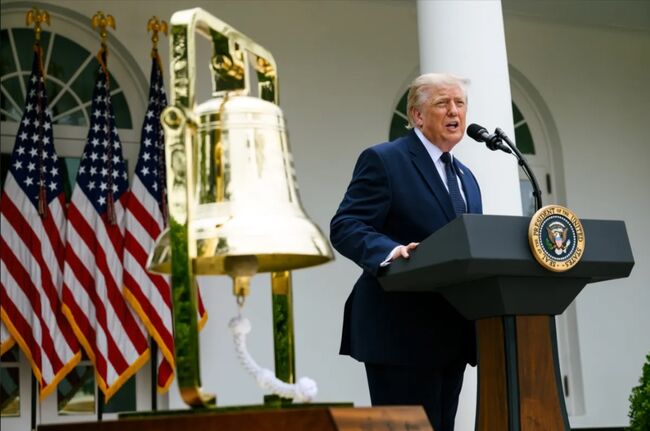 Trump pressures for rate cut again ahead of FOMC... "Should be the lowest in the world"
U.S. President Donald Trump. [Photo = The White House] U.S. President Donald Trump once again pressured the Federal Reserve, the U.S. central bank, to lower interest rates on the 27th (local time
Trump pressures for rate cut again ahead of FOMC... "Should be the lowest in the world"
U.S. President Donald Trump. [Photo = The White House] U.S. President Donald Trump once again pressured the Federal Reserve, the U.S. central bank, to lower interest rates on the 27th (local time
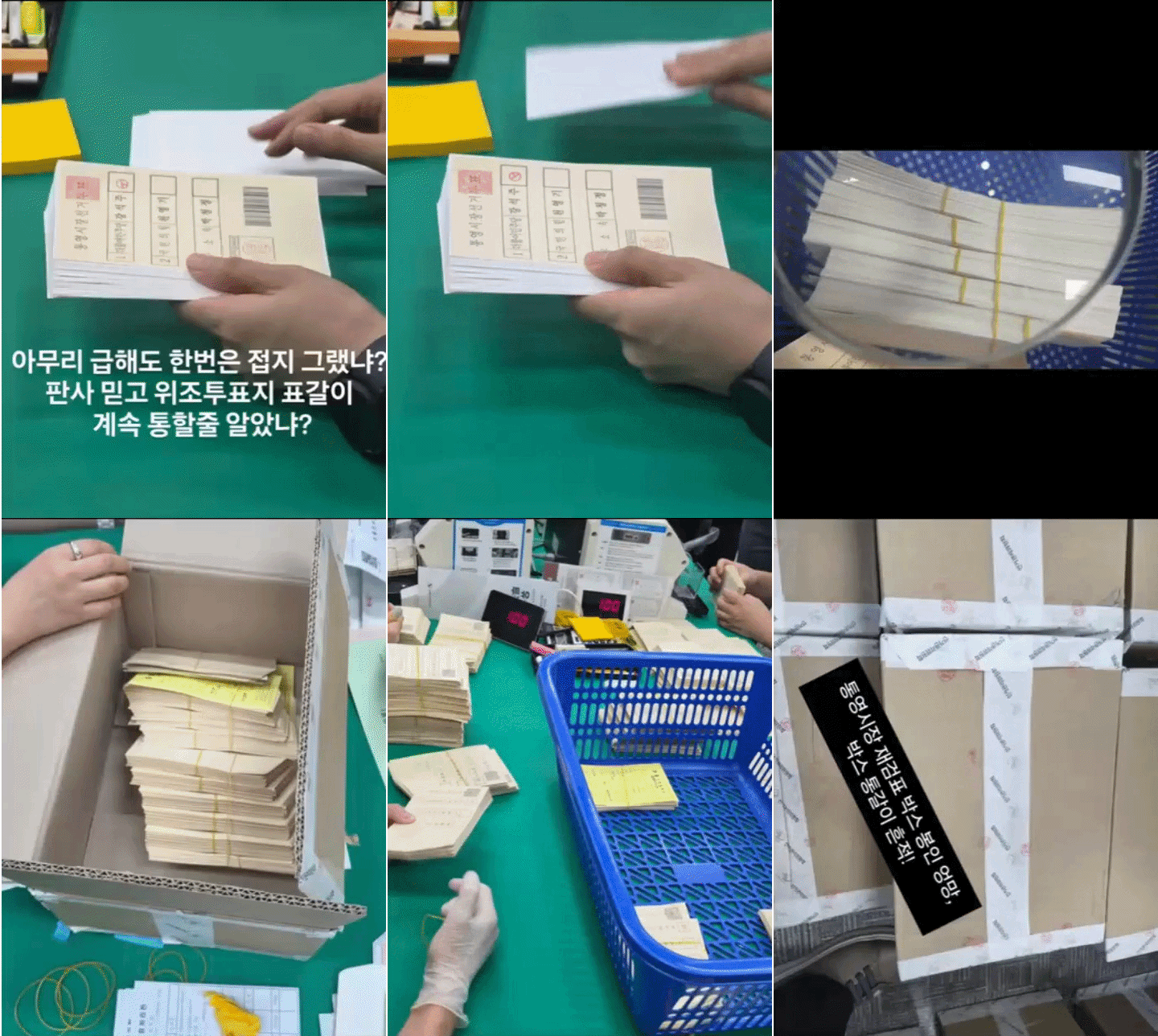 “Ignoring crisp ballots and damaged seals”… Tongyeong mayoral recount concludes with ‘no change in outcome,’ leaving suspicions and public outrage behind
Suspected counterfeit ballots discovered in Tongyeong [GIF from social media of Representative Hwang Kyo-ahn / Attorney Park Joo-hyun]During a recount of the Tongyeong mayoral election in South Gyeong
“Ignoring crisp ballots and damaged seals”… Tongyeong mayoral recount concludes with ‘no change in outcome,’ leaving suspicions and public outrage behind
Suspected counterfeit ballots discovered in Tongyeong [GIF from social media of Representative Hwang Kyo-ahn / Attorney Park Joo-hyun]During a recount of the Tongyeong mayoral election in South Gyeong
 President Yoon, regarding the first-instance ruling on the Public Official Election Act: “An excessive political verdict that distorts the facts… We will appeal immediately.”
The first-instance sentencing hearing for President Yoon Suk Yeol regarding violations of the Public Official Election Act is being broadcast live at Seoul Station on the 27th. [Photo=Yonhap News]Pres
President Yoon, regarding the first-instance ruling on the Public Official Election Act: “An excessive political verdict that distorts the facts… We will appeal immediately.”
The first-instance sentencing hearing for President Yoon Suk Yeol regarding violations of the Public Official Election Act is being broadcast live at Seoul Station on the 27th. [Photo=Yonhap News]Pres
 WSJ: "SK Hynix ADR Premium Is a Sign of AI Trading Overheat"
Advertisement for SK Hynix ADR listing in New York's Times Square [Reuters=Yonhap News file photo]The Wall Street Journal (WSJ) has pointed out that the price of SK Hynix’s American Depositary Recei
WSJ: "SK Hynix ADR Premium Is a Sign of AI Trading Overheat"
Advertisement for SK Hynix ADR listing in New York's Times Square [Reuters=Yonhap News file photo]The Wall Street Journal (WSJ) has pointed out that the price of SK Hynix’s American Depositary Recei
 'Godfather of Japanese Mystery Novels' Keigo Higashino Passes Away After Battle with Cancer at 68
Famous Japanese mystery novelist Keigo Higashino [AFP=Yonhap News]It has been belatedly reported that Keigo Higashino, the "godfather of Japanese mystery novels" and author of bestsellers such as "The
'Godfather of Japanese Mystery Novels' Keigo Higashino Passes Away After Battle with Cancer at 68
Famous Japanese mystery novelist Keigo Higashino [AFP=Yonhap News]It has been belatedly reported that Keigo Higashino, the "godfather of Japanese mystery novels" and author of bestsellers such as "The
 [Park Pil-kyu Security Column] To the Ignorant Trying to Clothe a Beast in Sheep's Clothing
Rep. Kim Byung-joo of the Democratic Party of Korea [Photo=Yonhap News]“The Air Force Academy doesn't teach you how to fly a plane!” “The Army, Navy, and Air Force academies are exactly the
[Park Pil-kyu Security Column] To the Ignorant Trying to Clothe a Beast in Sheep's Clothing
Rep. Kim Byung-joo of the Democratic Party of Korea [Photo=Yonhap News]“The Air Force Academy doesn't teach you how to fly a plane!” “The Army, Navy, and Air Force academies are exactly the
 [Issue Diagnosis] Two Effects of the Election Petition Review
 [Photo] Evidence of Election Fraud Flooding U.S. Media… Trump Had 2.7 Million Votes Stolen
 [Video] U.S. Semiquincentennial Air Show... 'Art in the Sky' streaks across New York
 [Editorial Cartoon] A Draconian Law That Undermines Freedom of Expression

 List
List