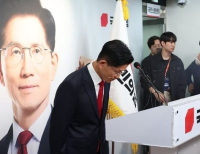
U.S. delegation (left) and Iranian delegation [AP·EPA=Yonhap News]
U.S. and Iranian delegations began talks in Islamabad, the capital of Pakistan, on the 11th (local time) to end the war. This is the highest-level meeting in about 50 years.
With the reopening of the blockaded Strait of Hormuz emerging as the biggest point of contention, both sides continued marathon talks for hours late into the night to reach an agreement.
Iranian media outlets such as IRNA, Tasnim, and Mehr all reported around 5:30 PM Pakistan time that "negotiations between Iran and the U.S. have begun in Islamabad."
After separately meeting with Pakistani Prime Minister Shehbaz Sharif earlier in the day to discuss the agenda and format of the talks, the delegations from both countries launched full-scale negotiations. The meeting venue is the 5-star Serena Hotel in Islamabad.
The U.S. delegation is led by Vice President JD Vance and includes President Donald Trump's eldest son-in-law, Jared Kushner, and Middle East Envoy Steve Witkoff. Iranian media reported the U.S. delegation's size to be around 300 people, including security personnel.
The Iranian side includes Parliament Speaker Mohammad Bagher Ghalibaf and Foreign Minister Abbas Araghchi. The entire Iranian delegation is said to comprise about 70 people.
Associated Press, U.S. CNN, and British BBC highlighted the significance of the talks being held in a trilateral format with direct engagement between the U.S. and Iran, with Pakistan's participation.
A White House official told Reuters, "Trilateral talks between the United States, Iran, and Pakistan are ongoing," adding, "The U.S. expert team accompanied them to Islamabad, and additional experts are providing support from Washington D.C."
Al Jazeera also reported, citing sources, that "both sides are engaging in direct negotiations with Pakistani mediators present," assessing it as a "dramatic development."
The U.S. daily New York Times (NYT) explained that Vice President Vance and Speaker Ghalibaf met with Prime Minister Sharif in attendance. Reuters reported that Envoy Witkoff, Kushner, Minister Araghchi, and Pakistan's Army Chief of Staff Asim Munir were also present.
This marks the highest-level meeting in 47 years since diplomatic relations between the two countries were severed in 1979, and it is the first official face-to-face negotiation between the two countries since the Iran nuclear deal was reached in 2015.
Today's talks are taking place four days after both countries abruptly agreed to a two-week ceasefire on the 7th, and 42 days after the war began with the U.S. and Israeli airstrikes on Iran on February 28th. Previously, the U.S. proposed a 15-point peace plan, to which Iran counter-proposed a 10-point demand.
IRNA reported, "The two countries have decided to begin negotiations and finally resolve these issues, considering the intensive consultations and progress made in Islamabad, Israel's restraint in attacks from Beirut to southern Lebanon, and the U.S. side's acceptance of the release of Iran's frozen assets."
Prior to the start of the talks, the Iranian delegation conveyed four "red lines" to Prime Minister Sharif: ▲ Recognition of control rights over Hormuz ▲ Compensation for war damages ▲ Release of Iran's frozen foreign assets ▲ Cessation of hostilities throughout the Middle East, according to IRIB.
At one point, Iran's state-run IRIB broadcast reported that "the talks have entered the expert stage," with committees from Iran's economic, military, legal, and nuclear sectors being deployed to the negotiation room, drawing attention to the progress of the dialogue.
However, with observations that the two sides clashed over the issue of managing the Strait of Hormuz, it remains uncertain whether the talks will yield substantial results.
The British daily Financial Times (FT), citing negotiation sources, reported that "negotiations over control of the Strait of Hormuz have reached an impasse." It stated that Iran rejected the proposal to control the strait together with the U.S. and insisted on its stance of imposing tolls unilaterally.
IRIB commented that "the U.S. is showing an overly tough stance in this meeting as well." Tasnim also pointed out that "there are serious disagreements on the issue of the Strait of Hormuz," and that attempts to exchange wording to establish a framework for agreement have been blocked.
The two countries resumed talks after a brief recess in the afternoon. Around 10:30 PM, about 5 hours after the talks began, IRIB commented, "The third round of talks will be held tonight," and added, "The outcome of the talks will become clear in the third round."
U.S. CNN, citing sources familiar with the negotiations, estimated that "the negotiations will take several days." Iran's Mehr news agency added that while talks could continue on the 12th if necessary, "there are signs that the talks will not last more than a day."
Meanwhile, the U.S. military put pressure on Iran by commencing mine-clearing operations in the Strait of Hormuz on the same day.
U.S. Central Command announced in a statement that "Central Command forces have begun creating conditions for mine clearance in the Strait of Hormuz," and that two U.S. Navy guided-missile destroyers had passed through the Strait of Hormuz.

 [Statement by the Seo-beo-kka Korea Military Academy Save-the-Nation Comrades Association] ㉛ Recount the Votes Publicly, as the Previous Recount Concealed Election Fraud
Tongyeong Mayoral Election Recount [Photo=Yonhap News]South Korea's liberal democracy is dying. The National Election Commission (NEC) and the judiciary, which have plummeted into criminal syndicates
[Statement by the Seo-beo-kka Korea Military Academy Save-the-Nation Comrades Association] ㉛ Recount the Votes Publicly, as the Previous Recount Concealed Election Fraud
Tongyeong Mayoral Election Recount [Photo=Yonhap News]South Korea's liberal democracy is dying. The National Election Commission (NEC) and the judiciary, which have plummeted into criminal syndicates
 What is the significance of the "Trump 2028" red hats that keep making a comeback?
It is noteworthy that President Donald Trump is "intentionally" fueling controversy over whether he can actually run in the 2028 presidential election, even though it is "highly likely he is seriously
What is the significance of the "Trump 2028" red hats that keep making a comeback?
It is noteworthy that President Donald Trump is "intentionally" fueling controversy over whether he can actually run in the 2028 presidential election, even though it is "highly likely he is seriously
 Jin Cummings: “North Korea says it will increase the number of spies, so what is the government doing?”
U.S. political columnist Gene Cummings has publicly questioned the South Korean government, asking, "North Korea is declaring that it will increase its number of spies, so what is the South Kore
Jin Cummings: “North Korea says it will increase the number of spies, so what is the government doing?”
U.S. political columnist Gene Cummings has publicly questioned the South Korean government, asking, "North Korea is declaring that it will increase its number of spies, so what is the South Kore
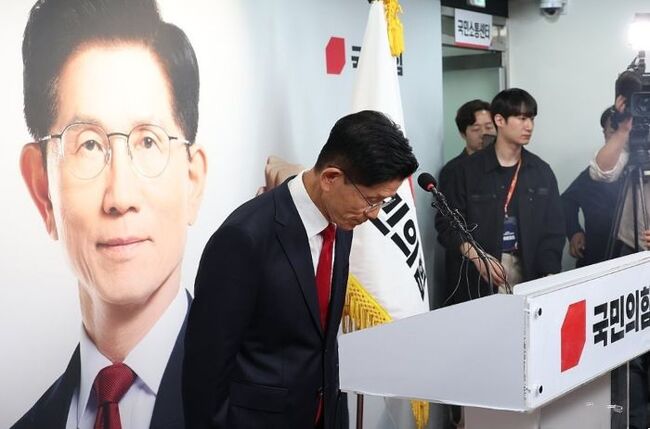 “Too little, too late?…” Kim Moon-soo, who previously conceded his presidential election defeat, now demands a special counsel investigation into ‘allegations of election fraud in the 2025 presidential election’
People Power Party presidential candidate Kim Moon-soo concedes defeat during a press conference at the party headquarters in Yeouido, Seoul, on June 4, 2025. [Joint Press Corps]As allegations emerge
“Too little, too late?…” Kim Moon-soo, who previously conceded his presidential election defeat, now demands a special counsel investigation into ‘allegations of election fraud in the 2025 presidential election’
People Power Party presidential candidate Kim Moon-soo concedes defeat during a press conference at the party headquarters in Yeouido, Seoul, on June 4, 2025. [Joint Press Corps]As allegations emerge
 Stock Market Crash 'Black Tuesday'… KOSPI down 10.8%, KOSDAQ down 7.7%
The KOSPI fell by more than 5% in early trading on the 28th, triggering a sell-side sidecar.On the 28th, the KOSPI plunged by more than 10%.Due to the sharp decline, a sell-side sidecar—a temporary
Stock Market Crash 'Black Tuesday'… KOSPI down 10.8%, KOSDAQ down 7.7%
The KOSPI fell by more than 5% in early trading on the 28th, triggering a sell-side sidecar.On the 28th, the KOSPI plunged by more than 10%.Due to the sharp decline, a sell-side sidecar—a temporary
 [World Heritage Committee] 25 New World Heritage Sites Inscribed in Busan… South Korea Successfully Expands 'Getbol' Listing
The Chairperson of the World Heritage Committee speaks at the plenary session of the 48th session of the World Heritage Committee, held at BEXCO in Busan on the 20th. [Photo: Yonhap News]A total of 25
[World Heritage Committee] 25 New World Heritage Sites Inscribed in Busan… South Korea Successfully Expands 'Getbol' Listing
The Chairperson of the World Heritage Committee speaks at the plenary session of the 48th session of the World Heritage Committee, held at BEXCO in Busan on the 20th. [Photo: Yonhap News]A total of 25
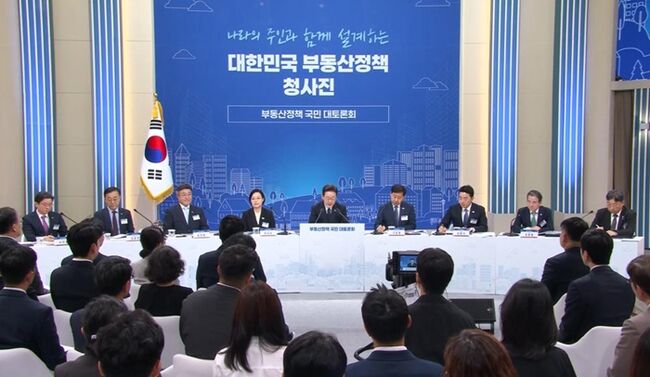 [Liberal Democratic Party Statement] Calling it a Grand Real Estate Debate… It Was Nothing More Than a Private Party Among Themselves
The 'National Grand Debate on Real Estate Policy' held on July 23rd and 27th. [Photo=Yonhap News]The 'National Grand Debate on Real Estate Policy,' hosted by the Lee Jae-myung administration under the
[Liberal Democratic Party Statement] Calling it a Grand Real Estate Debate… It Was Nothing More Than a Private Party Among Themselves
The 'National Grand Debate on Real Estate Policy' held on July 23rd and 27th. [Photo=Yonhap News]The 'National Grand Debate on Real Estate Policy,' hosted by the Lee Jae-myung administration under the
 [Photo] Evidence of Election Fraud Flooding U.S. Media… Trump Had 2.7 Million Votes Stolen
 [Video] U.S. Semiquincentennial Air Show... 'Art in the Sky' streaks across New York
 [Editorial Cartoon] A Draconian Law That Undermines Freedom of Expression

 List
List