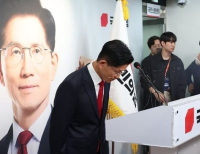
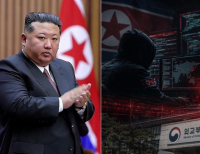
Global security is currently undergoing a seismic shift. Missiles launched from the deserts of Iran are tracing the trajectory of North Korean Nodong missiles, threatening Israel, and era where Iran-made suicide drone combat data is being transmitted to Pyongyang. It has become evident that Iran and North Korea are cooperating closely. Localized wars in the Middle East have turned into a global energy war.
The U.S. Navy has direct control over the Strait of Hormuz, making it impossible for Chinese oil tankers to reach Iran. China has historically relied on the Strait of Hormuz for 40-50% of its crude oil imports, and if the U.S. military blocks this route, China's strategic oil reserves would be depleted in a short period. China may be forced to abandon Iran to survive.
China will likely consider North Korea as an 'asymmetrical card' to alleviate internal discontent and find a breakthrough for its Taiwan annexation in 2027, contemplating a desperate exit as it did during the Korean War. China may engage in a political calculation to distract U.S. military forces by instigating war on the Korean Peninsula, while securing leverage in Taiwan or internal matters.
Why North Korea Aligning with the U.S. is the Path to Survival
China has viewed North Korea as a ferocious hunting dog guarding its backyard and a magic wand to disrupt the West whenever needed by loosening its leash. However, China's fatal miscalculation lies in overlooking the survival instincts within North Korea. For Kim Jong Un, China is both a backing for regime stability and the most dangerous entity that could replace him at any moment. The leadership in Pyongyang would also fear a future as a vassal state of China.
If North Korea cannot sever ties with China, the three-stage war scenario deployable by the U.S. military would be: ① Neutralizing North Korea's command, control, communications, and intelligence (C4I) system and power grid by deploying powerful electronic warfare aircraft and carbon fiber bombs, rendering the North Korean military a 'blind' force unable to respond due to the disruption of its air defense and communication networks. ② Precision strikes on underground command centers and missile launch sites based on AI and satellite intelligence, causing the simultaneous annihilation of outdated forces that cannot even engage, similar to the Iran case, while completely blocking maritime and aerial routes to cut off supplies and energy. ③ The North Korean regime and its military, having lost supply and control, would experience psychological collapse within a week.
Kim Jong Un must devise a 'geopolitical shift' to change his fate and survive. A unconventional, counter-intuitive idea of 'U.S. military presence in Pyongyang' is needed. This would not be mere occupation but a long-range approach to block Chinese interference, and a way for North Korea to escape the threat of becoming a Chinese vassal state. For Kim Jong Un, it would serve as robust security insurance for his regime, and for the U.S., which has no territorial ambitions, it would be a decisive move to instantly reshape the Northeast Asian landscape, satisfying the interests of both parties.
Why North Korea Has No Choice but to Accept the 'U.S. Military Presence in Pyongyang' Proposal
The reasons why North Korea has no choice but to accept this unconventional proposal are clear.
① 'U.S. Military Presence in Pyongyang' as a Defense Against China's 'Vassalization Strategy'
What China desires is not the maintenance of the Kim Jong Un regime, but a 'pro-China puppet regime' that conforms to China's interests. China has already revealed its ambition to replace the North Korean leadership in case of emergency through its Northeast Project and military exercises. From the perspective of the North Korean leadership, the presence of U.S. troops in Pyongyang would not be 'invading forces' aiming to eliminate them, but a reliable 'regime guarantor' preventing China's absorption and unification.
② 'Strategic Symbiosis' with the U.S., Which Has No Territorial Ambitions
The U.S. prioritizes the status quo on the Korean Peninsula and the containment of China. Unlike China, it does not seek direct control or permanent occupation of North Korean territory. Faced with the extreme choices of being absorbed by China and disappearing from the map, or joining hands with the U.S. to preserve its current system, choosing the latter 'security insurance' would be more advantageous for survival.
③ Escaping Economic Subjugation and Gaining a 'Safety Mark'
Currently, North Korea's economy is mortgaged to China, effectively losing its self-sufficiency. The presence of U.S. troops would serve as more than just military protection; it would function as a world-class 'safety mark' guaranteeing Western capital and technology inflow into North Korea, providing North Korea with the only escape route to break free from Chinese economic subjugation and enter the Western economic ecosystem.
Restoring the ROK-U.S. Alliance and Maintaining a Technological Blood Alliance with Israel
The physical foundation to complete this grand geopolitical shift lies in a robust ROK-U.S. alliance and a 'practical technological blood alliance' with Israel. We import over 97% of 'bromine,' a key raw material for semiconductors, from Israel. Israel's unparalleled missile defense algorithms and its integrated system of unmanned and manned platforms are the only keys to neutralizing North Korea's asymmetrical threats. The North Korean regime would likely remember the 2004 Ryongchon station explosion incident, which resulted in the death of a Syrian nuclear scientist.
Combining South Korea's hardware with Israel's software will not only enhance military capabilities but also lead to groundbreaking advancements in defense technology, compelling North Korea to cease provocations and accept 'U.S. military presence in Pyongyang' for its survival.
Leaders entrusted with the mission of national defense must cease self-destructive actions of severing security alliances or criticizing Israel. National security, which involves the lives of citizens, is not the property of politicians but the lives of all people.
The security apparatus, which has disregarded international affairs and undermined common sense in security, should now come to its senses and undergo a transformation to completely reshape the 76-year Cold War paradigm. They should realize the principle of "heaven helps those who help themselves," understanding that what is not changed by itself will be changed by force.

◆ Park Pil-gyu, Committee Member
Editor, Hankookilbo
40th graduating class of Korea Military Academy

 [Statement by the Seo-beo-kka Korea Military Academy Save-the-Nation Comrades Association] ㉛ Recount the Votes Publicly, as the Previous Recount Concealed Election Fraud
Tongyeong Mayoral Election Recount [Photo=Yonhap News]South Korea's liberal democracy is dying. The National Election Commission (NEC) and the judiciary, which have plummeted into criminal syndicates
[Statement by the Seo-beo-kka Korea Military Academy Save-the-Nation Comrades Association] ㉛ Recount the Votes Publicly, as the Previous Recount Concealed Election Fraud
Tongyeong Mayoral Election Recount [Photo=Yonhap News]South Korea's liberal democracy is dying. The National Election Commission (NEC) and the judiciary, which have plummeted into criminal syndicates
 What is the significance of the "Trump 2028" red hats that keep making a comeback?
It is noteworthy that President Donald Trump is "intentionally" fueling controversy over whether he can actually run in the 2028 presidential election, even though it is "highly likely he is seriously
What is the significance of the "Trump 2028" red hats that keep making a comeback?
It is noteworthy that President Donald Trump is "intentionally" fueling controversy over whether he can actually run in the 2028 presidential election, even though it is "highly likely he is seriously
 Jin Cummings: “North Korea says it will increase the number of spies, so what is the government doing?”
U.S. political columnist Gene Cummings has publicly questioned the South Korean government, asking, "North Korea is declaring that it will increase its number of spies, so what is the South Kore
Jin Cummings: “North Korea says it will increase the number of spies, so what is the government doing?”
U.S. political columnist Gene Cummings has publicly questioned the South Korean government, asking, "North Korea is declaring that it will increase its number of spies, so what is the South Kore
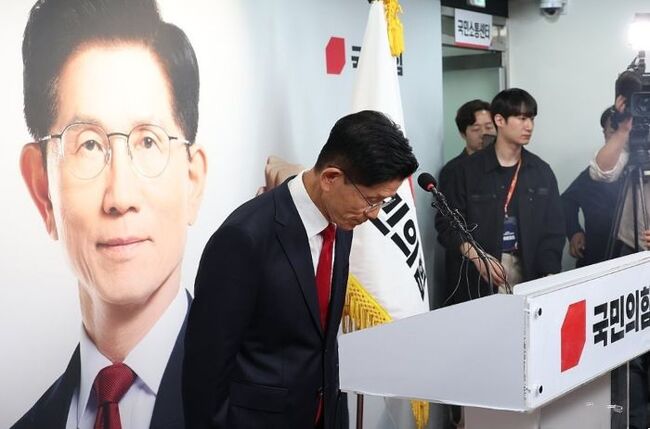 “Too little, too late?…” Kim Moon-soo, who previously conceded his presidential election defeat, now demands a special counsel investigation into ‘allegations of election fraud in the 2025 presidential election’
People Power Party presidential candidate Kim Moon-soo concedes defeat during a press conference at the party headquarters in Yeouido, Seoul, on June 4, 2025. [Joint Press Corps]As allegations emerge
“Too little, too late?…” Kim Moon-soo, who previously conceded his presidential election defeat, now demands a special counsel investigation into ‘allegations of election fraud in the 2025 presidential election’
People Power Party presidential candidate Kim Moon-soo concedes defeat during a press conference at the party headquarters in Yeouido, Seoul, on June 4, 2025. [Joint Press Corps]As allegations emerge
 Stock Market Crash 'Black Tuesday'… KOSPI down 10.8%, KOSDAQ down 7.7%
The KOSPI fell by more than 5% in early trading on the 28th, triggering a sell-side sidecar.On the 28th, the KOSPI plunged by more than 10%.Due to the sharp decline, a sell-side sidecar—a temporary
Stock Market Crash 'Black Tuesday'… KOSPI down 10.8%, KOSDAQ down 7.7%
The KOSPI fell by more than 5% in early trading on the 28th, triggering a sell-side sidecar.On the 28th, the KOSPI plunged by more than 10%.Due to the sharp decline, a sell-side sidecar—a temporary
 [World Heritage Committee] 25 New World Heritage Sites Inscribed in Busan… South Korea Successfully Expands 'Getbol' Listing
The Chairperson of the World Heritage Committee speaks at the plenary session of the 48th session of the World Heritage Committee, held at BEXCO in Busan on the 20th. [Photo: Yonhap News]A total of 25
[World Heritage Committee] 25 New World Heritage Sites Inscribed in Busan… South Korea Successfully Expands 'Getbol' Listing
The Chairperson of the World Heritage Committee speaks at the plenary session of the 48th session of the World Heritage Committee, held at BEXCO in Busan on the 20th. [Photo: Yonhap News]A total of 25
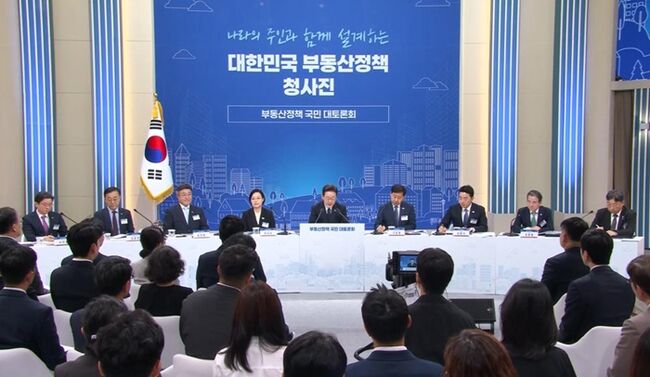 [Liberal Democratic Party Statement] Calling it a Grand Real Estate Debate… It Was Nothing More Than a Private Party Among Themselves
The 'National Grand Debate on Real Estate Policy' held on July 23rd and 27th. [Photo=Yonhap News]The 'National Grand Debate on Real Estate Policy,' hosted by the Lee Jae-myung administration under the
[Liberal Democratic Party Statement] Calling it a Grand Real Estate Debate… It Was Nothing More Than a Private Party Among Themselves
The 'National Grand Debate on Real Estate Policy' held on July 23rd and 27th. [Photo=Yonhap News]The 'National Grand Debate on Real Estate Policy,' hosted by the Lee Jae-myung administration under the
 [Photo] Evidence of Election Fraud Flooding U.S. Media… Trump Had 2.7 Million Votes Stolen
 [Video] U.S. Semiquincentennial Air Show... 'Art in the Sky' streaks across New York
 [Editorial Cartoon] A Draconian Law That Undermines Freedom of Expression

 List
List