The land reform and constitutional values enacted by President Syngman Rhee provided a path forward for the nascent Republic of Korea. Great Master Jizang (吉藏) of the Sanlun school in China stated through his 'Sanlun Xuanyi' that 'overcoming evil is revealing the good.' This means that breaking down wicked views is the way to reveal the right principles.
The roar of April, 66 years ago, also aligns with this principle. The courage of the young people who faced guns and bayonets went beyond simple resistance; it was a fierce practice that socially embodied the 'wisdom to find truth in ignorance' emphasized by the Lotus Sutra. The question that roar of that day poses to our society today also lies precisely at this point.
Democracy Blossomed on Barren Land of $80
Immediately after liberation, South Korea's illiteracy rate reached 77.8%. In 1946, a survey by the US military government revealed that 70% of the population supported socialism and only 14% supported capitalism, indicating extreme ideological confusion. In a 1961 survey of 377 Korea University students, 86% of respondents answered that 'Western democracy cannot be applied to Korea.'
On the land, where the scars of the Korean War had not yet faded, ruins replaced factories, and American aid supplies filled the void where hope should have been. In this harsh period, when war ruins and the hunger of the barley season were daily realities, the Republic of Korea stood at a crossroads of historical choice.
In the spring of 1960, South Korea's per capita GNP was around $80, making it one of the poorest countries in the world. At the time, Ghana in Africa (GNP approximately $180) and the Philippines in Asia (GNP approximately $200) were objects of our envy.
In an era when a bag of rice cost as much as a month's living expenses, the people recognized that dictatorship and corruption could not be fundamental solutions to hunger. The April 19 Revolution went beyond mere anger over fraudulent elections; it was the roar of the people who realized the necessity of democratic procedures for a humane life.
During those times, the economic measure that sustained the lives of the common people was the price of rice. The price of a bag of rice (80kg) was around 3,500 to 4,000 won. Considering the average wages of urban workers at the time, buying a bag of rice was equivalent to a month's living expenses.
In an era when a bowl of Jajangmyeon, a symbol of eating out, cost 15-20 won, the people had to accept the harsh season of the 'barley hump' as destiny each year. The statistics reveal the stark reality of 1960: three out of every ten farming households suffered from starvation due to lack of food.
The April 19 Revolution was not solely triggered by anger over fraudulent elections. Amidst the dire reality of an $80 per capita income, the people realized that dictatorship and corruption could not solve hunger, and that democratic procedures were essential for a humane life.
At this tragic turning point in modern history, history confronts the anguish of a leader. On April 23, 1960, President Syngman Rhee visited Seoul National University Hospital to see the injured students lying in their hospital beds. It is said that he was moved to tears as he touched the wounds of the students who had been shot.
"A people who do not stand up to injustice are a dead people. Well done! Our students are truly well done." "The bullets that I should have taken, you took them," his sorrowful words were also a repentance of a leader who had grasped the true sentiment of the people.
This repentant consolation and recognition of the students' just cause became a decisive turning point three days later, on April 26, leading him to decide to resign, abandoning any lingering attachment to power, with the declaration, "If the people desire it, I will step down."
Remembering the Weight of That Day
The Republic of Korea is a nation with a rare global precedent for achieving democracy during a harsh period with a per capita income of less than $100. From a peripheral poor nation that envied Ghana and the Philippines, it has now become a major power ranked among the top 10 global economies.
The visit to the hospital on April 19 holds historical significance in that it acknowledged the righteousness of the younger generation, who had been hurt by a leader's misguided policies. The single phrase "Well done" paradoxically proves that these students were the fruits of the democratic education that the president himself had emphasized throughout his life.
The freedom and prosperity we enjoy today are historical products born from the convergence of the courage of students who advocated for democracy while enduring the weight of a bag of rice, and the decision of a leader who, despite his past mistakes, knew how to step down in the face of the students' righteousness. That day's torch, which dispelled ignorance and opened the right path with the spirit of overcoming evil and revealing good, remains a relevant topic for us living today.
Within this historical context, excluding partisan bias, the choice of liberal democracy and a market economy as the foundation of the nation, driven by President Syngman Rhee's firm beliefs and leadership, is described as a decisive stroke of luck for the nation.
In particular, the land reform and constitutional values he enacted served as guideposts in a lost era, much like 'Yeolha Ilgi' (Records of Travels in Yeolha), providing a path forward for the nascent Republic of Korea.
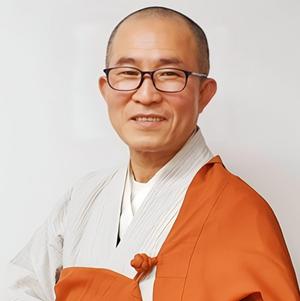
◆ Monk Eungcheon
Secretary-General of the Korean Buddhist National Defense Order
First Commander of the National Defense Monk Corps

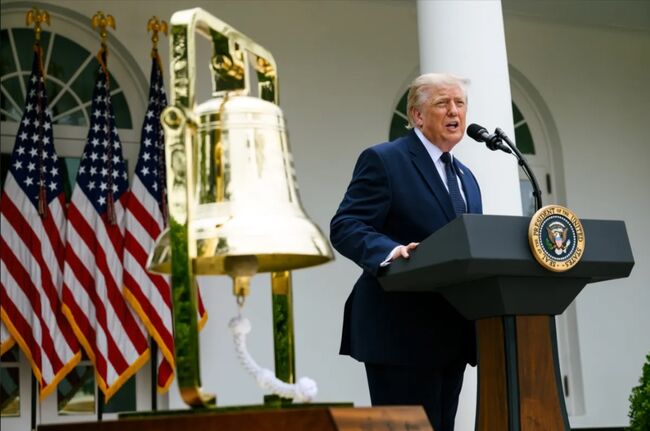 Trump pressures for rate cut again ahead of FOMC... "Should be the lowest in the world"
U.S. President Donald Trump. [Photo = The White House] U.S. President Donald Trump once again pressured the Federal Reserve, the U.S. central bank, to lower interest rates on the 27th (local time
Trump pressures for rate cut again ahead of FOMC... "Should be the lowest in the world"
U.S. President Donald Trump. [Photo = The White House] U.S. President Donald Trump once again pressured the Federal Reserve, the U.S. central bank, to lower interest rates on the 27th (local time
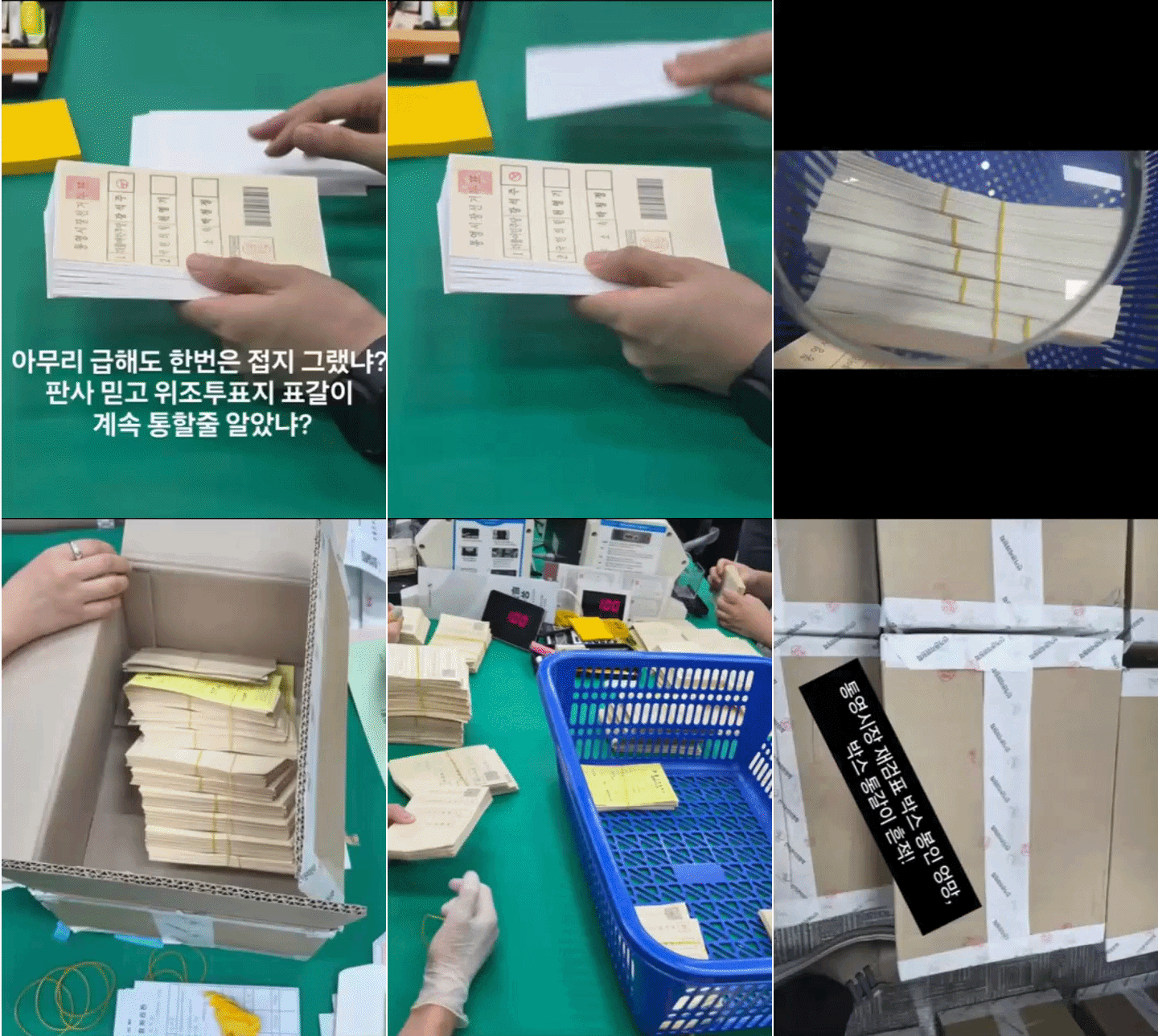 “Ignoring crisp ballots and damaged seals”… Tongyeong mayoral recount concludes with ‘no change in outcome,’ leaving suspicions and public outrage behind
Suspected counterfeit ballots discovered in Tongyeong [GIF from social media of Representative Hwang Kyo-ahn / Attorney Park Joo-hyun]During a recount of the Tongyeong mayoral election in South Gyeong
“Ignoring crisp ballots and damaged seals”… Tongyeong mayoral recount concludes with ‘no change in outcome,’ leaving suspicions and public outrage behind
Suspected counterfeit ballots discovered in Tongyeong [GIF from social media of Representative Hwang Kyo-ahn / Attorney Park Joo-hyun]During a recount of the Tongyeong mayoral election in South Gyeong
 President Yoon, regarding the first-instance ruling on the Public Official Election Act: “An excessive political verdict that distorts the facts… We will appeal immediately.”
The first-instance sentencing hearing for President Yoon Suk Yeol regarding violations of the Public Official Election Act is being broadcast live at Seoul Station on the 27th. [Photo=Yonhap News]Pres
President Yoon, regarding the first-instance ruling on the Public Official Election Act: “An excessive political verdict that distorts the facts… We will appeal immediately.”
The first-instance sentencing hearing for President Yoon Suk Yeol regarding violations of the Public Official Election Act is being broadcast live at Seoul Station on the 27th. [Photo=Yonhap News]Pres
 WSJ: "SK Hynix ADR Premium Is a Sign of AI Trading Overheat"
Advertisement for SK Hynix ADR listing in New York's Times Square [Reuters=Yonhap News file photo]The Wall Street Journal (WSJ) has pointed out that the price of SK Hynix’s American Depositary Recei
WSJ: "SK Hynix ADR Premium Is a Sign of AI Trading Overheat"
Advertisement for SK Hynix ADR listing in New York's Times Square [Reuters=Yonhap News file photo]The Wall Street Journal (WSJ) has pointed out that the price of SK Hynix’s American Depositary Recei
 'Godfather of Japanese Mystery Novels' Keigo Higashino Passes Away After Battle with Cancer at 68
Famous Japanese mystery novelist Keigo Higashino [AFP=Yonhap News]It has been belatedly reported that Keigo Higashino, the "godfather of Japanese mystery novels" and author of bestsellers such as "The
'Godfather of Japanese Mystery Novels' Keigo Higashino Passes Away After Battle with Cancer at 68
Famous Japanese mystery novelist Keigo Higashino [AFP=Yonhap News]It has been belatedly reported that Keigo Higashino, the "godfather of Japanese mystery novels" and author of bestsellers such as "The
 [Park Pil-kyu Security Column] To the Ignorant Trying to Clothe a Beast in Sheep's Clothing
Rep. Kim Byung-joo of the Democratic Party of Korea [Photo=Yonhap News]“The Air Force Academy doesn't teach you how to fly a plane!” “The Army, Navy, and Air Force academies are exactly the
[Park Pil-kyu Security Column] To the Ignorant Trying to Clothe a Beast in Sheep's Clothing
Rep. Kim Byung-joo of the Democratic Party of Korea [Photo=Yonhap News]“The Air Force Academy doesn't teach you how to fly a plane!” “The Army, Navy, and Air Force academies are exactly the
 [Issue Diagnosis] Two Effects of the Election Petition Review
 [Photo] Evidence of Election Fraud Flooding U.S. Media… Trump Had 2.7 Million Votes Stolen
 [Video] U.S. Semiquincentennial Air Show... 'Art in the Sky' streaks across New York
 [Editorial Cartoon] A Draconian Law That Undermines Freedom of Expression

 List
List