With the Japanese government significantly easing its arms export regulations, which it had maintained under the pacifist constitution, there are observations that the Japanese defense industry is experiencing a surge.
According to local media on the 22nd, Japan's defense industry, after a long period of stagnation, has seen a recent upturn in the past few years due to the government's policy to increase defense spending from the current 1% of GDP to 2% by fiscal year 2027 (April 2027 - March 2028).
 Japan's Mogami-class frigate, scheduled for export to Australia [Kyodo News]
The Japanese government's defense budget for the current fiscal year is a total of 10.6 trillion yen (approximately 98 trillion won), already reaching 1.9%.
Indeed, the Stockholm International Peace Research Institute (SIPRI) reported in December of last year that while the total revenue of the world's top 100 defense companies increased by 5.9% to $679 billion (approximately 1,004 trillion won) in 2024 compared to the previous year, the revenue of Japanese defense companies increased by 40% to $13.3 billion (approximately 19.7 trillion won).
The Asahi Shimbun reported, "Japan's defense industry had limited growth potential as its customer base was previously confined to the Self-Defense Forces, leading to a wave of companies withdrawing in the late 2010s. However, the situation has drastically changed in recent years due to the government's increase in defense spending."
Mitsubishi Heavy Industries, which manufactures fighter jets and tanks, plans to increase its personnel in the aviation, defense, and space business segments from 7,868 in fiscal year 2024 to approximately 10,000 by fiscal year 2026.
IHI, an heavy industry company, is constructing a solid rocket motor plant for missiles in Gunma Prefecture, aiming for completion in fiscal year 2028.
Japan Steel Works, which handles artillery and armored vehicles, already built a new defense equipment assembly plant in Hiroshima in January.
The Nikkei Shimbun reported that the increase in personnel and expansion of facilities by Japanese defense companies reflect expectations for overseas expansion following the relaxation of arms export regulations, in addition to the increase in defense spending by the Japanese government.
The Japanese government revised the Three Principles on Transfer of Defense Equipment and Its Applications, along with the operational guidelines, yesterday.
Prior to the revision, exports of defense equipment for non-combat purposes such as rescue, transport, surveillance, reconnaissance, and mine sweeping were permitted. Now, exports of lethal weapons such as fighter jets and warships are also permitted in principle.
Originally, Japan virtually banned the export of lethal weapons based on the "pacifist principles" of Article 9 of its constitution. During the second Abe administration, in 2014, it established the Three Principles on Transfer of Defense Equipment and Its Applications, allowing the export of defense equipment only for five purposes with low direct relevance to combat.
Since then, Japan has eased export restrictions by expanding exceptions, such as for joint development with other countries, but has principle-based restrictions on the export of lethal weapons.
The Japanese government expects that the relaxation of export regulations through this revision will revitalize the defense industry, enhance its ability to sustain prolonged combat, and serve as leverage for diplomatic security cooperation.
In particular, it is considering increasing frigate exports to Southeast Asian countries such as the Philippines.
However, there are also points raised that the international competitiveness of Japan's defense industry is not currently high.
The Asahi Shimbun stated, "Neighboring South Korea has historically focused on its defense industry, and according to SIPRI's data, South Korea ranks 4th in arms export market share in 2025, while Japan ranks 36th."
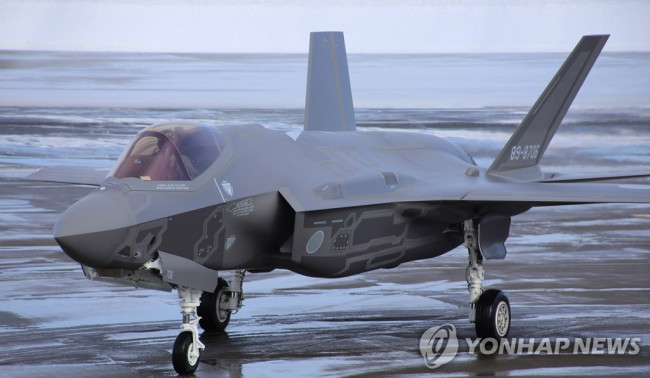 Japanese Air Self-Defense Force F-35 fighter jet [Provided by the Japan Air Self-Defense Force]
Meanwhile, Kyodo News reported that the ruling Liberal Democratic Party (LDP) has begun consolidating the key points for the revision of three security documents—the National Security Strategy, the National Defense Strategy, and the Defense Capability Consolidation Plan—which the current Takaychi Sanae cabinet plans to pursue within the year.
The LDP confirmed its intention to request the government to promote the development of interceptor drones and high-power lasers to strengthen the air defense network at a Security Research Council meeting held at the party headquarters.
The LDP identified the introduction of unmanned submarines to secure superiority underwater as a core element of defense capability consolidation, pointing out the need to establish a command and control system and enhance surveillance and reconnaissance in the Pacific, where China is expanding its military activities.
The meeting also included a proposal to expedite the review of equipping submarines that operate long-range missiles with next-generation power sources.
Kyodo News explained that while the option of using nuclear power as a next-generation power source for submarines is being discussed within the Japanese government, differing opinions are more prevalent within the LDP.

 [Statement by the Seobeokka KMA Patriots Association] ㉛ Recount the ballots openly, as the previous recount covered up election fraud
Recount of the Tongyeong mayoral election [Photo=Yonhap News]South Korea's liberal democracy is dying. The National Election Commission (NEC), which has degraded into a criminal organization through t
[Statement by the Seobeokka KMA Patriots Association] ㉛ Recount the ballots openly, as the previous recount covered up election fraud
Recount of the Tongyeong mayoral election [Photo=Yonhap News]South Korea's liberal democracy is dying. The National Election Commission (NEC), which has degraded into a criminal organization through t
 What is the significance of the "Trump 2028" red hat that keeps reappearing?
It is noteworthy that while it is "highly likely" that President Donald Trump is "seriously considering" a run for the presidency in 2028, he is also "deliberately" fueling speculation regarding wheth
What is the significance of the "Trump 2028" red hat that keeps reappearing?
It is noteworthy that while it is "highly likely" that President Donald Trump is "seriously considering" a run for the presidency in 2028, he is also "deliberately" fueling speculation regarding wheth
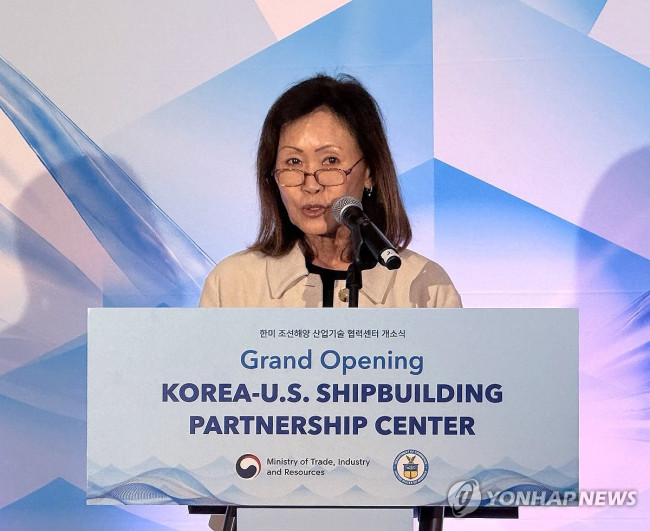 First U.S. Ambassador of Trump's Second Term to Arrive This Week… Will It Provide Momentum to Resolve Pending Issues?
U.S. Ambassador to South Korea Michelle Steel speaks at the opening ceremony of the Korea-U.S. Shipbuilding Cooperation Center held at the Mayflower Hotel in Washington, D.C., on the 23rd (local time)
First U.S. Ambassador of Trump's Second Term to Arrive This Week… Will It Provide Momentum to Resolve Pending Issues?
U.S. Ambassador to South Korea Michelle Steel speaks at the opening ceremony of the Korea-U.S. Shipbuilding Cooperation Center held at the Mayflower Hotel in Washington, D.C., on the 23rd (local time)
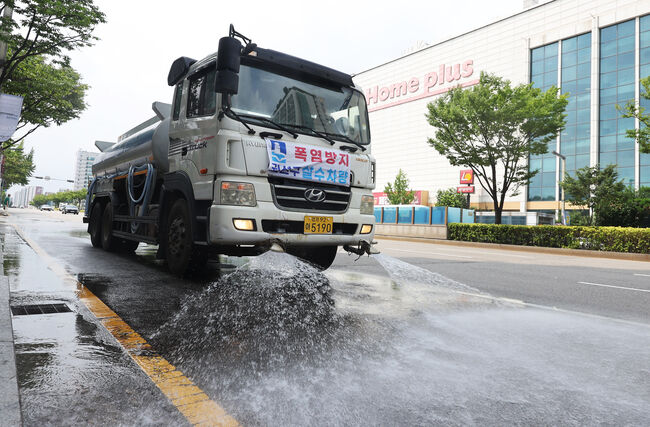 The Korean Peninsula wrapped in a thick blanket of scorching high pressure… Will the 1994 record be broken?
On the 28th, as the heatwave continues, a water sprinkler truck sprays water on Hyowon-ro, Gwonseon-gu, Suwon, Gyeonggi Province. [Photo = Yonhap News]The hottest years on record are considered to be
The Korean Peninsula wrapped in a thick blanket of scorching high pressure… Will the 1994 record be broken?
On the 28th, as the heatwave continues, a water sprinkler truck sprays water on Hyowon-ro, Gwonseon-gu, Suwon, Gyeonggi Province. [Photo = Yonhap News]The hottest years on record are considered to be
 Stock Market Crash 'Black Tuesday'… KOSPI down 10.8%, KOSDAQ down 7.7%
The KOSPI fell by more than 5% in early trading on the 28th, triggering a sell-side sidecar.On the 28th, the KOSPI plunged by more than 10%.Due to the sharp decline, a sell-side sidecar—a temporary
Stock Market Crash 'Black Tuesday'… KOSPI down 10.8%, KOSDAQ down 7.7%
The KOSPI fell by more than 5% in early trading on the 28th, triggering a sell-side sidecar.On the 28th, the KOSPI plunged by more than 10%.Due to the sharp decline, a sell-side sidecar—a temporary
 [World Heritage Committee] 25 New World Heritage Sites Inscribed in Busan… South Korea Successfully Expands 'Getbol' Listing
The Chairperson of the World Heritage Committee speaks at the plenary session of the 48th session of the World Heritage Committee, held at BEXCO in Busan on the 20th. [Photo: Yonhap News]A total of 25
[World Heritage Committee] 25 New World Heritage Sites Inscribed in Busan… South Korea Successfully Expands 'Getbol' Listing
The Chairperson of the World Heritage Committee speaks at the plenary session of the 48th session of the World Heritage Committee, held at BEXCO in Busan on the 20th. [Photo: Yonhap News]A total of 25
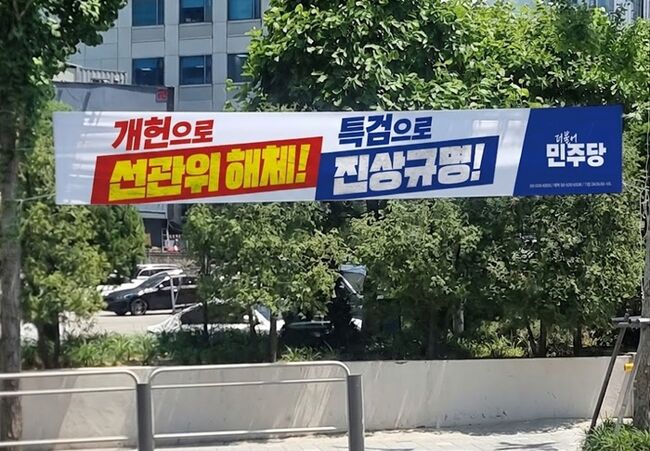 [Cho Yang-geon Column] The NEC: Facing a Fate of "Discarding the Dog After the Hunt"
Banner calling for the "dissolution of the NEC" posted by the Democratic Party. [AI-generated image]Banners calling for the "dissolution of the National Election Commission (NEC)" posted by the Democr
[Cho Yang-geon Column] The NEC: Facing a Fate of "Discarding the Dog After the Hunt"
Banner calling for the "dissolution of the NEC" posted by the Democratic Party. [AI-generated image]Banners calling for the "dissolution of the National Election Commission (NEC)" posted by the Democr
 [Photo] Evidence of Election Fraud Flooding U.S. Media… Trump Had 2.7 Million Votes Stolen
 [Video] U.S. Semiquincentennial Air Show... 'Art in the Sky' streaks across New York
 [Editorial Cartoon] A Draconian Law That Undermines Freedom of Expression

 List
List