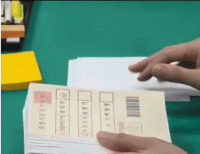
On April 20 (local time), the U.S. Navy monitors the Iranian-flagged vessel TUSCO (right) as it attempts to breach the U.S. maritime blockade. Shortly after, U.S. forces seize the TUSCO. [Photo=U.S. Navy]
Political columnist Jean Cummings pointed out on the 23rd that the U.S. Navy will continue its blockade of Iranian ports, citing a post on X (formerly Twitter) by U.S. Treasury Secretary Scott Bessent (below).
“Within days, the storage facilities on Kharg Island will be full, and Iran’s vulnerable oil wells will be shut down. Restricting Iran’s maritime trade directly targets the lifeline that is the regime’s primary source of revenue.”
This means the U.S. Department of the Treasury is systematically degrading the Tehran regime's ability to generate, move, and repatriate funds through "Economic Fury."
Secretary Bessent also stated, “Individuals or vessels facilitating illicit transactions risk exposure to U.S. sanctions. We continue to freeze funds stolen by corrupt leadership on behalf of the Iranian people.”
Furthermore, Jean Cummings is conveying the essence of this issue with commentary from Kim Jung-rak, CEO of Clay Tiles Malaysia (CTM).
Kim Jung-rak is known for his extensive field experience in the cement and specialty industrial materials sector, possessing an exceptional understanding of the actual supply structure and technical mechanisms of oil well cement.
According to CEO Kim, the current U.S. maritime blockade of Iran should be interpreted not as a mere military operation, but as structural pressure aimed at collapsing Iran's crude oil production base itself.
The following is a transcription of Jean Cummings' Facebook post, preserved as closely as possible.
The Deadly Mechanism of Maritime Blockade
Kharg Island is the key terminal responsible for approximately 90% of Iran’s oil exports. According to CEO Kim Jung-rak, due to limitations in storage capacity, if exports are blocked, the oil wells in the upstream oil fields will inevitably have to cease production.
In other words, the maritime blockade is not just about blocking ports, but an operation that forces the connected oil wells behind them into a shut-in state.
“Iran’s major oil fields, particularly in the Khuzestan region, such as Ahvaz, Marun, and Gachsaran, are representative cluster well areas.”
According to CEO Kim Jung-rak's explanation, the spacing between wells in these areas is very narrow, on the order of hundreds of meters, and they often share underground reservoirs. Furthermore, the geological structures are not favorable.
In such cluster wells, if the "oil well cement integrity" of one well is compromised, the resulting pressure transfer phenomenon creates a high risk of domino-like damage to other wells.
This is a point that the general public often overlooks. While it might seem simple to think, "Why not just stop production?" the reality of an oil field is far more complex.
The Most Critical Management Issue: Oil Well Cement
This is what CEO Kim Jung-rak particularly emphasized.
Shutting in an oil well does not simply mean closing a valve and leaving it unattended. The most crucial aspect is that the entire process of shutdown and restart is continuously monitored and maintained by world-class specialized companies, such as Schlumberger or Halliburton.
This is necessary to control risk factors such as pressure changes, cement integrity, and wellbore structural stability.
However, he notes that under the current circumstances, Iran is unable to utilize these specialized companies normally due to U.S. and European sanctions. This forces them to rely on Russian or Chinese companies, and he believes this creates a significant technical gap.
Specifically, he points out the anticipated impossibility of supplying the special additives required for mixing oil well cement slurry.
These include large quantities of special additives for Fluid Loss Control and Sour Environmental Durability. He explains that these are not merely general cement additives but essential specialty materials designed to withstand the extreme environments of oil wells, including pressure, fluid migration, sour environments, and long-term durability.
He further explains that if these materials cannot be secured in a timely manner due to the maritime blockade and sanctions, they will inevitably resort to mixing cement slurry in a makeshift manner, and will have to rely on temporary repairs and maintenance.
It is for this reason that he views the current maritime blockade as potentially a far greater disaster than mere economic sanctions. He explains that once a well is improperly shut down and does not receive proper cement maintenance and structural management, it will require significant time and money to recommission later, whether by surrendering or when the blockade is lifted.
He also adds that there is a high possibility of permanent damage occurring in more severe cases. He offers this explanation based on his lifelong experience in the cement field and his expertise in producing and supplying specialty oil well cement to oil field development, repair, and maintenance companies.
As very few people in Korea are directly involved in oil well cement, he is considered the sole expert in this field in Korea.
Therefore, his explanation is not mere speculation but reflects the practical insight of someone who understands oil field maintenance and the specialty cement supply chain. His commentary is considered highly important for broadening the perspective beyond viewing the Trump administration's "Operation Epic Fury" as simply bombing, destroying nuclear facilities, or a superficial operation for regime change, and instead, looking at it from a different angle as part of a larger U.S. strategy for energy hegemony over China.
CEO Kim emphasizes:
“One of the most significant repercussions of the U.S. maritime blockade of Iran is that oil production wells in the oil fields will be immediately shut down due to full storage facilities. If the pressure equilibrium within the wells is not maintained, blowouts or well collapses can occur.”
He further explains:
“Iran's offshore oil fields have likely been placed in a state of permanent abandonment due to Operation Economic Fury. The onshore oil fields, particularly in the Khuzestan region, such as Ahvaz, Marun, and Gachsaran, are representative of dense oil fields.
In these dense oil fields, the distance between wells is narrow, and they often share underground reservoirs. Therefore, when entering a shut-in phase, specialized management, maintenance, and repair personnel must continuously monitor the wells to prevent them from reaching their structural limits.
The most challenging to manage are mature fields. However, in the current state of conflict, management gaps are unavoidable, making it highly probable that these fields are at risk of being lost.”
Maritime Blockade is More Terrifying Than Bombing
A particularly important aspect of CEO Kim's commentary is that while global media primarily focuses on visible and sensational events like bombings or missile launches, they fail to adequately address the underlying, critical issues that are causing the real damage.
“Of course, the inability of Iran to export approximately $500 million worth of crude oil daily due to the maritime blockade is a significant blow. However, he believes there is a more serious problem: the potential complete loss of dense, mature oil fields due to inadequate management after being shut-in. In other words, there is a risk of Iran's medium- to long-term energy industry infrastructure collapsing.
This is not merely about a temporary decrease in exports. This is about the collapse of the industry's backbone. While explosion scenes may not be captured on media screens immediately, it could manifest years later as a more profound aftermath, with the question of 'Why is Iran's oil production capacity not recovering?'”
Furthermore, he points out that the maritime blockade not only halts crude oil exports but also disrupts Iran's food imports. In essence, it's a simultaneous blockade of both entry and exit.
It prevents foreign currency earnings by blocking exports and cuts off the inflow of essential supplies for survival by blocking imports. This is not simply military pressure, but a form of pressure that suffocates a nation's survival structure. Therefore, he analyzes that the maritime blockade, though less ostentatious than bombing, could be a far more terrifying disaster.
He explains that even amidst pervasive false reporting by Western media, President Trump's seemingly unfazed continuation of the blockade makes it understandable why he is often described as a fearsome and formidable individual. He emphasizes that the collapse of the production base, though invisible, can be far more fatal to Iran than visible bombings.
Ultimately, the core of his explanation is clear.
The U.S. maritime blockade of Iran does not stop at mere military control or blocking sea lanes. It is a structural and long-term pressure that completely cuts off Iran's crude oil exports, saturates storage facilities, and ultimately forces oil wells into a shut-in state.
Subsequently, wells that can no longer be maintained will naturally suffer permanent damage, and Iran will lose its production capacity itself. Unlike the temporary destruction caused by bombing, this strategy is silent but far more brutal, with a deeper and longer-lasting destructive power.
This represents a shift in the nature of warfare from "combat" to "system collapse," a quintessential example of 21st-century smart power. This operation perfectly aligns with the global strategy of a potential second Trump administration in 2025.
Upon taking office, President Trump first employed tariffs globally, realigning alliances. However, his true objective is to secure an absolute and permanent advantage for the United States in its hegemonic struggle with China.
This is a comprehensive operation that goes beyond mere military security, aiming to neutralize all threat factors, including Venezuela, Iran, and terrorist groups, and to draw countries linked to China into America's sphere of influence one by one.
The core pillar of this strategy is none other than energy hegemony, specifically crude oil hegemony.
Along with global economic hegemony, dollar hegemony, digital hegemony, cryptocurrency hegemony, and space hegemony, oil is a decisive leverage point through which the U.S. can exert overwhelming control. The moment Iran's production capacity is long-term crippled, China's energy lifeline will be critically hit.
As announced by Treasury Secretary Scott Bessent, blocking Iranian ports and imposing economic retribution will deliver a substantial blow to China's energy supply chain.
In the short term, China may be able to weather this with its strategic oil reserves and Russian oil, but in the long run, it will suffer severe damage due to the skyrocketing costs of manufacturing and military operations.
No matter how advanced weapons and manufacturing facilities China possesses, they become useless without oil. Factories will halt, military forces will become scrap metal, and the economy will be paralyzed.
This is the fastest and most effective way to cripple China. It is for the United States to seize control of China's crude oil supply chain.
President Trump's Operation Epic Fury is not merely about suppressing Iran. It is the prelude to completely subduing China and the decisive blow in the 21st-century hegemonic game.
The moment Iran's crude oil production effectively ceases, China will lose its strategic options, and Russia will also lose its energy leverage. North Korea will no longer be able to endure and will be forced down the path of self-destruction.
Regardless of where the Lee Jae-myung administration attempts to steer South Korea, the reason Trump is not rushing is precisely here.
South Korea's economy, with key industries such as semiconductors, automobiles, and batteries, is deeply reliant on the U.S. market, technology, and security umbrella. As long as the U.S. holds the "switches" for energy, supply chains, and alliances, no administration can escape fundamental limitations.
This serves as a stark mirror to the pro-China and pro-North Korea forces in South Korea, demonstrating the harsh realities of international politics that make it impossible for them to completely pull South Korea out of U.S. influence and transition it to a communist system.
As long as the United States, as a hegemonic power, holds the switches for energy, technology, markets, and security, South Korea is structurally incapable of escaping America's grasp.
Despite this, the forces that deceive the public by saying "The U.S. can do nothing" are simply ignorant and dangerously deceptive, fundamentally misjudging America's true strength. The U.S. will absolutely not stand idly by while South Korea becomes a communist dictatorship.
Peace Through Strength - Trump Doctrine Strategy
This is the essence of "Peace Through Strength" that Trump has pursued, and it is his doctrine strategy for managing the international order itself.
While perfect victory is not guaranteed in the nature of war, this strategy creates a fundamental imbalance that prevents China from ever threatening the United States and its allies again.
Realistically, China will not be rendered entirely powerless. However, Trump is accelerating efforts to bring China to a level where it can no longer threaten the U.S., and he will meticulously strive to achieve this controllable level through such pressure.
The possibility of Iran losing its oil fields appears very high at this moment. The resulting surge in oil prices could also create a backlash for U.S. shale and its allies. Furthermore, numerous variables cannot be ignored in the final, intense negotiation phase.
However, Trump will absolutely not stop this operation midway. His determination to fully realize the "zero oil exports from Iran" goal, as stated in NSPM-2, has already been sufficiently proven.
Even if the blockade is lifted, Iran will attempt restoration. However, Mr. Kim Jung-rak's prediction that "recovery of production capacity could be very difficult for several years" appears to be a highly probable scenario under the current circumstances.
The moment Iran's oil fields fall silent, the global order being reconfigured around the United States will draw much closer.
The media mocks President Trump as 'TACO' and dismisses him. However, CEO Kim Jung-rak strongly criticizes this.
He states, "The real strategy of Trump is to quietly kill the enemy by collapsing their system, rather than through visible bombings," and warns, "President Trump is a truly frightening person who turns words into actions. He should not be taken lightly."
◆ Jean Cummings
Political columnist. After working at Baltimore's Channel 13, she served as Editor-in-Chief of 'The Sunday Times' (1994-1996) and Business Director of 'The Korean Weekly' (1996-2000), before founding 'Asia Post' in 2000. She currently works as a backend analyst in political, diplomatic, and security affairs for a private company performing government contracts.

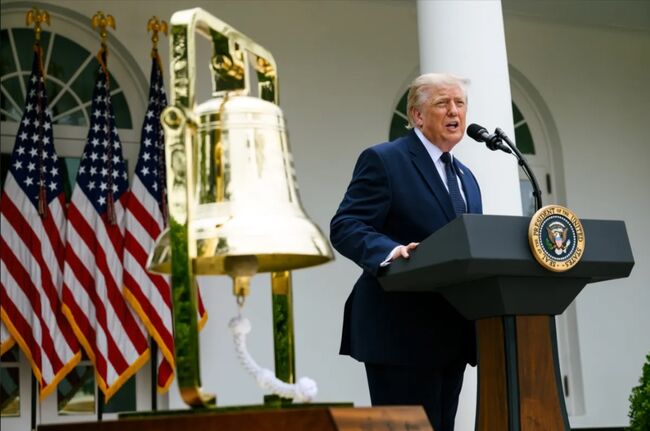 Trump pressures for rate cut again ahead of FOMC... "Should be the lowest in the world"
U.S. President Donald Trump. [Photo = The White House] U.S. President Donald Trump once again pressured the Federal Reserve, the U.S. central bank, to lower interest rates on the 27th (local time
Trump pressures for rate cut again ahead of FOMC... "Should be the lowest in the world"
U.S. President Donald Trump. [Photo = The White House] U.S. President Donald Trump once again pressured the Federal Reserve, the U.S. central bank, to lower interest rates on the 27th (local time
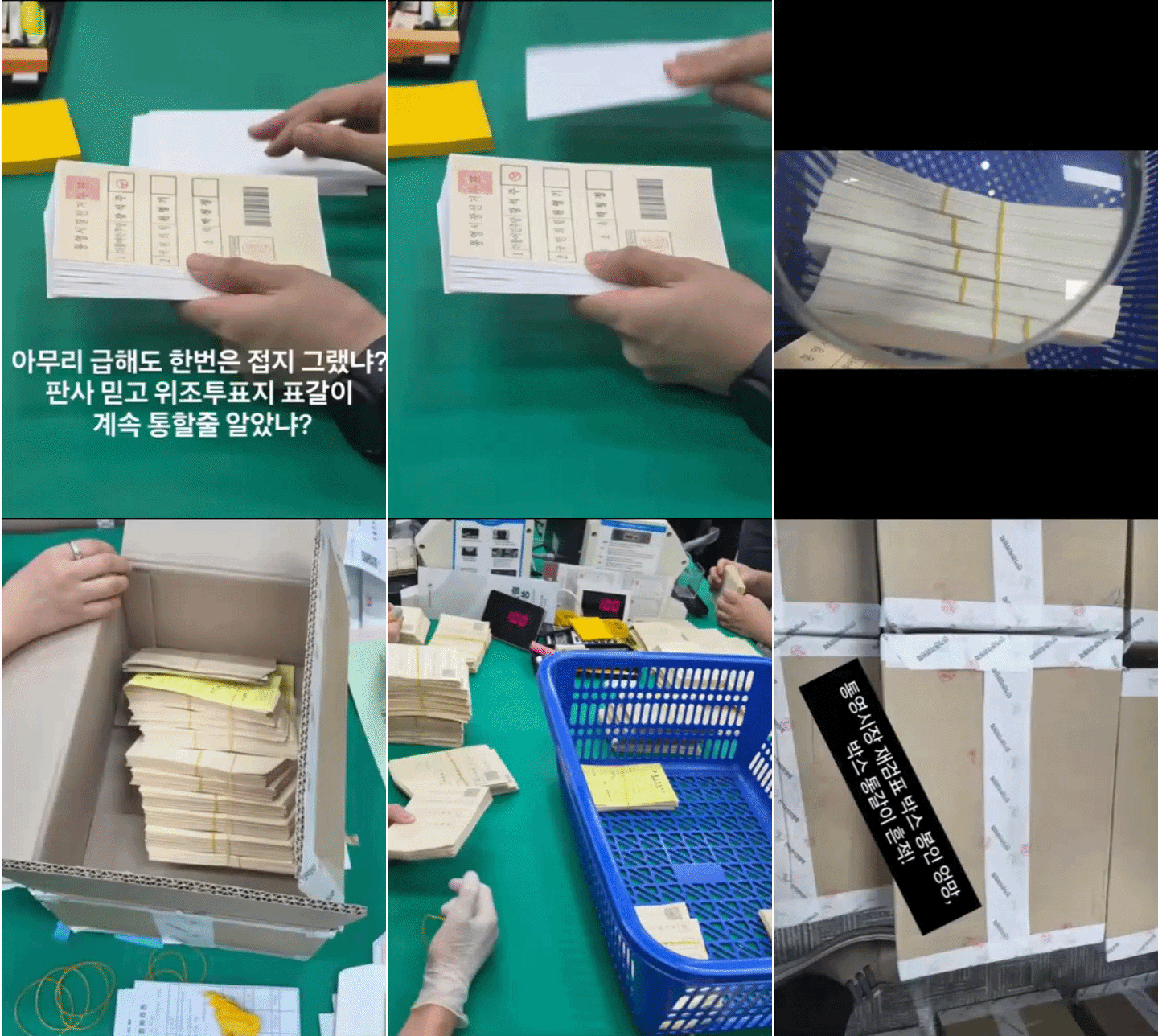 “Ignoring crisp ballots and damaged seals”… Tongyeong mayoral recount concludes with ‘no change in outcome,’ leaving suspicions and public outrage behind
Suspected counterfeit ballots discovered in Tongyeong [GIF from social media of Representative Hwang Kyo-ahn / Attorney Park Joo-hyun]During a recount of the Tongyeong mayoral election in South Gyeong
“Ignoring crisp ballots and damaged seals”… Tongyeong mayoral recount concludes with ‘no change in outcome,’ leaving suspicions and public outrage behind
Suspected counterfeit ballots discovered in Tongyeong [GIF from social media of Representative Hwang Kyo-ahn / Attorney Park Joo-hyun]During a recount of the Tongyeong mayoral election in South Gyeong
 President Yoon, regarding the first-instance ruling on the Public Official Election Act: “An excessive political verdict that distorts the facts… We will appeal immediately.”
The first-instance sentencing hearing for President Yoon Suk Yeol regarding violations of the Public Official Election Act is being broadcast live at Seoul Station on the 27th. [Photo=Yonhap News]Pres
President Yoon, regarding the first-instance ruling on the Public Official Election Act: “An excessive political verdict that distorts the facts… We will appeal immediately.”
The first-instance sentencing hearing for President Yoon Suk Yeol regarding violations of the Public Official Election Act is being broadcast live at Seoul Station on the 27th. [Photo=Yonhap News]Pres
 WSJ: "SK Hynix ADR Premium Is a Sign of AI Trading Overheat"
Advertisement for SK Hynix ADR listing in New York's Times Square [Reuters=Yonhap News file photo]The Wall Street Journal (WSJ) has pointed out that the price of SK Hynix’s American Depositary Recei
WSJ: "SK Hynix ADR Premium Is a Sign of AI Trading Overheat"
Advertisement for SK Hynix ADR listing in New York's Times Square [Reuters=Yonhap News file photo]The Wall Street Journal (WSJ) has pointed out that the price of SK Hynix’s American Depositary Recei
 'Godfather of Japanese Mystery Novels' Keigo Higashino Passes Away After Battle with Cancer at 68
Famous Japanese mystery novelist Keigo Higashino [AFP=Yonhap News]It has been belatedly reported that Keigo Higashino, the "godfather of Japanese mystery novels" and author of bestsellers such as "The
'Godfather of Japanese Mystery Novels' Keigo Higashino Passes Away After Battle with Cancer at 68
Famous Japanese mystery novelist Keigo Higashino [AFP=Yonhap News]It has been belatedly reported that Keigo Higashino, the "godfather of Japanese mystery novels" and author of bestsellers such as "The
 [Park Pil-kyu Security Column] To the Ignorant Trying to Clothe a Beast in Sheep's Clothing
Rep. Kim Byung-joo of the Democratic Party of Korea [Photo=Yonhap News]“The Air Force Academy doesn't teach you how to fly a plane!” “The Army, Navy, and Air Force academies are exactly the
[Park Pil-kyu Security Column] To the Ignorant Trying to Clothe a Beast in Sheep's Clothing
Rep. Kim Byung-joo of the Democratic Party of Korea [Photo=Yonhap News]“The Air Force Academy doesn't teach you how to fly a plane!” “The Army, Navy, and Air Force academies are exactly the
 [Issue Diagnosis] Two Effects of the Election Petition Review
 [Photo] Evidence of Election Fraud Flooding U.S. Media… Trump Had 2.7 Million Votes Stolen
 [Video] U.S. Semiquincentennial Air Show... 'Art in the Sky' streaks across New York
 [Editorial Cartoon] A Draconian Law That Undermines Freedom of Expression

 List
List