Lee Jae-myung claimed that reports on the ‘Daejang-dong suspicions’ were fabricated and pointed to a Dong-A Ilbo article that received an award in the 2023 News Coverage category, suggesting it should return the Korean Newspaper Award. The photo shows him leaving a venue after speaking at the Korea-Vietnam Business Forum held at a hotel in Hanoi, Vietnam, on the 23rd (local time). [Photo=Yonhap News]
To succeed as a capitalist in this world, one must know how to make the consuming public happy. Conversely, to succeed as a socialist, one must be adept at coercion. President Lee Jae-myung excels in both.
First, let's examine his capitalist talents. Capitalists invest their own money to create products that consumers desire, thereby maximizing utility and sales. What about Lee Jae-myung? He uses other people's money, specifically public funds, to win the favor of the masses. Is that the only difference? Since his tenure as Governor of Gyeonggi Province, President Lee has distributed disaster relief funds under various pretenses. Even after becoming president, his tendency to lavish funds under the guise of livelihood support has reached almost addictive levels.
What about his skills as a socialist? In terms of being skilled at coercion, Lee Jae-myung is outstanding. This was evident when he distributed the first round of basic disaster income during his time as governor of Gyeonggi. When the mayor of Bucheon suggested that it would be better to give 87 billion won to about 20,000 small business owners rather than 100,000 won to each of the 870,000 citizens of Bucheon, Lee immediately stated, “We will consider a plan to exclude Bucheon citizens from the payment.” He also aggressively dismissed the Korea Institute of Public Finance's findings that local currencies do not help stimulate local consumption, calling it "a deep-rooted evil that must be eradicated."
President Lee's 'Godfather'-esque Media Taming
In July 2018, SBS-TV's program "Unanswered Questions" aired an episode titled "Gangsters and Power – The Pattaya Murder, One Year Later." At the time, the program raised suspicions about the alleged ties between Governor Lee and Eun Soo-mi, then Mayor of Seongnam City, and organized crime. Lee then stated he would "watch," and at the same time, it was later revealed that he had contacted several executives at SBS.
There were also widespread rumors when the drama "The Uncanny Counter," which had been a massive success, breaking OCN's viewership record for the first time with over 10% viewership, suddenly replaced its main writer, Yeo Ji-na, with only four episodes left until its finale. This occurred after discussions arose suggesting that the character Mayor Shin Myung-hwi of the fictional city of Jungjin and the drama's settings and props were reminiscent of Seongnam City and Governor Lee.
Recently, SBS officially apologized to President Lee regarding the content of the "Unanswered Questions" broadcast in 2018, bowing its head and stating that the "gangster involvement theory was an error." This came after President Lee Jae-myung, on March 20th, through his personal social media, strongly criticized the past broadcast for severely damaging his image without clear evidence and demanded a sincere apology.
However, something is strange. The Blue House's basis for counterattacking is the Supreme Court ruling of March 12th. The Supreme Court upheld a one-year prison sentence suspended for two years for lawyer Jang Young-ha, who had raised suspicions of bribery between President Lee Jae-myung and gangsters. Yet, Lee Jae-myung and the Blue House are ignoring the fact that the Supreme Court's ruling differs in nature from what "Unanswered Questions" covered.
The Media Labor Union, SBS Branch, argued on the 20th in relation to this matter, "The broadcast did not simply report Mr. Jang's claims but confirmed and reported on details that emerged during the investigation of the victim and trial records of the 'Pattaya Murder Case' three years prior." In other words, the broadcast content and lawyer Jang's claims are separate issues.
Furthermore, the issues raised about the broadcast had already been legally and institutionally resolved. In January 2019, the court dismissed Lee Jae-myung's, then Governor of Gyeonggi Province, application for an injunction to prohibit the re-broadcasting and online distribution of the relevant program. The Korea Communications Standards Commission also concluded the following February that the broadcast did not violate 'objectivity' or 'defamation'.
Despite this, President Lee's side appears to be taking advantage of the situation. This time, he targeted a Dong-A Ilbo article that received the 2023 Korean Newspaper Association Award for its reporting on the 'Daejang-dong development suspicions,' attacking it as "not fact but a massive fabrication." He then smirked and said, "Wouldn't it be right to cancel and return the award, apologize, and correct the report now?" He even added, "This is because we must never again allow the history to be rewritten by presidential election manipulation by power institutions and the media." It feels like watching the movie 'The Godfather.'
Three Strategies Behind Lee Jae-myung's Media Offensive
At this point, one can't help but raise an eyebrow. The repeated attacks by President Lee on newspaper and broadcast reporting are difficult to dismiss as mere venting. It is plausible to infer that there is a strategic intention behind these actions, aimed at building sophisticated public relations and legal defense logic in preparation for upcoming judicial risks.
First, it is interpreted as an attempt to erase the 'stigma effect' while simultaneously shifting the narrative to 'victimhood.' For any politician, frames like 'gangster ties' or 'the mastermind behind Daejang-dong' are fatal elements that leave negative impressions on the public, regardless of legal guilt or innocence. If he can secure apologies or corrections from entities like SBS or Dong-A Ilbo regarding past allegations, it would allow him to frame those incidents as a "witch hunt without substance."
In subsequent legal proceedings, this strategy aims to strengthen the frame of "I am a victim of unconfirmed media reports and baseless rumors," while also attempting to portray the prosecution's basis for indictment as a "reckless investigation based on biased information."
Second, it could be a signal of 'presumption of innocence' directed at the judiciary. While trials are battles of legal arguments, a defendant's social reputation and circumstantial evidence also play significant roles. Pressuring the withdrawal of an award given for a report on Daejang-dong is bound to give third parties the impression that the premise of the case (accusations of primary responsibility) is faltering. In essence, by giving the impression to the court that "even the media is correcting the facts," it can weaken the certainty of guilt.
Third, it is about rallying supporters and reversing public opinion. Proactive requests for corrections and aggressive responses provide supporters with the justification that "our leader has been wronged by malicious media." This allows the upcoming trial to be framed not as a legal judgment but as political persecution. It is about securing a foothold in public opinion that can politically overcome even a negative verdict.
Ultimately, these actions are highly likely to be part of a meticulously calculated strategy of 'politicizing judicial risks.' This is because they can instill in the public the perception that issues, even if minor or subject to misunderstanding, have already been socially resolved.
After all, the public and voters do not read court rulings. Therefore, while politicians lead the legal professionals, blinded by political favors, to do their utmost in court, politicians can shape and inflame specific public opinion. The hidden objective may be to pre-script a 'narrative of innocence within public opinion' rather than to create courtroom evidence.
Former Editorial Writer, Munhwa Ilbo

 Trump pressures for rate cut again ahead of FOMC... "Should be the lowest in the world"
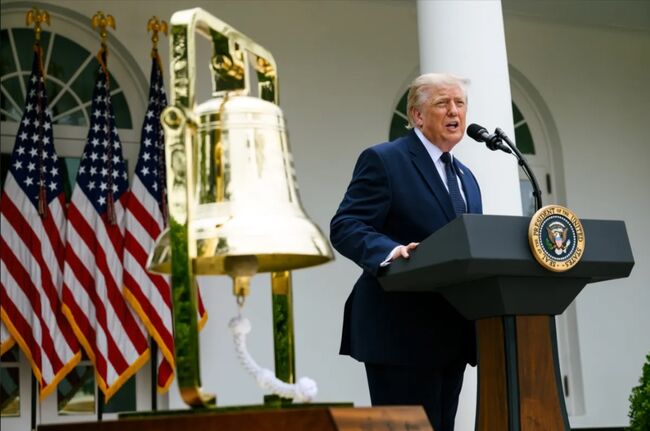
U.S. President Donald Trump. [Photo = The White House] U.S. President Donald Trump once again pressured the Federal Reserve, the U.S. central bank, to lower interest rates on the 27th (local time
Trump pressures for rate cut again ahead of FOMC... "Should be the lowest in the world"
U.S. President Donald Trump. [Photo = The White House] U.S. President Donald Trump once again pressured the Federal Reserve, the U.S. central bank, to lower interest rates on the 27th (local time
 “Ignoring crisp ballots and damaged seals”… Tongyeong mayoral recount concludes with ‘no change in outcome,’ leaving suspicions and public outrage behind
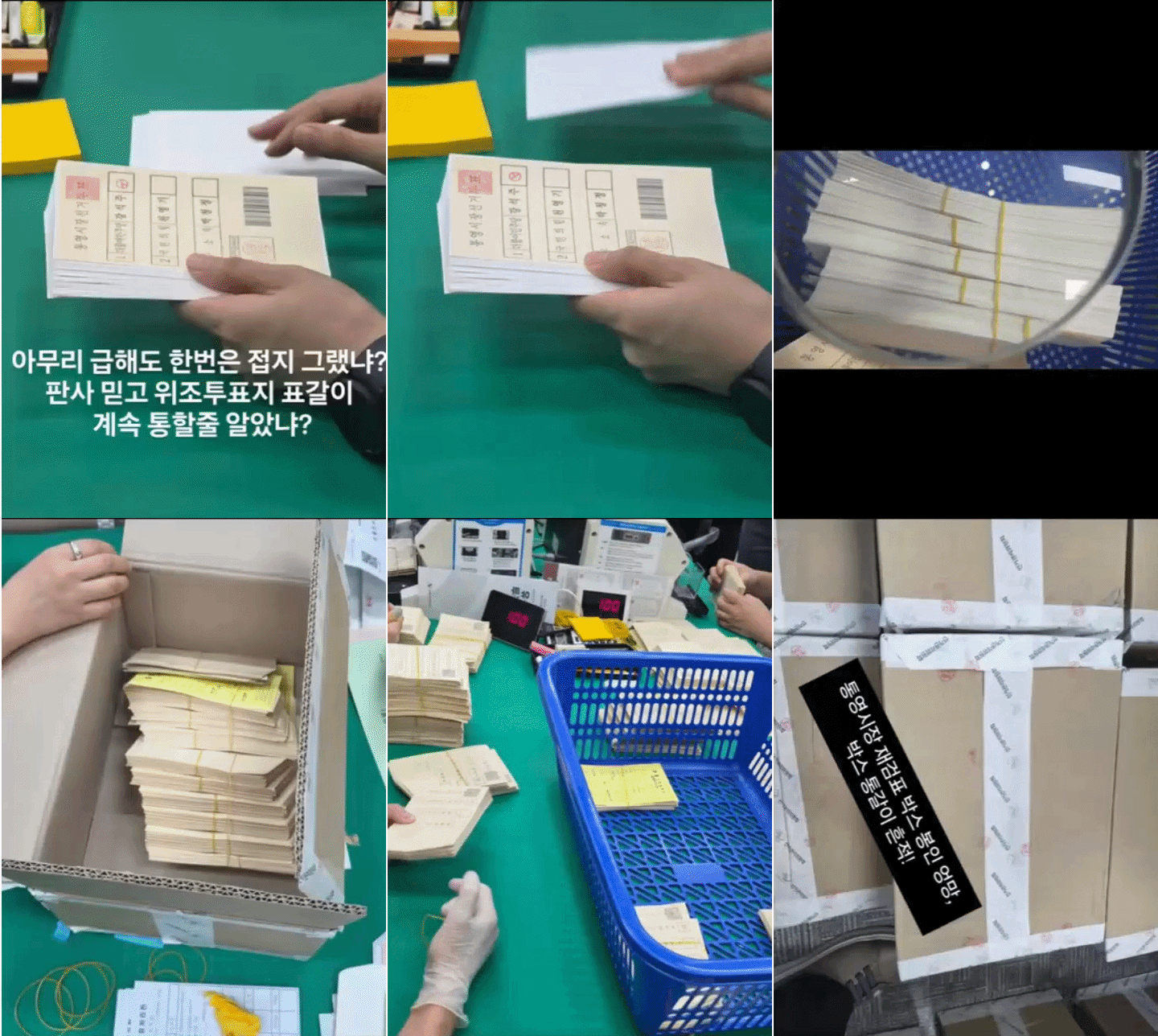
Suspected counterfeit ballots discovered in Tongyeong [GIF from social media of Representative Hwang Kyo-ahn / Attorney Park Joo-hyun]During a recount of the Tongyeong mayoral election in South Gyeong
“Ignoring crisp ballots and damaged seals”… Tongyeong mayoral recount concludes with ‘no change in outcome,’ leaving suspicions and public outrage behind
Suspected counterfeit ballots discovered in Tongyeong [GIF from social media of Representative Hwang Kyo-ahn / Attorney Park Joo-hyun]During a recount of the Tongyeong mayoral election in South Gyeong
 President Yoon, regarding the first-instance ruling on the Public Official Election Act: “An excessive political verdict that distorts the facts… We will appeal immediately.”
The first-instance sentencing hearing for President Yoon Suk Yeol regarding violations of the Public Official Election Act is being broadcast live at Seoul Station on the 27th. [Photo=Yonhap News]Pres
President Yoon, regarding the first-instance ruling on the Public Official Election Act: “An excessive political verdict that distorts the facts… We will appeal immediately.”
The first-instance sentencing hearing for President Yoon Suk Yeol regarding violations of the Public Official Election Act is being broadcast live at Seoul Station on the 27th. [Photo=Yonhap News]Pres
 WSJ: "SK Hynix ADR Premium Is a Sign of AI Trading Overheat"
Advertisement for SK Hynix ADR listing in New York's Times Square [Reuters=Yonhap News file photo]The Wall Street Journal (WSJ) has pointed out that the price of SK Hynix’s American Depositary Recei
WSJ: "SK Hynix ADR Premium Is a Sign of AI Trading Overheat"
Advertisement for SK Hynix ADR listing in New York's Times Square [Reuters=Yonhap News file photo]The Wall Street Journal (WSJ) has pointed out that the price of SK Hynix’s American Depositary Recei
 'Godfather of Japanese Mystery Novels' Keigo Higashino Passes Away After Battle with Cancer at 68
Famous Japanese mystery novelist Keigo Higashino [AFP=Yonhap News]It has been belatedly reported that Keigo Higashino, the "godfather of Japanese mystery novels" and author of bestsellers such as "The
'Godfather of Japanese Mystery Novels' Keigo Higashino Passes Away After Battle with Cancer at 68
Famous Japanese mystery novelist Keigo Higashino [AFP=Yonhap News]It has been belatedly reported that Keigo Higashino, the "godfather of Japanese mystery novels" and author of bestsellers such as "The
 [Park Pil-kyu Security Column] To the Ignorant Trying to Clothe a Beast in Sheep's Clothing
Rep. Kim Byung-joo of the Democratic Party of Korea [Photo=Yonhap News]“The Air Force Academy doesn't teach you how to fly a plane!” “The Army, Navy, and Air Force academies are exactly the
[Park Pil-kyu Security Column] To the Ignorant Trying to Clothe a Beast in Sheep's Clothing
Rep. Kim Byung-joo of the Democratic Party of Korea [Photo=Yonhap News]“The Air Force Academy doesn't teach you how to fly a plane!” “The Army, Navy, and Air Force academies are exactly the
 [Issue Diagnosis] Two Effects of the Election Petition Review
 [Photo] Evidence of Election Fraud Flooding U.S. Media… Trump Had 2.7 Million Votes Stolen
 [Video] U.S. Semiquincentennial Air Show... 'Art in the Sky' streaks across New York
 [Editorial Cartoon] A Draconian Law That Undermines Freedom of Expression

 List
List