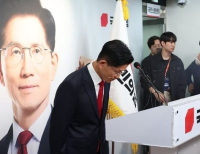
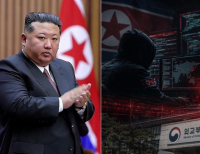
A post by the U.S. Trade Representative's Office criticizing South Korea's 'network usage fees' [Photo courtesy of USTR X account]
Attention is being drawn to the background as the U.S. administration under Donald Trump has once again expressed dissatisfaction by bringing up the issue of network usage fees, so-called "mang sayongryo," within South Korea.
In particular, attention is also being paid to the factual basis of the U.S. statement, which claims that "no country except South Korea imposes fees on internet service providers for traffic transmission."
However, regardless of the factual accuracy of the U.S. administration's claims, it is anticipated that the pressure from the United States regarding South Korea's digital regulations will intensify.
◇ U.S. Reiterates "Only Korea Has Network Usage Fees"... Digital Trade Issues Resurface
The Office of the United States Trade Representative (USTR) posted on X (formerly Twitter) on the 27th, stating, "No country in the world imposes network usage fees on its own Internet Service Providers for transmitting Internet traffic, except for South Korea."
This post was made as the USTR enumerated examples of "foreign trade barriers" faced by U.S. exporters.
The USTR wrote, "It's hard to believe how hard some countries try to block U.S. exports," and among the various examples introduced, it specifically pointed out South Korea's network usage fee issue.
In fact, the network usage fee issue has been one of South Korea's representative "digital regulatory barriers" that the U.S. has pointed out on several occasions.
Network usage fees are a contentious issue regarding whether content providers (CPs) like Netflix and YouTube should pay an appropriate fee to Internet Service Providers (ISPs) for generating large amounts of traffic through their networks.
 Netflix logo [Photo courtesy of Netflix app]
The domestic telecommunications industry has argued since around 2016 that foreign Big Tech companies should also share the costs of network investment and maintenance.
This is because the proportion of traffic from large global CPs has increased due to the surge in video streaming and mobile content consumption.
In particular, the telecommunications industry's view is that while domestic companies like Naver and Kakao [035720] pay network usage fees based on traffic volume and rates, some U.S. Big Tech companies pay relatively lower fees or virtually none, which is considered unfair.
On the other hand, the U.S. government has reportedly expressed its stance since around 2018 that the network usage fee issue could impose an additional burden on U.S. content and platform companies such as Netflix, Google, and Meta.
The U.S. content provider industry has also argued that charging CPs separately for network usage, in addition to users paying internet fees to telecommunication companies, constitutes double charging and undermines internet openness.
In South Korea, the network usage fee issue has emerged as a domestic and international trade issue, spurred by the network usage fee lawsuit between SK Broadband and Netflix, and the controversy surrounding Twitch's withdrawal from the Korean market.
As such, the domestic telecommunications industry advocates for "fair cost sharing," while the U.S. government and global platform industry emphasize "concerns about discriminatory regulations and trade barriers," and the two sides' positions remain difficult to reconcile.
◇ Controversy over "Only in Korea" Claim... EU Also Discussing "Fair Contribution"
The USTR's phrase "except for South Korea" has also drawn criticism for being controversial.
The domestic ICT industry argues that "the U.S. claim that network usage fees exist only in Korea is not true."
It states that U.S. Big Tech companies do pay network usage fees in accordance with the circumstances of each country, and they are often applied at relatively lower rates than those for domestic companies.
Furthermore, the issue of network usage fees or similar cost-sharing for network usage is not a matter discussed only in South Korea.
In the European Union (EU), discussions on "fair contribution," which posits that large platforms should share in network investment costs, have already taken place.
Discussions on related legislation have also occurred within the governments of France, Italy, and Spain.
However, South Korea is considered a prime example where related bills have been introduced in the National Assembly, and actual disputes between telecommunication companies and global CPs have arisen, making this issue a substantive point of contention.
 Google logo [AP=Yonhap News]
Indeed, in its National Trade Estimate (NTE) report released on the 31st of last month, the USTR identified South Korea's network usage fee issue as one of the barriers in the services sector.
The report stated at the time, "Since 2021, numerous bills have been introduced in the National Assembly requiring foreign content providers to pay network usage fees to Korean Internet Service Providers."
It also argued that because some Korean ISPs are also content providers, fees paid by U.S. CPs could benefit Korean competitors.
Considering these circumstances, some interpret the USTR's claim that "only Korea is unique" not as an objective fact, but rather as an indication that "South Korea is the case that is most strongly trying to institutionalize it."
◇ Government States "No Discrimination Based on Nationality" ... Concerns Over Increased U.S. Digital Pressure
The government maintains that its laws and policies related to digital services, such as network usage fees and online platform regulations, are not intended to discriminate against companies of any particular nationality.
However, the industry believes that as the USTR has highlighted the Korean case as a major trade barrier beyond the content of its annual report, digital sector pressure in trade negotiations with the U.S. could intensify.
This is because, with the growing share of U.S. Big Tech in the domestic digital market, issues related to network usage fees, platform regulations, and the export of precise domestic maps are all directly linked to the interests of U.S. companies.
The domestic telecommunications industry maintains its position that fair cost sharing is necessary, arguing that large global CPs generate enormous traffic but are reluctant to bear the costs of network investment.
Conversely, the U.S. Big Tech industry and the Trump administration view South Korea's digital regulations as potentially disadvantageous to U.S. companies.
An industry official commented, "The current network usage fee issue seems to have moved beyond a simple cost-sharing problem between domestic telecommunication companies and U.S. platforms," adding, "Given the sharply conflicting interests, it is difficult to resolve easily, and it is likely that negotiations will continue on parallel lines for a long time."

 [Statement by the Seo-beo-kka Korea Military Academy Save-the-Nation Comrades Association] ㉛ Recount the Votes Publicly, as the Previous Recount Concealed Election Fraud
Tongyeong Mayoral Election Recount [Photo=Yonhap News]South Korea's liberal democracy is dying. The National Election Commission (NEC) and the judiciary, which have plummeted into criminal syndicates
[Statement by the Seo-beo-kka Korea Military Academy Save-the-Nation Comrades Association] ㉛ Recount the Votes Publicly, as the Previous Recount Concealed Election Fraud
Tongyeong Mayoral Election Recount [Photo=Yonhap News]South Korea's liberal democracy is dying. The National Election Commission (NEC) and the judiciary, which have plummeted into criminal syndicates
 What is the significance of the "Trump 2028" red hats that keep making a comeback?
It is noteworthy that President Donald Trump is "intentionally" fueling controversy over whether he can actually run in the 2028 presidential election, even though it is "highly likely he is seriously
What is the significance of the "Trump 2028" red hats that keep making a comeback?
It is noteworthy that President Donald Trump is "intentionally" fueling controversy over whether he can actually run in the 2028 presidential election, even though it is "highly likely he is seriously
 Jin Cummings: “North Korea says it will increase the number of spies, so what is the government doing?”
U.S. political columnist Gene Cummings has publicly questioned the South Korean government, asking, "North Korea is declaring that it will increase its number of spies, so what is the South Kore
Jin Cummings: “North Korea says it will increase the number of spies, so what is the government doing?”
U.S. political columnist Gene Cummings has publicly questioned the South Korean government, asking, "North Korea is declaring that it will increase its number of spies, so what is the South Kore
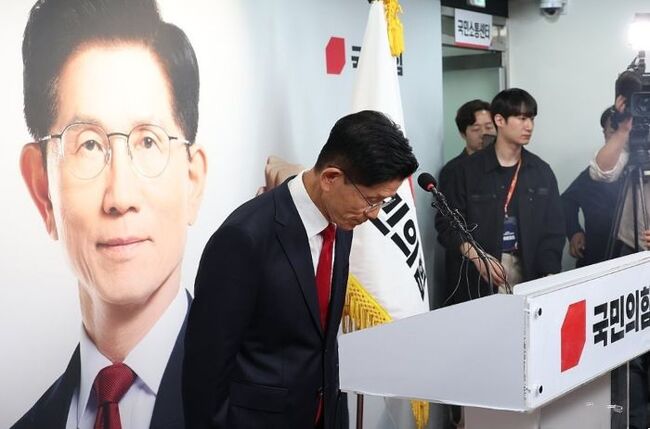 “Too little, too late?…” Kim Moon-soo, who previously conceded his presidential election defeat, now demands a special counsel investigation into ‘allegations of election fraud in the 2025 presidential election’
People Power Party presidential candidate Kim Moon-soo concedes defeat during a press conference at the party headquarters in Yeouido, Seoul, on June 4, 2025. [Joint Press Corps]As allegations emerge
“Too little, too late?…” Kim Moon-soo, who previously conceded his presidential election defeat, now demands a special counsel investigation into ‘allegations of election fraud in the 2025 presidential election’
People Power Party presidential candidate Kim Moon-soo concedes defeat during a press conference at the party headquarters in Yeouido, Seoul, on June 4, 2025. [Joint Press Corps]As allegations emerge
 Stock Market Crash 'Black Tuesday'… KOSPI down 10.8%, KOSDAQ down 7.7%
The KOSPI fell by more than 5% in early trading on the 28th, triggering a sell-side sidecar.On the 28th, the KOSPI plunged by more than 10%.Due to the sharp decline, a sell-side sidecar—a temporary
Stock Market Crash 'Black Tuesday'… KOSPI down 10.8%, KOSDAQ down 7.7%
The KOSPI fell by more than 5% in early trading on the 28th, triggering a sell-side sidecar.On the 28th, the KOSPI plunged by more than 10%.Due to the sharp decline, a sell-side sidecar—a temporary
 [World Heritage Committee] 25 New World Heritage Sites Inscribed in Busan… South Korea Successfully Expands 'Getbol' Listing
The Chairperson of the World Heritage Committee speaks at the plenary session of the 48th session of the World Heritage Committee, held at BEXCO in Busan on the 20th. [Photo: Yonhap News]A total of 25
[World Heritage Committee] 25 New World Heritage Sites Inscribed in Busan… South Korea Successfully Expands 'Getbol' Listing
The Chairperson of the World Heritage Committee speaks at the plenary session of the 48th session of the World Heritage Committee, held at BEXCO in Busan on the 20th. [Photo: Yonhap News]A total of 25
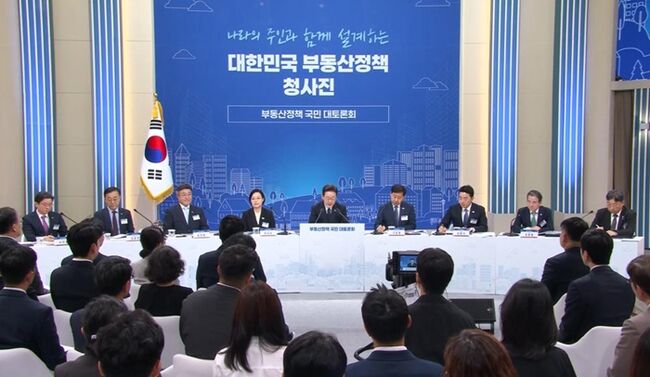 [Liberal Democratic Party Statement] Calling it a Grand Real Estate Debate… It Was Nothing More Than a Private Party Among Themselves
The 'National Grand Debate on Real Estate Policy' held on July 23rd and 27th. [Photo=Yonhap News]The 'National Grand Debate on Real Estate Policy,' hosted by the Lee Jae-myung administration under the
[Liberal Democratic Party Statement] Calling it a Grand Real Estate Debate… It Was Nothing More Than a Private Party Among Themselves
The 'National Grand Debate on Real Estate Policy' held on July 23rd and 27th. [Photo=Yonhap News]The 'National Grand Debate on Real Estate Policy,' hosted by the Lee Jae-myung administration under the
 [Photo] Evidence of Election Fraud Flooding U.S. Media… Trump Had 2.7 Million Votes Stolen
 [Video] U.S. Semiquincentennial Air Show... 'Art in the Sky' streaks across New York
 [Editorial Cartoon] A Draconian Law That Undermines Freedom of Expression

 List
List