 The United States and Israel simultaneously attacked major Iranian cities including the capital Tehran, Qom, Karaj, and Qeshm early on February 28 (local time). The US Department of Defense named this operation ‘EPIC FURY’. [Reuters=Yonhap News]The war, which began with airstrikes by the United States and Israel on Iran, has led to the elimination of numerous high-ranking Iranian leaders due to the overwhelming military might of the United States, and the near annihilation of military infrastructure such as air defense systems, air force, navy, missile bases, and drone bases.
While ‘Epic Fury’ can be read as ‘Magnificent Rage,’ it signifies an unprecedented explosion of anger that has been building between the United States and Israel for the past 47 years.
Amidst the war, Trump has postponed his visit to China, originally scheduled for late March, and is set to visit Beijing on May 14 and 15 to meet with Xi Jinping.
This visit is expected to reflect the altered international order and the respective positions of the countries following the recent arrest of Maduro in Venezuela and the war in Iran, making its outcome highly anticipated.
The summit in May is likely to be a fierce strategic battle where the United States projects its strong hegemonic will even while conducting the war, and China defends its economic interests while attempting to prevent cracks in the totalitarian bloc.
Iran's Strategic Failures
Zineb Riboua, a fellow at the Hudson Institute, a US think tank, published an article on January 12, about a month and a half before the outbreak of the war with Iran, titled "Seven Strategic Failures That Will End Khamenei's Rule." Her article accurately predicted the impending events.
She analyzes that the Islamic Republic of Iran is heading towards collapse not merely due to temporary protests, but due to the following fundamental strategic misjudgments within the regime.
① Ruin of the 'Axis of Resistance' Strategy: The strategy of expanding influence in the Middle East by utilizing proxy forces such as Hezbollah, Hamas, and the Houthis has backfired, placing Iran at the forefront of international confrontation, depleting its national finances, and creating a liability that has fueled resentment within the Arab world.
② Misjudgment of the Abraham Accords: Iran mistakenly believed that public opinion among 'Arab masses' would prevent the normalization of relations between Arab countries and Israel. However, Arab nations viewed Iran as a greater threat than Israel.
③ Excessive Reliance on Russia and China: Iran believed that its 'Look to the East' policy would provide an economic and security umbrella from China and Russia. However, China and Russia treated Iran not as a strategic partner but as a subordinate arms supplier.
④ Erosion of Ideological Core: The 'Woman, Life, Freedom' movement is not merely a riot but an indicator demonstrating that the religious and revolutionary values of the current regime no longer resonate with young Iranians.
⑤ Economic Collapse and the Contradiction of 'Bonyads': The Iranian economy is structured like a mafia, dominated by the Islamic Revolutionary Guard Corps (IRGC) and religious foundations known as 'Bonyads.' The prioritization of ideological purity has resulted in chronic inflation and poverty, leading even the impoverished ('mustadafin') to turn away from the regime.
⑥ Crisis of Leadership Succession: The absence of a clear and legitimate successor to lead after Khamenei's demise carries a high risk of regime fragmentation or violent power transition due to the power struggle between the Revolutionary Guard and established clerical groups.
⑦ Collapse of the Barrier of Fear: Despite mass executions and brutal suppression, the Iranian people are shedding their fear of the regime. Riboua explains that once the populace overcomes their fear of the state, they enter an 'apocalyptic phase.'
The 'Illusion of Peace' Has Ended, and the 'Age of Power' Has Returned
When the Soviet Union collapsed in 1990, the world believed an era of free trade without conflict had begun. However, 30 years later, it has become clear that this expectation was an illusion. Instead of false peace and unattainable ideals, we have witnessed the harsh principle of international politics: the survival of the fittest.
Nations must now pursue a path of becoming rich and strong (富國强兵), not just by making money, but by possessing the power to defend themselves.
The United States' misjudgments after the collapse of the Soviet Union were painful. The failure to deter North Korea's nuclear program and the withdrawal from Afghanistan cracked the US-led order. In particular, allowing China into the World Trade Organization (WTO) in 2001 ultimately proved to be like giving wings to a tiger.
Contrary to Western expectations, China revealed its true colors, challenging US hegemony as soon as it gained strength. Now, in 2026, we stand at the epicenter of this colossal clash.
The Stranding of 'China Dream': When Energy Runs Out, the Road Ends
'Belt and Road Initiative,' aimed at expanding China's influence by building infrastructure worldwide, has now become a massive debt burden. This is due to the United States' sophisticated resource blockade strategy and attacks on China's allied nations.
While the United States has achieved energy self-sufficiency through the shale revolution, it is relentlessly pressuring China's lifeline: its energy supply routes. Having secured key minerals in Panama and Greenland, the US has prepared to cut off all supply routes to China in case of emergency. Roads without oil are nothing but ruins.
China is estimated to have spent trillions of dollars to date on the Belt and Road Initiative, the "Chōhan War" (an allusion to the ancient Chinese war), capital flight abroad, and internal corruption. However, recouping these investments appears difficult. China's version of globalization is currently facing its greatest crisis.
The Trump 2.0 Era: Economic Bombs in the Name of Tariffs
Trump's 'America First' policy, as he returns to the presidency for the 47th term after serving the 45th, has become even more stringent. Tariffs are no longer just taxes but have become weapons to distinguish between allies and enemies. By raising tariff barriers, the US is dismantling the 'world's factory' system of China.
Supply chain criteria have also changed. Previously, the lowest cost was paramount, but now, the safety and reliability of a country have become the top priority. Consequently, companies are rapidly moving out of China to destinations like India, Vietnam, and Mexico.
This massive shift, which is dividing the global economy into US-centric and China-centric blocs, sends a powerful warning to South Korea, an export-driven nation, that it cannot survive with its current approach.
The 'New War' Created by the Technological Gap
2026 is a year of significant and rapid change that is reshaping the global power landscape. The United States is first consolidating its periphery, including Venezuela and Iran, to destabilize the core of China. Furthermore, instead of the talkative but inactive UN, it is creating new alliances based on practical action, such as establishing the Peace Commission and FORGE (Forum on Resource Governance and Engagement), an alliance for critical minerals.
Most notably, the widening gap in scientific and military technology is evident. In modern warfare dominated by AI and drones, the limitations of Chinese technology are becoming apparent. In this New War era, where advanced technology determines victory or defeat, the technological gap with the United States has become an insurmountable wall for China.
Palantir CTO's Book 'Mobilize'
'Mobilize: War on the Rocks' by Shyam Shankar delivers the message that the nature of modern warfare is changing, and for democracies to win the technological competition against authoritarian states, their defense systems must be constantly updated.
① Software-Defined Warfare: Shankar argues that the outcome of modern warfare is no longer determined by the quantity of hardware like tanks and aircraft, but by the speed of software updates that incorporate battlefield feedback.
② Collapse of Traditional Weapon Acquisition Procedures: He criticizes the inefficient structure of traditional defense department weapon procurement processes, which take decades to complete. He emphasizes the need for a defense procurement system centered on 'Minimum Viable Products (MVPs)' that are functional now and can be improved weekly, rather than waiting for a perfect weapon to be completed in ten years.
③ Military Application of Civilian Technology (Dual-Use Technology): Emphasizing the synergy between Silicon Valley and the Pentagon, he argues for the establishment of an 'industrial ecosystem' that can immediately integrate proven civilian technologies such as AI, big data, and autonomous driving into defense systems.
④ Adaptive Defense Industrial Base: He stresses the importance of a flexible defense industrial base capable of optimizing processes through software and instantly reconfiguring production lines when necessary.
⑤ Changes in Human Resources and Leadership: Commanders must accurately understand the limitations and potential of AI and data, and coding and data analysis must become as crucial military competencies as marksmanship.
Our Survival Strategy: The Decision of 'Peace Through America, Strength Through America' (安美經美)
The time when hedging bets between the US and China was feasible is rapidly coming to an end. Trying to play both sides will lead to abandonment by both. Can South Korea, based on its liberal democratic ideology, align with any country other than the United States, which possesses the strongest economic and military power?
The ROK-US alliance must be further solidified as a values-based alliance, and we must possess overwhelming power, including the consideration of independent nuclear armament, to completely neutralize the North Korean nuclear threat.
Energy security is essential for national survival. Realistically, South Korea must join an energy alliance centered around the United States, an energy self-sufficient nation, to secure a stable energy supply chain.
The Opportunity for Korean Peninsula Unification Arrives for the Prepared
History repeats itself. The strength of the United States that brought down the Soviet Union in the 1980s is reappearing in a more powerful form in 2026. The weakening of China and Russia signifies the isolation and collapse of the North Korean regime. This also means that the most certain 'opportunity for Korean Peninsula unification' in our thousands of years of history is approaching.
International order is driven solely by the prioritization of national interests and the power to enforce them. We must pave the way for the future of a great unified Korea based on a strong ROK-US alliance. Crisis becomes opportunity only for those who are prepared, and now is the time for that decision.
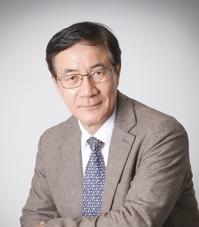
◆ Dr. Shin Dong-choon
Ph.D. in Public Administration, President of the Global Aerospace Industry Association, Representative of the National Coalition for Freedom and Unification. After passing the 21st Higher Civil Service Examination, he has engaged in active pursuits including public service, CEO roles, university professorships, media contributions, authorship, and serving as the President of the Global Aerospace Industry Association.

 Iranian Foreign Ministry: "Continuing Message Exchanges with the U.S. and Activities of Mediating Countries"
Esmaeil Baghaei, Spokesperson for the Iranian Ministry of Foreign Affairs [Xinhua, Yonhap News file photo]Esmaeil Baghaei, spokesperson for the Iranian Ministry of Foreign Affairs, stated on the 26th
Iranian Foreign Ministry: "Continuing Message Exchanges with the U.S. and Activities of Mediating Countries"
Esmaeil Baghaei, Spokesperson for the Iranian Ministry of Foreign Affairs [Xinhua, Yonhap News file photo]Esmaeil Baghaei, spokesperson for the Iranian Ministry of Foreign Affairs, stated on the 26th
 President Yoon: "Do You Think You Are Safe from the Special Counsel?"... Final Statement Video Released
President Yoon Suk Yeol rebuking the special prosecutor on the 24th. [Court video / @birds_justice X account subtitle GIF] A video of President Yoon Suk Yeol's closing statement at his trial rega
President Yoon: "Do You Think You Are Safe from the Special Counsel?"... Final Statement Video Released
President Yoon Suk Yeol rebuking the special prosecutor on the 24th. [Court video / @birds_justice X account subtitle GIF] A video of President Yoon Suk Yeol's closing statement at his trial rega
 President Yoon, regarding the first-instance ruling on the Public Official Election Act: “An excessive political verdict that distorts the facts… We will appeal immediately.”
The first-instance sentencing hearing for President Yoon Suk Yeol regarding violations of the Public Official Election Act is being broadcast live at Seoul Station on the 27th. [Photo=Yonhap News]Pres
President Yoon, regarding the first-instance ruling on the Public Official Election Act: “An excessive political verdict that distorts the facts… We will appeal immediately.”
The first-instance sentencing hearing for President Yoon Suk Yeol regarding violations of the Public Official Election Act is being broadcast live at Seoul Station on the 27th. [Photo=Yonhap News]Pres
 WSJ: "SK Hynix ADR Premium Is a Sign of AI Trading Overheat"
Advertisement for SK Hynix ADR listing in New York's Times Square [Reuters=Yonhap News file photo]The Wall Street Journal (WSJ) has pointed out that the price of SK Hynix’s American Depositary Recei
WSJ: "SK Hynix ADR Premium Is a Sign of AI Trading Overheat"
Advertisement for SK Hynix ADR listing in New York's Times Square [Reuters=Yonhap News file photo]The Wall Street Journal (WSJ) has pointed out that the price of SK Hynix’s American Depositary Recei
 'Godfather of Japanese Mystery Novels' Keigo Higashino Passes Away After Battle with Cancer at 68
Famous Japanese mystery novelist Keigo Higashino [AFP=Yonhap News]It has been belatedly reported that Keigo Higashino, the "godfather of Japanese mystery novels" and author of bestsellers such as "The
'Godfather of Japanese Mystery Novels' Keigo Higashino Passes Away After Battle with Cancer at 68
Famous Japanese mystery novelist Keigo Higashino [AFP=Yonhap News]It has been belatedly reported that Keigo Higashino, the "godfather of Japanese mystery novels" and author of bestsellers such as "The
 [Park Pil-kyu Security Column] To the Ignorant Trying to Clothe a Beast in Sheep's Clothing
Rep. Kim Byung-joo of the Democratic Party of Korea [Photo=Yonhap News]“The Air Force Academy doesn't teach you how to fly a plane!” “The Army, Navy, and Air Force academies are exactly the
[Park Pil-kyu Security Column] To the Ignorant Trying to Clothe a Beast in Sheep's Clothing
Rep. Kim Byung-joo of the Democratic Party of Korea [Photo=Yonhap News]“The Air Force Academy doesn't teach you how to fly a plane!” “The Army, Navy, and Air Force academies are exactly the
 [Issue Diagnosis] Two Effects of the Election Petition Review
 [Photo] Evidence of Election Fraud Flooding U.S. Media… Trump Had 2.7 Million Votes Stolen
 [Video] U.S. Semiquincentennial Air Show... 'Art in the Sky' streaks across New York
 [Editorial Cartoon] A Draconian Law That Undermines Freedom of Expression

 List
List









