This image symbolically represents the flow of AI funds spreading from semiconductors to power, energy, and supply chain industries by synthesizing images of a digital globe, semiconductor chips, power grids, and shipyards. [Photo: Combined by Hanmi Ilbo]
This week's trend is named "From Technology to Foundation."
Global capital did not simply move to reduce risky assets this week.
Despite the tensions in the Strait of Hormuz and the burden of rising oil prices, the market did not sell all assets in the same direction. Instead, capital chose where to go amidst the uncertainty.
The targets were AI infrastructure, semiconductors, power, energy, and shipbuilding supply chains.
The nature of capital movement has changed from simply being categorized as "tech stocks." The market has begun to look not only at companies creating AI but also at the foundational industries that enable AI.
This week's Capital Rotation Radar has one question:
Where did the capital move?
The answer lies in the foundational industries supporting AI.
In the past, the focus of the AI rally was on models and platforms. The key was who could create better services and who could secure more users.
However, this week, the market has delved a step further.
It has begun to reflect in prices the fact that AI requires chips to run, chips require power, and stable power supply necessitates energy and infrastructure.
Three structures were confirmed in this week's capital flow:
First, semiconductors remained at the center of capital circulation.
AI server demand is not just about computational chips. It involves high-bandwidth memory, storage, packaging, networking, and power management components. The expansion of capital expenditure by Big Tech directly translates into demand for semiconductors and memory. This is why Samsung Electronics and SK Hynix in the Korean market are seen not just as large-cap stocks but as core components of the AI supply chain.
Second, oil prices and electricity have begun to be linked on the same axis.
In the past, falling oil prices were considered a favorable variable for cyclical stocks like airlines, transportation, and chemicals. However, in the AI era, it's different. Data centers consume enormous amounts of electricity. Power prices and energy costs are directly tied to the cost structure of Big Tech. Oil and energy are no longer external variables to technology stocks but internal cost variables.
Third, shipbuilding and supply chains have re-emerged as strategic industries.
The discussion about restoring US shipbuilding capacity is giving a new interpretation to the Korean shipbuilding industry. Shipbuilding is not an industry that can be built in a short period. It requires the accumulation of design, equipment, skilled labor, inspection/certification, and delivery management. If the US is to reconsider its shipbuilding capabilities in terms of security and supply chain reorganization, the Korean shipbuilding industry could be re-evaluated not as a mere cyclical industry but as part of an allied supply chain.
Therefore, this week's trend is named "From Technology to Foundation."
The market has not just looked at AI as a technology. It has begun to look at the physical foundation that supports that technology. Chips, power, energy, shipbuilding, logistics, and data centers are being connected into a single investment map.
This week's market conclusion can be summarized as follows:
"AI began with the language of technology, but capital has started moving in the language of foundational industries."
Next week's checkpoints are threefold:
First, whether oil prices will once again shake capital circulation. If oil prices remain at high levels, energy stocks may hold up, but the cost burden for consumption and manufacturing may increase.
Second, whether AI infrastructure demand will spread to power and data center related stocks. We need to see if the capital that started with semiconductors will extend to power equipment, cooling systems, cables, and transformers.
Third, whether the re-evaluation of the shipbuilding industry will translate into actual orders and policy news. Expectations alone are not enough. The key is whether the US supply chain discussions will materialize into orders, collaborations, and institutional support.
※ This article is an article-style commentary on market trends, not investment advice. Actual stock prices and capital flows may vary depending on exchange rates, oil prices, geopolitical variables, corporate earnings, and policy changes.

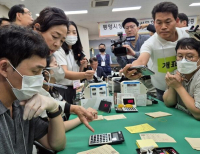
 [Statement by the Seobeokka KMA Patriots Association] ㉛ Recount the ballots openly, as the previous recount covered up election fraud
Recount of the Tongyeong mayoral election [Photo=Yonhap News]South Korea's liberal democracy is dying. The National Election Commission (NEC), which has degraded into a criminal organization through t
[Statement by the Seobeokka KMA Patriots Association] ㉛ Recount the ballots openly, as the previous recount covered up election fraud
Recount of the Tongyeong mayoral election [Photo=Yonhap News]South Korea's liberal democracy is dying. The National Election Commission (NEC), which has degraded into a criminal organization through t
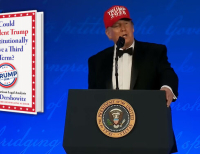
 What is the significance of the "Trump 2028" red hat that keeps reappearing?
It is noteworthy that while it is "highly likely" that President Donald Trump is "seriously considering" a run for the presidency in 2028, he is also "deliberately" fueling speculation regarding wheth
What is the significance of the "Trump 2028" red hat that keeps reappearing?
It is noteworthy that while it is "highly likely" that President Donald Trump is "seriously considering" a run for the presidency in 2028, he is also "deliberately" fueling speculation regarding wheth
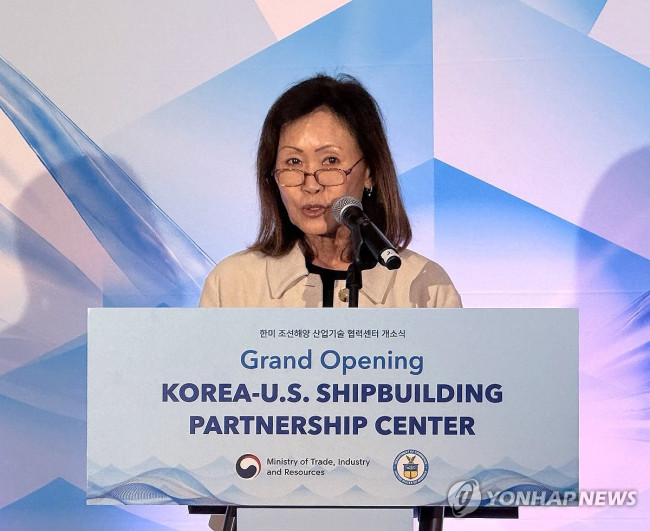 First U.S. Ambassador of Trump's Second Term to Arrive This Week… Will It Provide Momentum to Resolve Pending Issues?
U.S. Ambassador to South Korea Michelle Steel speaks at the opening ceremony of the Korea-U.S. Shipbuilding Cooperation Center held at the Mayflower Hotel in Washington, D.C., on the 23rd (local time)
First U.S. Ambassador of Trump's Second Term to Arrive This Week… Will It Provide Momentum to Resolve Pending Issues?
U.S. Ambassador to South Korea Michelle Steel speaks at the opening ceremony of the Korea-U.S. Shipbuilding Cooperation Center held at the Mayflower Hotel in Washington, D.C., on the 23rd (local time)
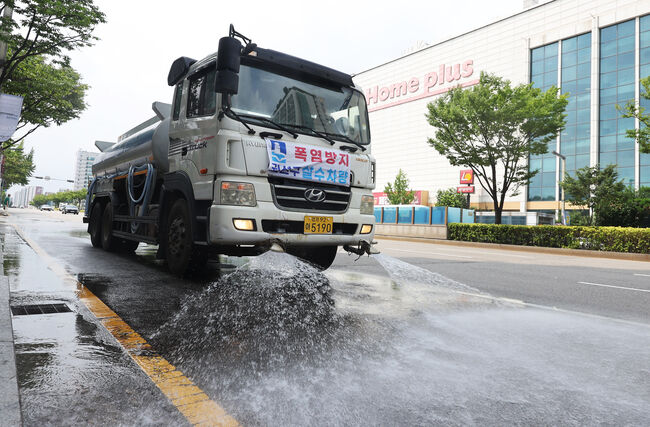 The Korean Peninsula wrapped in a thick blanket of scorching high pressure… Will the 1994 record be broken?
On the 28th, as the heatwave continues, a water sprinkler truck sprays water on Hyowon-ro, Gwonseon-gu, Suwon, Gyeonggi Province. [Photo = Yonhap News]The hottest years on record are considered to be
The Korean Peninsula wrapped in a thick blanket of scorching high pressure… Will the 1994 record be broken?
On the 28th, as the heatwave continues, a water sprinkler truck sprays water on Hyowon-ro, Gwonseon-gu, Suwon, Gyeonggi Province. [Photo = Yonhap News]The hottest years on record are considered to be
 Stock Market Crash 'Black Tuesday'… KOSPI down 10.8%, KOSDAQ down 7.7%
The KOSPI fell by more than 5% in early trading on the 28th, triggering a sell-side sidecar.On the 28th, the KOSPI plunged by more than 10%.Due to the sharp decline, a sell-side sidecar—a temporary
Stock Market Crash 'Black Tuesday'… KOSPI down 10.8%, KOSDAQ down 7.7%
The KOSPI fell by more than 5% in early trading on the 28th, triggering a sell-side sidecar.On the 28th, the KOSPI plunged by more than 10%.Due to the sharp decline, a sell-side sidecar—a temporary
 [World Heritage Committee] 25 New World Heritage Sites Inscribed in Busan… South Korea Successfully Expands 'Getbol' Listing
The Chairperson of the World Heritage Committee speaks at the plenary session of the 48th session of the World Heritage Committee, held at BEXCO in Busan on the 20th. [Photo: Yonhap News]A total of 25
[World Heritage Committee] 25 New World Heritage Sites Inscribed in Busan… South Korea Successfully Expands 'Getbol' Listing
The Chairperson of the World Heritage Committee speaks at the plenary session of the 48th session of the World Heritage Committee, held at BEXCO in Busan on the 20th. [Photo: Yonhap News]A total of 25
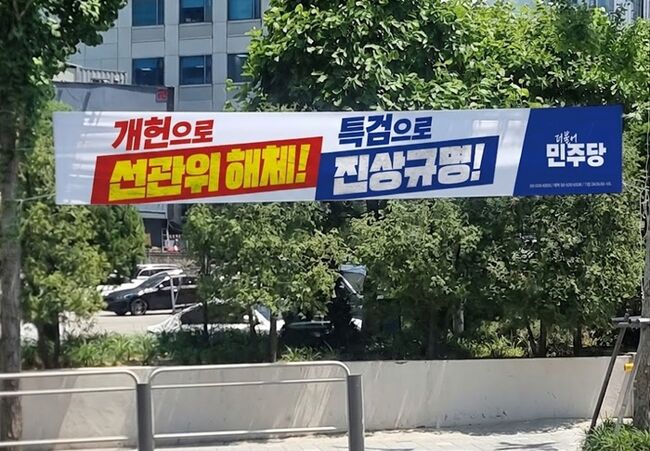 [Cho Yang-geon Column] The NEC: Facing a Fate of "Discarding the Dog After the Hunt"
Banner calling for the "dissolution of the NEC" posted by the Democratic Party. [AI-generated image]Banners calling for the "dissolution of the National Election Commission (NEC)" posted by the Democr
[Cho Yang-geon Column] The NEC: Facing a Fate of "Discarding the Dog After the Hunt"
Banner calling for the "dissolution of the NEC" posted by the Democratic Party. [AI-generated image]Banners calling for the "dissolution of the National Election Commission (NEC)" posted by the Democr
 [Photo] Evidence of Election Fraud Flooding U.S. Media… Trump Had 2.7 Million Votes Stolen
 [Video] U.S. Semiquincentennial Air Show... 'Art in the Sky' streaks across New York
 [Editorial Cartoon] A Draconian Law That Undermines Freedom of Expression

 List
List