On the 4th, the People Power Party's Supreme Council meeting unanimously launched a fierce attack on the ruling party's push for a special prosecutor, raising the level of rhetoric with phrases like "Number 2 in ultimate dignity after Kim Jong-un (North Korean Chairman)" and "a full package of unconstitutionality, adding unconstitutionality upon unconstitutionality." [Photo=Yonhap News]
Lee Jae-myung's remarks on the 'manipulated indictment special prosecutor' on the 4th were not a call for caution. His statement should be seen as the President directly endorsing the necessity of a special prosecutor and shifting the political burden to the Democratic Party, which is facing local and by-elections.
Hongikpyo, the Senior Secretary for Political Affairs at the Blue House, stated at a briefing while conveying Lee Jae-myung's intentions, "It is something that must be done to uncover the truth and establish judicial justice through a special prosecutor."
At the same time, regarding the specific timing and procedures, he added, "We ask the ruling Democratic Party to judge after gathering public opinion and undergoing a deliberation process."
The core lies between these two sentences. A special prosecutor must be appointed. However, when and how will be the responsibility of the Democratic Party to manage politically.
This is not the President's restraint. It is the calculation of power. If it were truly a call for caution, the President should have distanced himself from the very necessity of a special prosecutor.
However, Lee Jae-myung said, "It is something that must be done." At that moment, the statement could not help but be interpreted not merely as an expression of opinion, but as a de facto directive to pursue a special prosecutor.
The bigger problem is that this special prosecutor is not a general special prosecutor for power-related corruption. Reports indicate that out of the 12 cases subject to investigation under the so-called manipulated indictment special prosecutor bill, 8 are cases in which Lee Jae-myung is a party involved.
Some cases, such as the Daejang-dong development suspicions, are currently suspended in their first-instance trials. Analyses have also suggested that the launch of a special prosecutor could directly affect these cases, given that under the Criminal Procedure Act, the withdrawal of indictment is possible before the first-instance verdict.
Despite this, Lee Jae-myung called the special prosecutor "something that must be done." Although he spoke in the President's name, the interest in those words reaches the defendant, Lee Jae-myung.
The defendant has publicly affirmed the necessity of a special prosecutor that includes his own cases. Furthermore, he stated that the timing and procedures for handling it should be decided by the Democratic Party. This is no different from saying, "Grant the special prosecutor's power, but let the party bear the responsibility for the election."
The political background is also clear. With the June 3rd local elections and by-elections just a month away, the manipulated indictment special prosecutor bill has already emerged as an election issue.
Even within the Democratic Party, remarks reflecting concerns about the election's impact have been made. Jo Seung-rae, the Secretary-General of the Democratic Party, stated in a radio interview regarding the manipulated indictment special prosecutor bill, "We cannot help but consider the impact on the election."
Ultimately, a structure has been created where the Blue House establishes the justification, and the Democratic Party bears the political cost.
The necessity of a special prosecutor is approved by the President. However, the backlash from forcing it through before the election will be borne by the Democratic Party. This is the reality disguised by the terms "gathering public opinion" and "deliberation."
The gathering of public opinion should not become a tool to decorate procedures with a predetermined conclusion. If, after the President has already affirmed it as "something that must be done," he asks the ruling party to deliberate, that is not open deliberation. It is closer to a political request to adjust the timetable for a conclusion that has already been decided.
It is also difficult to dismiss the opposition party's objections as mere political squabbling.
The People Power Party criticizes this special prosecutor bill as a "special prosecutor to erase Lee Jae-myung's crimes" and a "full package of unconstitutionality." While the language is harsh, if the bill's structure combines the President's own cases with the possibility of indictment withdrawal, controversy over a 'self-exoneration' is unavoidable.
A special prosecutor should inherently be a mechanism for uncovering the truth, independent of power.
However, in this case, the structure is such that the ruling party, to which the President belongs, will re-examine cases involving the President at the pinnacle of power. This, combined with the controversy over the authority to withdraw indictments, makes the issue even more serious.
Suspicion that the structure of the President's trial is being altered under the guise of uncovering the truth is bound to grow.
If there are suspicions of manipulated indictments, the truth must be revealed. If there has been an abuse of prosecutorial power, responsibility must be held accountable.
However, the process should not proceed in a way that erases Defendant Lee Jae-myung's trial or redesigns the indictment structure.
While prosecutorial reform may be necessary. However, the moment prosecutorial reform is transformed into a mechanism for resolving the President's personal judicial risks, it becomes not reform but self-preservation of power.
What Lee Jae-myung needs to do is clear.
He must step away from pursuing a special prosecutor that includes his own cases. The Democratic Party must also re-examine the issue of indictment withdrawal authority and the inclusion of cases related to the President from square one.
If a special prosecutor is necessary, a mechanism to separate it from the President's cases and potential conflicts of interest must be established first. Otherwise, this special prosecutor cannot escape criticism for being not 'investigating the truth of manipulated indictments' but 'saving Defendant Lee Jae-myung.'
The President is not a third party. The Democratic Party is also not an independent arbiter.
The moment the ruling party of Defendant Lee Jae-myung decides to rewrite Defendant Lee Jae-myung's cases through a special prosecutor, the public cannot help but ask.
Is this judicial justice? Or is it power redesigning its own trial?

 [Statement by the Seobeokka KMA Patriots Association] ㉛ Recount the ballots openly, as the previous recount covered up election fraud
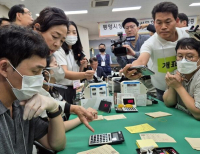
Recount of the Tongyeong mayoral election [Photo=Yonhap News]South Korea's liberal democracy is dying. The National Election Commission (NEC), which has degraded into a criminal organization through t
[Statement by the Seobeokka KMA Patriots Association] ㉛ Recount the ballots openly, as the previous recount covered up election fraud
Recount of the Tongyeong mayoral election [Photo=Yonhap News]South Korea's liberal democracy is dying. The National Election Commission (NEC), which has degraded into a criminal organization through t
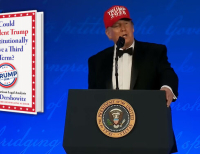
 What is the significance of the "Trump 2028" red hat that keeps reappearing?
It is noteworthy that while it is "highly likely" that President Donald Trump is "seriously considering" a run for the presidency in 2028, he is also "deliberately" fueling speculation regarding wheth
What is the significance of the "Trump 2028" red hat that keeps reappearing?
It is noteworthy that while it is "highly likely" that President Donald Trump is "seriously considering" a run for the presidency in 2028, he is also "deliberately" fueling speculation regarding wheth
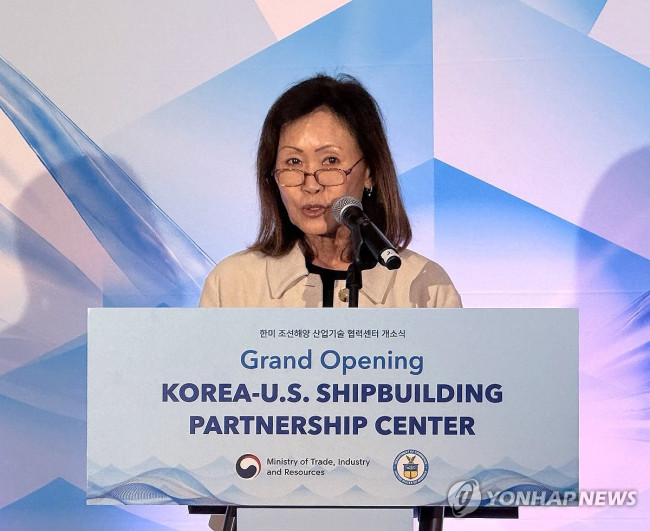 First U.S. Ambassador of Trump's Second Term to Arrive This Week… Will It Provide Momentum to Resolve Pending Issues?
U.S. Ambassador to South Korea Michelle Steel speaks at the opening ceremony of the Korea-U.S. Shipbuilding Cooperation Center held at the Mayflower Hotel in Washington, D.C., on the 23rd (local time)
First U.S. Ambassador of Trump's Second Term to Arrive This Week… Will It Provide Momentum to Resolve Pending Issues?
U.S. Ambassador to South Korea Michelle Steel speaks at the opening ceremony of the Korea-U.S. Shipbuilding Cooperation Center held at the Mayflower Hotel in Washington, D.C., on the 23rd (local time)
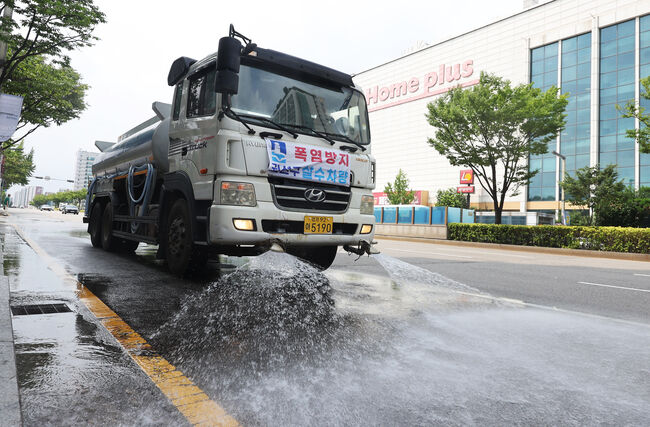 The Korean Peninsula wrapped in a thick blanket of scorching high pressure… Will the 1994 record be broken?
On the 28th, as the heatwave continues, a water sprinkler truck sprays water on Hyowon-ro, Gwonseon-gu, Suwon, Gyeonggi Province. [Photo = Yonhap News]The hottest years on record are considered to be
The Korean Peninsula wrapped in a thick blanket of scorching high pressure… Will the 1994 record be broken?
On the 28th, as the heatwave continues, a water sprinkler truck sprays water on Hyowon-ro, Gwonseon-gu, Suwon, Gyeonggi Province. [Photo = Yonhap News]The hottest years on record are considered to be
 Stock Market Crash 'Black Tuesday'… KOSPI down 10.8%, KOSDAQ down 7.7%
The KOSPI fell by more than 5% in early trading on the 28th, triggering a sell-side sidecar.On the 28th, the KOSPI plunged by more than 10%.Due to the sharp decline, a sell-side sidecar—a temporary
Stock Market Crash 'Black Tuesday'… KOSPI down 10.8%, KOSDAQ down 7.7%
The KOSPI fell by more than 5% in early trading on the 28th, triggering a sell-side sidecar.On the 28th, the KOSPI plunged by more than 10%.Due to the sharp decline, a sell-side sidecar—a temporary
 [World Heritage Committee] 25 New World Heritage Sites Inscribed in Busan… South Korea Successfully Expands 'Getbol' Listing
The Chairperson of the World Heritage Committee speaks at the plenary session of the 48th session of the World Heritage Committee, held at BEXCO in Busan on the 20th. [Photo: Yonhap News]A total of 25
[World Heritage Committee] 25 New World Heritage Sites Inscribed in Busan… South Korea Successfully Expands 'Getbol' Listing
The Chairperson of the World Heritage Committee speaks at the plenary session of the 48th session of the World Heritage Committee, held at BEXCO in Busan on the 20th. [Photo: Yonhap News]A total of 25
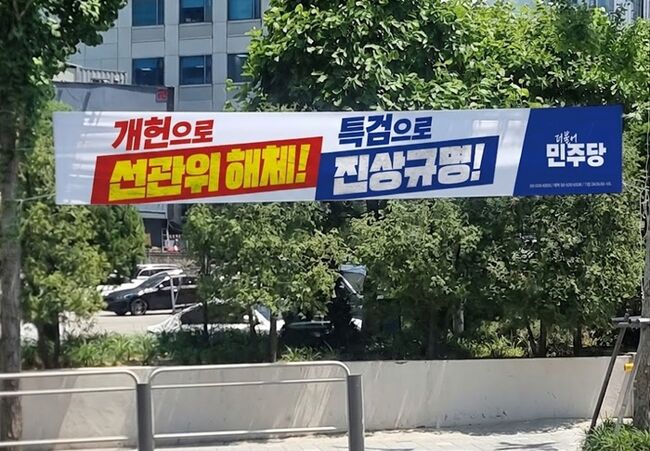 [Cho Yang-geon Column] The NEC: Facing a Fate of "Discarding the Dog After the Hunt"
Banner calling for the "dissolution of the NEC" posted by the Democratic Party. [AI-generated image]Banners calling for the "dissolution of the National Election Commission (NEC)" posted by the Democr
[Cho Yang-geon Column] The NEC: Facing a Fate of "Discarding the Dog After the Hunt"
Banner calling for the "dissolution of the NEC" posted by the Democratic Party. [AI-generated image]Banners calling for the "dissolution of the National Election Commission (NEC)" posted by the Democr
 [Photo] Evidence of Election Fraud Flooding U.S. Media… Trump Had 2.7 Million Votes Stolen
 [Video] U.S. Semiquincentennial Air Show... 'Art in the Sky' streaks across New York
 [Editorial Cartoon] A Draconian Law That Undermines Freedom of Expression

 List
List