 Kim Gu's black and white photo restored in color. [Photo = Ministry of Patriots and Veterans Affairs]
In commemoration of the 150th anniversary of the birth of Kim Gu, Chairman of the Provisional Government of the Republic of Korea, UNESCO has designated this year as the ‘UNESCO Commemorative Year for the 150th Anniversary of Kim Gu's Birth,’ and the current administration is promoting various commemorative projects. Kim Gu also appears in the lyrics of BTS's new song.
Kim Gu was the last chairman of the Provisional Government, and when Syngman Rhee was the first president of the Provisional Government, Kim Gu was the Director of the Bureau of Investigation. Syngman Rhee opposed the futile armed struggle and terrorism against Japan advocated by communists who had infiltrated the Shanghai Provisional Government, and left for the United States with the aim of laying the groundwork for independence through diplomacy centered on the United States.
Kim Gu, who drank blood after committing murder and robbery
Kim Gu's great-grandson, Kim Yong-man, is a member of the Democratic Party. Immediately after the 12.12 martial law, as the National Assembly passed an impeachment motion against Acting President Han Duck-soo led by the Democratic Party, the People Power Party lawmakers rushed to the podium to protest Speaker Woo Won-shik, during which Kim Yong-man, a member of the Democratic Party, violently grabbed the neck of Kang Myung-gu, a member of the People Power Party.
It is not a coincidence that Kim Yong-man is a member of the Democratic Party. The identity of the original pro-North Korean leftist Kim Gu aligns with the Democratic Party. The Baekbeom Kim Gu Memorial Hall in Yongsan is also a frequently used venue for the Democratic Party's events. Kim Yong-man's temperament is reminiscent of Kim Gu's Chihapo incident.
In his autobiography, "Baekbeomilji," Kim Gu claims to have beaten to death a Japanese merchant named Sutchida at an inn in Chihapo, Hwanghae Province, in retaliation for the murder of the Queen during the Eulmi Incident.
Contrary to Kim Gu's claim, Sutchida was not a Japanese army lieutenant but an ordinary merchant. Kim Gu was someone who displayed an unimaginable level of madness and violence, killing a person in a fit of rage because the innkeeper served hot soup to a Japanese merchant before him, and then drinking the blood.
After killing the Japanese merchant, Kim Gu claimed he was a lieutenant in the Japanese army, stole Sutchida's belongings, and fled. Kim Gu was arrested and imprisoned on charges of murder and robbery, but he escaped the following year and went into hiding, while his father was apprehended and imprisoned instead. There is also a record that Kim Gu, who was tall and strong, physically assaulted and kicked Syngman Rhee during a conversation when they disagreed.
There are suspicions that Kim Gu assassinated several independence activists with different ideologies during his time in the Provisional Government, as well as circumstances suggesting his involvement in the assassinations of many right-wing leaders in South Korea after liberation, and even an attempt on Syngman Rhee's life.
While serving as Director of the Bureau of Investigation of the Provisional Government, Kim Gu was accused of receiving money from the Japanese consulate, murdering a 17-year-old boy, framing and killing Kim Rip and Hwang Hak-seon for embezzlement and being an informant for the Japanese, and murdering Ahn Gong-geun over money. Ahn Gong-geun was Ahn Jung-geun's younger brother, and their father, Ahn Tae-hun, had harbored and taken care of Kim Gu for a considerable period after Kim Gu participated in the Donghak Peasant Movement and was defeated by the Japanese army.
Kim Gu is suspected of having ordered the assassinations of Song Jin-u, Yeo Un-hyeong, and Jang Deok-su, as well as acts of murder and terrorism carried out by groups such as Baekuisa, Daehanmincheong, and Seobukcheongnyeondan.
Kim Gu was a person who did not take killing lightly. If there are pro-North Korean leftist forces today who use democratization as a means of livelihood and advancement, then about 100 years ago, there were "independence profiteers" who used the independence movement as a tool for their livelihood and personal ambition.
The Baekbeomilji, which has become a mountain of lies, much like the fabrication that Sutchida was a Japanese army lieutenant, is not Kim Gu's work but that of Chwunwon Lee Kwang-su, as confessed by Kim Gu's son, Kim Shin.
Circumstances of Kim Gu's Attempted Assassination of Syngman Rhee and Suspicion of Collusion with North Korea
Kim Gu's violence continued even on the day he was assassinated by Ahn Doo-hee. Ahn Doo-hee describes the situation on the day of the assassination in his 1955 book, "Why I Murdered Mr. Kim Gu." Ahn Doo-hee, a serving officer and agent of Kim Gu's Korean Independence Party's secret terrorist organization, visits Kim Gu on August 15, 1949, the National Liberation Day, to confirm suspicions that his major mission upon receiving his assignment was the assassination of Syngman Rhee.
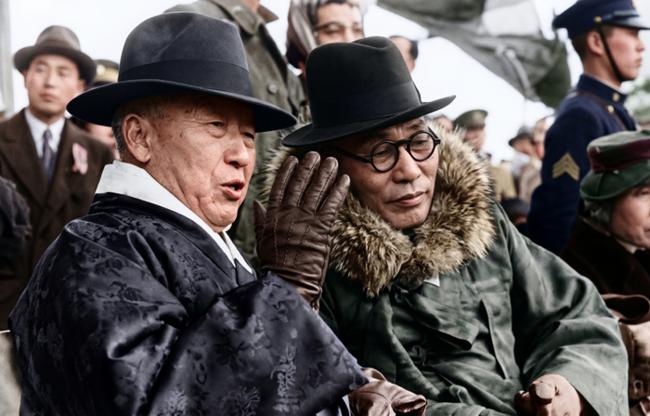 Syngman Rhee (left) and Kim Gu at the welcoming ceremony for Provisional Government officials on December 1, 1945. Black and white photo converted to color.
When Ahn Doo-hee questioned Kim Gu about △ his alleged involvement in the assassinations of Song Jin-u and Jang Deok-su, △ suspicions that Kim Gu was illegally controlling the military using his position as Chairman of the Provisional Government, despite the police being controlled by President Syngman Rhee, △ suspicions that Kim Gu was colluding with North Korea, and △ suspicions that Kim Gu's Korean Independence Party was involved in the Yeosu-Suncheon Rebellion, Kim Gu responded, "Yes, you rascal, is this what you call a government?" He denied the legitimacy of Syngman Rhee's government, became agitated, and indiscriminately punched Ahn Doo-hee and threw inkstones, brushes, and books at him.
Based on Kim Gu's response, Ahn Doo-hee became convinced that Kim Gu intended to eliminate Syngman Rhee. When Ahn Doo-hee asked if this meant he was aligned with North Korea's stance, Kim Gu replied, "Interpret it as you wish."
Ahn Doo-hee confronted Kim Gu about his visit to Pyongyang, his condemnation of the US as an aggressor, his call for the withdrawal of US troops, his denunciation of Syngman Rhee as a sycophant, and his refusal to recognize the South Korean government led by Syngman Rhee, and questioned why he was being led by Kim Il-sung's communist ideology.
To this, Kim Gu replied, "What's wrong with being a communist?" Ahn Doo-hee, having realized Kim Gu's true identity, concluded that he could not deter Kim Gu's attempt to assassinate Syngman Rhee, drew his pistol, shouted, "Let's change the old man and the country!" and fired four shots at Kim Gu.
For the sake of his own power, he did not care whether it was communism or anything else. Kim Gu's life trajectory and true nature is that of a convicted murderer and robber who, without ideology, philosophy, or national vision, considered his own advancement, success, and rise to power as the highest value, used the independence movement as a tool for his own advancement and livelihood, and indiscriminately assassinated his political rivals.
There is a record that at a meeting after liberation between Song Jin-u and domestic nationalist leaders, and officials from the Provisional Government in Shanghai, Kim Gu and other Provisional Government officials strongly demanded the expulsion of pro-Japanese collaborators. Song Jin-u retorted, "We know everything about how you officials of the Provisional Government lived in China. Where are you coming off with this talk of pro-Japanese collaborators?" at which point Kim Gu and the Provisional Government officials fell silent.
Following the March 1st Movement in 1919, apart from a few acts of terrorism such as the Battle of Ch'ongsan-ri and the Battle of Pongodong, and the assassination attempts on Emperor Hirohito by Lee Bong-chang and Yoon Bong-gil, and the assassination of Japanese generals, the Provisional Governments and independence armies established in various locations such as Manchuria, the Soviet Union, and Shanghai have left no significant trace.
The Battles of Ch'ongsan-ri and Pongodong were cases where the Provisional Government exaggerated insignificant battles with the Japanese army into major victories to extort military funds from Koreans in Manchuria who were reluctant to provide financial support due to extreme hardship. Lee Bong-chang and Yoon Bong-gil were also means for the Provisional Government, suffering from financial difficulties, to secure funding from Chinese and domestic sponsors.
Even Kim Jwa-jin, a symbol of the independence army, was feared like a demon by Koreans in Manchuria. The reality of the independence army and the Provisional Government was that they extorted military funds from Koreans in Manchuria, who could barely make a living after paying taxes to Chinese authorities and rent to landlords, and even committed murder.
The reason for Kim Jwa-jin's assassination was also the extortion and murder of Koreans in Manchuria by the Shinminbu led by Kim Jwa-jin. The reason the Provisional Government officials fell silent when Song Jin-u emphasized that factional infighting within the Provisional Government led to a bloody struggle for control of the acquired military funds and funding, with Kim Gu at the center, is because of this.
The Originator of Juche Ideology, Aiming to Overthrow the Republic of Korea
Syngman Rhee opposed the Provisional Government's armed struggle and terrorist activities, advocating for independence through diplomacy with the United States and the Western world.
Japan was an incomparably powerful nation at the time, a G2 rivaling the United States. This was because while European countries were devastated by the aftermath of World War I, the United States and Japan, which did not participate in the war, avoided the war and enjoyed years of war-driven economic boom.
Japan had over a dozen aircraft carriers at the time, something Korea still lacks, and possessed thousands of aircraft. Its immense national power was such that it initiated the Pacific War with the United States after the Manchurian Incident and the Second Sino-Japanese War, culminating in the attack on Pearl Harbor. Had the United States not succeeded in decoding Japanese military ciphers by a stroke of luck in the Battle of Midway, history might have been shaped by Japan rather than the United States.
Even when Japan surrendered after the dropping of the atomic bombs by the United States, Japan maintained an army of over 10 million troops, including 7 million in Japan, 2 million in China, 1 million in the Pacific, and 300,000 in Korea.
This is the reason why MacArthur signed the surrender document not in Tokyo, but on board the USS Missouri anchored in Tokyo Bay. This was the background for Syngman Rhee's opposition to armed struggle and terrorist activities against Japan, which were futile, temporary acts of vengeance at the cost of the lives of promising young people, a path uninformed by international affairs.
“My headquarters will be in Yokohama, and the surrender ceremony will take place on board the Missouri anchored in Tokyo Bay. Japan had one objection: they opposed my plan to land at Asanaki Airfield. They seemed to think it was too dangerous. Our staff agreed. They felt it was reckless for the supreme commander to land with only a few unarmed staff members. Their argument was that it was an airfield in an enemy country still teeming with fully armed enemy troops, and that 300,000 combat troops from 22 Japanese divisions remained in the Kanto Plain.” (Translated by Ban Kwang-sik, Douglas MacArthur, "MacArthur's Memoirs Vol. 2")
This is from a letter sent to MacArthur by Winthrop Aldrich, the US Ambassador to Britain at the time. "Mr. Winston Churchill asked me to guess what was the most outstanding achievement of any commander during the war. I didn't answer and asked him what it was, and he said it was that you landed with a small force in a place swarming with hundreds of thousands of still disarmed Japanese soldiers.” (Translated by Ban Kwang-sik, Douglas MacArthur, "MacArthur's Memoirs Vol. 2")
Kim Gu, the Original Pro-North Korean Leftist, and Kim Young-sam's Special Law on May 18
Kim Gu's Provisional Government was effectively a mere title. Apart from its external activities, most of its officials had left, leaving it barely functional, and it was so difficult for the remaining officials to make a living that they spent their time engaged in factional strife. This is the evaluation of Kim Gu's Provisional Government found in a report from the Chongqing US Embassy.
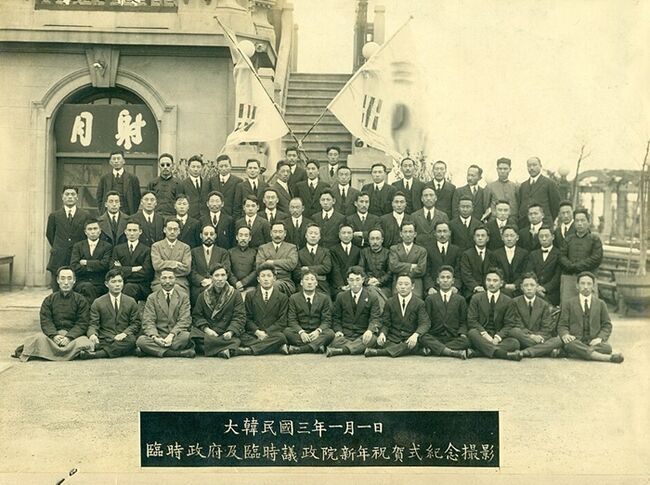 New Year's greetings ceremony of the Provisional Assembly on January 1, 1921. Kim Gu is seated third from the right in the first row.
“It is believed that they are living at the expense of the Chinese authorities, with the hope that simply when Japan is finally defeated, they will be able to occupy positions to pursue their political ambitions and enrich their personal wealth, lacking the ability to efficiently oversee an organization for a valuable cause.” (Kim Sang-gu, ‘Kim Gu Hearing’)
This was the reality of Kim Gu's Provisional Government at the time, and the reason why no one, whether the US or China, recognized the Provisional Government.
The reason why pro-North Korean leftists revere Kim Gu is because Kim Gu was the original Juche ideologue. After returning to Korea following liberation, Kim Gu met with Kim Il-sung in Pyongyang and subsequently fell under Kim Il-sung's command, refusing to recognize the US-backed Syngman Rhee government and awaiting the communization of South Korea by the army of Kim Il-sung, supported by the Soviet Communist Party.
According to conversations between Kim Gu and Liu Yuwan, the Chinese representative of the UN Commission on Korea, after Kim Gu's visit to Pyongyang, Kim Gu spoke of Kim Il-sung's well-armed military invading South Korea with the help of the Soviet Union and easily establishing a People's Republic in Seoul. Kim Gu also advocated for the withdrawal of US troops stationed in Korea to aid Kim Il-sung's invasion. This is the true nature of the original pro-North Korean leftist Kim Gu.
If Kim Gu had succeeded in assassinating Syngman Rhee and coming to power according to his plan, and then allied with Kim Il-sung, the subsequent history is obvious. Kim Gu would have been purged according to the traditional communist united front strategy since Marx and Lenin, and the Republic of Korea would have been communized.
This is the history of the spread of Soviet communism in Europe and Asia after World War II, and the history of the purging of Pak Hun-young, numerous members of the South Korean Workers' Party, and North Korean figures such as Cho Man-sik, a nationalist, and members of the Yan'an faction, aligned with the Chinese Communist Party.
The relationship between Syngman Rhee and Kim Gu is similar to that between Park Chung-hee and Kim Dae-jung. Despite the obstruction from the communist group of the Soviet Union and North Korea's Kim Il-sung, Kim Gu constantly interfered with Syngman Rhee's efforts to establish the Republic of Korea based on liberal democracy. Similarly, Kim Dae-jung constantly opposed Park Chung-hee's efforts for the modernization and industrialization of the nation.
The difference is that while Kim Gu was assassinated by Ahn Doo-hee, Kim Dae-jung survived. Park Chung-hee was assassinated by Kim Jae-gyu, the Director of the Korean Central Intelligence Agency, a close associate. Kim Dae-jung was sentenced to death for sedition related to the May 18th incident by the Supreme Court, but was pardoned by Chun Doo-hwan.
Riding the wave of the so-called democratization movement in 1987, Kim Young-sam, who came to power, enacted the Special Law on May 18th and manipulated the case, which had been ruled as sedition and armed rebellion in Gwangju by the Supreme Court's judgment on the May 18th incident, into a democratization movement.
Furthermore, Chun Doo-hwan, the head of the Joint Investigation Headquarters of Martial Law, who had lawfully carried out his duties, was punished for arresting General Jeong Seung-hwa, the Commander of Martial Law, who was a suspect in the assassination of President Park Chung-hee, by labeling it as rebellion, and Chun Doo-hwan and Roh Tae-woo were indicted on bribery charges and sentenced to prison with confiscation of hundreds of billions of won.
Following the investigation into Chun Doo-hwan and Roh Tae-woo by the prosecution immediately after Kim Young-sam's inauguration as president in 1993, the case was closed with a non-prosecution ruling, stating that a successful coup cannot be punished. However, when allegations of illegal political funds surfaced in 1995, including Roh Tae-woo's 400 billion won in illegal political funds and 300 billion won in illegal political funds allegedly transferred by Roh Tae-woo to Kim Young-sam, Kim Young-sam abruptly changed his stance, covering up his and Kim Dae-jung's illegal political funds while prosecuting Chun Doo-hwan and Roh Tae-woo for bribery, and not stopping there, he also punished Chun Doo-hwan and Roh Tae-woo for the 12.12 rebellion.
Kim Young-sam, who inherited the legacy of the original pro-North Korean leftist Kim Gu, became the host of South Korea's pro-North Korean leftists through the Special Law on May 18th. Today, pro-North Korean leftists are advancing the communization of the Republic of Korea under the guise of democratization, through propaganda, agitation, and brainwashing, in a way that destroys democracy, to achieve the communization of Korea that Kim Il-sung and Pak Hun-young failed to achieve.
The accurate expression for the 1987 democratization movement, a product of brainwashing and propaganda by pro-North Korean leftists, is the 1987 communization movement, and the May 18th democratization movement is the May 18th communization movement. Large-scale protests and riots in the Republic of Korea after liberation in 1945, such as April 19th, May 18th, Jeju April 3rd, the Yeosu-Suncheon Rebellion, the Daegu Uprising, and the Busan October Uprising, all have suspicions of North Korean involvement.
The Pinnacle of North Korea's Subversive Operations Against South Korea: Allegations of Election Fraud
Allegations of election fraud are at the pinnacle of North Korea's subversive operations against South Korea. Election fraud is a shortcut to subvert the Republic of Korea without the arduous armed struggle of the May 18th incident and the Korean War invasion. Kim Dae-jung is at the center of the allegations of election fraud in the Republic of Korea. Upon arriving at Pyongyang Sunan Airport for the June 15th inter-Korean summit in 2000, Kim Dae-jung, violating security protocols, got into Kim Jong-il's private car without bodyguards and had a 45-minute secret conversation with Kim Jong-il.
According to media reports on the content of the secret conversation obtained by US intelligence agencies, Kim Jong-il instructed that Roh Moo-hyun be made the next presidential candidate for the Democratic Party. When Kim Dae-jung mentioned that Roh Moo-hyun's name recognition was lower than that of Chung Dong-young or Han Hwa-kap, Kim Jong-il cited Roh Moo-hyun's father's hometown being in Honam and Roh Moo-hyun's father-in-law's background as a former partisan, stating that public opinion and recognition can be overcome through propaganda and agitation, and added, "Let's research election matters extensively with us."
As a result of the meeting between Kim Dae-jung and Kim Jong-il, electronic vote counting machines were first introduced in 2002. Roh Moo-hyun, overcoming his competitors in the Democratic Party's presidential primary and the general election, was elected president in December of that year. Although companies such as Guanwoo Information and Communication, Hantel System, and SK C&C were responsible for the supply and operation of the electronic counting system first introduced during the Kim Dae-jung administration in 2002, their executives were prosecuted on charges of bribery to the National Election Commission.
During the trial, the CEO of the manufacturing company testified that Kim Dae-jung, Lee Hae-chan, and Park Jie-won had ordered the production of fraudulent electronic vote counting machines, but the prosecution did not investigate. Since then, through the Kim Dae-jung and Roh Moo-hyun administrations, suspicions have arisen regarding the inter-Korean communication network project, the connection of the Dasan Group and Korea Electronic Voting Co., Ltd. to left-leaning governments, and the manipulation of the National Election Commission's network through Huawei's backdoor.
As a result of decades of propaganda, agitation, and brainwashing by pro-North Korean leftists, and the divisive individualism and laziness of the liberal right, the Republic of Korea has already been subverted, and only unification through communization remains.
The pro-North Korean leftists and the Democratic Party continue their attempts to include the May 18th incident in the preamble of the constitution, as propaganda and agitation by North Korea's subversive operations and all forms of communization movements by pro-North Korean leftists are referred to as democratization movements. Including the May 18th incident in the preamble of the constitution is not the end but the beginning. Based on this, laws will be enacted that go beyond the current law prohibiting distortion of the May 18th incident, making not only the May 18th incident but all of North Korea's subversive operations against South Korea, such as the Jeju April 3rd incident, into democratization movements, and a law prohibiting the raising of allegations of election fraud will be enacted, let alone clarifying the allegations of election fraud.
The reason why the Democratic Party can continue to enact dictatorial legislation that undermines democracy is election fraud. In a fraudulent election system, the people are not the sovereign; the group that creates the fraudulent election system is the sovereign, and the people are slaves. This is why Lee Hae-chan advocates for the Democratic Party's 50-year rule, and why Kim Min-seok, the head of the Democratic Party's election situation room, could accurately predict the early voting rate of 31.3% to the decimal point in the 2024 general election.
Early voting is at the core of election fraud allegations. In the last presidential election, the People Power Party candidate Kim Moon-soo overwhelmingly defeated the Democratic Party candidate Lee Jae-myung in the main voting, with 54% of the vote compared to Lee Jae-myung's 34%. However, in the early voting, Kim Moon-soo received 25% of the vote, while Lee Jae-myung received 62%, leading to Lee Jae-myung's victory with an overall vote share of 49% against Kim Moon-soo's 41%.
This statistically impossible discrepancy between the vote percentages in the main voting and early voting is in stark contrast to Lee Jun-seok of the Reform Party and Kwon Young-guk of the Minlu Party, where the vote percentages in the main voting and early voting are almost identical. Lee Jun-seok's vote share in the main voting was 9.64%, and his early voting share was 10.34%. Kwon Young-guk's vote share in the main voting was 1.26%, and his early voting share was 1.30%.
Regarding the investigation into the allegations of election fraud, which was the reason for President Yoon Suk-yeol's declaration of martial law, Lee Jae-myung said during a presidential campaign rally last year, "It was an election fraud, so why did I win? Are you saying I committed fraud? If I were to commit fraud, wouldn't I ensure a landslide victory rather than a narrow one?"
This is the background for the statistically impossible and blatant discrepancy between the early voting percentages of 62% vs. 25% and the main voting percentages of 34% vs. 54% between Lee Jae-myung and Kim Moon-soo in the 2025 presidential election. The reason Lee Jae-myung lost to Yoon Suk-yeol by a margin of 0.7% in the 2022 presidential election was a manipulation resulting in a small difference, mindful of the allegations of election fraud. Yoon Suk-yeol's victory was the result of an overwhelming vote share that neutralized the manipulation of early voting.
Kim Moon-soo obtained the nicknames Kim Seung-bok and Kim Cheol-bong by accepting the election results instead of filing a lawsuit to nullify the election due to allegations of election fraud.
Instead of reflecting on his past as an activist, Kim Moon-soo, a former student activist from the pro-North Korean Juche ideology, covers up the allegations of election fraud by his former comrades in the pro-North Korean leftist camp with sophistry such as stating that he would file a lawsuit to nullify the election if definitive evidence of election fraud was provided, despite clear allegations of election fraud.
This is the reality of South Korea's pro-North Korean leftists, deeply rooted since Kim Gu, the original pro-North Korean leftist. Understanding the history and reality of the pro-North Korean leftists and not being swayed by the propaganda and agitation of the North Korean communist group and pro-North Korean leftists is the first step in defending the free democratic Republic of Korea.
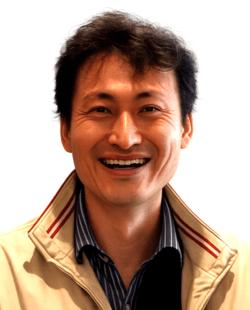
◆ Hwang Doo-hyong
Former Washington Correspondent for Yonhap News
Former Deputy Editor-in-Chief of Yonhap News

 Trump pressures for rate cut again ahead of FOMC... "Should be the lowest in the world"
U.S. President Donald Trump. [Photo = The White House] U.S. President Donald Trump once again pressured the Federal Reserve, the U.S. central bank, to lower interest rates on the 27th (local time
Trump pressures for rate cut again ahead of FOMC... "Should be the lowest in the world"
U.S. President Donald Trump. [Photo = The White House] U.S. President Donald Trump once again pressured the Federal Reserve, the U.S. central bank, to lower interest rates on the 27th (local time
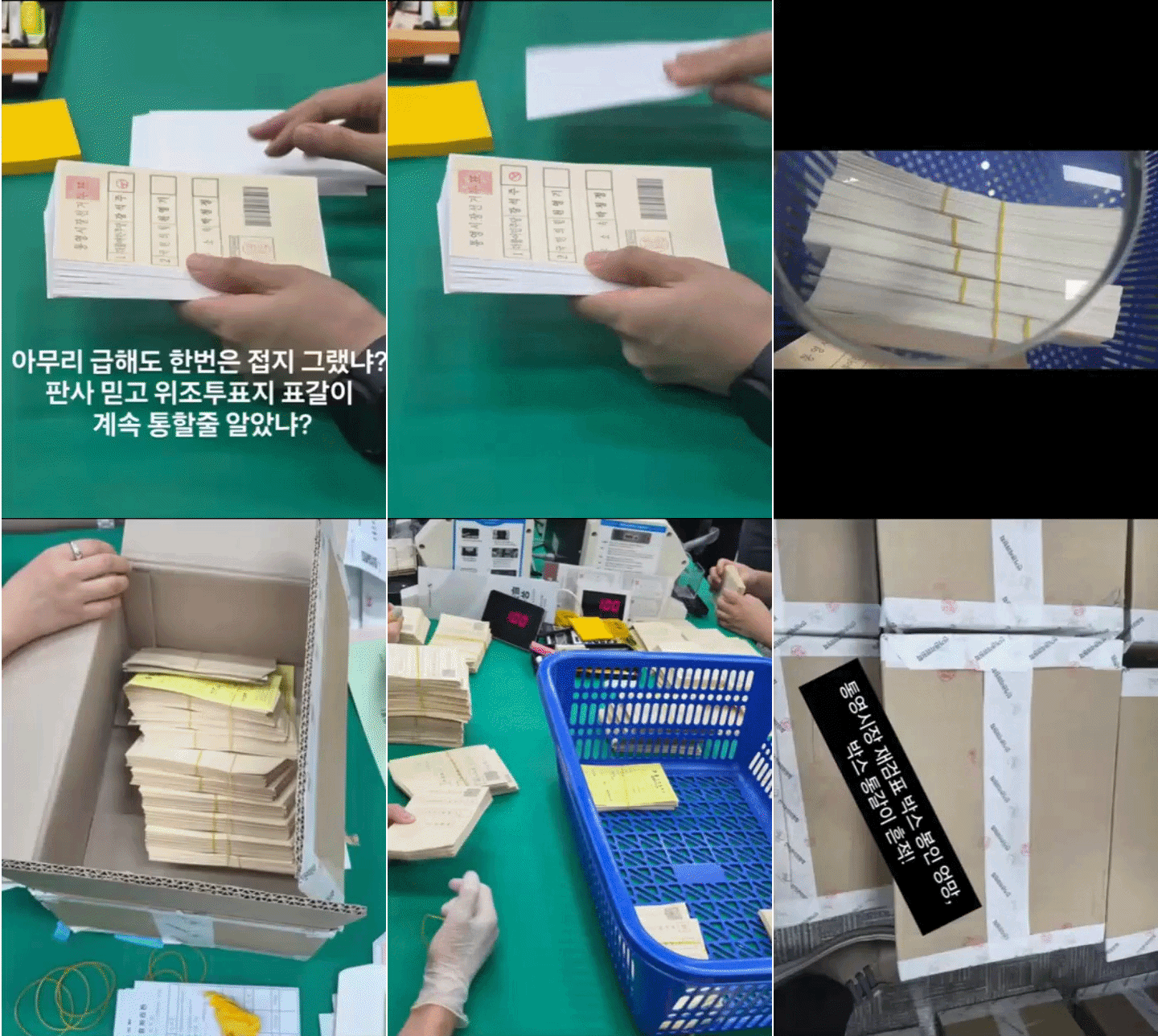 “Ignoring crisp ballots and damaged seals”… Tongyeong mayoral recount concludes with ‘no change in outcome,’ leaving suspicions and public outrage behind
Suspected counterfeit ballots discovered in Tongyeong [GIF from social media of Representative Hwang Kyo-ahn / Attorney Park Joo-hyun]During a recount of the Tongyeong mayoral election in South Gyeong
“Ignoring crisp ballots and damaged seals”… Tongyeong mayoral recount concludes with ‘no change in outcome,’ leaving suspicions and public outrage behind
Suspected counterfeit ballots discovered in Tongyeong [GIF from social media of Representative Hwang Kyo-ahn / Attorney Park Joo-hyun]During a recount of the Tongyeong mayoral election in South Gyeong
 President Yoon, regarding the first-instance ruling on the Public Official Election Act: “An excessive political verdict that distorts the facts… We will appeal immediately.”
The first-instance sentencing hearing for President Yoon Suk Yeol regarding violations of the Public Official Election Act is being broadcast live at Seoul Station on the 27th. [Photo=Yonhap News]Pres
President Yoon, regarding the first-instance ruling on the Public Official Election Act: “An excessive political verdict that distorts the facts… We will appeal immediately.”
The first-instance sentencing hearing for President Yoon Suk Yeol regarding violations of the Public Official Election Act is being broadcast live at Seoul Station on the 27th. [Photo=Yonhap News]Pres
 WSJ: "SK Hynix ADR Premium Is a Sign of AI Trading Overheat"
Advertisement for SK Hynix ADR listing in New York's Times Square [Reuters=Yonhap News file photo]The Wall Street Journal (WSJ) has pointed out that the price of SK Hynix’s American Depositary Recei
WSJ: "SK Hynix ADR Premium Is a Sign of AI Trading Overheat"
Advertisement for SK Hynix ADR listing in New York's Times Square [Reuters=Yonhap News file photo]The Wall Street Journal (WSJ) has pointed out that the price of SK Hynix’s American Depositary Recei
 'Godfather of Japanese Mystery Novels' Keigo Higashino Passes Away After Battle with Cancer at 68
Famous Japanese mystery novelist Keigo Higashino [AFP=Yonhap News]It has been belatedly reported that Keigo Higashino, the "godfather of Japanese mystery novels" and author of bestsellers such as "The
'Godfather of Japanese Mystery Novels' Keigo Higashino Passes Away After Battle with Cancer at 68
Famous Japanese mystery novelist Keigo Higashino [AFP=Yonhap News]It has been belatedly reported that Keigo Higashino, the "godfather of Japanese mystery novels" and author of bestsellers such as "The
 [Park Pil-kyu Security Column] To the Ignorant Trying to Clothe a Beast in Sheep's Clothing
Rep. Kim Byung-joo of the Democratic Party of Korea [Photo=Yonhap News]“The Air Force Academy doesn't teach you how to fly a plane!” “The Army, Navy, and Air Force academies are exactly the
[Park Pil-kyu Security Column] To the Ignorant Trying to Clothe a Beast in Sheep's Clothing
Rep. Kim Byung-joo of the Democratic Party of Korea [Photo=Yonhap News]“The Air Force Academy doesn't teach you how to fly a plane!” “The Army, Navy, and Air Force academies are exactly the
 [Issue Diagnosis] Two Effects of the Election Petition Review
 [Photo] Evidence of Election Fraud Flooding U.S. Media… Trump Had 2.7 Million Votes Stolen
 [Video] U.S. Semiquincentennial Air Show... 'Art in the Sky' streaks across New York
 [Editorial Cartoon] A Draconian Law That Undermines Freedom of Expression

 List
List










