 On May 18, 1993, the send-off ceremony for the "suicide squad" to arrest Chun Doo-hwan and Roh Tae-woo was held at Yonsei University. [Photo=The Council for the Commemoration of Democracy Movement]
While not outwardly apparent, 1993 was actually the most dangerous year in the history of the Korean Confederation of Trade Unions (KCTU).
If 1987 was the year anger erupted in the labor scene, and 1990 was the year the strong field organization called the National Council of Labor Unions (NCIL) was formed, then 1993 was the year that organization began to shed its union facade and transform into a political force. This was the launch of the National Conference of Trade Union Representatives (NCTUR).
While the KCTU is typically recorded as being founded in 1995, its core as a political organization was already completed in 1993. The NCTUR was not a federation of trade unions; it was the preparatory committee for the KCTU's founding and a preliminary headquarters for a leftist political force.
The NCTUR was officially launched on June 19, 1993. It was a national organization centered around the NCIL, bringing together representatives of democratic unions from various industries and regions. Ostensibly, it was a "협의기구 (consultative body) of democratic trade union representatives." On the surface, it seemed like a working-level consultative body where field representatives gathered to discuss joint responses.
However, its actual role was different. The NCTUR was not a simple consultative body; it was a political organization that openly declared its goal of "building an independent labor federation." The independent labor federation it spoke of was not simply a new labor federation distinct from the Federation of Korean Trade Unions (FKTU). It signified a national headquarters that would reorganize the labor movement into a political force.
Following the launch of the NCTUR, the language within the labor movement began to change noticeably. In 1987, the focus was on wages, collective agreements, industrial accidents, and union democratization. In 1990, at least on the surface, field struggles took precedence.
However, from the NCTUR period in 1993 onwards, terms like "political empowerment," "people's power," "class advance," and "labor politics" began to be explicitly used. The political organization of workers became a more important task than workers' wages and safety. The priority began to shift, with unions existing not for their members, but with members existing for a larger political project.
During this period, the core leaders of the NCTUR no longer hid their intentions. It was openly stated that the labor movement should not end with economic struggles but should aim for political power. On the surface, this seemed plausible. The idea that workers need political representation is difficult to refute. The problem lay in the method.
The method was not to foster representatives who would advocate for workers' rights within the existing system, but rather to transform the entire union organization into a subordinate mobilization network for leftist political forces. Trade unions can have a voice in politics. However, the NCTUR went beyond merely having a voice. It began to transform unions entirely into political bases.
From this point on, the labor scene became more explicitly a political school for activists. Factory night classes increased the proportion of class education over labor law education, and union leader training prioritized political line education over collective bargaining techniques. Union members began to be referred to as "class subjects" before being called workers. Real-world issues within factories, such as shift work, industrial accident compensation, exploitation of subcontractors, and wage system reforms, remained important, but they increasingly became fodder for higher-level political struggles. Field issues became not problems to be solved, but justifications for mobilization.
From the NCTUR period, a very harmful formula solidified within the Korean labor movement. It involves amplifying dissatisfaction in the field, consolidating it into collective anger, elevating that anger into political slogans, and expanding it into criticism of the government and the system. This approach was highly efficient for union leadership because the greater the conflict in the field, the easier political mobilization became.
However, it resulted in significant losses for union members. Union dues increased, strikes became longer, and workplace fatigue accumulated, yet it was often unclear how much their lives had actually improved. The leadership grew politically, while the members were called out to the streets more frequently.
The NCTUR was not the midwife of the KCTU. It was the blueprint that predetermined the character of the KCTU. Within this blueprint, trade unions were no longer organizations for improving working conditions. They were repositioned as logistical bases, street mobilization bases, and pre-party organizations for leftist political forces.
This also predetermined why the KCTU would later lead to the Democratic Labor Party and become the core mobilization organization for candlelit protests, general strikes, and street politics.
The NCTUR in 1993 was not a precursor to the KCTU's founding. It was a complete prototype that demonstrated why the KCTU came to operate more like a political organization than a trade union. It was a political organization that pulled workers along, rather than a union for workers. That framework was completed at this time.
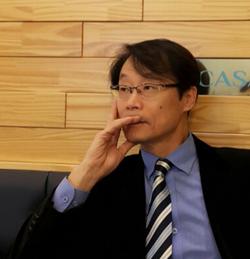
◆ Songsan
Poet and researcher of history and philosophy. Former director of the Rhee Syngman Academy. Currently serves as research advisor for the Korean Modern and Contemporary History Research Association and representative of the philosophy forum Lyceum. He has published four poetry collections, co-translated "Heroes of Hong Kong," and published "Joseon That Became Myth" and "Humanities on the Tatami." He is actively engaged in research and practice within the liberal cultural movement. Songsan is a pen name.

 Iranian Foreign Ministry: "Continuing Message Exchanges with the U.S. and Activities of Mediating Countries"
Esmaeil Baghaei, Spokesperson for the Iranian Ministry of Foreign Affairs [Xinhua, Yonhap News file photo]Esmaeil Baghaei, spokesperson for the Iranian Ministry of Foreign Affairs, stated on the 26th
Iranian Foreign Ministry: "Continuing Message Exchanges with the U.S. and Activities of Mediating Countries"
Esmaeil Baghaei, Spokesperson for the Iranian Ministry of Foreign Affairs [Xinhua, Yonhap News file photo]Esmaeil Baghaei, spokesperson for the Iranian Ministry of Foreign Affairs, stated on the 26th
 President Yoon: "Do You Think You Are Safe from the Special Counsel?"... Final Statement Video Released
President Yoon Suk Yeol rebuking the special prosecutor on the 24th. [Court video / @birds_justice X account subtitle GIF] A video of President Yoon Suk Yeol's closing statement at his trial rega
President Yoon: "Do You Think You Are Safe from the Special Counsel?"... Final Statement Video Released
President Yoon Suk Yeol rebuking the special prosecutor on the 24th. [Court video / @birds_justice X account subtitle GIF] A video of President Yoon Suk Yeol's closing statement at his trial rega
 President Yoon, regarding the first-instance ruling on the Public Official Election Act: “An excessive political verdict that distorts the facts… We will appeal immediately.”
The first-instance sentencing hearing for President Yoon Suk Yeol regarding violations of the Public Official Election Act is being broadcast live at Seoul Station on the 27th. [Photo=Yonhap News]Pres
President Yoon, regarding the first-instance ruling on the Public Official Election Act: “An excessive political verdict that distorts the facts… We will appeal immediately.”
The first-instance sentencing hearing for President Yoon Suk Yeol regarding violations of the Public Official Election Act is being broadcast live at Seoul Station on the 27th. [Photo=Yonhap News]Pres
 WSJ: "SK Hynix ADR Premium Is a Sign of AI Trading Overheat"
Advertisement for SK Hynix ADR listing in New York's Times Square [Reuters=Yonhap News file photo]The Wall Street Journal (WSJ) has pointed out that the price of SK Hynix’s American Depositary Recei
WSJ: "SK Hynix ADR Premium Is a Sign of AI Trading Overheat"
Advertisement for SK Hynix ADR listing in New York's Times Square [Reuters=Yonhap News file photo]The Wall Street Journal (WSJ) has pointed out that the price of SK Hynix’s American Depositary Recei
 'Godfather of Japanese Mystery Novels' Keigo Higashino Passes Away After Battle with Cancer at 68
Famous Japanese mystery novelist Keigo Higashino [AFP=Yonhap News]It has been belatedly reported that Keigo Higashino, the "godfather of Japanese mystery novels" and author of bestsellers such as "The
'Godfather of Japanese Mystery Novels' Keigo Higashino Passes Away After Battle with Cancer at 68
Famous Japanese mystery novelist Keigo Higashino [AFP=Yonhap News]It has been belatedly reported that Keigo Higashino, the "godfather of Japanese mystery novels" and author of bestsellers such as "The
 [Park Pil-kyu Security Column] To the Ignorant Trying to Clothe a Beast in Sheep's Clothing
Rep. Kim Byung-joo of the Democratic Party of Korea [Photo=Yonhap News]“The Air Force Academy doesn't teach you how to fly a plane!” “The Army, Navy, and Air Force academies are exactly the
[Park Pil-kyu Security Column] To the Ignorant Trying to Clothe a Beast in Sheep's Clothing
Rep. Kim Byung-joo of the Democratic Party of Korea [Photo=Yonhap News]“The Air Force Academy doesn't teach you how to fly a plane!” “The Army, Navy, and Air Force academies are exactly the
 [Issue Diagnosis] Two Effects of the Election Petition Review
 [Photo] Evidence of Election Fraud Flooding U.S. Media… Trump Had 2.7 Million Votes Stolen
 [Video] U.S. Semiquincentennial Air Show... 'Art in the Sky' streaks across New York
 [Editorial Cartoon] A Draconian Law That Undermines Freedom of Expression

 List
List









