 The 'Garden of Gratitude' created in Gwanghwamun Square, Seoul. [Photo = Yonhap News]
There are various ongoing debates surrounding the 'Garden of Gratitude' created in Gwanghwamun Square, Seoul. Some criticize it as a symbolic project that solidifies a specific political sentiment in a national space.
However, from a liberal conservative perspective, a more crucial question arises: Why has the Korean right wing neglected the spaces of culture and memory for so long?
Culture Shapes People's Sentiments and Common Sense
Antonio Gramsci, though a leftist revolutionary, was a figure who most keenly analyzed the essence of modern cultural power. He viewed that power in contemporary society did not solely derive from laws and armies. He believed that cultural spheres such as schools, media, arts, public squares, and memorial spaces shape people's sentiments and common sense, ultimately determining their political direction. He termed this concept hegemony.
What is interesting is that the Korean left wing has understood this point well for a long time. They valued not only parliamentary seats but also historical interpretations and symbolic spaces. This was because they knew that a single public square, a memorial hall, a movie, or a line in a textbook ultimately shapes the political sentiments of future generations.
In contrast, the Korean conservative movement has underestimated the cultural sphere for too long. They believed that a nation could be sustained simply by ensuring economic growth, security, and efficient institutional operation. However, reality proved different. When one loses ground in culture, one eventually loses ground in politics as well. Even if one wins elections, if one loses the war of common sense, the overall direction of society will be lost in the long run.
It is precisely in this context that the 'Garden of Gratitude' holds significant meaning for the conservative right wing as well.
Gwanghwamun is the central square of the Republic of Korea. In the Joseon Dynasty, it symbolized royal authority, and in modern times, it has become the central space for the national identity and civic politics of Korea. Creating a space there to honor those who sacrificed to protect freedom and constitutional order is by no means shameful. On the contrary, it is something a liberal democratic nation must do.
For a long time, the conservative right wing has left the 'politics of memory' to the left wing as if it were their exclusive domain. However, remembering those who sacrificed while defending the nation, those who fell while defending the liberal democratic system, and those who dedicated themselves to maintaining the very nation of the Republic of Korea is also a legitimate role of the state.
The problem is that, until now, the politics of memory in Korea's public spaces has been excessively tilted in one direction. The memory of democratization movements and resistance has been repeatedly represented by grand national symbols, while the memories of those who sacrificed for industrialization, national defense, security, and constitutional order have been relatively scarce. The liberal right wing has remained culturally silent amidst this imbalance.
From Gramsci's perspective, this is a very dangerous stance. When cultural spaces are abandoned, the historical interpretations of the opposing side become solidified as the common sense of the entire society. Over time, only specific political language comes to monopolize the names of "justice" and "democracy." Ultimately, there is even a risk that the very history of the nation that underpinned liberal democracy will be negatively reconstructed.
The 'Garden of Gratitude' can be seen as an attempt to restore this balance.
This space is not merely a memorial facility. It is a symbolic space that shows citizens what values the Republic of Korea has been maintained upon. Inscribing those who sacrificed to protect freedom, the constitution, and the national community within public spaces is also a form of self-defense for a liberal state.
In particular, the liberal right wing must no longer be ashamed of the cultural sphere. It is not only the left wing that can engage with culture and symbols. Liberalism must also possess its own memories, values, and symbolic systems. Otherwise, freedom will be reduced to mere economic policies. Liberalism, having lost its cultural language, will struggle to endure.
If You Give Up the Cultural War, the Opponent's Logic Becomes Common Sense
Many conservatives are uncomfortable with cultural warfare. They are reluctant for politics to intrude into culture. However, reality has already entered the realm of cultural warfare. Public squares, textbooks, broadcasts, and films have already become political spaces. In such a situation, if only the liberal right wing retreats by saying, "We don't do that," then only the historical interpretations of the opposing side will remain as the standard for the entire society.
Gramsci believed that the forces that control "common sense" ultimately lead society. Therefore, the liberal right wing must also actively ensure that the legitimacy of the Republic of Korea, the values of liberal democracy, the history of industrialization and national defense, and the sacrifices made to protect constitutional order are preserved in public memory.
In this regard, the 'Garden of Gratitude' can serve as an important starting point.
Of course, in a liberal society, memory should not be coerced. Various interpretations and discussions should always be possible. However, if a society where liberalism cannot commemorate itself at all emerges, liberalism will ultimately be culturally dismantled. The memories of those who tried to protect the nation will disappear, and only negative sentiments towards the nation will be repeatedly reproduced.
The Republic of Korea is not a nation that exists solely on the history of resistance. It has also existed upon the sacrifices of countless individuals who strived to protect industrialization, national security, constitutional order, economic growth, and the liberal democratic system.
Leaving that memory in the heart of a public square is by no means authoritarianism. Rather, it is the process by which a liberal nation defends its own identity.
This is the lesson that the liberal right wing, reading Gramsci, must learn. Culture is not a mere decorative accessory. It is a core space that shapes the nation's spiritual direction. If you abandon public squares, you abandon common sense. If you abandon memory, you ultimately abandon the political sentiments of future generations.
And for precisely these reasons, the 'Garden of Gratitude' in Gwanghwamun should be seen not as a simple landscaping project but as a cultural declaration of the liberal democratic Republic of Korea's self-remembrance.
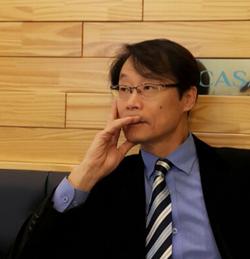
◆ Songsan (송산)
Poet and researcher of history and philosophy. Former director of the Syngman Rhee Academy. Currently serves as research advisor for the Korean Modern and Contemporary History Research Association and representative of the philosophy forum Lyceum. He has published four poetry collections, co-translated 'Heroes of the Hook Gogi,' and published 'Joseon That Became Myth' and 'Humanities on Tatami.' He is currently actively engaged in research and practice for liberal cultural movements. Songsan is a pen name.

 Iranian Foreign Ministry: "Continuing Message Exchanges with the U.S. and Activities of Mediating Countries"
Esmaeil Baghaei, Spokesperson for the Iranian Ministry of Foreign Affairs [Xinhua, Yonhap News file photo]Esmaeil Baghaei, spokesperson for the Iranian Ministry of Foreign Affairs, stated on the 26th
Iranian Foreign Ministry: "Continuing Message Exchanges with the U.S. and Activities of Mediating Countries"
Esmaeil Baghaei, Spokesperson for the Iranian Ministry of Foreign Affairs [Xinhua, Yonhap News file photo]Esmaeil Baghaei, spokesperson for the Iranian Ministry of Foreign Affairs, stated on the 26th
 President Yoon: "Do You Think You Are Safe from the Special Counsel?"... Final Statement Video Released
President Yoon Suk Yeol rebuking the special prosecutor on the 24th. [Court video / @birds_justice X account subtitle GIF] A video of President Yoon Suk Yeol's closing statement at his trial rega
President Yoon: "Do You Think You Are Safe from the Special Counsel?"... Final Statement Video Released
President Yoon Suk Yeol rebuking the special prosecutor on the 24th. [Court video / @birds_justice X account subtitle GIF] A video of President Yoon Suk Yeol's closing statement at his trial rega
 President Yoon, regarding the first-instance ruling on the Public Official Election Act: “An excessive political verdict that distorts the facts… We will appeal immediately.”
The first-instance sentencing hearing for President Yoon Suk Yeol regarding violations of the Public Official Election Act is being broadcast live at Seoul Station on the 27th. [Photo=Yonhap News]Pres
President Yoon, regarding the first-instance ruling on the Public Official Election Act: “An excessive political verdict that distorts the facts… We will appeal immediately.”
The first-instance sentencing hearing for President Yoon Suk Yeol regarding violations of the Public Official Election Act is being broadcast live at Seoul Station on the 27th. [Photo=Yonhap News]Pres
 WSJ: "SK Hynix ADR Premium Is a Sign of AI Trading Overheat"
Advertisement for SK Hynix ADR listing in New York's Times Square [Reuters=Yonhap News file photo]The Wall Street Journal (WSJ) has pointed out that the price of SK Hynix’s American Depositary Recei
WSJ: "SK Hynix ADR Premium Is a Sign of AI Trading Overheat"
Advertisement for SK Hynix ADR listing in New York's Times Square [Reuters=Yonhap News file photo]The Wall Street Journal (WSJ) has pointed out that the price of SK Hynix’s American Depositary Recei
 'Godfather of Japanese Mystery Novels' Keigo Higashino Passes Away After Battle with Cancer at 68
Famous Japanese mystery novelist Keigo Higashino [AFP=Yonhap News]It has been belatedly reported that Keigo Higashino, the "godfather of Japanese mystery novels" and author of bestsellers such as "The
'Godfather of Japanese Mystery Novels' Keigo Higashino Passes Away After Battle with Cancer at 68
Famous Japanese mystery novelist Keigo Higashino [AFP=Yonhap News]It has been belatedly reported that Keigo Higashino, the "godfather of Japanese mystery novels" and author of bestsellers such as "The
 [Park Pil-kyu Security Column] To the Ignorant Trying to Clothe a Beast in Sheep's Clothing
Rep. Kim Byung-joo of the Democratic Party of Korea [Photo=Yonhap News]“The Air Force Academy doesn't teach you how to fly a plane!” “The Army, Navy, and Air Force academies are exactly the
[Park Pil-kyu Security Column] To the Ignorant Trying to Clothe a Beast in Sheep's Clothing
Rep. Kim Byung-joo of the Democratic Party of Korea [Photo=Yonhap News]“The Air Force Academy doesn't teach you how to fly a plane!” “The Army, Navy, and Air Force academies are exactly the
 [Issue Diagnosis] Two Effects of the Election Petition Review
 [Photo] Evidence of Election Fraud Flooding U.S. Media… Trump Had 2.7 Million Votes Stolen
 [Video] U.S. Semiquincentennial Air Show... 'Art in the Sky' streaks across New York
 [Editorial Cartoon] A Draconian Law That Undermines Freedom of Expression

 List
List










