Defendants in the Revolutionary Party for National Salvation case on trial in 1973. [Kookmin Ilbo archive photo]
In the 1970s, prisons were not records of defeat for pro-North Korea leftists, but medal factories.
Their organizations collapsed, leaders were captured, and their ideology failed. After the Tongil Hyukmyung Party (Revolutionary Party for National Unification) incident in 1968, the core organization was effectively dismantled. Kim Jong-tae was executed in 1969, and key figures like Kim Jil-rak, Lee Moon-gyu, and Choi Young-do were convicted in succession. The underground revolutionary line continued to be exposed through incidents like the Revolutionary Party for National Salvation in 1974 and the National Liberation Front of South Korea (Namminjeon) in 1979. On the surface, it was a complete defeat.
However, in the 1970s, pro-North Korea leftists did not let these continuous failures remain as failures. They began the work of transforming prisons into political schools and turning prison records into moral assets. This is where the survival strategy of the pro-North Korea leftists of the 1970s was forged.
Until the late 1960s, prisons were evidence of failure within the activist circles. Being caught meant failure in security and an inability to protect the organization. In a revolutionary organization, arrest was not a heroic tale but an incident.
However, this perception changed in the 1970s. Those who were caught were reinterpreted not as incompetent leaders but as "victims of state violence." This shift did not happen by chance. As organizations collapsed one after another, acknowledging failure would have meant the collapse of the entire movement. To survive, the meaning of defeat had to be redefined. Thus, prison was repackaged not as a site of failure but as proof of conviction.
This effort intensified after the Tongil Hyukmyung Party incident. In August 1968, the Korean Central Intelligence Agency announced the arrest of 158 individuals related to the Tongil Hyukmyung Party. Of these, 73 were indicted, and key leaders, including Kim Jong-tae, received severe sentences. The organization was effectively finished.
However, within activist circles, this incident was not framed as a "failure of ideology." Instead, the memory was altered to "the state suppressed those who demanded democracy." The core elements of North Korean ties and the establishment of underground parties were hidden, and the narrative of suppression was emphasized. This marked the creation of the first prison narrative. The fact of imprisonment began to serve as proof of legitimacy.
The Revolutionary Party for National Salvation case in 1974 served as a catalyst that dramatically amplified this prison narrative. In April 1974, while investigating the People's Revolutionary Party Incident (Mincheonghakryon), the Korean Central Intelligence Agency announced the discovery of the Revolutionary Party for National Salvation's reconstructed organization. Do Ye-jong, Ha Jae-wan, Song Sang-jin, Woo Hong-seon, Lee Su-byeong, Seo Do-won, Kim Yong-won, and Yeo Jeong-nam were sentenced to death by the Supreme Court on April 8, 1975, and their executions were carried out on April 9, just 18 hours after the verdict.
This case later became a symbolic asset for the entire activist movement. Through this incident, pro-North Korea leftists secured a powerful victim narrative of "the state killed people." From this point on, prison became a space of injustice, and prisoners were reborn not as failures of revolution but as survivors of state violence.
This shift was particularly strong within the student activist movement. By the mid-1970s, "captured seniors" became a more potent educational tool than theoretical texts on university campuses. Student activist organizations at Seoul National University, Korea University, Yonsei University, Sungkyunkwan University, and Hanyang University circulated accounts from those who had been arrested and letters from prison.
The illegal printed materials typically contained three things: the arrest process, interrogation experiences, and prison life. These writings did not mention "organizational failure." Instead, they emphasized torture, solitary confinement, conviction, and endurance. The core message was not "why were you caught?" but "how did you endure?" Ideological review disappeared, leaving only the narrative of hardship. From this point on, student activism began to learn the grammar of martyrdom before ideology.
By the late 1970s, the experience of imprisonment became social capital within activist circles. While a "criminal record" typically results in disadvantages in society, the opposite was true within activist circles. A history of arrest was considered a verified track record. Who endured longer, who withstood more severe interrogations, and who refused to write a statement of renunciation became the criteria for internal hierarchy.
During this period, saying "I served X years" within activist circles was not a simple introduction of a sentence. It was a certificate of loyalty. Prisons became not places for laundering careers but for issuing career certificates.
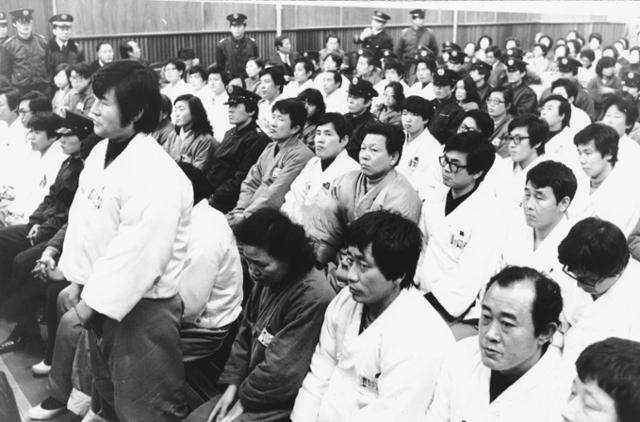 On February 4, 1980, the first trial for 73 defendants in the 'National Liberation Front of South Korea Preparatory Committee' case was held in the main courtroom of the Seoul Criminal Court. [Hankook Ilbo archive photo]
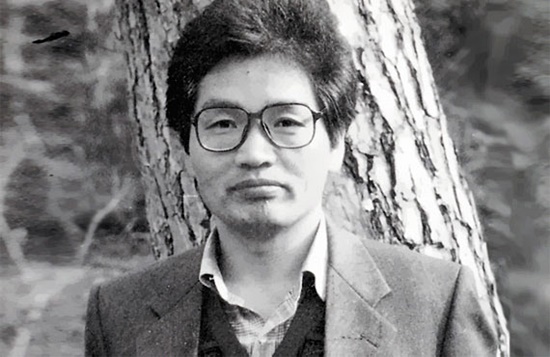 Poet Kim Nam-ju, known as a 'fighter of Namminjeon'. [Photo: Kim Nam-ju Memorial Foundation]
This culture became even more pronounced in the 1979 Namminjeon case. The National Liberation Front of South Korea Preparatory Committee, known as Namminjeon, was formed in 1976 and exposed in 1979. Lee Jae-moon, Ahn Jae-goo, Kim Nam-ju, and others were involved, and about 80 people were arrested nationwide. Prosecutors presented evidence of its anti-state nature and preparations for armed struggle.
However, the memory within activist circles differed. The dangers of the armed ideology and the failure of organizational judgment were hidden, and only "the suppression of intellectuals who opposed dictatorship" remained. Namminjeon was again re-edited not as a failed underground organization but as a suppressed resistance group. Here, prison once again served as a facility for washing away defeat.
This prison narrative also quickly solidified in personal autobiographies. From the late 1970s to the early 1980s, memoirs, personal accounts, and leaflets by former activists repeated a similar grammatical structure. Expressions like "I was dragged away," "I endured," "I did not break," and "I came out again" formed the core of these narratives.
However, something crucial was missing. Questions like "Why did the organization fail?", "Why did the public not respond?", and "Why did the North Korean-style revolutionary theory not gain traction in Korean society?" were rarely asked. There were many stories about prison, but no analysis of failure. Imprisonment was exaggerated in length, and failure was described briefly.
This approach was politically very useful. A failed revolutionary is dangerous, but a victim who returns from prison easily gains moral authority. Pro-North Korea leftists understood this point precisely. Prison served as a shield to hide organizational failures and was the easiest proof to justify themselves before the public.
The simple statement "I went to prison" bypassed scrutiny of ideology and strategy. How much one suffered took precedence over what one did. This solidified a long-standing habit within activist circles: the habit of believing that even if the ideology was wrong, suffering conferred moral superiority.
The student movement of the 1980s grew on this very legacy. The prison narrative of the 1970s became a shared asset for both the NL (National Liberation) and PD (People's Democracy) factions in the 1980s. Prison became not a record of failure but a basis of legitimacy, and arrest became not a stigma but a badge of honor.
This greatly influenced the culture of the 1980s student movement, which prioritized "struggle experience" over "ideological verification." Pro-North Korea leftists, while failing in revolution in the 1970s, perfected the art of glorifying failure. What they brought back from prison were not apologies but medals.
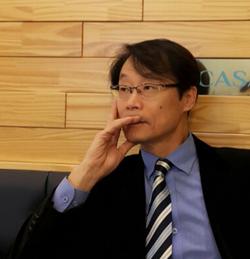
◆ Songsan
Poet and historian/philosopher researcher. Former director of the Rhee Syngman Academy. Currently serves as Senior Researcher at the Korean Modern and Contemporary History Research Association and CEO of the philosophy forum Rikeion. He has published four poetry collections, co-translated "Heroes of Hugokoji," and authored "Joseon as Myth" and "Humanities on Tatami Mats." He is actively engaged in the research and practice of liberal cultural movements. Songsan is a pen name.

 Trump pressures for rate cut again ahead of FOMC... "Should be the lowest in the world"
U.S. President Donald Trump. [Photo = The White House] U.S. President Donald Trump once again pressured the Federal Reserve, the U.S. central bank, to lower interest rates on the 27th (local time
Trump pressures for rate cut again ahead of FOMC... "Should be the lowest in the world"
U.S. President Donald Trump. [Photo = The White House] U.S. President Donald Trump once again pressured the Federal Reserve, the U.S. central bank, to lower interest rates on the 27th (local time
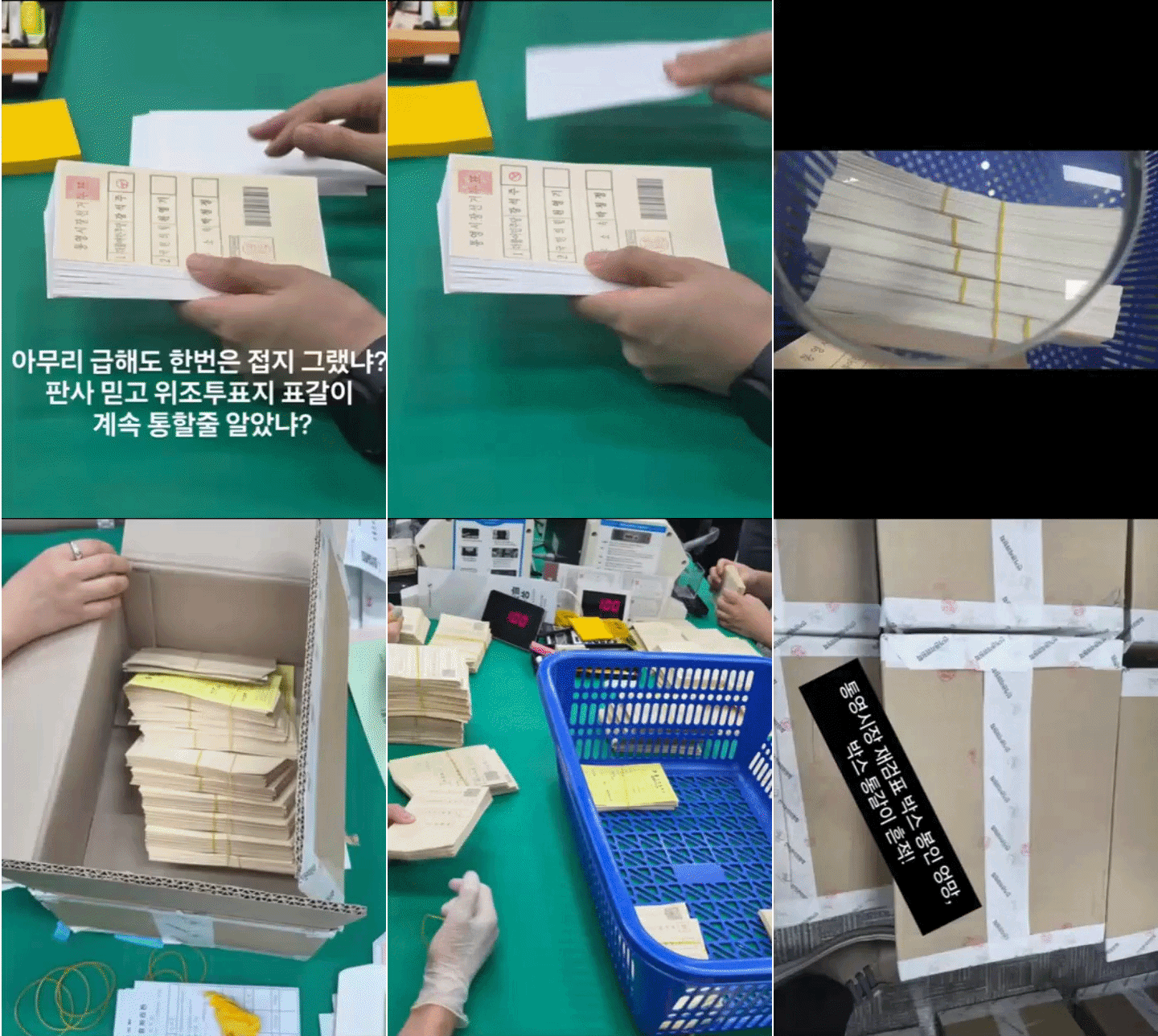 “Ignoring crisp ballots and damaged seals”… Tongyeong mayoral recount concludes with ‘no change in outcome,’ leaving suspicions and public outrage behind
Suspected counterfeit ballots discovered in Tongyeong [GIF from social media of Representative Hwang Kyo-ahn / Attorney Park Joo-hyun]During a recount of the Tongyeong mayoral election in South Gyeong
“Ignoring crisp ballots and damaged seals”… Tongyeong mayoral recount concludes with ‘no change in outcome,’ leaving suspicions and public outrage behind
Suspected counterfeit ballots discovered in Tongyeong [GIF from social media of Representative Hwang Kyo-ahn / Attorney Park Joo-hyun]During a recount of the Tongyeong mayoral election in South Gyeong
 President Yoon, regarding the first-instance ruling on the Public Official Election Act: “An excessive political verdict that distorts the facts… We will appeal immediately.”
The first-instance sentencing hearing for President Yoon Suk Yeol regarding violations of the Public Official Election Act is being broadcast live at Seoul Station on the 27th. [Photo=Yonhap News]Pres
President Yoon, regarding the first-instance ruling on the Public Official Election Act: “An excessive political verdict that distorts the facts… We will appeal immediately.”
The first-instance sentencing hearing for President Yoon Suk Yeol regarding violations of the Public Official Election Act is being broadcast live at Seoul Station on the 27th. [Photo=Yonhap News]Pres
 WSJ: "SK Hynix ADR Premium Is a Sign of AI Trading Overheat"
Advertisement for SK Hynix ADR listing in New York's Times Square [Reuters=Yonhap News file photo]The Wall Street Journal (WSJ) has pointed out that the price of SK Hynix’s American Depositary Recei
WSJ: "SK Hynix ADR Premium Is a Sign of AI Trading Overheat"
Advertisement for SK Hynix ADR listing in New York's Times Square [Reuters=Yonhap News file photo]The Wall Street Journal (WSJ) has pointed out that the price of SK Hynix’s American Depositary Recei
 'Godfather of Japanese Mystery Novels' Keigo Higashino Passes Away After Battle with Cancer at 68
Famous Japanese mystery novelist Keigo Higashino [AFP=Yonhap News]It has been belatedly reported that Keigo Higashino, the "godfather of Japanese mystery novels" and author of bestsellers such as "The
'Godfather of Japanese Mystery Novels' Keigo Higashino Passes Away After Battle with Cancer at 68
Famous Japanese mystery novelist Keigo Higashino [AFP=Yonhap News]It has been belatedly reported that Keigo Higashino, the "godfather of Japanese mystery novels" and author of bestsellers such as "The
 [Park Pil-kyu Security Column] To the Ignorant Trying to Clothe a Beast in Sheep's Clothing
Rep. Kim Byung-joo of the Democratic Party of Korea [Photo=Yonhap News]“The Air Force Academy doesn't teach you how to fly a plane!” “The Army, Navy, and Air Force academies are exactly the
[Park Pil-kyu Security Column] To the Ignorant Trying to Clothe a Beast in Sheep's Clothing
Rep. Kim Byung-joo of the Democratic Party of Korea [Photo=Yonhap News]“The Air Force Academy doesn't teach you how to fly a plane!” “The Army, Navy, and Air Force academies are exactly the
 [Issue Diagnosis] Two Effects of the Election Petition Review
 [Photo] Evidence of Election Fraud Flooding U.S. Media… Trump Had 2.7 Million Votes Stolen
 [Video] U.S. Semiquincentennial Air Show... 'Art in the Sky' streaks across New York
 [Editorial Cartoon] A Draconian Law That Undermines Freedom of Expression

 List
List