 US-China Summit that captured public attention. [Reuters=Yonhap News]
One cannot help but feel concerned when observing the perspectives of South Korea's mainstream media on the recent US-China summit, which has captured significant public attention.
Many media outlets have published incomprehensible reports, stating that "Trump knelt before Xi Jinping" or "the United States capitulated to China's pressure." We hope readers will make a calm assessment after reviewing the results of the US-China summit analyzed below.
Do Not Be Deceived by China's Rhetoric
Media reports will inevitably have their truth revealed through the actual unfolding of international affairs and objective facts.
This is similar to how, during the past US presidential election, the majority of domestic media outlets predicted a landslide victory for Hillary Clinton or Kamala Harris, but when the opposite result occurred, not a single one offered a proper explanation or apology. The truth cannot be hidden by covering it with one's palm, and the true performance of this summit lies in the balance sheet hidden behind the flamboyant rhetoric.
The power struggle and episodes that unfolded during this summit symbolically represent the positions of the two great powers. While the summit was grandly staged, it undeniably felt like rhetoric fueled by China's characteristic arrogance as a major power. President Xi Jinping made subtly disparaging remarks about the United States in his banquet speech, stating, "China has a history of 5,000 years and a population of 1.4 billion, while the United States has only 250 years of history and a population of 300 million."
However, could this display of historical pride not paradoxically reflect China's anxiety in the face of an overwhelming reality centered on the United States? Tensions between the delegations of the two countries reached their peak throughout the summit, including security and escort measures. The US delegation even discarded all items provided by the Chinese side due to security concerns before boarding their return flight.
US President Donald Trump, as if to showcase his close relationship with Japan, immediately called Japanese Prime Minister Kishida immediately after returning from the summit to explain the meeting's outcomes in detail.
Balance Sheet of Agreements Between the Two Countries
By scrutinizing the specific agreements and US demands from the summit, it is easy to see that this was by no means a victory for China. Since the inception of his "second Trump administration," President Donald Trump has consistently promoted "America First" and comprehensively worked to restore America's hegemonic position.
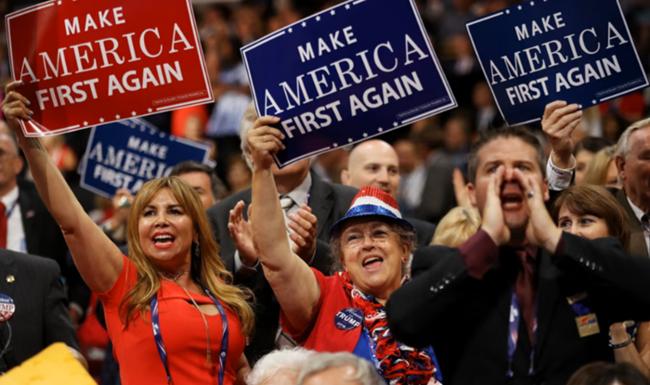 America First, which prioritizes US national interests above those of other countries, is President Donald Trump's core political ideology. [Getty Images=Yonhap News]
He reclaimed operational control of the Panama Canal from China, secured Greenland to strengthen energy security, and gained oil operational rights after arresting the dictator of Venezuela. Furthermore, by striking Iran forcefully, he disrupted China's energy import network, which relied on Iranian oil, and restored the "energy dollar hegemony" by systematically dismantling Iran's proxy forces such as Hamas, Hezbollah, and the Houthis.
Based on these tangible advantages, the US secured numerous agreements with China during this summit. Both countries agreed to oppose the blockade of the Strait of Hormuz, a vital artery of international logistics, and to oppose the imposition of tolls for passage through the strait. They also agreed on the clear principle of opposing Iran's nuclear armament. China pledged not to supply weapons to Iran.
This can be seen as a declaration that China will place the card of Iran, which it has been fully supporting behind the scenes, under US control. In addition to the above agreements, the White House Fact Sheet confirmed that President Trump and President Xi Jinping reaffirmed their common goal of denuclearizing North Korea.
Facing economic crises, including in energy, China promised to purchase a large quantity of American energy (oil, gas, etc.) and agreed to prohibit the export of raw materials for fentanyl, which has been a scourge on American society, and for solid-state batteries, which are key to the future battery market.
Moreover, President Trump brought 17 CEOs of major American corporations to the summit to pressure China for market opening. He presented China with a bill represented by the "5Bs": priority purchase of 200 Boeing aircraft (with an option for an additional 500 in the future), followed by purchases of Beans, Beef, Barrels (crude oil), and Bio products, as well as demands for the opening of China's financial markets (Banking). Even before the summit, the US had already pressured China by implementing a stringent financial sanctions network targeting Chinese oil refiners and crude oil importers.
Future Handling of the Iran Issue
Following this summit, tensions are expected to escalate further in the Middle East, the world's powder keg, and the Taiwan Strait. Firstly, regarding the relationship with Iran, the US objective is to completely halt Iran's nuclear program for the next 20 years (nuclear disarmament). The US did not request China to exert influence over Iran, as it determined it would resolve the issue itself.
Currently, Iran is facing a severe economic and environmental disaster due to the US sanctions that have halted its oil exports, forcing the closure of oil wells and resulting in oil spills.
Furthermore, Iran's international isolation is deepening, with even Saudi Arabia and the United Arab Emirates (UAE), its long-standing rivals in the Middle East, taking action against it. A multinational fleet, including South Korea, is scheduled to be deployed soon to manage the Strait of Hormuz, and signs of a "second military operation" are being detected in various quarters if an agreement between the US and Iran fails.
Taiwan Issue, China's Core Interest, and Rising Tensions
Regarding the Taiwan issue, President Xi Jinping was determined. Xi strongly demanded that the US "Back off and withdraw from involvement with Taiwan." However, President Trump remained completely unresponsive to this aggressive demand, and the heads of the US foreign and national security apparatus, such as Secretary of State Marco Rubio and Secretary of Defense Hagset, clearly stated their position of maintaining the status quo.
Additionally, regarding the $12 billion arms sale to Taiwan, Trump appears to be maintaining a strategy of strategic ambiguity, using it as a bargaining chip with China by not yet making a decision, considering various variables such as congressional approval, the situation in Taiwan, and China's stance.
In fact, Xi's aggressive stance on the Taiwan issue is more of a "domestic political maneuver" than a desire for external victory. Amidst economic difficulties, he intends to use the Taiwan issue to showcase the summit's achievements, secure his domestic support base, and intentionally create a war-like atmosphere to heighten tensions, thereby solidifying his long-term rule and ensuring his re-election in 2027.
On the other hand, the United States is not just speaking words; it is further solidifying its military commitment to defend Taiwan by working with key allies in the Asia-Pacific region, including Japan, the Philippines, and Australia, thereby pressuring China. Indeed, on April 17, the Japanese destroyer JS Ikazuchi intentionally delayed its passage through the Taiwan Strait for 14 hours as a show of force.
Comparison of US and China's Strengths and Weaknesses
Ultimately, the future hegemonic competition between the US and China will be determined by the clash of their structural strengths and weaknesses. Let us calmly compare the fundamentals of the two countries.
Category | United States (USA) | China (China) |
Strengths | * Dollar Hegemony & Financial Control * Leading in Innovative Technologies (AI, Semiconductor Design, Quantum, etc.) * Food & Energy Self-Sufficiency Possible * Global Alliance Network (NATO, Quad, AUKUS, etc.) | * World's Factory: Exclusive Manufacturing Supply Chain * Dominance in Renewable Energy Infrastructure & Battery Supply Chains * Unwavering National Mobilization Capacity & Swift Decision-Making * Vast Domestic Market (1.4 billion population) |
Weaknesses | * Political Polarization (Trumpism vs. Democratic Left/PC Ideology) * Excessive National Debt & Weakened Manufacturing Base * Potential Friction with Allies due to Unilateralist Stance | * High Foreign Dependence on Energy & Food (Malacca Strait Risk) * Demographic Cliff & Rapidly Aging Population * Rigidity of Xi Jinping's One-Man Dictatorial System & Internal Discontent * Debt Crisis (Real Estate) & Diplomatic Isolation |
As the comparison table above shows, China boasts manufacturing capabilities as the "world's factory" and a market of 1.4 billion people, but it harbors a fatal Achilles' heel due to its high dependence on foreign energy and food. The Chinese economy's engine cannot function properly if the US controls the Malacca Strait or the Strait of Hormuz.
Furthermore, the astronomical debt crisis due to the real estate collapse, the demographic cliff, and the rigidity of decision-making in a one-man dictatorial system are factors accelerating systemic collapse.
Peak China and Resilient Adaptation
Historian Thucydides spoke of the "Thucydides Trap," where war is inevitable when a rising power challenges an established hegemonic power. China has undoubtedly been the rising power that has challenged American hegemony with frightening speed over the past few decades. However, the future US-China hegemonic war is expected to unfold with the US perceiving and strategizing that China has reached "Peak China."
Although the US is also experiencing significant internal struggles, it possesses food and energy self-sufficiency and has an untiring engine in terms of demographics, thanks to the constant influx of young and talented immigrants from around the world. Coupled with its overwhelming dollar financial system and advanced technological capabilities, America's hegemony is unlikely to collapse easily.
Trump proposed a visit to Washington for the Xi couple in September of this year, which China agreed to. They are also scheduled to meet again at the APEC summit in Shenzhen, China, in November and the G20 summit in Miami, USA, in December, indicating that the two countries will continue to grapple with unresolved issues. The speed and sincerity of implementation of already agreed-upon matters will also remain a point of contention.
We must face the harsh shifts in power dynamics during this period of profound change in US-China relations and devise sophisticated and calm strategies for the survival and national interests of the Republic of Korea.
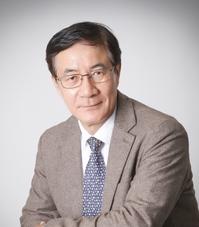
◆ Dr. Shin Dong-choon
Ph.D. in Public Administration, Representative of the National Union for Freedom and Unification. After passing the 21st Higher Civil Service Examination, he had a career in public service, followed by roles as a CEO, university professor, media contributor, author, and Chairman of the Global Aerospace Industry Association, engaging in a wide range of activities.

 Iranian Foreign Ministry: "Continuing Message Exchanges with the U.S. and Activities of Mediating Countries"
Esmaeil Baghaei, Spokesperson for the Iranian Ministry of Foreign Affairs [Xinhua, Yonhap News file photo]Esmaeil Baghaei, spokesperson for the Iranian Ministry of Foreign Affairs, stated on the 26th
Iranian Foreign Ministry: "Continuing Message Exchanges with the U.S. and Activities of Mediating Countries"
Esmaeil Baghaei, Spokesperson for the Iranian Ministry of Foreign Affairs [Xinhua, Yonhap News file photo]Esmaeil Baghaei, spokesperson for the Iranian Ministry of Foreign Affairs, stated on the 26th
 President Yoon: "Do You Think You Are Safe from the Special Counsel?"... Final Statement Video Released
President Yoon Suk Yeol rebuking the special prosecutor on the 24th. [Court video / @birds_justice X account subtitle GIF] A video of President Yoon Suk Yeol's closing statement at his trial rega
President Yoon: "Do You Think You Are Safe from the Special Counsel?"... Final Statement Video Released
President Yoon Suk Yeol rebuking the special prosecutor on the 24th. [Court video / @birds_justice X account subtitle GIF] A video of President Yoon Suk Yeol's closing statement at his trial rega
 President Yoon, regarding the first-instance ruling on the Public Official Election Act: “An excessive political verdict that distorts the facts… We will appeal immediately.”
The first-instance sentencing hearing for President Yoon Suk Yeol regarding violations of the Public Official Election Act is being broadcast live at Seoul Station on the 27th. [Photo=Yonhap News]Pres
President Yoon, regarding the first-instance ruling on the Public Official Election Act: “An excessive political verdict that distorts the facts… We will appeal immediately.”
The first-instance sentencing hearing for President Yoon Suk Yeol regarding violations of the Public Official Election Act is being broadcast live at Seoul Station on the 27th. [Photo=Yonhap News]Pres
 WSJ: "SK Hynix ADR Premium Is a Sign of AI Trading Overheat"
Advertisement for SK Hynix ADR listing in New York's Times Square [Reuters=Yonhap News file photo]The Wall Street Journal (WSJ) has pointed out that the price of SK Hynix’s American Depositary Recei
WSJ: "SK Hynix ADR Premium Is a Sign of AI Trading Overheat"
Advertisement for SK Hynix ADR listing in New York's Times Square [Reuters=Yonhap News file photo]The Wall Street Journal (WSJ) has pointed out that the price of SK Hynix’s American Depositary Recei
 'Godfather of Japanese Mystery Novels' Keigo Higashino Passes Away After Battle with Cancer at 68
Famous Japanese mystery novelist Keigo Higashino [AFP=Yonhap News]It has been belatedly reported that Keigo Higashino, the "godfather of Japanese mystery novels" and author of bestsellers such as "The
'Godfather of Japanese Mystery Novels' Keigo Higashino Passes Away After Battle with Cancer at 68
Famous Japanese mystery novelist Keigo Higashino [AFP=Yonhap News]It has been belatedly reported that Keigo Higashino, the "godfather of Japanese mystery novels" and author of bestsellers such as "The
 [Park Pil-kyu Security Column] To the Ignorant Trying to Clothe a Beast in Sheep's Clothing
Rep. Kim Byung-joo of the Democratic Party of Korea [Photo=Yonhap News]“The Air Force Academy doesn't teach you how to fly a plane!” “The Army, Navy, and Air Force academies are exactly the
[Park Pil-kyu Security Column] To the Ignorant Trying to Clothe a Beast in Sheep's Clothing
Rep. Kim Byung-joo of the Democratic Party of Korea [Photo=Yonhap News]“The Air Force Academy doesn't teach you how to fly a plane!” “The Army, Navy, and Air Force academies are exactly the
 [Issue Diagnosis] Two Effects of the Election Petition Review
 [Photo] Evidence of Election Fraud Flooding U.S. Media… Trump Had 2.7 Million Votes Stolen
 [Video] U.S. Semiquincentennial Air Show... 'Art in the Sky' streaks across New York
 [Editorial Cartoon] A Draconian Law That Undermines Freedom of Expression

 List
List









