 Editorial Board Member, Hankook Ilbo. Korea Military Academy, Class of '40
The current government is considering a two-stage plan for integrating service academies: first, by converting each academy into an agency directly under the Ministry of National Defense, and second, by establishing a "Republic of Korea Service Academy." To this end, it plans to amend the current "Act on the Establishment of Service Academies." The integration of the Korea Military Academy and the Korea Army Academy, which was initially planned as a preparatory step for service academy integration, appears to have been suspended, perhaps due to concerns about the Army's overwhelming influence.
The justification for integrating service academies is to enhance inter-Army, Navy, and Air Force cooperation and joint operational capabilities to effectively respond to future warfare environments, and to prevent cartels formed by specific alumni groups, such as the past "Hanahoe," thereby strengthening the military's political neutrality. If their logic of distrust in the military holds, a larger, new form of cartel will emerge when all officers are produced from an integrated academy. Therefore, the stated concern about cartelization within specific branches of the military is merely political rhetoric.
Beneath this justification lies an emotional response and political retaliation from the political sphere regarding the numerous high-ranking officers from the Korea Military Academy during the December 3rd state of emergency martial law. This is an expression of a monolithic way of thinking by a few politicians and the current security leadership who fail to understand the diversity of war and military functions, and it is nothing more than a clumsy military control policy stemming from the current administration's political insecurity.
1. The current government's push for service academy integration is an act of destroying the military.
The integration of service academies is a rushed administrative move by politicians and security chiefs who lack a proper understanding of the military's educational system and traditions, designed to complete a "rebellion frame" and eliminate the roots of the service academies. This can be likened to Qin Shi Huang's burning of books and burying of scholars to eliminate thoughts that threatened his rule. While the burning of books and burying of scholars aimed to erase ideas, the integration of service academies can be inferred as an attempt to erase the traditions of each branch of the military.
In reality, no specific service academy cartel has ever existed. Attempting to integrate service academies by fabricating and dismantling a phantom cartel is comparable to King Gojong's regent Heungseon Daewongun's order to dismantle private academies (Seowon) to break the vested interests of the Joseon Dynasty's Confucian elite and strengthen royal authority. Although the number of academies nationwide was consolidated to 47, the final outcome was the downfall of the nation.
The service academy integration policy is the result of focusing solely on superficial problem-solving without a deep understanding of the military. Integrating service academies will damage and obliterate the traditions, identity, and expertise of each military branch, leading to a qualitative weakening of the officer corps, a reduction in national defense capabilities, a decline in military morale, and ultimately, a critical consequence where the military is perpetually dragged into politics. If the security leaders and politicians understood the current morale level of the military and the future functional needs of the Republic of Korea's armed forces, they would pursue a direction that enhances "cooperation" and "communication" while maximizing the expertise of each military branch, rather than a physical integration of service academies. Do they not understand the principle that the twelve strings of the gayageum produce beautiful sounds by resonating when separated?
2. Service academy integration undermines the intent of the National Defense Establishment Act and constitutional values.
The Constitution and the National Defense Establishment Act clearly distinguish between the Army, Navy, and Air Force and respect the unique expertise of each branch. The integration of service academies would dismantle the officer training system that considers the specific characteristics of each branch, nullify military-related legislation, and potentially undermine constitutional values such as the military's political neutrality and the efficient fulfillment of national defense duties.
The absence of specialized education for each branch will lead to a decline in officer expertise and can cause confusion in the officer recruitment process. Service academy integration is a dangerous concept that poses critical risks to national security, leading to a weakening of military combat power and efficiency, thereby undermining national defense and jeopardizing the stability of the military organization. True jointness enhancement should be achieved by fostering cooperation and communication while maximizing the expertise of each branch, rather than through integration.
3. Institutionalizing expanded exchange to promote jointness rather than service academy integration.
Those with a uniform and strong totalitarian tendency tend to feel at ease when they can gather and control things in one place rather than allowing them to function independently. This is a characteristic trait of dictators. Proponents of service academy integration cite the examples of Germany and Canada, which have integrated their service academies. Germany employs a dual system where officers receive academic education at the Federal Armed Forces University after completing their respective branch training, and Canada also integrates officer training at the Royal Military College (RMC). However, South Korea's military environment is significantly different from the training systems of these countries.
Korea still faces a clear threat from North Korea, and the Army, Navy, and Air Force must maintain an airtight defense posture based on their respective expertise. In particular, the Navy and Air Force require a high level of specialized knowledge to handle advanced technology and complex weapon systems. The United States also operates separate Army, Navy, and Air Force academies, opting for a method that maximizes jointness and expertise for each branch, a point for those tasked with service academy integration to consider.
It is truly ironic that, even while witnessing hybrid warfare dominated by AI robots and precision-guided drones, some seek jointness over diversity. Jointness is an area of unified command, control, and governance, not a panacea for all military functions.
Instead of integrating service academies, I propose investing just 1% of the service academy integration budget to establish a "Graduate School of Military Leadership" focused on field-grade officers within the National Defense University, and to open "AI-based Jointness Understanding," "Management and Training of the MZ Generation," "Leadership," and "Security, Military Diplomacy, Politics, and Economics" courses at the National Defense University's Graduate School of National Security and the National Defense University’s Graduate School of Policy, covering beginner, intermediate, and advanced levels, for all officers of each military branch to complete.
#ServiceAcademyIntegration #MilitaryTradition #WeakeningDefense #PoliticalMilitaryControl #ConstitutionalViolation #StrengtheningJointness #MilitaryEducation #NationalDefenseEstablishmentAct #SecurityPolicy #MilitaryLeadership
※ The views of external contributors may differ from the editorial direction of this publication.

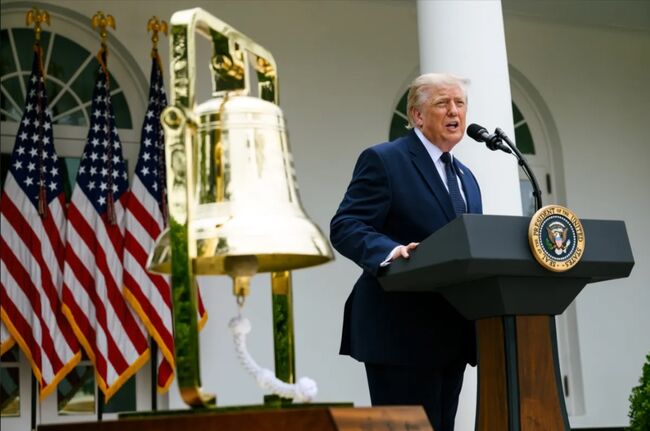 Trump pressures for rate cut again ahead of FOMC... "Should be the lowest in the world"
U.S. President Donald Trump. [Photo = The White House] U.S. President Donald Trump once again pressured the Federal Reserve, the U.S. central bank, to lower interest rates on the 27th (local time
Trump pressures for rate cut again ahead of FOMC... "Should be the lowest in the world"
U.S. President Donald Trump. [Photo = The White House] U.S. President Donald Trump once again pressured the Federal Reserve, the U.S. central bank, to lower interest rates on the 27th (local time
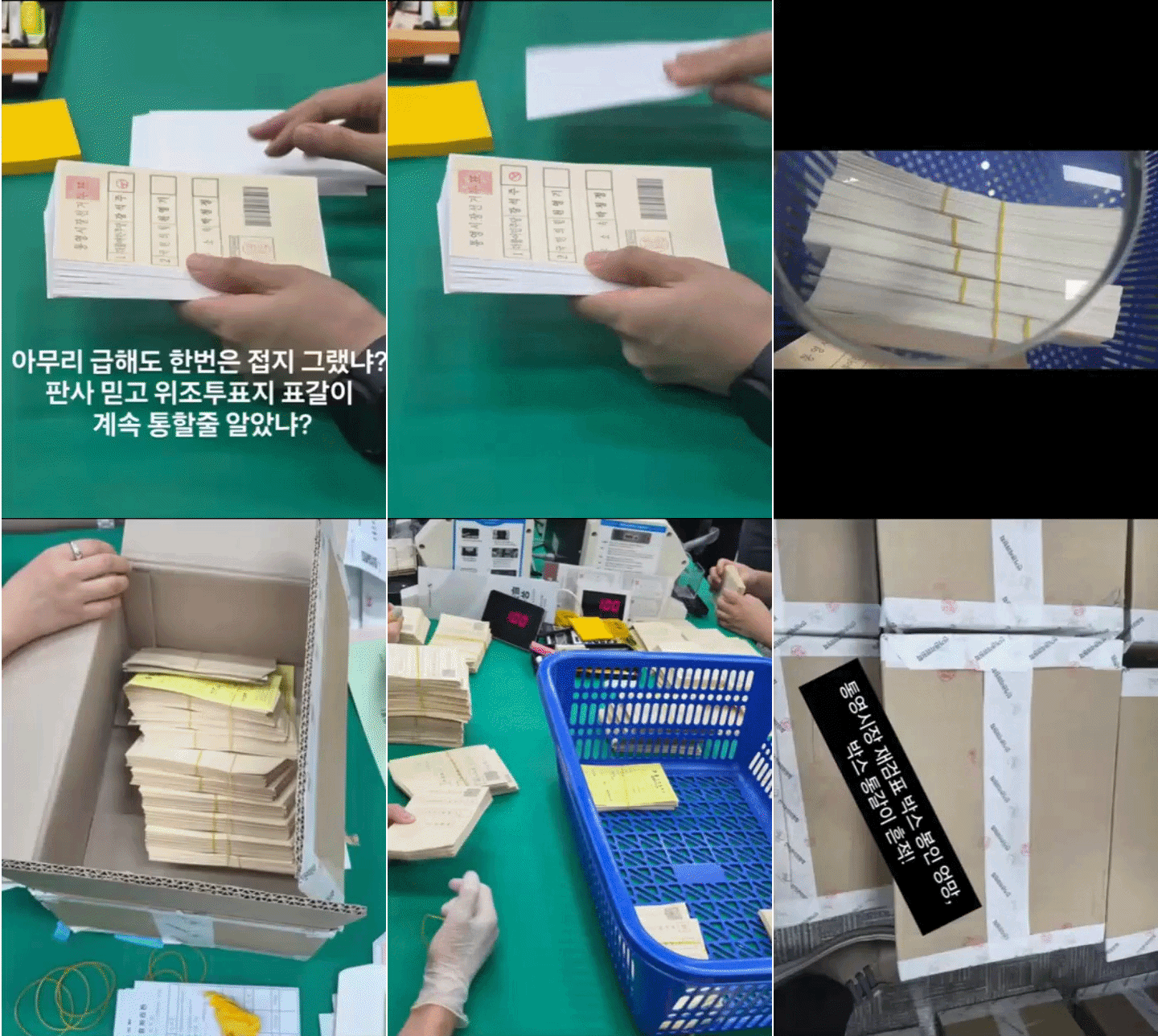 “Ignoring crisp ballots and damaged seals”… Tongyeong mayoral recount concludes with ‘no change in outcome,’ leaving suspicions and public outrage behind
Suspected counterfeit ballots discovered in Tongyeong [GIF from social media of Representative Hwang Kyo-ahn / Attorney Park Joo-hyun]During a recount of the Tongyeong mayoral election in South Gyeong
“Ignoring crisp ballots and damaged seals”… Tongyeong mayoral recount concludes with ‘no change in outcome,’ leaving suspicions and public outrage behind
Suspected counterfeit ballots discovered in Tongyeong [GIF from social media of Representative Hwang Kyo-ahn / Attorney Park Joo-hyun]During a recount of the Tongyeong mayoral election in South Gyeong
 President Yoon, regarding the first-instance ruling on the Public Official Election Act: “An excessive political verdict that distorts the facts… We will appeal immediately.”
The first-instance sentencing hearing for President Yoon Suk Yeol regarding violations of the Public Official Election Act is being broadcast live at Seoul Station on the 27th. [Photo=Yonhap News]Pres
President Yoon, regarding the first-instance ruling on the Public Official Election Act: “An excessive political verdict that distorts the facts… We will appeal immediately.”
The first-instance sentencing hearing for President Yoon Suk Yeol regarding violations of the Public Official Election Act is being broadcast live at Seoul Station on the 27th. [Photo=Yonhap News]Pres
 WSJ: "SK Hynix ADR Premium Is a Sign of AI Trading Overheat"
Advertisement for SK Hynix ADR listing in New York's Times Square [Reuters=Yonhap News file photo]The Wall Street Journal (WSJ) has pointed out that the price of SK Hynix’s American Depositary Recei
WSJ: "SK Hynix ADR Premium Is a Sign of AI Trading Overheat"
Advertisement for SK Hynix ADR listing in New York's Times Square [Reuters=Yonhap News file photo]The Wall Street Journal (WSJ) has pointed out that the price of SK Hynix’s American Depositary Recei
 'Godfather of Japanese Mystery Novels' Keigo Higashino Passes Away After Battle with Cancer at 68
Famous Japanese mystery novelist Keigo Higashino [AFP=Yonhap News]It has been belatedly reported that Keigo Higashino, the "godfather of Japanese mystery novels" and author of bestsellers such as "The
'Godfather of Japanese Mystery Novels' Keigo Higashino Passes Away After Battle with Cancer at 68
Famous Japanese mystery novelist Keigo Higashino [AFP=Yonhap News]It has been belatedly reported that Keigo Higashino, the "godfather of Japanese mystery novels" and author of bestsellers such as "The
 [Park Pil-kyu Security Column] To the Ignorant Trying to Clothe a Beast in Sheep's Clothing
Rep. Kim Byung-joo of the Democratic Party of Korea [Photo=Yonhap News]“The Air Force Academy doesn't teach you how to fly a plane!” “The Army, Navy, and Air Force academies are exactly the
[Park Pil-kyu Security Column] To the Ignorant Trying to Clothe a Beast in Sheep's Clothing
Rep. Kim Byung-joo of the Democratic Party of Korea [Photo=Yonhap News]“The Air Force Academy doesn't teach you how to fly a plane!” “The Army, Navy, and Air Force academies are exactly the
 [Issue Diagnosis] Two Effects of the Election Petition Review
 [Photo] Evidence of Election Fraud Flooding U.S. Media… Trump Had 2.7 Million Votes Stolen
 [Video] U.S. Semiquincentennial Air Show... 'Art in the Sky' streaks across New York
 [Editorial Cartoon] A Draconian Law That Undermines Freedom of Expression

 List
List










