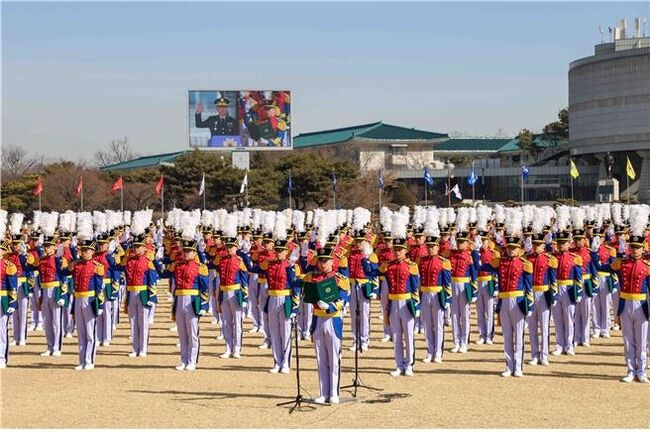
 83rd Class cadets at the Korea Military Academy taking their entrance oath [Photo=Korea Military Academy]
Among the slogans used by retired military officers protesting the current government's plan to close the three military academies is: "Closure of the Army, Navy, and Air Force Academies - Destruction of core national defense capabilities - Ignoring public opposition - Forcing policies by refusing open debate - Anti-democratic, anti-national dictatorship."
This argument condemns the current government's policy of shutting down the three military academies—including the 80-year-old Korea Military Academy—destroying Hwarangdae, the cradle of our national defense history and tradition, and forcing the creation of a unified "National Armed Forces Academy." Let us carefully examine why this argument holds weight.
First, the "anti-democratic" nature of the policy is exactly as the slogans suggest. Since the beginning of this year, when the government's policy to abolish and merge the military academies began to leak from behind closed doors, the alumni associations of the three academies have held two forums to diagnose the policy, identifying it as unjust and opposing it.
Furthermore, they have demanded open discussions, such as public hearings, from the government. However, the defense authorities, unable to rationalize the legitimacy of their policy against opposing logic, have been avoiding these requests.
In particular, as the reality of this absurd policy has become known to the general public, who were previously indifferent, opposition has surged to over 70%. Despite criticism from major media editorials and columns, the government continues to ignore all these concerns.
Many retired officers from the Korea Military Academy, led by their alumni association, have been leading public opinion through professional column contributions and other means.
In solidarity, various military reserve groups, including former Chiefs of Staff and past Academy Superintendents, have held press conferences and issued statements urging the withdrawal of the policy, thereby forming a strong tide of public opposition.
Only then did the government recognize the gravity of the situation and belatedly trot out a few generals who support the policy to counter the opposition. However, this was insufficient to silence the opposition's logic, and the number of participating generals was merely a "drop in the bucket." Those presenting in favor of the government policy were not even in a position to engage in open debate with the opposition.
On July 22, a "Policy Debate on the Creation of the National Armed Forces Academy" was held at the Heonjeonghoe Policy Research Institute at the National Assembly, co-hosted by the National Defense Committee. All individuals who participated as hosts, delivered welcoming or congratulatory remarks, or served as moderators were affiliated with the Democratic Party. An opportunity for opposing views, requested by figures from the opposing side who were present as observers, was denied.
The policy briefings held by the Ministry of National Defense for key officials of each military branch were also nothing more than one-sided propaganda. They were not policy briefings in the true sense, which would involve examining and supplementing the background, content, expected effects, and side effects of the policy.
The public hearing scheduled for August is also titled a "Unified Military Academy Public Hearing." It is a hearing conducted with the premise of "creating a National Armed Forces Academy" without undergoing any public deliberation process such as debates involving both proponents and opponents beforehand. One cannot help but point out that this is a distinctly North Korean style of conduct.
The North Korean Workers' Party regime has shown consistent characteristics throughout countless inter-Korean and U.S.-North Korea dialogues. The political negotiation tactics of the Communist Party view dialogue as a battle, conducted according to negotiation strategies. The most representative trick is for the North to preemptively set the agenda.
Whether it is inter-Korean negotiations for realizing a federation, U.S.-North Korea negotiations for the withdrawal of U.S. forces, or denuclearization talks that effectively recognize North Korea's nuclear possession, they only put their own demands on the agenda. The current government's behavior resembles this North Korean Communist method.
The refusal to allow opposing views at the National Assembly's policy debate on the academy abolition/merger, led by the ruling Democratic Party, and the labeling and punishment of the presumption of North Korean involvement in the Gwangju 5·18 Democratization Movement as "distorted, false information," are all similar. The left-wing regime is displaying anti-democratic behavior that eradicates the freedom of dissent.
Then, why is the abolition and merger of the military academies "anti-national"? It is because it destroys the core capabilities of national defense and obliterates the morale and patriotic spirit of the officers.
To those from military academies, especially the Korea Military Academy, Hwarangdae—the bedrock of Korea's history and tradition of national defense—is the home of the patriotic spirit where loyalty, honor, and faith are forged through four years of disciplined training, and it serves as a lifelong source of pride.
For those from the Korea Military Academy, whether they are cadets, active-duty officers, or reservists, losing Hwarangdae would cause immeasurable mental loss and trauma. No one can deny the resulting decline in morale and the loss of the will to defend the nation.
A Democratic Party lawmaker, a former general who supports the government's forced closure of the military academies, has been making absurd remarks such as, "The current four-year curriculum at the military academy is no different from that of a regular university." It is questionable what kind of spirit that individual possessed during his four years at the academy. It seems he may have been focused solely on becoming a politician early on while majoring in philosophy.
How can the rigorous internal life under the cadet self-governance system with clear hierarchies between seniors and juniors, the maintenance of academic grades under threat of expulsion, the observance of various school regulations, and the daily physical training and martial arts practice to build strong combat power be considered equivalent to the experience at a regular university?
How can a cadet who lives with his peers and seniors in a dormitory for four years be compared to a university student who commutes from home?
Are they suggesting that we can abolish the mental and physical training grounds that transform cadets into capable troop commanders through daily testing that requires split-second judgment and the study of organizational management and leadership? To dismantle this is an idea no different from being an anti-national traitor.
The Minister of National Defense stated he would meet with the alumni associations of the three military academies to hear their opinions. To avoid being labeled as an anti-national traitorous faction, he must open a public hearing that can accommodate true opposition and be witnessed by the entire nation.
Stop the one-sided policy debates that lack even a dissenting view, much like the Workers' Party policy lectures or Kim Il-sung Juche ideology seminars led by the North Korean propaganda department.
The government must abandon the North Korean style of political behavior that refuses to acknowledge dissent. Otherwise, the label of being "pro-North Korean forces" will never be erased. Are there not already many key figures in the current government who have been involved in past activities that were effectively aiding North Korea or constituted espionage?
I emphasize my firm belief once again: The "principle of infallibility," which applies only to the North Korean leader and the Workers' Party, cannot prevail in the Republic of Korea.
The feudal, hereditary, dictatorial, and iron-fisted governing style of the North Korean Workers' Party, which tolerates immorality, unethical conduct, and illegality in the name of revolution, can never be tolerated here either.
The forced closure of the three military academies and the creation of a unified National Armed Forces Academy, packaged as "defense reform," is part of a revolution aiding the communization of the South by attempting to negate the history and tradition of the ROK Armed Forces through the regression of the academies and the destruction of Hwarangdae.
I hope the current government, which is dogmatically pushing through matters of state importance while ignoring even dissenting opinions, will escape the label of being a "North Korea-like, pro-North, anti-democratic, dictatorial regime."
◆ Ilgo Kim Myung-soo
Korea Military Academy, 27th Class
Retired Army Major
Former Director of North Korean Psychological Warfare, Agency for National Security Planning

 [Statement by the ROK Military Academy National Salvation Comrades Association] ㉜Jang Dong-hyuk and Kim Moon-soo must stake their lives on eradicating election fraud
Former Minister of Labor Kim Moon-soo (left) and People Power Party representative Jang Dong-hyuk. [Photo = Yonhap News]The Republic of Korea cannot take a single step forward without eradicating elec
[Statement by the ROK Military Academy National Salvation Comrades Association] ㉜Jang Dong-hyuk and Kim Moon-soo must stake their lives on eradicating election fraud
Former Minister of Labor Kim Moon-soo (left) and People Power Party representative Jang Dong-hyuk. [Photo = Yonhap News]The Republic of Korea cannot take a single step forward without eradicating elec
 Altman Visits U.S. Congress… Discusses AI Regulation Amidst 'GPT Hacking' Shock
OpenAI CEO Sam Altman visits the U.S. Capitol in Washington, D.C., on the 29th (local time) for meetings with U.S. senators. [Getty Images/AFP=Yonhap News]Sam Altman, CEO of ChatGPT developer OpenAI,
Altman Visits U.S. Congress… Discusses AI Regulation Amidst 'GPT Hacking' Shock
OpenAI CEO Sam Altman visits the U.S. Capitol in Washington, D.C., on the 29th (local time) for meetings with U.S. senators. [Getty Images/AFP=Yonhap News]Sam Altman, CEO of ChatGPT developer OpenAI,
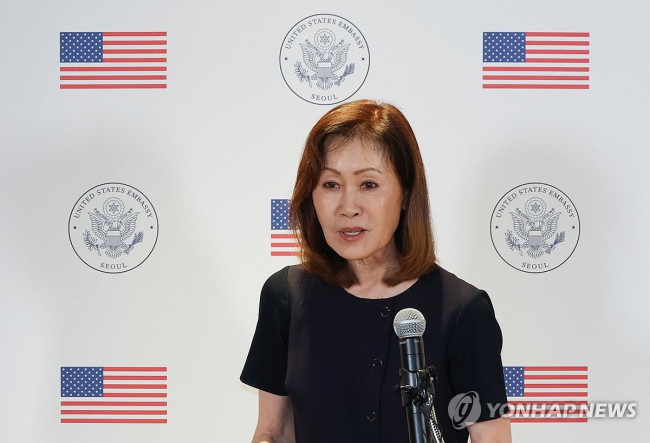 Arriving at Incheon Airport, U.S. Ambassador to South Korea Steel said, "We will realize The U.S. President Donald Trump's vision for a stronger ROK-U.S. alliance."
U.S. Ambassador to South Korea Michelle Steel arrives in South Korea via Incheon International Airport on the 30th and delivers a statement at a Terminal 2 event venue. [Photo=Yonhap News]U.S. A
Arriving at Incheon Airport, U.S. Ambassador to South Korea Steel said, "We will realize The U.S. President Donald Trump's vision for a stronger ROK-U.S. alliance."
U.S. Ambassador to South Korea Michelle Steel arrives in South Korea via Incheon International Airport on the 30th and delivers a statement at a Terminal 2 event venue. [Photo=Yonhap News]U.S. A
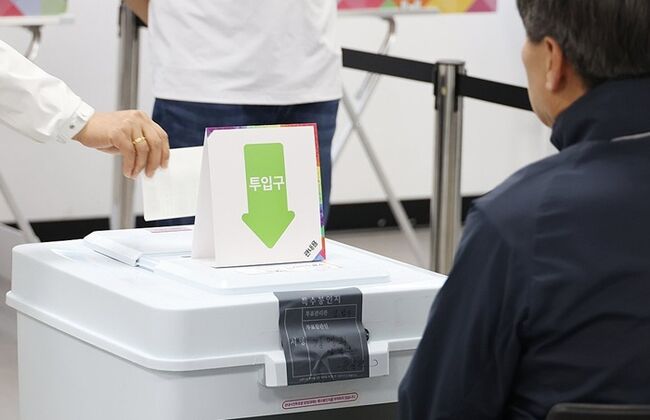 Throughout the lunch hour when voters were flocking to the polls, the count remained at '0'… Controversy arises over voter turnout tallies in Pyeongtaek, Guri, and other regions
In some local governments, such as Pyeongtaek and Guri in Gyeonggi Province, the number of voters during early and main voting failed to increase during certain time slots or recorded abnormally low f
Throughout the lunch hour when voters were flocking to the polls, the count remained at '0'… Controversy arises over voter turnout tallies in Pyeongtaek, Guri, and other regions
In some local governments, such as Pyeongtaek and Guri in Gyeonggi Province, the number of voters during early and main voting failed to increase during certain time slots or recorded abnormally low f
 'Gap investment' with no capital leads to 67 billion won in stolen jeonse deposits… 15-year prison sentence upheld in second trial
Real estate gap investment [Yonhap News file photo]A businessman who swindled approximately 67 billion won from 349 victims through a "no-capital" gap investment scheme has been handed a heavy sentenc
'Gap investment' with no capital leads to 67 billion won in stolen jeonse deposits… 15-year prison sentence upheld in second trial
Real estate gap investment [Yonhap News file photo]A businessman who swindled approximately 67 billion won from 349 victims through a "no-capital" gap investment scheme has been handed a heavy sentenc
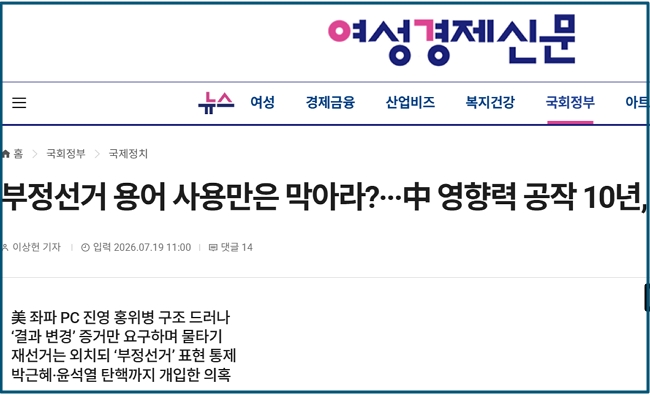 [Media Criticism] From an estimate of ‘100 people’ to ‘far-right led’ and ‘China connections’… What is the basis for the All-Gong report?
Screenshot of the Women's Economic Daily websiteKim Sang-soon, a Ph.D. in International Relations from Peking University and an expert on Chinese affairs, has filed a formal request with the Press Arb
[Media Criticism] From an estimate of ‘100 people’ to ‘far-right led’ and ‘China connections’… What is the basis for the All-Gong report?
Screenshot of the Women's Economic Daily websiteKim Sang-soon, a Ph.D. in International Relations from Peking University and an expert on Chinese affairs, has filed a formal request with the Press Arb
 [Photo] Evidence of Election Fraud Flooding U.S. Media… Trump Had 2.7 Million Votes Stolen
 [Video] U.S. Semiquincentennial Air Show... 'Art in the Sky' streaks across New York
 [Editorial Cartoon] A Draconian Law That Undermines Freedom of Expression

 List
List