[Photo=Yonhap News]
“‘Dismissal of Indictment’ Added at the Last Minute: For Whom Is This Clause?” (Editorial)
“‘Guarding with Empty Guns’ at the Frontline After Removing Live Ammo: The Military Is Becoming Increasingly Bizarre” (Editorial)
“Despite the World’s Worst Stock Market Volatility, the Blue House Says, ‘It’s Not Just Korea’” (Editorial)
“The President’s ‘Landlord Loan’ Demonstrating Inequality” (Espresso)
“Semiconductor Factories Built Over Earthquakes” (Manmulsang)
“A Regime Like a ‘Giant Without a Frontal Lobe’” (Yang Sang-hoon Column)
“The Human Rights Commission’s ‘Same Handcuffs, Different Standards’” (Reporter’s View)
If you open the Chosun Ilbo dated July 30, 2026, the atmosphere is unusual. Editorials and columns are filled with articles directly criticizing government policy and state administration. It is a stark contrast to a tone that was considered favorable to the government only a short time ago.
News is circulating in and outside the media industry that full-scale coverage and investigative reports are also being prepared regarding allegations of election fraud, which have been treated as a taboo until now. If true, this is a sign of significant change.
The raison d'être of the press is to monitor power. If so, is this current change at the Chosun Ilbo a return to the media's true role? Or is it a pragmatic choice reflecting rapidly shifting public sentiment and the political landscape?
In particular, the change in Yang Sang-hoon’s column is symbolic.
Yang Sang-hoon, who criticized the Yoon Suk-yeol administration more intensely than anyone else, is now pouring out the same level of criticism toward the Lee Jae-myung government. Pointing out the administration’s handling of affairs, including the controversy over the dismissal of indictments, he even used the sharp metaphor of a “giant without a frontal lobe.”
While criticism toward Yoon Suk-yeol continues, it gives the impression that the stance has shifted from previous sycophancy to a critical posture, likening the Lee Jae-myung regime to a giant with a malfunctioning frontal lobe.
However, the standard for evaluating the media is not whom it criticizes, but whether it applies the same standards to everyone.
Conservatives have consistently argued that legacy media, including the Chosun Ilbo, were particularly strict toward the Park Geun-hye and Yoon Suk-yeol administrations while remaining relatively lenient toward progressive-leaning governments.
Controversies surrounding the coverage of Gwanghwamun rallies, allegations of election fraud, and the handling of various perspectives regarding the May 18 Democratic Uprising have also been cited as reasons for this distrust.
There is an assessment that the long-term rallies at Olympic Park following the June 3 election fraud allegations were a case that re-exposed this critical awareness. The rallies, which continued for a long period, calling for a “re-election” and “same-day voting and manual counting” without any organized leadership, were a symbol of spontaneous civic movement for the participants. However, many media outlets were criticized for failing to provide sufficient coverage.
As time passed, various controversies surrounding the administration surfaced, and the media’s reporting trend is changing noticeably. As articles criticizing government policies and various allegations increase, some evaluate that “the media is finally recovering its proper function.” On the other hand, there is not a little cynicism that “they are just belatedly following the flow of public opinion.”
The media must be even more rigorous as power becomes stronger. If it remains silent when power is at its peak and only raises its voice when it begins to decline, readers will suspect the media’s calculations before its sense of justice. The media’s greatest asset is not influence, but trust, and trust comes from consistency.
Whether this change will end as a temporary shift in tone or become a new beginning of monitoring power by the same standards regardless of its political color will be answered by future reports.
What readers are watching is not the intensity of the criticism against a specific regime. It is whether the same principles and standards are maintained regardless of which regime is in power. That is the only way for the media to prove its reason for existence in a democratic society and the first step toward restoring the trust of readers.
However, today’s change in tone does not mean that past controversies and criticisms will all disappear. If the media exists to monitor power, the media itself must also be subject to the public’s monitoring and evaluation. In a democratic society, no power can be an exception, and media power is no different.
If the criticism that the media lost its balance and fact-checking capabilities at a certain time and exerted excessive influence on shaping public opinion is valid, then it must be held accountable. Of course, that accountability must be fulfilled through necessary institutional verification. What is important is not to forget the past, but to ensure that the same things do not recur.
In other words, what readers truly desire is not which government is criticized. It is a media that monitors with the same principles and standards regardless of whose hands power rests in, and a media that knows how to admit responsibility for its own mistakes. That is the path for the media to restore trust and the most important foundation for safeguarding liberal democracy.
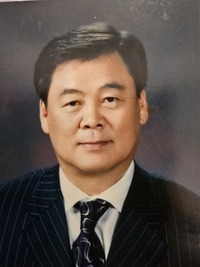
◆ Jeong Seong-hong
Chairman of The Hanmiilbo
Former Executive of the National Intelligence Service

 [Statement by the ROK Military Academy National Salvation Comrades Association] ㉜Jang Dong-hyuk and Kim Moon-soo must stake their lives on eradicating election fraud
Former Minister of Labor Kim Moon-soo (left) and People Power Party representative Jang Dong-hyuk. [Photo = Yonhap News]The Republic of Korea cannot take a single step forward without eradicating elec
[Statement by the ROK Military Academy National Salvation Comrades Association] ㉜Jang Dong-hyuk and Kim Moon-soo must stake their lives on eradicating election fraud
Former Minister of Labor Kim Moon-soo (left) and People Power Party representative Jang Dong-hyuk. [Photo = Yonhap News]The Republic of Korea cannot take a single step forward without eradicating elec
 Altman Visits U.S. Congress… Discusses AI Regulation Amidst 'GPT Hacking' Shock
OpenAI CEO Sam Altman visits the U.S. Capitol in Washington, D.C., on the 29th (local time) for meetings with U.S. senators. [Getty Images/AFP=Yonhap News]Sam Altman, CEO of ChatGPT developer OpenAI,
Altman Visits U.S. Congress… Discusses AI Regulation Amidst 'GPT Hacking' Shock
OpenAI CEO Sam Altman visits the U.S. Capitol in Washington, D.C., on the 29th (local time) for meetings with U.S. senators. [Getty Images/AFP=Yonhap News]Sam Altman, CEO of ChatGPT developer OpenAI,
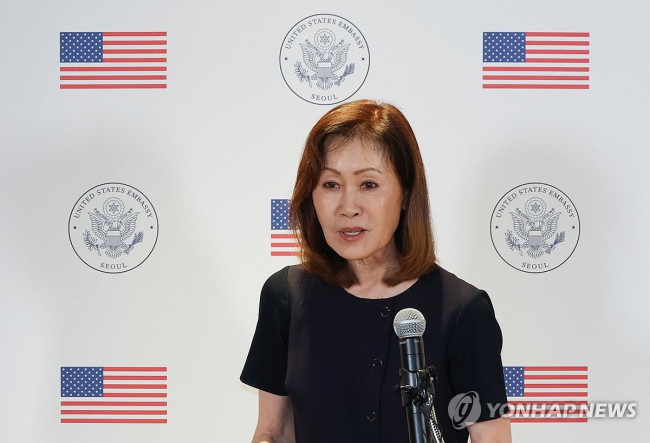 Arriving at Incheon Airport, U.S. Ambassador to South Korea Steel said, "We will realize The U.S. President Donald Trump's vision for a stronger ROK-U.S. alliance."
U.S. Ambassador to South Korea Michelle Steel arrives in South Korea via Incheon International Airport on the 30th and delivers a statement at a Terminal 2 event venue. [Photo=Yonhap News]U.S. A
Arriving at Incheon Airport, U.S. Ambassador to South Korea Steel said, "We will realize The U.S. President Donald Trump's vision for a stronger ROK-U.S. alliance."
U.S. Ambassador to South Korea Michelle Steel arrives in South Korea via Incheon International Airport on the 30th and delivers a statement at a Terminal 2 event venue. [Photo=Yonhap News]U.S. A
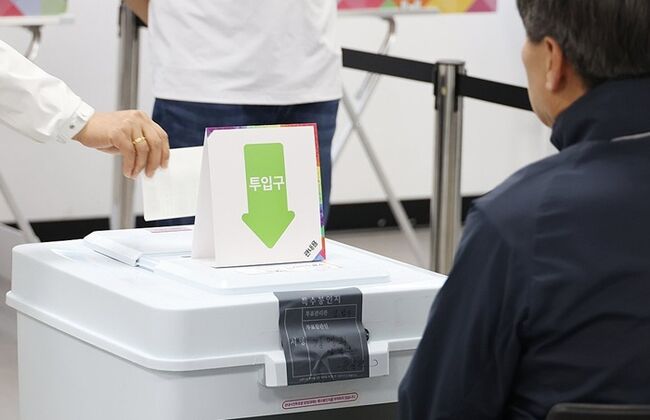 Throughout the lunch hour when voters were flocking to the polls, the count remained at '0'… Controversy arises over voter turnout tallies in Pyeongtaek, Guri, and other regions
In some local governments, such as Pyeongtaek and Guri in Gyeonggi Province, the number of voters during early and main voting failed to increase during certain time slots or recorded abnormally low f
Throughout the lunch hour when voters were flocking to the polls, the count remained at '0'… Controversy arises over voter turnout tallies in Pyeongtaek, Guri, and other regions
In some local governments, such as Pyeongtaek and Guri in Gyeonggi Province, the number of voters during early and main voting failed to increase during certain time slots or recorded abnormally low f
 'Gap investment' with no capital leads to 67 billion won in stolen jeonse deposits… 15-year prison sentence upheld in second trial
Real estate gap investment [Yonhap News file photo]A businessman who swindled approximately 67 billion won from 349 victims through a "no-capital" gap investment scheme has been handed a heavy sentenc
'Gap investment' with no capital leads to 67 billion won in stolen jeonse deposits… 15-year prison sentence upheld in second trial
Real estate gap investment [Yonhap News file photo]A businessman who swindled approximately 67 billion won from 349 victims through a "no-capital" gap investment scheme has been handed a heavy sentenc
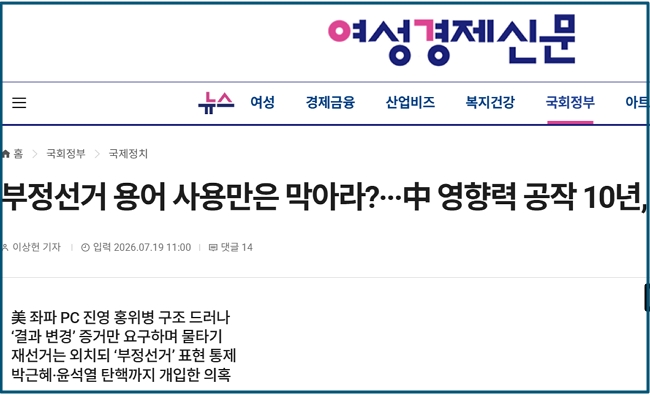 [Media Criticism] From an estimate of ‘100 people’ to ‘far-right led’ and ‘China connections’… What is the basis for the All-Gong report?
Screenshot of the Women's Economic Daily websiteKim Sang-soon, a Ph.D. in International Relations from Peking University and an expert on Chinese affairs, has filed a formal request with the Press Arb
[Media Criticism] From an estimate of ‘100 people’ to ‘far-right led’ and ‘China connections’… What is the basis for the All-Gong report?
Screenshot of the Women's Economic Daily websiteKim Sang-soon, a Ph.D. in International Relations from Peking University and an expert on Chinese affairs, has filed a formal request with the Press Arb
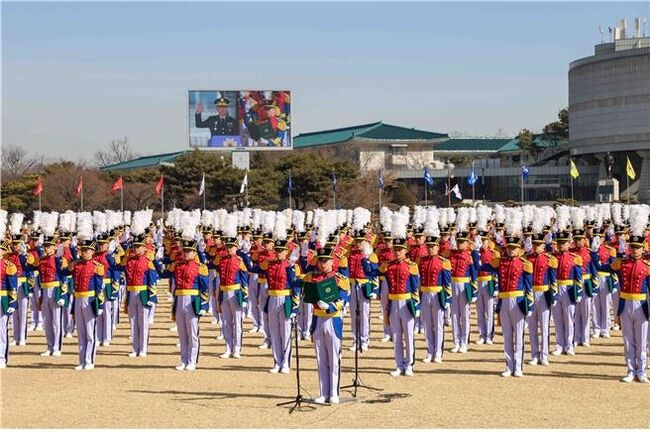 [Kim Myung-soo Column] Why Forcing the Integration of the Three Military Academies Is Anti-Democratic and Anti-National
83rd Class cadets at the Korea Military Academy taking their entrance oath [Photo=Korea Military Academy]Among the slogans used by retired military officers protesting the current government's plan to
[Kim Myung-soo Column] Why Forcing the Integration of the Three Military Academies Is Anti-Democratic and Anti-National
83rd Class cadets at the Korea Military Academy taking their entrance oath [Photo=Korea Military Academy]Among the slogans used by retired military officers protesting the current government's plan to
 [Photo] Evidence of Election Fraud Flooding U.S. Media… Trump Had 2.7 Million Votes Stolen
 [Video] U.S. Semiquincentennial Air Show... 'Art in the Sky' streaks across New York
 [Editorial Cartoon] A Draconian Law That Undermines Freedom of Expression

 List
List