General Paul LaCamera, Commander of the ROK-US Combined Forces Command and U.S. Forces Korea, stated on the 17th that one can feel the strategic necessity for cooperation among South Korea, Japan, and the Philippines by flipping the map of East Asia. The photo shows an inverted map of the Korean Peninsula. [Photo courtesy of U.S. Forces Korea. Reproduction and database prohibited] Yonhap News
The "East-Up" posture, emphasized by General Paul LaCamera, Commander of U.S. Forces Korea, is expanding beyond the discussions of the ROK-US Security Consultative Meeting (SCM) to become a strategic message directly targeting the narrative of President Lee Jae-myung's administration regarding the return of wartime operational control (OPCON).
The fact that the operational and command concepts discussed at the 50th ROK-US SCM, held in Seoul on November 3rd, were disclosed in a manner that directly explains them to the Korean public, rather than the Korean government, suggests this written interview is, in fact, an official stance approved by Washington.
In written responses to an interview with the ROK Ministry of National Defense press corps on the 17th, General LaCamera stated, "Even as OPCON transition progresses, the fundamental basis of our combined defense will not change." This is drawing political attention as it fundamentally clashes with the framing of the Lee Jae-myung administration, which has equated OPCON with "sovereignty restoration."
His explanation of OPCON transition not as a "transfer of command" but as an "adjustment of the existing combined operational system" is significant because it effectively refutes the simplistic domestic political narrative that the return of OPCON will inevitably lead to "South Korean forces' independent command."
This is because LaCamera's explanation goes beyond a mere difference in concepts; it declares a fundamental change in how the military alliance operates.
He emphasized, "From an 'East-Up' perspective, South Korea, Japan, and the Philippines are not three separate bilateral relationships but a single, interconnected network." This means the Korean Peninsula is no longer a vulnerable area exposed to pressure from North Korea, China, and Russia, but rather a strategic axis of operations that runs through the entire Indo-Pacific.
South Korea provides "depth from the center," Japan offers "technological superiority and maritime reach," and the Philippines grants "access to the southern maritime axis." This configuration itself, he explained, already forms the framework for regional combined operations.
This message is not a diplomatic explanation directed at the South Korean government. It is considered highly unusual that a serving four-star U.S. general, in his capacity as commander, has directly articulated the alliance structure, operational concepts, and interpretation of OPCON to the Korean public through a controlled medium like a written interview.
This is why some interpret it as a strategic intervention by the United States to bring the OPCON debate back from "political discourse" to "military reality." In particular, redefining OPCON with military terms such as "conditions" and "deterrence structure" conveys a message on a completely different level from the Lee Jae-myung administration's frame of "retrieval" or "sovereignty."
This interview holds further significance in that it bypasses the South Korean government for a "direct explanation to the people." When the U.S. changes its alliance structure, it considers the political variables of its allies. This is because domestic political conflict is the biggest factor influencing areas such as OPCON and troop presence.
Therefore, this message is seen as a preemptive move to shape public opinion, adjusting expectations regarding OPCON within South Korea and encouraging the public to embrace strategic flexibility, expanded operational radius, and trilateral cooperation.
There are times when it is safer to change a structure by speaking about it rather than by simply altering it without comment. The U.S. appears to be choosing the latter approach. At a time when the OPCON return debate was being consumed solely by political rhetoric, the final commander of the ROK-US Combined Forces has presented a military reality through the "East-Up" frame.
It is a moment when not just the map, but also the meaning of OPCON, has been inverted.
East UP is a concept symbolizing a shift in military and strategic thinking. It is not simply about rotating a map by 90 degrees, but a frame shift that completely reinterprets the strategic position of the Korean Peninsula and the alliance structure. This term was popularized by General Paul LaCamera, Commander of U.S. Forces Korea, as he used it officially for the first time.
"Depth from the center" is a military expression defining the Korean Peninsula as an operational platform rather than a defense line. This means that South Korea is viewed not as a weakness to be protected, but as a central axis from which operations can be sustained and expanded.
Maritime reach (海洋 到達性, maritime reach or maritime access) is a military and strategic term referring to a country's or military force's ability or geographical advantage to project power or extend its operational range through the sea.
#EastUp #WartimeOperationalControl #ROKUSAlliance #SCM #LaCamera #LeeJaeMyungAdministration #StrategicFlexibility #IndoPacific #USFK #ROKJapanPhilippinesTrilateralCooperation

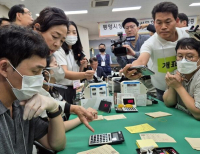
 [Statement by the Seobeokka KMA Patriots Association] ㉛ Recount the ballots openly, as the previous recount covered up election fraud
Recount of the Tongyeong mayoral election [Photo=Yonhap News]South Korea's liberal democracy is dying. The National Election Commission (NEC), which has degraded into a criminal organization through t
[Statement by the Seobeokka KMA Patriots Association] ㉛ Recount the ballots openly, as the previous recount covered up election fraud
Recount of the Tongyeong mayoral election [Photo=Yonhap News]South Korea's liberal democracy is dying. The National Election Commission (NEC), which has degraded into a criminal organization through t
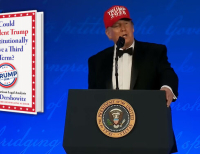
 What is the significance of the "Trump 2028" red hat that keeps reappearing?
It is noteworthy that while it is "highly likely" that President Donald Trump is "seriously considering" a run for the presidency in 2028, he is also "deliberately" fueling speculation regarding wheth
What is the significance of the "Trump 2028" red hat that keeps reappearing?
It is noteworthy that while it is "highly likely" that President Donald Trump is "seriously considering" a run for the presidency in 2028, he is also "deliberately" fueling speculation regarding wheth
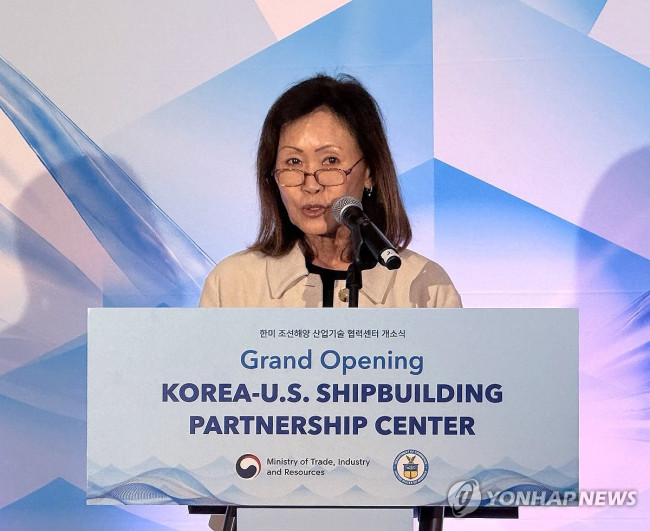 First U.S. Ambassador of Trump's Second Term to Arrive This Week… Will It Provide Momentum to Resolve Pending Issues?
U.S. Ambassador to South Korea Michelle Steel speaks at the opening ceremony of the Korea-U.S. Shipbuilding Cooperation Center held at the Mayflower Hotel in Washington, D.C., on the 23rd (local time)
First U.S. Ambassador of Trump's Second Term to Arrive This Week… Will It Provide Momentum to Resolve Pending Issues?
U.S. Ambassador to South Korea Michelle Steel speaks at the opening ceremony of the Korea-U.S. Shipbuilding Cooperation Center held at the Mayflower Hotel in Washington, D.C., on the 23rd (local time)
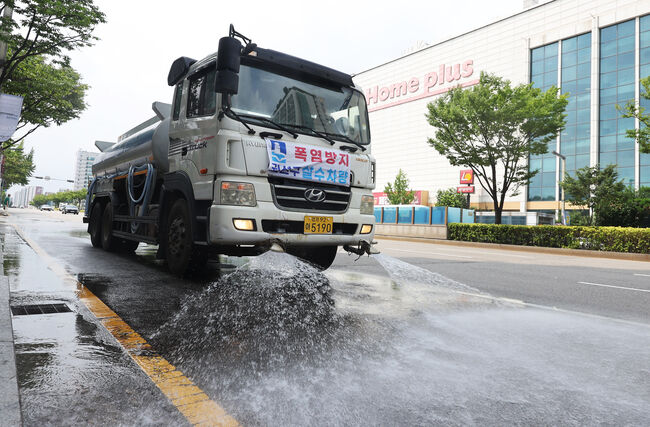 The Korean Peninsula wrapped in a thick blanket of scorching high pressure… Will the 1994 record be broken?
On the 28th, as the heatwave continues, a water sprinkler truck sprays water on Hyowon-ro, Gwonseon-gu, Suwon, Gyeonggi Province. [Photo = Yonhap News]The hottest years on record are considered to be
The Korean Peninsula wrapped in a thick blanket of scorching high pressure… Will the 1994 record be broken?
On the 28th, as the heatwave continues, a water sprinkler truck sprays water on Hyowon-ro, Gwonseon-gu, Suwon, Gyeonggi Province. [Photo = Yonhap News]The hottest years on record are considered to be
 Stock Market Crash 'Black Tuesday'… KOSPI down 10.8%, KOSDAQ down 7.7%
The KOSPI fell by more than 5% in early trading on the 28th, triggering a sell-side sidecar.On the 28th, the KOSPI plunged by more than 10%.Due to the sharp decline, a sell-side sidecar—a temporary
Stock Market Crash 'Black Tuesday'… KOSPI down 10.8%, KOSDAQ down 7.7%
The KOSPI fell by more than 5% in early trading on the 28th, triggering a sell-side sidecar.On the 28th, the KOSPI plunged by more than 10%.Due to the sharp decline, a sell-side sidecar—a temporary
 [World Heritage Committee] 25 New World Heritage Sites Inscribed in Busan… South Korea Successfully Expands 'Getbol' Listing
The Chairperson of the World Heritage Committee speaks at the plenary session of the 48th session of the World Heritage Committee, held at BEXCO in Busan on the 20th. [Photo: Yonhap News]A total of 25
[World Heritage Committee] 25 New World Heritage Sites Inscribed in Busan… South Korea Successfully Expands 'Getbol' Listing
The Chairperson of the World Heritage Committee speaks at the plenary session of the 48th session of the World Heritage Committee, held at BEXCO in Busan on the 20th. [Photo: Yonhap News]A total of 25
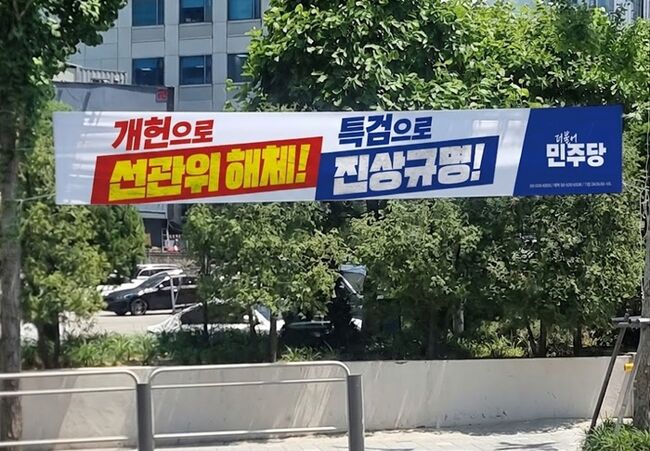 [Cho Yang-geon Column] The NEC: Facing a Fate of "Discarding the Dog After the Hunt"
Banner calling for the "dissolution of the NEC" posted by the Democratic Party. [AI-generated image]Banners calling for the "dissolution of the National Election Commission (NEC)" posted by the Democr
[Cho Yang-geon Column] The NEC: Facing a Fate of "Discarding the Dog After the Hunt"
Banner calling for the "dissolution of the NEC" posted by the Democratic Party. [AI-generated image]Banners calling for the "dissolution of the National Election Commission (NEC)" posted by the Democr
 [Photo] Evidence of Election Fraud Flooding U.S. Media… Trump Had 2.7 Million Votes Stolen
 [Video] U.S. Semiquincentennial Air Show... 'Art in the Sky' streaks across New York
 [Editorial Cartoon] A Draconian Law That Undermines Freedom of Expression

 List
List