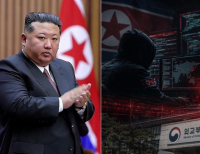
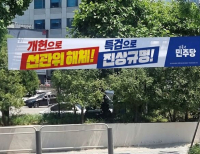
Concerns are being raised that if the Ministry of Interior and Safety's content regulations for banners are implemented, political expression channels for the socially vulnerable could become 'closed spaces,' similar to mourning ribbons. [Graphic=Hanmi Ilbo]
The Ministry of Interior and Safety's announcement of guidelines to judge the 'content' of banners is creating a structure where the realm of political expression falls under the discretion of administrative power. Banners are virtually the only channel for political minorities and the socially vulnerable to voice their opinions. There are growing concerns that if the administration obstructs this path, not only freedom of expression but also the equity of democracy could be shaken.
For a long time, banners have been the easiest means for minor parties in the political sphere to communicate their positions to the public. With low cost, they were effectively the only channel for political expression for groups lacking organizational strength or financial resources.
For a long time, this channel was an area primarily utilized by progressive civic groups and parties. However, after the presidential impeachment period, as conservative civic groups and minor parties began to actively express their views through banners, this area emerged as a new issue alongside shifts in political balance.
What became most apparent in this process was the ambiguity of the standards. As the same phrase was permitted in some regions and prohibited in others, the arbitrary judgment of administrative agencies became the center of controversy.
During election seasons, cases where the election commission flagged specific banner slogans and demanded their removal or modification were repeated. Not infrequently, restrictions were imposed based on 'potential for political interpretation,' regardless of actual damage or whether the information was false.
The addition of the President's remarks about 'disrupting anti-China protests' has escalated the banner issue beyond mere outdoor advertising management into a conflict between freedom of political expression and administrative regulation. The subsequent announcement of the 'content judgment' guidelines by the Ministry of Interior and Safety was an attempt to quell this conflict with institutionalized measures, inevitably leading to significant repercussions.
In late 2024, the National Human Rights Commission recommended corrective action in a case where a local government refused to post a banner criticizing the county governor, stating that "the arbitrary judgment of the administrative agency infringed upon citizens' freedom of political expression." The Human Rights Commission clearly pointed out the infringement of basic rights by demanding the reorganization of outdoor advertising review committees, training of responsible public officials, and revision of ordinances. This is a representative example illustrating the consequences of administrative intervention in content based on critical political expression.
Past rulings by the election commission were structurally similar. Although repeated decisions for removal or modification were made based on phrases being 'misleading' or 'violating the obligation of political neutrality,' consistency in these judgment criteria was difficult to find. As the same slogans were permitted in some places and prohibited in others, criticism arose that the discretion of administrative power wavered according to political leanings. This is why concerns are being raised that the Ministry of Interior and Safety's guidelines will further solidify such arbitrary judgments in an institutionalized form.
Above all, banners are not mere promotional materials. For political minorities and the socially vulnerable, who are on the periphery of institutional politics, they are virtually the only channel for political expression. While groups with large organizations and capital can always disseminate their messages through the media and online/media platforms, for those who cannot, banners are the last resource to prove their very existence.
Considering this structure, the Ministry of Interior and Safety's current measure directly contradicts not only the universal standard of freedom of expression but also the ideological standard of 'protecting the socially vulnerable,' which progressives themselves emphasize. It is natural that criticism arises, questioning whether the measure of first restricting the expression channels of the vulnerable is politically motivated.
Therefore, some in the political and civic communities are pointing out that the current guidelines are "political considerations, not policy" and "a regulation to protect the President's feelings." This is because if the purpose of the regulation is not the public interest but to block inconvenient criticism, it is a dangerous choice that shakes the equity of democracy and overall political fairness.
Lawyer Park Ju-hyun, who has a winning record in banner lawsuits against the election commission, stated, "The Ministry of Interior and Safety's guidelines are internal rules, not laws, and therefore cannot directly bind citizens." He added, "If local governments refuse posting based on these guidelines, disputes over the deviation and abuse of discretionary power are inevitable, and it is highly likely that such decisions will be canceled through lawsuits."
He further pointed out, "Standards that restrict higher basic rights, such as freedom of expression, must be established by law, and replacing this with administrative directives goes beyond constitutional limits."
So, what legal responses are possible regarding these guidelines? While the guidelines themselves are administrative rules and not directly subject to cancellation lawsuits, 'posting refusal decisions' made based on these guidelines can be challenged in court.
In the process, the court will simultaneously assess the illegality of the guidelines, violations of higher laws, and whether there was a deviation or abuse of discretionary power. Furthermore, if the guidelines effectively carry coercive force and directly restrict freedom of expression, a constitutional appeal is also possible.
Banners are almost the last political communication channel remaining for those who lack resources for expression. If that channel narrows due to a single administrative interpretation, the balance of power in freedom of expression shifts from citizens to administrative power.
What is needed is not regulation but a minimal restriction based on clear legal standards, and procedural stability to ensure that these standards do not waver according to the government's leanings or administrative agencies' judgments.
Freedom of expression is sometimes maintained by tolerating discomfort. The moment that principle is shaken, the foundation of democracy will also be shaken.
#BannerRegulation #MinistryofInteriorandSafetyGuidelines #FreedomofExpression #SociallyVulnerable #PoliticalMinorities #ParadoxofProgressivePolicy #PoliticalRegulationControversy #PresidentialFavoritismControversy #MourningBanner #HanmiIlbo

 [Statement by the Seobeokka KMA Patriots Association] ㉛ Recount the ballots openly, as the previous recount covered up election fraud
Recount of the Tongyeong mayoral election [Photo=Yonhap News]South Korea's liberal democracy is dying. The National Election Commission (NEC), which has degraded into a criminal organization through t
[Statement by the Seobeokka KMA Patriots Association] ㉛ Recount the ballots openly, as the previous recount covered up election fraud
Recount of the Tongyeong mayoral election [Photo=Yonhap News]South Korea's liberal democracy is dying. The National Election Commission (NEC), which has degraded into a criminal organization through t
 What is the significance of the "Trump 2028" red hat that keeps reappearing?
It is noteworthy that while it is "highly likely" that President Donald Trump is "seriously considering" a run for the presidency in 2028, he is also "deliberately" fueling speculation regarding wheth
What is the significance of the "Trump 2028" red hat that keeps reappearing?
It is noteworthy that while it is "highly likely" that President Donald Trump is "seriously considering" a run for the presidency in 2028, he is also "deliberately" fueling speculation regarding wheth
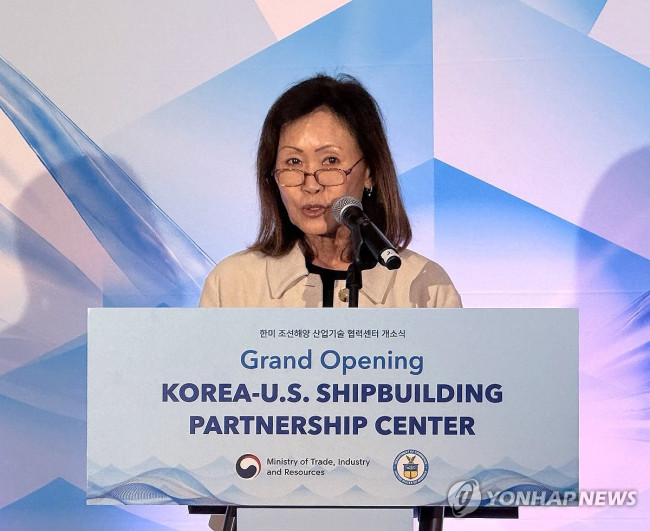 First U.S. Ambassador of Trump's Second Term to Arrive This Week… Will It Provide Momentum to Resolve Pending Issues?
U.S. Ambassador to South Korea Michelle Steel speaks at the opening ceremony of the Korea-U.S. Shipbuilding Cooperation Center held at the Mayflower Hotel in Washington, D.C., on the 23rd (local time)
First U.S. Ambassador of Trump's Second Term to Arrive This Week… Will It Provide Momentum to Resolve Pending Issues?
U.S. Ambassador to South Korea Michelle Steel speaks at the opening ceremony of the Korea-U.S. Shipbuilding Cooperation Center held at the Mayflower Hotel in Washington, D.C., on the 23rd (local time)
 The Korean Peninsula wrapped in a thick blanket of scorching high pressure… Will the 1994 record be broken?
On the 28th, as the heatwave continues, a water sprinkler truck sprays water on Hyowon-ro, Gwonseon-gu, Suwon, Gyeonggi Province. [Photo = Yonhap News]The hottest years on record are considered to be
The Korean Peninsula wrapped in a thick blanket of scorching high pressure… Will the 1994 record be broken?
On the 28th, as the heatwave continues, a water sprinkler truck sprays water on Hyowon-ro, Gwonseon-gu, Suwon, Gyeonggi Province. [Photo = Yonhap News]The hottest years on record are considered to be
 Stock Market Crash 'Black Tuesday'… KOSPI down 10.8%, KOSDAQ down 7.7%
The KOSPI fell by more than 5% in early trading on the 28th, triggering a sell-side sidecar.On the 28th, the KOSPI plunged by more than 10%.Due to the sharp decline, a sell-side sidecar—a temporary
Stock Market Crash 'Black Tuesday'… KOSPI down 10.8%, KOSDAQ down 7.7%
The KOSPI fell by more than 5% in early trading on the 28th, triggering a sell-side sidecar.On the 28th, the KOSPI plunged by more than 10%.Due to the sharp decline, a sell-side sidecar—a temporary
 [World Heritage Committee] 25 New World Heritage Sites Inscribed in Busan… South Korea Successfully Expands 'Getbol' Listing
The Chairperson of the World Heritage Committee speaks at the plenary session of the 48th session of the World Heritage Committee, held at BEXCO in Busan on the 20th. [Photo: Yonhap News]A total of 25
[World Heritage Committee] 25 New World Heritage Sites Inscribed in Busan… South Korea Successfully Expands 'Getbol' Listing
The Chairperson of the World Heritage Committee speaks at the plenary session of the 48th session of the World Heritage Committee, held at BEXCO in Busan on the 20th. [Photo: Yonhap News]A total of 25
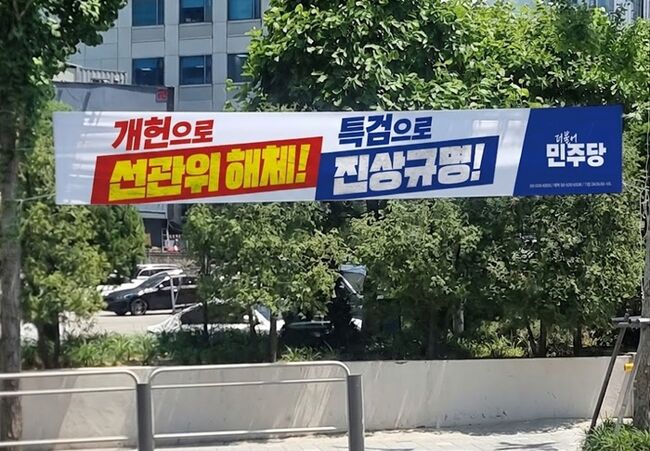 [Cho Yang-geon Column] The NEC: Facing a Fate of "Discarding the Dog After the Hunt"
Banner calling for the "dissolution of the NEC" posted by the Democratic Party. [AI-generated image]Banners calling for the "dissolution of the National Election Commission (NEC)" posted by the Democr
[Cho Yang-geon Column] The NEC: Facing a Fate of "Discarding the Dog After the Hunt"
Banner calling for the "dissolution of the NEC" posted by the Democratic Party. [AI-generated image]Banners calling for the "dissolution of the National Election Commission (NEC)" posted by the Democr
 [Photo] Evidence of Election Fraud Flooding U.S. Media… Trump Had 2.7 Million Votes Stolen
 [Video] U.S. Semiquincentennial Air Show... 'Art in the Sky' streaks across New York
 [Editorial Cartoon] A Draconian Law That Undermines Freedom of Expression

 List
List