Yonhap News TV
 Editorial Board Member of Hanmi Ilbo, Chairman of the Korea Military Critics Association, Director of the Future East Sea Research InstituteThe international political situation in East Asia is in turmoil, caught in a vortex for nearly a month. This is due to the clash between China and Japan, triggered by the newly appointed Japanese female Prime Minister Sanae Takaichi's multi-layered and calculated public declaration of "intervention in Japan" in the event of "Taiwan's contingency." This coincides with President Trump's proclamation of "Anti-Communism Week" (November 2-8), leading to a global spread of anti-communist sentiment.
Which country did Trump have in mind when he declared Anti-Communism Week? The strategic aim and political implications can be easily inferred from the White House's statement, which expressed a commitment to "mourn the more than 100 million lives lost to communist regimes" and "combat the destructive ideology that obliterates faith, suppresses freedom, and destroys prosperity."
Taiwan, one of the potential hotspots for war in East Asia, is also drawing global attention, amplifying internal conflicts and growing pains. Both positive and negative aspects coexist, depending on one's perspective and stance. While the Kuomintang (KMT), which advocates for Chinese unification through a third collaboration with the Chinese Communist Party (CCP), views this as a perilous crisis that could provoke a CCP invasion, the ruling Democratic Progressive Party (DPP), which consistently pursues a policy of Taiwanese independence, sees it as an opportunity for Taiwan to step onto the world diplomatic stage.
For the DPP, US support and backing for Taiwan is also a welcome development. Both the Biden and Trump administrations have passed various Taiwan support bills to bring Taiwan into the international arena as a check against China. Western European countries, unlike their attitudes just six months ago, are now boldly attempting to strengthen relations with Taiwan without regard for China's sensitivities.
From the perspective of external third-party nations, these changes and shifts in international relations appear to be a golden opportunity for Taiwan to broaden its scope of action and break free from China's encirclement since its expulsion from the UN in October 1971. Of course, it goes without saying that bipartisan cooperation between Taiwan's ruling and opposition parties is crucial to further capitalize on this opportunity.
However, the domestic situation in Taiwan is bleak due to the persistent issues of "unification" and "independence." This structure is similar to South Korea's, which faces ongoing division and the question of unification. A recent poll in Taiwan (TPOF) showed that President Lai Ching-te's disapproval rating was higher than his approval rating. Lai Ching-te's job satisfaction rate was 37.9% versus his job dissatisfaction rate of 50.2%; the DPP's approval rating was 24.1% versus the KMT's 20.5% and the Taiwan People's Party's (TPP) 17.8%. These figures reflect the current sentiment of the Taiwanese people.
The reason for the decline in President Lai Ching-te's approval rating compared to the 40.05% he received in the presidential election in mid-January last year, and the increase in opposition, is simple. It reflects the Taiwanese people's dissatisfaction with domestic livelihood issues and economic inequality, which have been overshadowed by the grand narrative of China's threat. Additionally, the increase in defense spending, driven by Lai Ching-te's firm resolve to "stand firm" against China under the guise of defense, the public fatigue with the DPP's foreign policy that heavily favors anti-CCP United States, and the lack of political acumen to secure the full support or cooperation of the TPP, which holds the casting vote in the minority-majority legislative session, have all contributed to this situation.
The decline in approval ratings for the ruling and opposition parties, as well as the president and ruling party, is something I predicted long ago. I made this assertion the day after the presidential and parliamentary elections were held simultaneously in January last year, based on the fact that the DPP failed to secure a majority of seats in the Legislative Yuan. (At that time, out of a total of 113 seats, the DPP secured only 51, while the KMT secured 52 and the TPP secured 8, resulting in a "minority-majority" legislature for the first time since 2004.)
In the future, for the Lai Ching-te administration to step onto the world diplomatic stage, the support of the majority of the public and cooperation from the opposition parties are essential, but the outlook is not bright. The situation could only be turned around if the DPP were to completely abandon its long-held party platform of "Taiwan independence" (台獨). However, there is no possibility that Lai Ching-te and the DPP would do so, as it would betray their supporters of Taiwanese independence and undermine the party's very existence.
The reason why the two major influential parties in Taiwan, the KMT and the DPP, have not achieved bipartisan cooperation is not only due to the underlying unique context of Eastern political and power culture but also the structural antagonism related to the issues of national system and ideology. In short, the extreme confrontation and deadlock in Taiwan's politics today go beyond mere policy differences between the ruling and opposition parties; they are intertwined with fundamental ideological issues concerning the nation's identity and future. Furthermore, this is rooted in the security issues arising from President Xi Jinping's determination to forcibly invade Taiwan.
As is well known, the DPP emphasizes Taiwan's identity as an independent nation and does not abandon its goal of separation and independence from China. In contrast, the KMT, based on its historical "One China" policy, adheres to a line of reconciliation and cooperation with the CCP, and ultimately the unification of all of China.
On October 18th last month, the election of the hawkish pro-China Yen Chi-wen as the new chairperson of the KMT further intensified the confrontation between the ruling and opposition parties. Chairman Yen's statement immediately after his election, "One of the KMT's duties is reconciliation with the Chinese Communist Party," foreshadows that the waves of conflict between the ruling and opposition parties will not subside. This clearly indicates that the KMT will prioritize improving relations with China and will oppose the DPP's hardline stance against China on every issue.
Moreover, the immediate congratulatory message from Xi Jinping, who is spearheading the "united front tactics" against Taiwan, conveying a message of "hope for advancing national unification," will further escalate or sustain the confrontation between the ruling and opposition parties. In other words, like South Korea, Taiwan is currently unable to escape the net of "Chohan War" (a strategy of dividing and conquering) cast by the CCP and the ensuing schism.
This dynamic is unlikely to dissipate easily due to the qualitative difference in history, geopolitical security, and political culture compared to the West. In both Taiwan and South Korea, matters that require bipartisan cooperation, such as national security, are constantly turned into tools for political infighting, unlike in the US. When the Lai Ching-te administration announced its plan to increase defense spending to 5% of GDP by 2030 and establish a special defense budget of $40 billion, taking advantage of President Trump's pressure to counter the CCP's military threat, the KMT criticized it as "playing with fire that pushes Taiwan into the flames of war" and strongly opposed it.
Thus, Lai Ching-te's strong will and attempts to enhance defense capabilities are not garnering bipartisan support. This is because the KMT controls the legislature and consistently opposes the ruling party's increase in defense spending and the implementation of the so-called "Hedgehog Strategy." The KMT argues that the increase in the defense budget is not an invasion deterrent but rather an act that provokes the CCP and escalates the risk of war.
The absence of bipartisan cooperation stems not from a rational debate about the correctness of policies but from fundamental ideological differences and identity conflicts over "independence versus unification." While the KMT worries that the Lai Ching-te government's efforts to strengthen its defense capabilities could accelerate Taiwan's independence and provoke a Chinese invasion, the DPP criticizes the KMT's conciliatory attitude for underestimating the CCP's threat and weakening Taiwan's security.
There is no room for compromise in these differing views on the perception of and reality concerning China, which are running on parallel lines. The more serious problem is Taiwan's political reality, where bipartisan cooperation is impossible even on security issues that concern the nation's survival. The national line confrontation and friction between the DPP and the KMT go beyond mere policy competition. It exhibits the characteristics of a "zero-sum game" concerning Taiwan's national identity and the future form and direction of its existence.
As long as the KMT, holding the initiative in the Legislative Yuan, continues to block key policies related to the DPP government's confrontation with the CCP, such as increasing defense spending and strengthening relations with the US, while seeking a political breakthrough for re-election through improved relations with the CCP, Taiwan's division and political deadlock will persist. This will serve as the greatest internal vulnerability for Taiwanese who support the DPP and must face the threat of the CCP.
Even if the current clash, fueled by historical ethnic animosity and a sense of superiority arising from unresolved past grievances, combined with the pride of leaders of the two regional hegemonic powers, China and Japan, is resolved and the confrontation subsides, the confrontation between the ruling and opposition parties over unification and independence within Taiwan will not be resolved. This will not happen unless the CCP collapses on its own due to the weight of its outdated ideology and the various internal problems accumulated since its founding!
Editorial Board Member of Hanmi Ilbo, Chairman of the Korea Military Critics Association, Director of the Future East Sea Research Institute

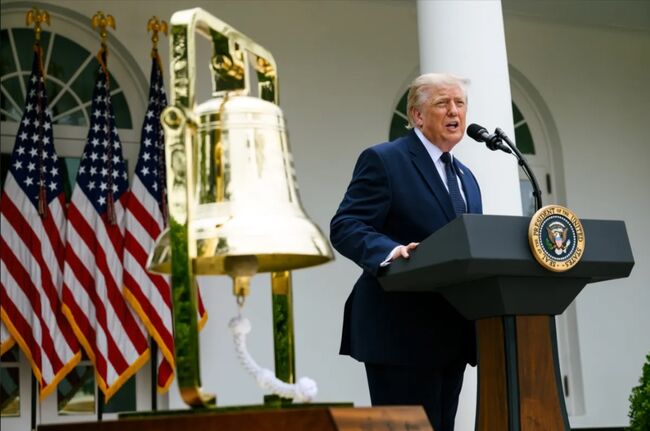 Trump pressures for rate cut again ahead of FOMC... "Should be the lowest in the world"
U.S. President Donald Trump. [Photo = The White House] U.S. President Donald Trump once again pressured the Federal Reserve, the U.S. central bank, to lower interest rates on the 27th (local time
Trump pressures for rate cut again ahead of FOMC... "Should be the lowest in the world"
U.S. President Donald Trump. [Photo = The White House] U.S. President Donald Trump once again pressured the Federal Reserve, the U.S. central bank, to lower interest rates on the 27th (local time
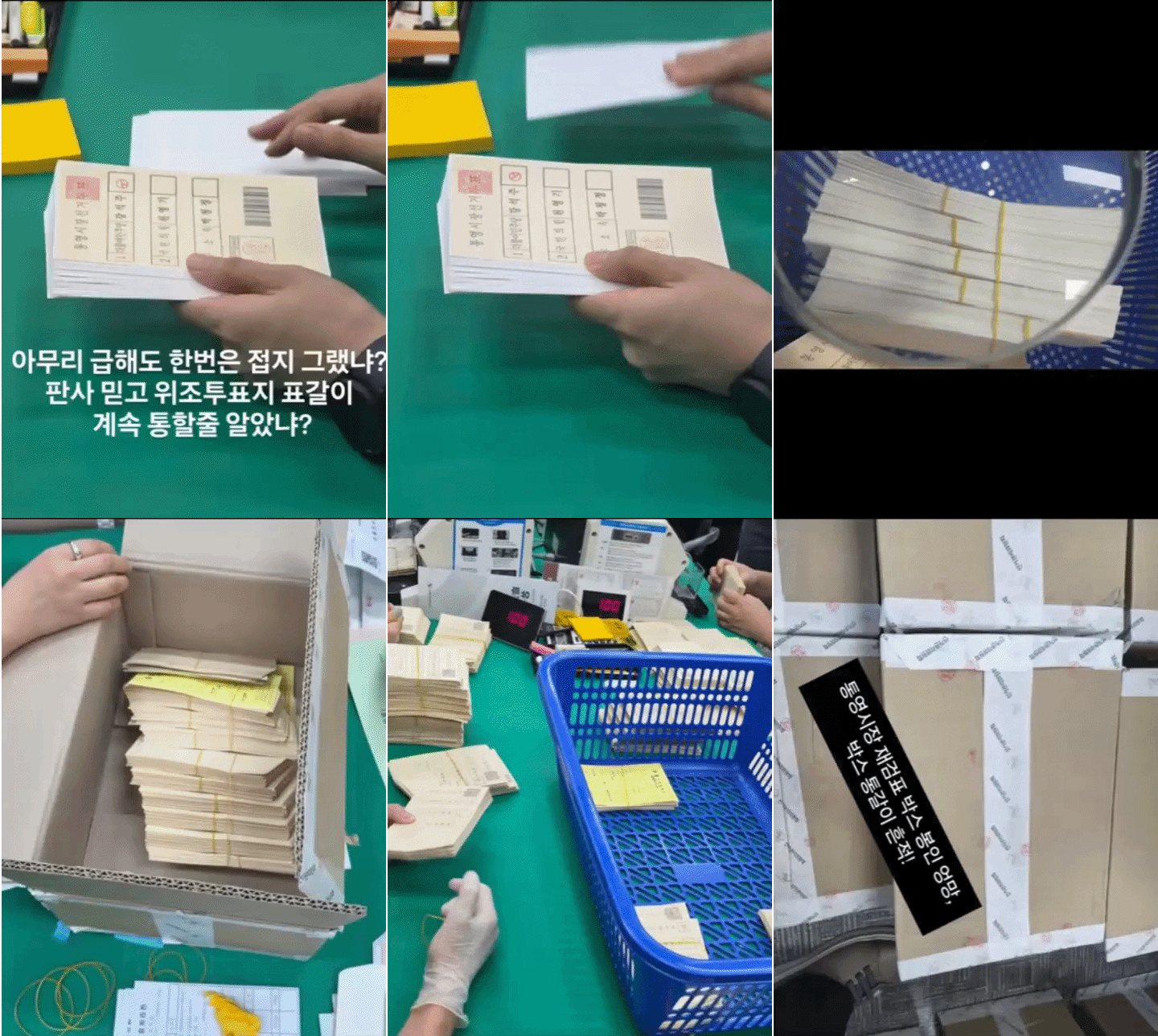 “Ignoring crisp ballots and damaged seals”… Tongyeong mayoral recount concludes with ‘no change in outcome,’ leaving suspicions and public outrage behind
Suspected counterfeit ballots discovered in Tongyeong [GIF from social media of Representative Hwang Kyo-ahn / Attorney Park Joo-hyun]During a recount of the Tongyeong mayoral election in South Gyeong
“Ignoring crisp ballots and damaged seals”… Tongyeong mayoral recount concludes with ‘no change in outcome,’ leaving suspicions and public outrage behind
Suspected counterfeit ballots discovered in Tongyeong [GIF from social media of Representative Hwang Kyo-ahn / Attorney Park Joo-hyun]During a recount of the Tongyeong mayoral election in South Gyeong
 President Yoon, regarding the first-instance ruling on the Public Official Election Act: “An excessive political verdict that distorts the facts… We will appeal immediately.”
The first-instance sentencing hearing for President Yoon Suk Yeol regarding violations of the Public Official Election Act is being broadcast live at Seoul Station on the 27th. [Photo=Yonhap News]Pres
President Yoon, regarding the first-instance ruling on the Public Official Election Act: “An excessive political verdict that distorts the facts… We will appeal immediately.”
The first-instance sentencing hearing for President Yoon Suk Yeol regarding violations of the Public Official Election Act is being broadcast live at Seoul Station on the 27th. [Photo=Yonhap News]Pres
 WSJ: "SK Hynix ADR Premium Is a Sign of AI Trading Overheat"
Advertisement for SK Hynix ADR listing in New York's Times Square [Reuters=Yonhap News file photo]The Wall Street Journal (WSJ) has pointed out that the price of SK Hynix’s American Depositary Recei
WSJ: "SK Hynix ADR Premium Is a Sign of AI Trading Overheat"
Advertisement for SK Hynix ADR listing in New York's Times Square [Reuters=Yonhap News file photo]The Wall Street Journal (WSJ) has pointed out that the price of SK Hynix’s American Depositary Recei
 'Godfather of Japanese Mystery Novels' Keigo Higashino Passes Away After Battle with Cancer at 68
Famous Japanese mystery novelist Keigo Higashino [AFP=Yonhap News]It has been belatedly reported that Keigo Higashino, the "godfather of Japanese mystery novels" and author of bestsellers such as "The
'Godfather of Japanese Mystery Novels' Keigo Higashino Passes Away After Battle with Cancer at 68
Famous Japanese mystery novelist Keigo Higashino [AFP=Yonhap News]It has been belatedly reported that Keigo Higashino, the "godfather of Japanese mystery novels" and author of bestsellers such as "The
 [Park Pil-kyu Security Column] To the Ignorant Trying to Clothe a Beast in Sheep's Clothing
Rep. Kim Byung-joo of the Democratic Party of Korea [Photo=Yonhap News]“The Air Force Academy doesn't teach you how to fly a plane!” “The Army, Navy, and Air Force academies are exactly the
[Park Pil-kyu Security Column] To the Ignorant Trying to Clothe a Beast in Sheep's Clothing
Rep. Kim Byung-joo of the Democratic Party of Korea [Photo=Yonhap News]“The Air Force Academy doesn't teach you how to fly a plane!” “The Army, Navy, and Air Force academies are exactly the
 [Issue Diagnosis] Two Effects of the Election Petition Review
 [Photo] Evidence of Election Fraud Flooding U.S. Media… Trump Had 2.7 Million Votes Stolen
 [Video] U.S. Semiquincentennial Air Show... 'Art in the Sky' streaks across New York
 [Editorial Cartoon] A Draconian Law That Undermines Freedom of Expression

 List
List