In the age of images, "Reading the Plastic Arts of Humanity," which delves into the fundamental nature of form, has been published. In this book, Kang Woo-bang, a master of art history and director of the Il-hyang Institute for Korean Art History, reveals through extensive fieldwork and the analysis of numerous artifacts that the patterns expressed in art are indeed "plastic languages."
This book, which shifts perspectives on viewing art, draws attention to the "patterns" inscribed on works that have not been interpreted in art history until now.
While conventional art theories focus on artists, periods, regions, and stylistic characteristics, this book empirically demonstrates that the patterns expressed in artifacts and artworks from Korea and around the world function as "plastic languages."
The patterns inscribed in plastic arts, or plastic languages, reveal beauty through the poetic cycle of repetition and variation, acting as the principle by which artworks are created.
The author clarifies that the patterns inscribed in tens of thousands of artifacts from antiquity to the present, in both Eastern and Western art, and in global examples of painting, sculpture, architecture, patterns, metalwork, and costume, are not mere iconographic signs or decorations, but rather "plastic languages" that visually re-enact the principles of vitality and movement in art.
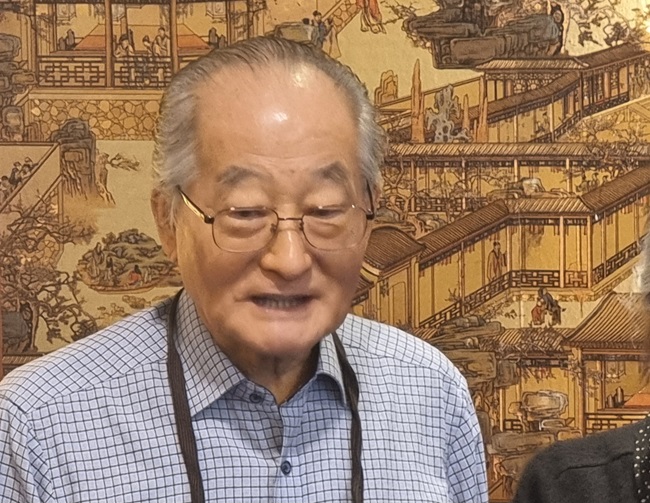 Kang Woo-bang, Director of the Il-hyang Institute for Korean Art History, who published "Reading the Plastic Arts of Humanity: From Patterns to Plastic Languages" (Mulboda). Reporter Lim Yo-hee.
The author presents these plastic languages in four forms: "First Eclipsed Bud," "Second Eclipsed Bud," "Third Eclipsed Bud," and "Jewel." These four plastic languages are expressed in various rhythms within artworks and function as the power that generates art. The author concretely illustrates these aspects through "coloring analysis," which involves direct drawing and coloring.
Through this process, art becomes not a vague object of appreciation, but a living artwork that can be read, discovered, and vividly encountered. The aesthetics of artistic "reading" presented by the author, namely "plastic language" and "coloring analysis," revive the vitality and dynamic power of plastic arts.
For instance, the coloring analysis of the green-glazed dragon face tile (Nok-yu Yong-myeon-wa) from the Unified Silla period vividly showcases the plastic language of the dragon. The "face" inscribed on the tile is not a ghost or an ogre, but a spiritual pattern (Je-il, Je-i, Je-sam Yeonggi-ssak, Bo-ju) composed of plastic languages. In particular, the round jewel (Bo-ju) in the dragon's mouth and the plastic language act as the creative force of the plastic art.
Furthermore, observing the Azure Dragon in the Four Guardian Deities painting at the Gangseo Tomb, we witness not just a dragon drawn on the wall, but the "emergence of a dragon" from the tomb itself as the rolled patterns on the dragon's legs overlap and connect to its body. By exploring why the dragon is there, one can feel the scene where art is generated through the form of plastic language.
The scene of artistic creation is also evident in the illustrations of various objects from Joseon's "Chaekgeori" (books and scholar's objects), such as myriad books, book boxes, and brush holders.
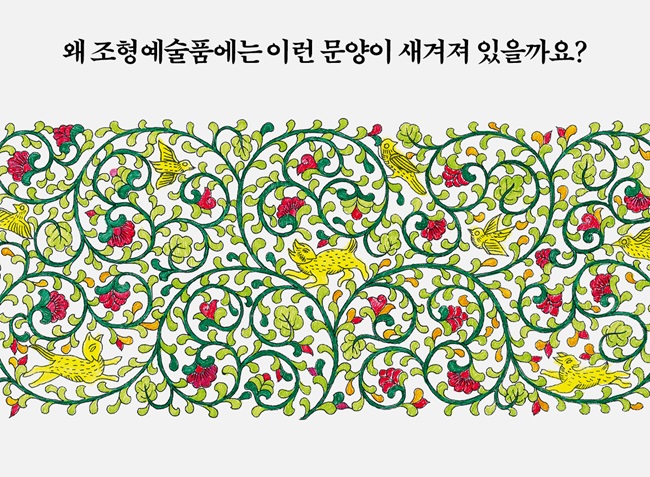
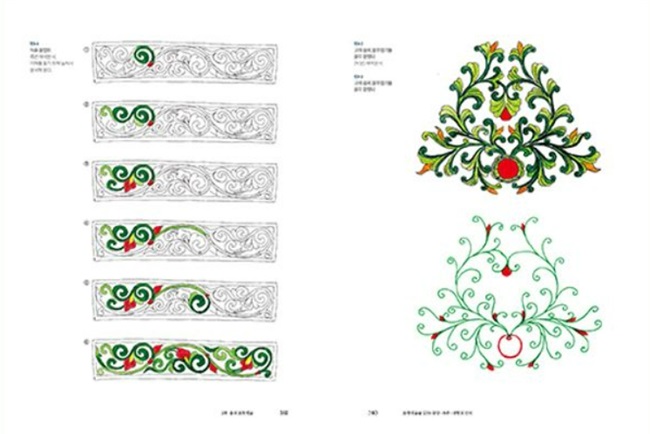
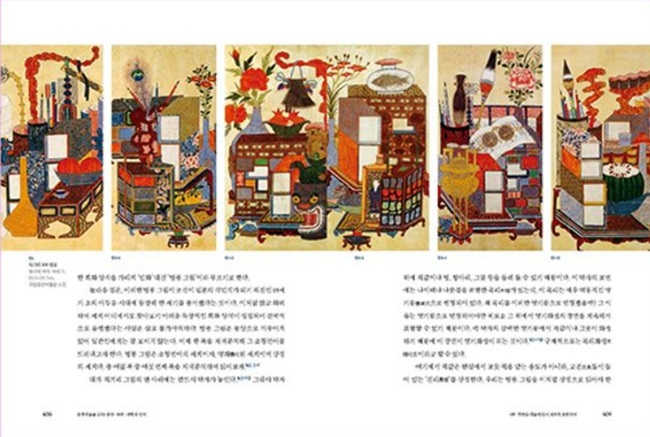
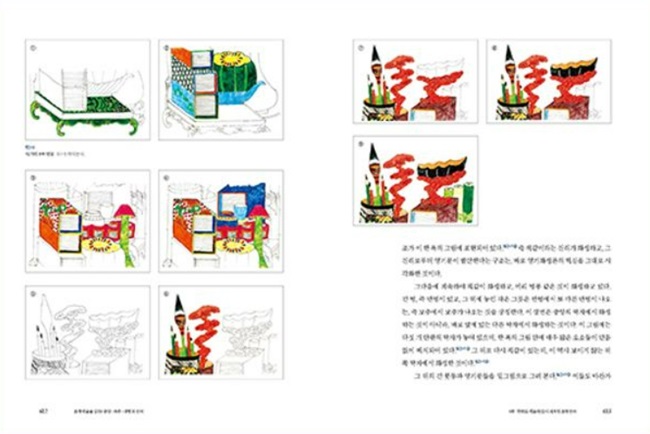 Through "coloring analysis," which involves direct drawing and coloring, Director Kang Woo-bang concretely presents the four forms of plastic language: "First Eclipsed Bud," "Second Eclipsed Bud," "Third Eclipsed Bud," and "Jewel." Mulboda.
Across its 58 chapters, the book broadens the horizons of art by posing questions such as, "Why has humanity repeatedly used these patterns?" "Are patterns merely decoration?" "What is humanity trying to remember by leaving behind so many forms?" and "Is there a way for us to read these forms?"
Reporter Lim Yo-hee

 [Statement by the Seo-beo-kka Korea Military Academy Save-the-Nation Comrades Association] ㉛ Recount the Votes Publicly, as the Previous Recount Concealed Election Fraud
Tongyeong Mayoral Election Recount [Photo=Yonhap News]South Korea's liberal democracy is dying. The National Election Commission (NEC) and the judiciary, which have plummeted into criminal syndicates
[Statement by the Seo-beo-kka Korea Military Academy Save-the-Nation Comrades Association] ㉛ Recount the Votes Publicly, as the Previous Recount Concealed Election Fraud
Tongyeong Mayoral Election Recount [Photo=Yonhap News]South Korea's liberal democracy is dying. The National Election Commission (NEC) and the judiciary, which have plummeted into criminal syndicates
 What is the significance of the "Trump 2028" red hats that keep making a comeback?
It is noteworthy that President Donald Trump is "intentionally" fueling controversy over whether he can actually run in the 2028 presidential election, even though it is "highly likely he is seriously
What is the significance of the "Trump 2028" red hats that keep making a comeback?
It is noteworthy that President Donald Trump is "intentionally" fueling controversy over whether he can actually run in the 2028 presidential election, even though it is "highly likely he is seriously
 Jin Cummings: “North Korea says it will increase the number of spies, so what is the government doing?”
U.S. political columnist Gene Cummings has publicly questioned the South Korean government, asking, "North Korea is declaring that it will increase its number of spies, so what is the South Kore
Jin Cummings: “North Korea says it will increase the number of spies, so what is the government doing?”
U.S. political columnist Gene Cummings has publicly questioned the South Korean government, asking, "North Korea is declaring that it will increase its number of spies, so what is the South Kore
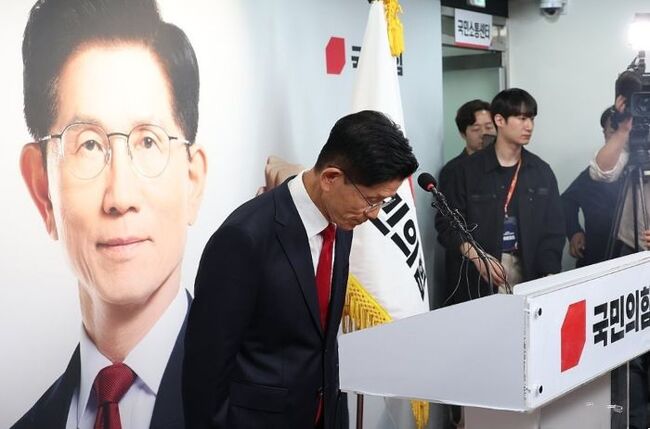 “Too little, too late?…” Kim Moon-soo, who previously conceded his presidential election defeat, now demands a special counsel investigation into ‘allegations of election fraud in the 2025 presidential election’
People Power Party presidential candidate Kim Moon-soo concedes defeat during a press conference at the party headquarters in Yeouido, Seoul, on June 4, 2025. [Joint Press Corps]As allegations emerge
“Too little, too late?…” Kim Moon-soo, who previously conceded his presidential election defeat, now demands a special counsel investigation into ‘allegations of election fraud in the 2025 presidential election’
People Power Party presidential candidate Kim Moon-soo concedes defeat during a press conference at the party headquarters in Yeouido, Seoul, on June 4, 2025. [Joint Press Corps]As allegations emerge
 Stock Market Crash 'Black Tuesday'… KOSPI down 10.8%, KOSDAQ down 7.7%
The KOSPI fell by more than 5% in early trading on the 28th, triggering a sell-side sidecar.On the 28th, the KOSPI plunged by more than 10%.Due to the sharp decline, a sell-side sidecar—a temporary
Stock Market Crash 'Black Tuesday'… KOSPI down 10.8%, KOSDAQ down 7.7%
The KOSPI fell by more than 5% in early trading on the 28th, triggering a sell-side sidecar.On the 28th, the KOSPI plunged by more than 10%.Due to the sharp decline, a sell-side sidecar—a temporary
 [World Heritage Committee] 25 New World Heritage Sites Inscribed in Busan… South Korea Successfully Expands 'Getbol' Listing
The Chairperson of the World Heritage Committee speaks at the plenary session of the 48th session of the World Heritage Committee, held at BEXCO in Busan on the 20th. [Photo: Yonhap News]A total of 25
[World Heritage Committee] 25 New World Heritage Sites Inscribed in Busan… South Korea Successfully Expands 'Getbol' Listing
The Chairperson of the World Heritage Committee speaks at the plenary session of the 48th session of the World Heritage Committee, held at BEXCO in Busan on the 20th. [Photo: Yonhap News]A total of 25
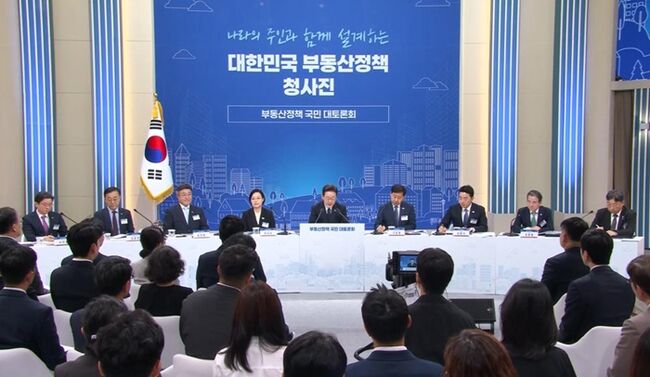 [Liberal Democratic Party Statement] Calling it a Grand Real Estate Debate… It Was Nothing More Than a Private Party Among Themselves
The 'National Grand Debate on Real Estate Policy' held on July 23rd and 27th. [Photo=Yonhap News]The 'National Grand Debate on Real Estate Policy,' hosted by the Lee Jae-myung administration under the
[Liberal Democratic Party Statement] Calling it a Grand Real Estate Debate… It Was Nothing More Than a Private Party Among Themselves
The 'National Grand Debate on Real Estate Policy' held on July 23rd and 27th. [Photo=Yonhap News]The 'National Grand Debate on Real Estate Policy,' hosted by the Lee Jae-myung administration under the
 [Photo] Evidence of Election Fraud Flooding U.S. Media… Trump Had 2.7 Million Votes Stolen
 [Video] U.S. Semiquincentennial Air Show... 'Art in the Sky' streaks across New York
 [Editorial Cartoon] A Draconian Law That Undermines Freedom of Expression

 List
List