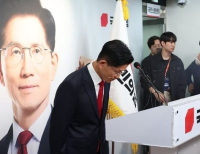
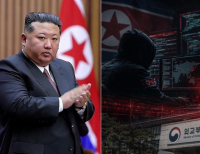
Counterintelligence is an offensive defense and requires a high degree of professionalism, making accumulated experience and expertise essential for responding to threats within the military. Defense Counterintelligence Command.
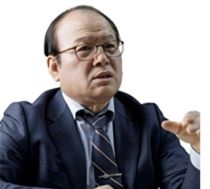 Joo Eun-sik, Editorial Writer and Director of the Korea Strategy InstituteThe military has yet to fully recover from the shock of the December 3rd emergency martial law last year. Promotions of generals and colonels have been significantly delayed, shaking command stability, and the political sphere is even considering reorganizing the core functions of the military.
Amidst this situation, the government's announcement to transfer the counterintelligence functions, a core task of the Defense Counterintelligence Command, to the Intelligence Headquarters has sparked serious concerns even within the military. Critics argue that this is not merely an organizational reform but a significant experiment that could undermine the fundamental principles and security framework of the military.
Security and counterintelligence are distinct concepts, yet they are functions that must never be separated.
Security is a preventive management system encompassing personnel, facilities, communications, cyberspace, and documents, aimed at preemptively blocking organizational vulnerabilities. Counterintelligence, conversely, is an offensive defense activity that detects, tracks, and neutralizes enemy espionage activities. As an offensive defense requiring a high degree of professionalism, counterintelligence necessitates accumulated experience and expertise specifically for responding to internal military threats. Therefore, while distinct in nature, security and counterintelligence have functionally operated as an integrated system.
The Intelligence Headquarters is fundamentally an organization responsible for the intelligence cycle of collection, analysis, evaluation, and dissemination. Its primary function is to analyze external threats to support operational command, not to identify and neutralize hostile forces infiltrating the military. It is undeniable that officers in the intelligence branch have not systematically accumulated practical experience in counterintelligence and security.
Effective counterintelligence requires the coordinated application of human networks, investigative acumen, interrogation and analytical skills, and an understanding of legal frameworks. These functions cannot be transferred simply by moving an organization overnight. Such a transfer of functions is highly likely to lead to the disintegration of that organization.
The Defense Counterintelligence Command exists to maintain internal military security. If its counterintelligence function is removed, the command would effectively become a nominal organization. This is why realistic analyses suggest that the separation of counterintelligence functions is linked to a trend to "organizationally shrink" the command following specific incidents.
The consequences are significant. The ability to counter hostile elements, spies, and sabotage within the military will inevitably weaken, and it may become unclear which agency is responsible in the event of a security breach. There will be confusion in reporting channels due to overlapping or avoided responsibilities between the Intelligence Headquarters and the Defense Counterintelligence Command. Commanders' decision-making will be hampered by distrust, and a relaxation of military discipline and combat readiness will be unavoidable.
Undermining the counterintelligence function under the guise of resolving political distrust is not a responsible approach to state governance. If there were shortcomings within the Defense Counterintelligence Command, accountability should be enforced, systems improved, and oversight strengthened. However, an approach that weakens the core functions itself is tantamount to self-inflicted damage to the security framework. It is crucial to remember that flawed decisions in the security domain cannot be retrospectively validated, and the cost will ultimately be borne by the public.
What is even more concerning is that discussions about neutralizing counterintelligence functions and abolishing the National Security Act are progressing simultaneously.
If organizational reforms that weaken counterintelligence functions are pursued concurrently with attempts to reduce legal safeguards against hostile activities, it will inevitably lead to a structural destabilization of the entire national security system. Contrary to simplistic arguments that the National Security Act suppresses freedom of expression, it actually serves as a minimal legal barrier against espionage, state subversion, and collaboration with hostile forces. If the law has flaws, the solution is "amendment," not abolition, which in a state of counterintelligence vacuum directly signifies a weakening of national security.
International standards also show that no democratic nation dismantles its counterintelligence system.
The United Kingdom operates the Official Secrets Act (OSA), strictly punishing the leakage of classified information in military, diplomatic, and intelligence fields, as well as collaboration with foreign intelligence agencies. This is unrelated to freedom of expression and applies to 'state secrets and acts of cooperation with hostile forces.'
France protects national security information and severely punishes espionage through its Penal Code and Defense Code. In particular, counterintelligence within military and intelligence organizations is integrated rather than separated.
The United States is no exception. Based on the Espionage Act and the National Security Act, counterintelligence, security, and classified information protection functions operate as an integrated system within the military and intelligence agencies. Whistleblowing and espionage are clearly distinguished, and the latter is treated with extreme strictness.
These nations are all democracies that guarantee freedom of expression, yet they never entrust national security and the protection of state secrets to political discourse. Democracy is not preserved by dismantling counterintelligence.
The real problem is that this logic rests on a false dichotomy of 'democracy versus security.' The argument that counterintelligence must be weakened to protect democracy has never been justified in the real world. History, rather, tells us this:
The Defense Counterintelligence Command is not merely an administrative organization but an aggregate of accumulated human experience, networks, and expertise. Tampering with it improperly will irreversibly weaken its actual functions, even if it appears to be maintained on the surface. If necessary, functions should be improved through institutional reorganization, such as strengthening integrated control, refining classified information protection legislation, and increasing accountability for counterintelligence failures. A method of systematically separating or dismantling the functions themselves will only result in national security being subordinated to political messaging.
We must operate security legislation at the same level as developed countries by maintaining and refining legal mechanisms for the protection of state secrets, curbing the abuse of counterintelligence authority, and strengthening accountability for failures. Security is not an ideological issue. Security is a matter of systems and functions, and its cost is always paid afterward. The nation is not a laboratory, and the military is not a tool for political purification. A collapsed counterintelligence system takes decades to restore.
"There is one common standard maintained by the military and intelligence systems of developed countries: the principle that security and counterintelligence must operate as an inseparable, integrated system. This principle is not a choice but a matter of national survival."
Joo Eun-sik, Editorial Writer and Director of the Korea Strategy Institute

 [Statement by the Seo-beo-kka Korea Military Academy Save-the-Nation Comrades Association] ㉛ Recount the Votes Publicly, as the Previous Recount Concealed Election Fraud
Tongyeong Mayoral Election Recount [Photo=Yonhap News]South Korea's liberal democracy is dying. The National Election Commission (NEC) and the judiciary, which have plummeted into criminal syndicates
[Statement by the Seo-beo-kka Korea Military Academy Save-the-Nation Comrades Association] ㉛ Recount the Votes Publicly, as the Previous Recount Concealed Election Fraud
Tongyeong Mayoral Election Recount [Photo=Yonhap News]South Korea's liberal democracy is dying. The National Election Commission (NEC) and the judiciary, which have plummeted into criminal syndicates
 What is the significance of the "Trump 2028" red hats that keep making a comeback?
It is noteworthy that President Donald Trump is "intentionally" fueling controversy over whether he can actually run in the 2028 presidential election, even though it is "highly likely he is seriously
What is the significance of the "Trump 2028" red hats that keep making a comeback?
It is noteworthy that President Donald Trump is "intentionally" fueling controversy over whether he can actually run in the 2028 presidential election, even though it is "highly likely he is seriously
 Jin Cummings: “North Korea says it will increase the number of spies, so what is the government doing?”
U.S. political columnist Gene Cummings has publicly questioned the South Korean government, asking, "North Korea is declaring that it will increase its number of spies, so what is the South Kore
Jin Cummings: “North Korea says it will increase the number of spies, so what is the government doing?”
U.S. political columnist Gene Cummings has publicly questioned the South Korean government, asking, "North Korea is declaring that it will increase its number of spies, so what is the South Kore
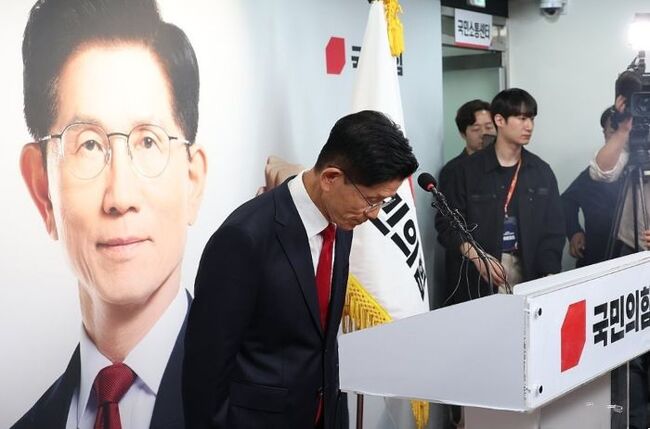 “Too little, too late?…” Kim Moon-soo, who previously conceded his presidential election defeat, now demands a special counsel investigation into ‘allegations of election fraud in the 2025 presidential election’
People Power Party presidential candidate Kim Moon-soo concedes defeat during a press conference at the party headquarters in Yeouido, Seoul, on June 4, 2025. [Joint Press Corps]As allegations emerge
“Too little, too late?…” Kim Moon-soo, who previously conceded his presidential election defeat, now demands a special counsel investigation into ‘allegations of election fraud in the 2025 presidential election’
People Power Party presidential candidate Kim Moon-soo concedes defeat during a press conference at the party headquarters in Yeouido, Seoul, on June 4, 2025. [Joint Press Corps]As allegations emerge
 Stock Market Crash 'Black Tuesday'… KOSPI down 10.8%, KOSDAQ down 7.7%
The KOSPI fell by more than 5% in early trading on the 28th, triggering a sell-side sidecar.On the 28th, the KOSPI plunged by more than 10%.Due to the sharp decline, a sell-side sidecar—a temporary
Stock Market Crash 'Black Tuesday'… KOSPI down 10.8%, KOSDAQ down 7.7%
The KOSPI fell by more than 5% in early trading on the 28th, triggering a sell-side sidecar.On the 28th, the KOSPI plunged by more than 10%.Due to the sharp decline, a sell-side sidecar—a temporary
 [World Heritage Committee] 25 New World Heritage Sites Inscribed in Busan… South Korea Successfully Expands 'Getbol' Listing
The Chairperson of the World Heritage Committee speaks at the plenary session of the 48th session of the World Heritage Committee, held at BEXCO in Busan on the 20th. [Photo: Yonhap News]A total of 25
[World Heritage Committee] 25 New World Heritage Sites Inscribed in Busan… South Korea Successfully Expands 'Getbol' Listing
The Chairperson of the World Heritage Committee speaks at the plenary session of the 48th session of the World Heritage Committee, held at BEXCO in Busan on the 20th. [Photo: Yonhap News]A total of 25
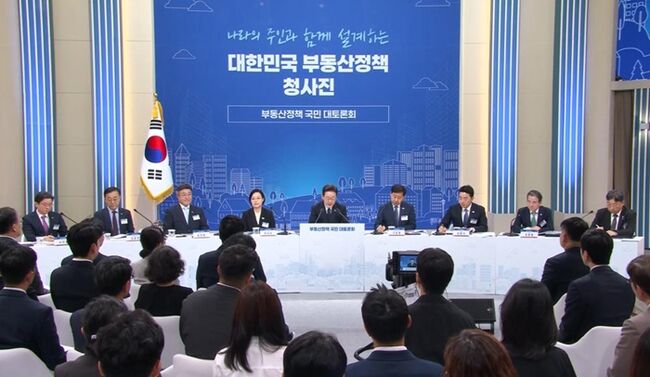 [Liberal Democratic Party Statement] Calling it a Grand Real Estate Debate… It Was Nothing More Than a Private Party Among Themselves
The 'National Grand Debate on Real Estate Policy' held on July 23rd and 27th. [Photo=Yonhap News]The 'National Grand Debate on Real Estate Policy,' hosted by the Lee Jae-myung administration under the
[Liberal Democratic Party Statement] Calling it a Grand Real Estate Debate… It Was Nothing More Than a Private Party Among Themselves
The 'National Grand Debate on Real Estate Policy' held on July 23rd and 27th. [Photo=Yonhap News]The 'National Grand Debate on Real Estate Policy,' hosted by the Lee Jae-myung administration under the
 [Photo] Evidence of Election Fraud Flooding U.S. Media… Trump Had 2.7 Million Votes Stolen
 [Video] U.S. Semiquincentennial Air Show... 'Art in the Sky' streaks across New York
 [Editorial Cartoon] A Draconian Law That Undermines Freedom of Expression

 List
List