The DMZ is the birthplace of the Cold War's tragedies and a repository of well-preserved nature. Exhibition at the Goseong DMZ Museum. Reporter Lim Yo-hee ⒸHanmi Ilbo
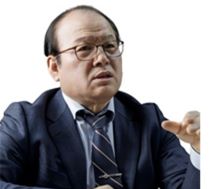 Joo Eun-sik, Editorial Writer and Director of the Korea Strategy InstituteThe recent conflict between the South Korean government and the UN Command over the procedures for entering the Demilitarized Zone (DMZ) is not merely a matter of administrative friction or a dispute over sovereign sentiment.
This issue reveals a structural risk where international legal obligations and the alliance order are being relegated to a lower priority by domestic political logic. It should be read as a significant warning that could erode the trust South Korea has built in the international community. The debate over DMZ jurisdiction is not an isolated issue; it is intertwined with matters of diplomacy and alliance, such as the issuance of visas to UN Command officers, and is thus undermining South Korea's international credibility.
The direct trigger for the controversy was the UN Command's recent denial of access to the site of a joint excavation for remains at Baekma Peak for the Deputy National Security Advisor. In response, Minister of Unification Jeong Dong-young expressed strong public dissatisfaction, stating, "The dignity of a sovereign nation is at stake," and announced plans to pursue legislative measures to allow entry into the DMZ with only government approval, bypassing the UN Command's endorsement process. Indeed, the matter has escalated beyond simple administrative consultation into a political issue, with a public hearing on related legislation already held in the National Assembly.
However, the essence of this issue is obscured if one mistakenly believes that domestic law can supersede international treaties. While the DMZ is unequivocally South Korean territory under the constitution, it is simultaneously a special international zone established by the Korean War Armistice Agreement signed on July 27, 1953. The Armistice Agreement is not merely a political accord but a legally binding treaty. Under this treaty, the authority for the military and administrative management of the DMZ is vested in the Commander of the UN Command. This is not a matter that can be adjusted by the policy choices or interpretations of any single government, but a legal obligation that signatory parties must adhere to.
Nevertheless, the notion of attempting to neutralize or circumvent the UN Command's approval process through domestic legislation demonstrates a fundamental ignorance of the international legal order. The illusion that domestic legislation can reign supreme over international treaties may garner political applause in the short term, but in the long run, it is tantamount to declaring to the world that South Korea is a "country that does not respect treaties."
What is even more concerning is that such movements could send the wrong signal to North Korea. North Korea has consistently attempted to undermine the armistice system by, for example, nullifying the Military Armistice Commission, expelling the Neutral Nations Supervisory Commission, and asserting the invalidity of the Armistice Agreement. In this context, if the South Korean government were to attempt to damage core provisions of the Armistice Agreement through domestic political logic, it could result in providing diplomatic justification for North Korea's existing claims. It is self-evident how the international community would assess the contradiction of speaking of respect for the Armistice Agreement while weakening it through actions.
The seriousness of the problem does not end here. The practice of prioritizing domestic administrative convenience over international law is even more blatantly evident in the Ministry of Foreign Affairs' visa issuance for UN Command officers. The reality that foreign military officers dispatched to Korea under the UN Command are issued short-term work visas instead of diplomatic or official visas, and must repeatedly visit immigration offices to extend their stay, is closer to systemic incompetence than mere administrative error. UN Command officers are not workers coming to South Korea for employment; they are international military personnel performing their duties based on the Armistice Agreement. It is difficult to find any country that applies work visas to them.
Some might counter by asking if the United States does not also impose strict work visa requirements on South Korean corporate workers. However, that is precisely the core of the issue. If we have criticized the systems of other countries, we should at least extend courtesies in accordance with international practices to our allies and UN Command personnel. Otherwise, it is not reciprocity but self-contradiction, and it only fuels doubts about our alliance management capabilities.
Alliances are not maintained by declarations or rhetoric. Trust is sustained by seemingly minor but cumulative details such as respect for international law, consistency in systems, and courtesy to allied personnel. If the disregard for international treaties in the DMZ jurisdiction issue and the treatment of UN Command officers as subjects of labor administration continue, the cracks in the alliance will widen, silently but surely.
Notably, we are currently mobilizing national capabilities to export Korean-type submarines to Canada. However, if we treat Lieutenant General Derek Allen Macaulay, the Deputy Commander of the UN Command and a Canadian Army officer, who is working in Korea, with such indignity by having him go through labor offices to obtain a work visa, while simultaneously trying to persuade them that "Korean-type submarines are excellent and should be adopted," how persuasive can our arguments be? In international defense transactions, trust and courtesy, as well as the perceived attitude of the other party, are just as important as technology.
K-defense is no longer an issue for individual companies; it is an area where the nation must exert its full effort. Victories in international transactions are not decided solely by the performance specifications of weapon systems. We have repeatedly experienced that details, protocols, and respect for personnel from the other country accumulate and ultimately influence the final decision. If we ignore this and prioritize domestic political logic and administrative convenience, the costs we will incur across diplomacy, security, and industry will be far from small.
What is needed now is not emotional discourse on sovereignty, but mature state management that maximizes national interests within the framework of international law and the alliance order. If legislative attempts to disregard the Armistice Agreement and administrative practices that treat UN Command officers as laborers continue, it will directly erode South Korea's diplomatic and security assets. The DMZ jurisdiction debate and the UN Command visa issue are warning lights asking which path South Korea is currently on. The time to correct our course has long since passed.
Editorial Writer, Hanmi Ilbo, and Director of the Korea Strategy Institute

 [Statement by the Seo-beo-kka Korea Military Academy Save-the-Nation Comrades Association] ㉛ Recount the Votes Publicly, as the Previous Recount Concealed Election Fraud
Tongyeong Mayoral Election Recount [Photo=Yonhap News]South Korea's liberal democracy is dying. The National Election Commission (NEC) and the judiciary, which have plummeted into criminal syndicates
[Statement by the Seo-beo-kka Korea Military Academy Save-the-Nation Comrades Association] ㉛ Recount the Votes Publicly, as the Previous Recount Concealed Election Fraud
Tongyeong Mayoral Election Recount [Photo=Yonhap News]South Korea's liberal democracy is dying. The National Election Commission (NEC) and the judiciary, which have plummeted into criminal syndicates
 What is the significance of the "Trump 2028" red hats that keep making a comeback?
It is noteworthy that President Donald Trump is "intentionally" fueling controversy over whether he can actually run in the 2028 presidential election, even though it is "highly likely he is seriously
What is the significance of the "Trump 2028" red hats that keep making a comeback?
It is noteworthy that President Donald Trump is "intentionally" fueling controversy over whether he can actually run in the 2028 presidential election, even though it is "highly likely he is seriously
 Jin Cummings: “North Korea says it will increase the number of spies, so what is the government doing?”
U.S. political columnist Gene Cummings has publicly questioned the South Korean government, asking, "North Korea is declaring that it will increase its number of spies, so what is the South Kore
Jin Cummings: “North Korea says it will increase the number of spies, so what is the government doing?”
U.S. political columnist Gene Cummings has publicly questioned the South Korean government, asking, "North Korea is declaring that it will increase its number of spies, so what is the South Kore
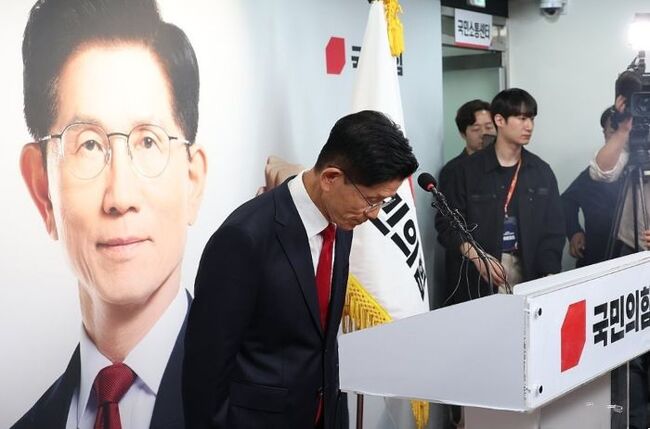 “Too little, too late?…” Kim Moon-soo, who previously conceded his presidential election defeat, now demands a special counsel investigation into ‘allegations of election fraud in the 2025 presidential election’
People Power Party presidential candidate Kim Moon-soo concedes defeat during a press conference at the party headquarters in Yeouido, Seoul, on June 4, 2025. [Joint Press Corps]As allegations emerge
“Too little, too late?…” Kim Moon-soo, who previously conceded his presidential election defeat, now demands a special counsel investigation into ‘allegations of election fraud in the 2025 presidential election’
People Power Party presidential candidate Kim Moon-soo concedes defeat during a press conference at the party headquarters in Yeouido, Seoul, on June 4, 2025. [Joint Press Corps]As allegations emerge
 Stock Market Crash 'Black Tuesday'… KOSPI down 10.8%, KOSDAQ down 7.7%
The KOSPI fell by more than 5% in early trading on the 28th, triggering a sell-side sidecar.On the 28th, the KOSPI plunged by more than 10%.Due to the sharp decline, a sell-side sidecar—a temporary
Stock Market Crash 'Black Tuesday'… KOSPI down 10.8%, KOSDAQ down 7.7%
The KOSPI fell by more than 5% in early trading on the 28th, triggering a sell-side sidecar.On the 28th, the KOSPI plunged by more than 10%.Due to the sharp decline, a sell-side sidecar—a temporary
 [World Heritage Committee] 25 New World Heritage Sites Inscribed in Busan… South Korea Successfully Expands 'Getbol' Listing
The Chairperson of the World Heritage Committee speaks at the plenary session of the 48th session of the World Heritage Committee, held at BEXCO in Busan on the 20th. [Photo: Yonhap News]A total of 25
[World Heritage Committee] 25 New World Heritage Sites Inscribed in Busan… South Korea Successfully Expands 'Getbol' Listing
The Chairperson of the World Heritage Committee speaks at the plenary session of the 48th session of the World Heritage Committee, held at BEXCO in Busan on the 20th. [Photo: Yonhap News]A total of 25
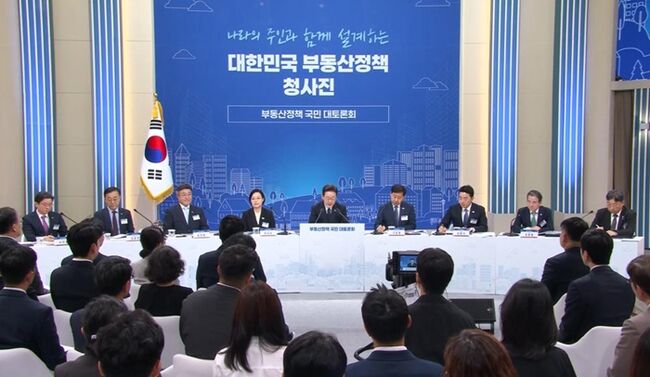 [Liberal Democratic Party Statement] Calling it a Grand Real Estate Debate… It Was Nothing More Than a Private Party Among Themselves
The 'National Grand Debate on Real Estate Policy' held on July 23rd and 27th. [Photo=Yonhap News]The 'National Grand Debate on Real Estate Policy,' hosted by the Lee Jae-myung administration under the
[Liberal Democratic Party Statement] Calling it a Grand Real Estate Debate… It Was Nothing More Than a Private Party Among Themselves
The 'National Grand Debate on Real Estate Policy' held on July 23rd and 27th. [Photo=Yonhap News]The 'National Grand Debate on Real Estate Policy,' hosted by the Lee Jae-myung administration under the
 [Photo] Evidence of Election Fraud Flooding U.S. Media… Trump Had 2.7 Million Votes Stolen
 [Video] U.S. Semiquincentennial Air Show... 'Art in the Sky' streaks across New York
 [Editorial Cartoon] A Draconian Law That Undermines Freedom of Expression

 List
List