The film ‘Legacy of War’, commemorating the 75th anniversary of the outbreak of the Korean War. CultInc.TF
Since the 1980s, during South Korea's so-called democratization period, past taboos were broken, and various controversial elements such as political bias, violence, and changes in historical perspective emerged in mainstream popular culture under the name of democratization or democracy.
Democratization and democracy are not something that can be monopolized by anyone. We must respect diversity and contribute to expanding cultural freedom in accordance with South Korean society and the minds of its people. Monopolies are bad anywhere, anytime, and it is the government's responsibility to create a fair competitive environment.
In a seminar on the Korean cultural war held last spring, experts raised issues regarding the tilted playing field in South Korea across various cultural and artistic fields including literature, history, film, and media, and explored new directions.
Negative Impact of Films on Society: ‘Anti-Japan’ and ‘Anti-America’
Korean films have been pouring out since the 1980s, with some achieving box office success and winning awards at prestigious international film festivals.
While individual film evaluations can encompass various perspectives such as visual aesthetics, character development, and social commentary, if an overwhelmingly large number of works exhibit a specific negative tendency, it can deeply affect the public's emotional perception and distort the direction of the national community.
Whereas past Korean films and dramas emphasized human triumph, family love, and warmth amidst hardship, works after democratization have focused on uncovering the base nature of humans or the contradictions of social structures. This has had the side effect of instilling in the public a logic of individual survival and distrust of others rather than a sense of community solidarity.
Following democratization, the film industry focused on criticizing the authoritarian governments of the past and reinterpreting modern and contemporary history. Films dealing with the Korean War moved away from past anti-communism and strengthened a ‘nationalistic perspective’ or a ‘both sides are to blame’ viewpoint.
This was criticized for diluting national security awareness and confusing the concept of the main enemy by emphasizing only the ‘sacrificed individuals’ and the ‘tragedy of fratricidal strife,’ rather than the cause and responsibility of the war (North Korea's invasion of the South) (e.g., Taegeukgi Hwinalrimyeo, Welcome to Dongmakgol).
In particular, the spread of anti-Japanese and anti-American sentiments led to a weakening of national identity by undermining pride in being a liberal democracy and historical legitimacy.
Distorted Visuals That Have Dulled the Public's Receptivity to Stimuli
Furthermore, the ‘cinematic aesthetics’ that glorify revenge, incest, and extreme violence have desensitized the public to stimuli, producing fragmented individuals who prioritize instinct and revenge over human dignity.
 A scene from Squid Game. [Photo=Netflix]
As sensational narratives inciting conflict between classes, generations, and genders have dominated discourse, conflict rather than integration has become the main driving force of films and dramas (e.g., Oldboy, Parasite, Squid Game, Sympathy for Lady Vengeance).
In particular, with the repeated portrayal of South Korea's national system as a product of a corrupt establishment (e.g., Parasite, Squid Game), cynicism and hatred have taken root among the youth, rather than pride in their country, fostering a discourse of ‘Hell Joseon.’
Is a society where poverty is not a sin but the wealthy are treated as sinners healthy? Can achieving equality through violent revolution be justified?
Communist Societies Where Socialist Realism Became the Standard of Art
Let us look at the perception and history of films in communist countries as a lesson.
In 1922, Lenin declared, "Of all the arts, cinema is the most important," nationalized the film industry, and established a dedicated department.
In the 1930s, Stalin defined ‘Socialist Realism’ as the sole criterion for art, which was a method of brainwashing the masses by depicting not reality as it is, but the ‘ideal future desired by the party’ as if it were a current fact.
Mao Zedong controlled the ideology of the entire nation by only showing ‘model operas’ (revolutionary opera), which played a key role in mobilizing the masses as Red Guards and eliminating opposition.
Communist theorists like Antonio Gramsci emphasized ‘cultural hegemony,’ arguing that media, education, and art must be seized before a political revolution.
North Korea defines film not merely as entertainment but as a ‘textbook for mass education.’ Director Shin Sang-ok, who was abducted, produced high-quality films with the full support of Kim Jong-il, but it is assessed that this resulted in brainwashing North Korean residents with ‘loyalty to the Leader’ through more sophisticated visual artistry.
Patriotic Right-Wing Films on the Brink of Extinction
The Korean film industry has been criticized since the late 1990s for forming a so-called ‘interest cartel’ with individuals holding specific ideological leanings dominating key positions.
A cartel structure was created where the Korean Film Council (KOFIC), the Busan International Film Festival, specific film publications, and independent film organizations were linked in terms of personnel and resources, supporting each other.
In the 2000s, through several governments, enormous budgets were invested in national institutions and projects reinterpreting modern and contemporary history under the guise of ‘freedom of expression,’ which became fertile ground for the production of works that were socially critical or depicted the founding history of South Korea negatively.
Cultural and artistic grants are often loosely tied to performance measurement or repayment obligations, making them easy to be used as tools by the regime that provided the funding once received.
Works with a conservative perspective that defend liberal democracy, market economy, and the legitimacy of South Korea are relatively isolated in the market. As support from major investment and distribution companies and KOFIC is concentrated among specific networks, patriotic scripts are often rejected at the investment stage.
Even if production is somehow achieved, distribution networks controlled by cinema chains are reluctant to allocate screen space, citing ‘lack of commercial appeal’ or ‘to prevent controversy,’ thus denying opportunities to meet the public. Attempts by conservative governments to support patriotic films were met with strong public condemnation under the ‘blacklist’ frame.
As the tilted playing field has deepened, films with themes of the Korean War or national defense are only a few each year, estimated to be less than 1-3% of the total number of films produced annually, which amounts to hundreds.
Examples of Disadvantage and Success for Patriotic Films
‘The Battleship Island’ (2015), which depicted the actual naval engagement that occurred during the 2002 FIFA World Cup, was shunned by investors from the planning stage. Major investment companies withdrew due to the political logic that it would ‘pour cold water on inter-Korean relations,’ and ultimately, thousands of ordinary citizens participated in ‘crowdfunding (national donations)’ to enable its production.
 'The Battleship Island' (2015), which depicted the actual naval engagement during the 2002 FIFA World Cup, was shunned by investors from the planning stage due to the political logic that it would 'pour cold water on inter-Korean relations.' [Photo=Next Entertainment World]
‘Operation Chromite’ (2016) faced extremely low scores (1-3 points) from critics upon its release, with sensational reviews calling it ‘anachronistic,’ and it is cited as an example of ‘politicization of criticism’ due to the very subject matter of a patriotic film being met with resistance.
However, despite the harsh criticism from experts, over 7 million viewers watched it, proving its demand.
‘The Birth of Korea’ (2024), which depicts the life of President Syngman Rhee, faced significant difficulties in securing initial screening venues. It was shunned by major multiplexes until its box office potential became apparent, leading to audiences directly requesting screenings at theaters.
Despite these challenges, the film ultimately caused a stir, surpassing 1.17 million viewers, a first for a right-wing documentary. The film was praised for reintroducing the buried truths of the nation's founding history through data and testimony, creating an opportunity for historical re-evaluation among the younger generation.
Other films include ‘Spring of Tamra’ (2022) and ‘The Beginning of a Miracle’ (2023), which depict rebellions and suppressions during the nation's founding and the lives of its founding leaders.
‘The Children of Kim Il-sung’ (2022), a documentary about Korean War orphans sent to Eastern Europe and forcibly repatriated to North Korea, is also known to have faced many difficulties in production and screening.
‘Ode to My Father’ (2014), without espousing political slogans, depicted the sacrifices of the industrialization generation and a positive national outlook during the modernization process, while ‘The Admiral: Roaring Currents’ (2014) depicted the heroic life of Admiral Yi Sun-sin, receiving public acclaim.
This year, ‘Legacy of War’ (directed by Kim Chae-young), commemorating the 75th anniversary of the outbreak of the Korean War, was released and received widespread acclaim both domestically and internationally.
These films have proven that audiences are thirsty for patriotic stories about those who saved the nation from the brink, rather than content that is solely critical and biased.
However, due to the high entry barriers in the institutional film industry, capable filmmakers are forming an alternative culture by actively producing short films and educational documentaries that correct historical distortions through independent films, YouTube-based content, or their own screening platforms.
Proposals for Expanding the Base of Patriotic Conservative Films
There are strong calls for the following institutional changes to rectify the tilted playing field in the cultural and arts sector and allow diverse values to coexist.
① Balanced Personnel Composition of the Korean Film Council (KOFIC)
There are many criticisms that the KOFIC's review panels and committee members are currently biased towards individuals from certain ideological groups. Therefore, the government should reconfigure the council to be ideologically neutral and balanced, creating an environment where ‘artistic merit’ and ‘national value’ can be judged fairly, without discrimination based on subject matter.
② Introduction of a Separate Support Quota System for ‘National Defense and Founding Films’
A policy is needed to classify films that defend the legitimacy of South Korea and inspire national pride as ‘films for public interest,’ significantly increase tax credit benefits for production costs, and guarantee a quota for production support funds from KOFIC.
③ Objectification of Criteria for Independent and Art Films
The subjective review process that determines whether a film is an ‘art film’ based on political orientation should be abolished, and regulations should be codified to provide the same benefits regardless of ideology for documentaries that aim to clarify historical facts or convey public interest value.
④ Incentives for Private Investment Promotion
Tax benefits for individuals and corporations investing in films with conservative values should be strengthened through ‘cultural investment tax benefits’ to open avenues for private capital to flow freely without going through the internal film industry cartel.
⑤ Strengthening Fair Assignment Oversight by Multiplexes
To prevent major distributors and cinema chains with market dominance from intentionally neglecting films of a certain orientation, a fair trade approach could be considered, monitoring the fairness of screen time allocation relative to audience share and imposing sanctions for violations.
We hope that healthy criticism and institutional improvements will work in tandem to level the tilted playing field, so that films documenting Korea's proud history are no longer a ‘political taboo.’
Representative of the Federation for Free Unification, Ph.D. in Public Administration
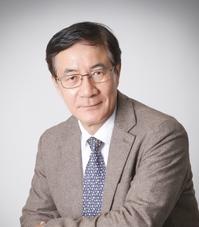
◆ Dr. Shin Dong-chun
Ph.D. in Public Administration, Representative of the Federation for Free Unification. After passing the 21st Higher Civil Service Examination, he served in public office before embarking on a dynamic career as a CEO, university professor, media columnist, author, and chairman of the Global Aerospace Industry Association.

 Trump pressures for rate cut again ahead of FOMC... "Should be the lowest in the world"
U.S. President Donald Trump. [Photo = The White House] U.S. President Donald Trump once again pressured the Federal Reserve, the U.S. central bank, to lower interest rates on the 27th (local time
Trump pressures for rate cut again ahead of FOMC... "Should be the lowest in the world"
U.S. President Donald Trump. [Photo = The White House] U.S. President Donald Trump once again pressured the Federal Reserve, the U.S. central bank, to lower interest rates on the 27th (local time
 “Ignoring crisp ballots and damaged seals”… Tongyeong mayoral recount concludes with ‘no change in outcome,’ leaving suspicions and public outrage behind
Suspected counterfeit ballots discovered in Tongyeong [GIF from social media of Representative Hwang Kyo-ahn / Attorney Park Joo-hyun]During a recount of the Tongyeong mayoral election in South Gyeong
“Ignoring crisp ballots and damaged seals”… Tongyeong mayoral recount concludes with ‘no change in outcome,’ leaving suspicions and public outrage behind
Suspected counterfeit ballots discovered in Tongyeong [GIF from social media of Representative Hwang Kyo-ahn / Attorney Park Joo-hyun]During a recount of the Tongyeong mayoral election in South Gyeong
 President Yoon, regarding the first-instance ruling on the Public Official Election Act: “An excessive political verdict that distorts the facts… We will appeal immediately.”
The first-instance sentencing hearing for President Yoon Suk Yeol regarding violations of the Public Official Election Act is being broadcast live at Seoul Station on the 27th. [Photo=Yonhap News]Pres
President Yoon, regarding the first-instance ruling on the Public Official Election Act: “An excessive political verdict that distorts the facts… We will appeal immediately.”
The first-instance sentencing hearing for President Yoon Suk Yeol regarding violations of the Public Official Election Act is being broadcast live at Seoul Station on the 27th. [Photo=Yonhap News]Pres
 WSJ: "SK Hynix ADR Premium Is a Sign of AI Trading Overheat"
Advertisement for SK Hynix ADR listing in New York's Times Square [Reuters=Yonhap News file photo]The Wall Street Journal (WSJ) has pointed out that the price of SK Hynix’s American Depositary Recei
WSJ: "SK Hynix ADR Premium Is a Sign of AI Trading Overheat"
Advertisement for SK Hynix ADR listing in New York's Times Square [Reuters=Yonhap News file photo]The Wall Street Journal (WSJ) has pointed out that the price of SK Hynix’s American Depositary Recei
 'Godfather of Japanese Mystery Novels' Keigo Higashino Passes Away After Battle with Cancer at 68
Famous Japanese mystery novelist Keigo Higashino [AFP=Yonhap News]It has been belatedly reported that Keigo Higashino, the "godfather of Japanese mystery novels" and author of bestsellers such as "The
'Godfather of Japanese Mystery Novels' Keigo Higashino Passes Away After Battle with Cancer at 68
Famous Japanese mystery novelist Keigo Higashino [AFP=Yonhap News]It has been belatedly reported that Keigo Higashino, the "godfather of Japanese mystery novels" and author of bestsellers such as "The
 [Park Pil-kyu Security Column] To the Ignorant Trying to Clothe a Beast in Sheep's Clothing
Rep. Kim Byung-joo of the Democratic Party of Korea [Photo=Yonhap News]“The Air Force Academy doesn't teach you how to fly a plane!” “The Army, Navy, and Air Force academies are exactly the
[Park Pil-kyu Security Column] To the Ignorant Trying to Clothe a Beast in Sheep's Clothing
Rep. Kim Byung-joo of the Democratic Party of Korea [Photo=Yonhap News]“The Air Force Academy doesn't teach you how to fly a plane!” “The Army, Navy, and Air Force academies are exactly the
 [Issue Diagnosis] Two Effects of the Election Petition Review
 [Photo] Evidence of Election Fraud Flooding U.S. Media… Trump Had 2.7 Million Votes Stolen
 [Video] U.S. Semiquincentennial Air Show... 'Art in the Sky' streaks across New York
 [Editorial Cartoon] A Draconian Law That Undermines Freedom of Expression

 List
List