 Chinese President Xi Jinping [AP=Yonhap News]
Under the Xi Jinping regime, history is not a matter of interpreting the past, but a state management policy to maintain current power and define future direction.
In China, a 'historical view' does not signify an academic preference or ideological difference. It is a standard that delineates what can be said and what can lead to punishment if spoken. This is why historical issues have become particularly sensitive in Chinese society since Xi Jinping came to power.
"The Collapse of the Soviet Communist Party Was Caused by Self-Negation"
Xi Jinping was elected General Secretary of the Communist Party of China in November 2012 and became President in March 2013. Shortly after taking office, he repeatedly mentioned the collapse of the Soviet Union.
The reason Xi Jinping emphasized for the Soviet Union's downfall was not economic failure, but the collapse of ideology, specifically the attitude of the Communist Party negating its own history. Xi Jinping's historical view starts from the premise that if the Communist Party undermines its past, the justification for defending the present also disappears.
On January 5, 2013, in an internal lecture to high-ranking party officials, Xi Jinping presented a standard that would be repeatedly cited in subsequent Chinese politics. This principle is commonly summarized as the 'Prohibition of Two Negations'.
It states that one must not completely negate the period before reform and opening up, i.e., the Mao Zedong era, based on the achievements after reform and opening up. Conversely, one must not negate the path after reform and opening up based on the Mao era.
Although these remarks were not immediately released as official documents, they were subsequently cited repeatedly in party theory journals and state-controlled media, establishing them as de facto standards. The purpose of this principle is to prevent the history of the Communist Party of China from being used as a tool to attack different periods.
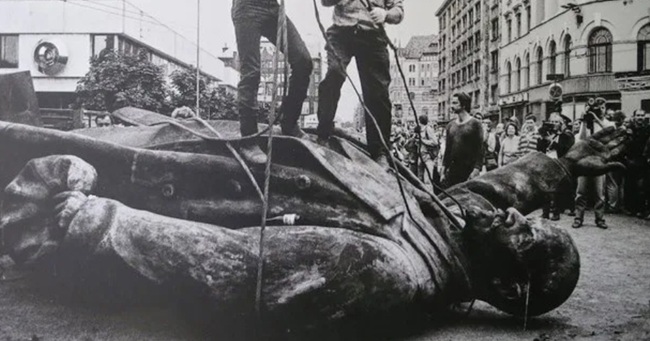 The Soviet Union was officially dissolved on December 26, 1991. This event led to the creation of 15 new independent nations. People pulling down a statue of Lenin after the dissolution of the Soviet Union. [Photo=Wikipedia]
The history of the Communist Party of China includes events like the Great Leap Forward (started in 1958) and the Cultural Revolution (1966-1976), which caused immense loss of life and social upheaval.
The Chinese government itself, in its 1981 "Resolution on Certain Questions in the History of Our Party Since the Founding of the PRC," described the Cultural Revolution as "a serious disaster brought to the Party, the state and the people."
Xi Jinping does not overturn these existing evaluations. However, he strongly prevents these evaluations from being extended into a logic that negates the entire system. His stance is that while mistakes are acknowledged, this acknowledgment must not shake the legitimacy of the Communist Party's rule.
This principle became more institutionally defined in 2021. The year 2021 marked the 100th anniversary of the founding of the Communist Party of China. The party was founded in Shanghai in 1921, making it exactly 100 years by 2021.
In commemoration of this year, Xi Jinping ordered a nationwide campaign for learning and educating Party history. This was not a simple history lecture; it was a large-scale political education program requiring all Party organizations, government agencies, schools, and state-owned enterprises to learn the Party's history according to the same standards.
On November 16 of the same year, the Sixth Plenary Session of the 19th Central Committee of the Communist Party of China adopted the "Resolution on the Major Achievements and Historical Experience of the Party over the Past Century."
This document, commonly referred to as the third historical resolution, is the third major historical document adopted by the Party, following those of 1945 and 1981. This resolution frames the Party's 100-year history as a continuous narrative of success, specifically emphasizing achievements since Xi Jinping's rise to power, termed the "new era."
Key achievements presented include economic growth, poverty eradication, military modernization, and strengthening national capabilities. It clearly established Xi Jinping Thought as the guiding ideology of the Party. Through this document, Xi Jinping formalized his period of rule as a central segment within the history of the Communist Party of China.
'Historical Nihilism' as a Political Label
The most powerful tool for disseminating a historical view throughout society is education. In November 2019, the Central Committee of the Communist Party of China and the State Council issued the "Outline for the Implementation of Patriotic Education in the New Era."
This document meticulously defined the objectives, content, target audience, and methods of patriotic education. Core content included respect for the history of the Party and nation, revolutionary traditions, the spirit of heroes and martyrs, and national symbols. This became a directive that all levels of schools and institutions had to follow, going beyond mere recommendations.
This trend advanced further with the "Patriotic Education Law" passed by the Standing Committee of the National People's Congress on October 24, 2023. This law came into effect on January 1, 2024. The elevation of education from a directive to a law is significant.
Patriotism and historical perception are no longer optional but have become legal obligations. The law explicitly mandates correct understanding of national unity, ethnic solidarity, national security, and the history of the Party and the nation.
Even earlier, on April 27, 2018, the "Law on the Protection of Heroes and Martyrs" was passed and took effect on May 1 of the same year. This law prohibits acts that defame or deny the honor of heroes and martyrs recognized by the state. This signifies that it has become a domain with legal repercussions, not just moral condemnation. The state's intention to directly set the scope of interpretation of historical figures and events is clearly evident.
The internet space is no exception. Around 2021, the Cyberspace Administration of China launched a concentrated crackdown on "historical nihilism." Content that distorts or denies the history of the Party and the nation was designated as subject to reporting, leading to the deletion of posts and account sanctions.
Here, historical nihilism is closer to a political label than an academic concept. It is a term used to collectively refer to interpretations that deviate from the official narratives of the Communist Party.
'Selection of Memory'... Even the Number of Victims is Altered
Another characteristic of Xi Jinping's historical view is the selection of memory. China strongly commemorates events such as the War of Resistance Against Japanese Aggression and the Nanjing Massacre at the national level.
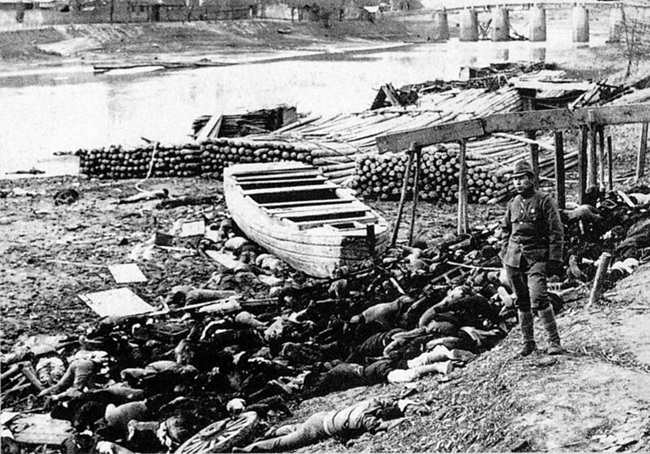 The Nanjing Massacre was an event during the Second Sino-Japanese War in which the Imperial Japanese Army, after occupying Nanjing, the capital of the Republic of China, indiscriminately raped and massacred Chinese civilians. At that time, Chinese soldiers and male civilians who surrendered were mass-shot under the pretext of disposing of defeated soldiers. [Photo=Wikipedia]
On December 13, 2014, China officially designated December 13 as the National Memorial Day for Victims of the Nanjing Massacre and held the first national memorial ceremony. This event has continued annually since then.
The Chinese government officially states the number of victims as 300,000, a figure that differs from numbers presented by some international researchers. However, this number itself is treated as an unalterable standard within China.
The background that allows this historical view to take root in society is the scale of the organization. As of the end of 2024, the number of Communist Party members in China exceeded 102.7 million, an increase of approximately 1.09 million from 2023.
There are about 5.25 million grassroots Party organizations. Party organizations exist in almost all living spaces, including schools, villages, businesses, hospitals, and research institutes. This structure allows for daily education and oversight of historical views.
The historical view of the Xi Jinping regime posits that the past is not an object of debate but an object of management, and this management operates for the sake of current governance and future national goals. In the Xi Jinping regime, history is not a bygone story. It is a present-tense power that continues to operate through laws, education, organizations, and censorship even at this very moment.
This historical view may be effective in uniting China in a single direction. However, it also significantly restricts the autonomy of historical interpretation. Xi Jinping's historical view does not presuppose diversity. It demands unified memory, controlled narratives, and consistent evaluations. This is the method chosen by the Communist Party of China to avoid the path of the Soviet Union and is the core of the historical politics constructed by Xi Jinping.
Poet, Historian, Philosopher
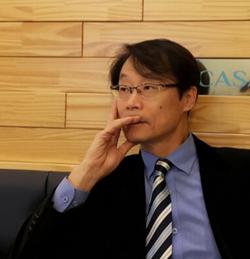
◆ Songshan
A poet and researcher of history and philosophy, he previously served as a director of the Syngman Rhee Institute and is currently active as a research advisor for the Korean Modern and Contemporary History Research Society and the representative of the Philosophy Forum Lyceum. He has published four poetry collections and co-translated "The Hero of Hook Goji." Songshan is a pen name.

 Iranian Foreign Ministry: "Continuing Message Exchanges with the U.S. and Activities of Mediating Countries"
Esmaeil Baghaei, Spokesperson for the Iranian Ministry of Foreign Affairs [Xinhua, Yonhap News file photo]Esmaeil Baghaei, spokesperson for the Iranian Ministry of Foreign Affairs, stated on the 26th
Iranian Foreign Ministry: "Continuing Message Exchanges with the U.S. and Activities of Mediating Countries"
Esmaeil Baghaei, Spokesperson for the Iranian Ministry of Foreign Affairs [Xinhua, Yonhap News file photo]Esmaeil Baghaei, spokesperson for the Iranian Ministry of Foreign Affairs, stated on the 26th
 President Yoon: "Do You Think You Are Safe from the Special Counsel?"... Final Statement Video Released
President Yoon Suk Yeol rebuking the special prosecutor on the 24th. [Court video / @birds_justice X account subtitle GIF] A video of President Yoon Suk Yeol's closing statement at his trial rega
President Yoon: "Do You Think You Are Safe from the Special Counsel?"... Final Statement Video Released
President Yoon Suk Yeol rebuking the special prosecutor on the 24th. [Court video / @birds_justice X account subtitle GIF] A video of President Yoon Suk Yeol's closing statement at his trial rega
 President Yoon, regarding the first-instance ruling on the Public Official Election Act: “An excessive political verdict that distorts the facts… We will appeal immediately.”
The first-instance sentencing hearing for President Yoon Suk Yeol regarding violations of the Public Official Election Act is being broadcast live at Seoul Station on the 27th. [Photo=Yonhap News]Pres
President Yoon, regarding the first-instance ruling on the Public Official Election Act: “An excessive political verdict that distorts the facts… We will appeal immediately.”
The first-instance sentencing hearing for President Yoon Suk Yeol regarding violations of the Public Official Election Act is being broadcast live at Seoul Station on the 27th. [Photo=Yonhap News]Pres
 WSJ: "SK Hynix ADR Premium Is a Sign of AI Trading Overheat"
Advertisement for SK Hynix ADR listing in New York's Times Square [Reuters=Yonhap News file photo]The Wall Street Journal (WSJ) has pointed out that the price of SK Hynix’s American Depositary Recei
WSJ: "SK Hynix ADR Premium Is a Sign of AI Trading Overheat"
Advertisement for SK Hynix ADR listing in New York's Times Square [Reuters=Yonhap News file photo]The Wall Street Journal (WSJ) has pointed out that the price of SK Hynix’s American Depositary Recei
 'Godfather of Japanese Mystery Novels' Keigo Higashino Passes Away After Battle with Cancer at 68
Famous Japanese mystery novelist Keigo Higashino [AFP=Yonhap News]It has been belatedly reported that Keigo Higashino, the "godfather of Japanese mystery novels" and author of bestsellers such as "The
'Godfather of Japanese Mystery Novels' Keigo Higashino Passes Away After Battle with Cancer at 68
Famous Japanese mystery novelist Keigo Higashino [AFP=Yonhap News]It has been belatedly reported that Keigo Higashino, the "godfather of Japanese mystery novels" and author of bestsellers such as "The
 [Park Pil-kyu Security Column] To the Ignorant Trying to Clothe a Beast in Sheep's Clothing
Rep. Kim Byung-joo of the Democratic Party of Korea [Photo=Yonhap News]“The Air Force Academy doesn't teach you how to fly a plane!” “The Army, Navy, and Air Force academies are exactly the
[Park Pil-kyu Security Column] To the Ignorant Trying to Clothe a Beast in Sheep's Clothing
Rep. Kim Byung-joo of the Democratic Party of Korea [Photo=Yonhap News]“The Air Force Academy doesn't teach you how to fly a plane!” “The Army, Navy, and Air Force academies are exactly the
 [Issue Diagnosis] Two Effects of the Election Petition Review
 [Photo] Evidence of Election Fraud Flooding U.S. Media… Trump Had 2.7 Million Votes Stolen
 [Video] U.S. Semiquincentennial Air Show... 'Art in the Sky' streaks across New York
 [Editorial Cartoon] A Draconian Law That Undermines Freedom of Expression

 List
List









