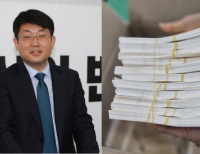
[Photo Credit: Yonhap News]
The Supreme Court has issued a final ruling ordering Pizza Hut Korea to refund 21.5 billion won in difference-based franchise fees to its franchisees. The court determined that collecting these fees, which were not explicitly stated in franchise agreements, constituted unjust enrichment.
Key Details of the Supreme Court Ruling
On the 15th, the Supreme Court's Third Division (presided by Justice Lee Heung-gu) upheld a lower court's ruling in favor of some plaintiffs in an appeal case filed by 94 Pizza Hut Korea franchisees against the headquarters, seeking the return of unjustly enriched funds. Consequently, Pizza Hut Korea is obligated to refund a total of 21.5 billion won in difference-based franchise fees collected from 2016 to 2022 to its franchisees.
The core issue in the trial was whether a separate agreement was necessary for the franchisor to collect difference-based franchise fees, which represent the distribution margin taken during the supply of raw materials and ingredients. Difference-based franchise fees refer to the margin generated from the difference between the cost price and the supply price when the headquarters supplies ingredients purchased externally to its franchisees.
The Supreme Court ruled that since difference-based franchise fees are a type of franchise fee under the Franchise Business Act, there must be a concrete agreement of intent between the franchisor and the franchisee to collect them. In Pizza Hut's case, the franchise agreement lacked an explicit clause regarding the imposition of difference-based franchise fees, and implicit consent from the franchisees was not recognized.
Franchisees' Claims
The franchisees argued that the headquarters was already collecting 6% of sales as royalties (administration fees) and was additionally collecting difference-based franchise fees, which were not specified in the contract, thereby profiting twice. The franchisees stated that the headquarters set prices higher than market rates for the supply of raw materials and ingredients, and collected margins without prior notification or agreement.
The court accepted the franchisees' claims, recognizing the collection of difference-based franchise fees without a contractual basis as unjust enrichment.
Pizza Hut Headquarters' Position
Pizza Hut headquarters countered that collecting a reasonable distribution margin is inherent to the franchise business. The headquarters argued that the difference-based franchise fees were legitimate profits, considering the costs incurred in purchasing, storing, managing, and supplying raw materials and ingredients in bulk to franchisees.
However, the court did not accept the headquarters' argument, citing the lack of prior agreement.
Ongoing Receivership Proceedings
This Supreme Court ruling has placed Pizza Hut Korea in a severe financial crisis. Following the loss in the second trial in September of last year, some franchisees initiated enforcement actions, including attaching the headquarters' accounts. In response, Pizza Hut filed for corporate rehabilitation proceedings at the Seoul Rehabilitation Court in November of last year.
The court has decided to commence rehabilitation proceedings for Pizza Hut, and the company is required to submit a rehabilitation plan by March of next year. The company's future fate will depend on the content of the rehabilitation plan and the consent of its creditors.
Impact on the Franchise Industry as a Whole
This ruling is unlikely to be limited to Pizza Hut alone. Currently, approximately 2,500 franchisees are involved in similar lawsuits seeking the refund of difference-based franchise fees against 17 major franchise brands, including bhc, Kyochon Chicken, BBQ, Baskin-Robbins, and Twosome Place.
The Korea Franchise Industry Association stated that if similar lawsuits increase based on this Supreme Court ruling, the total potential risk could reach 1 trillion won. The association noted that about 90% of domestic franchisors rely on difference-based franchise fees as a major source of revenue, and expressed concern that a significant number of small and medium-sized franchisors would face financial difficulties if this ruling is upheld.
The association also submitted an intervention application in the Pizza Hut lawsuit.
Background for Franchise Business Act Amendment
The Franchise Business Act was recently amended, strengthening the standards for drafting franchise agreements. The revised law mandates that franchise agreements clearly specify the types of essential items and the method for calculating their supply prices.
This Supreme Court ruling has clarified that a clear contractual basis is required to collect difference-based franchise fees. Accordingly, franchise headquarters will likely need to re-examine their franchise agreements and disclosure statements and explicitly state clauses related to difference-based franchise fees.
Prospects for Revenue Structure Realignment
Experts predict that this ruling will bring about changes in the revenue structure of the domestic franchise industry. Until now, franchise headquarters have operated under a revenue model combining low royalties and difference-based franchise fees.
With the difficulty in collecting difference-based franchise fees due to this ruling, headquarters may need to realign their revenue structures by adjusting royalty rates or recalculating franchise fees. However, concerns are also being raised that such changes could lead to increased burdens for franchisees or higher prices for consumers.
This Pizza Hut situation serves as a case study highlighting the importance of contractual transparency between franchisors and franchisees. The court deemed profit collection without a clear contractual basis as unjust enrichment, which is expected to influence future franchise contract practices.
Franchise headquarters are now under greater necessity to clearly state their revenue structures in contracts and engage in thorough discussions with their franchisees. Simultaneously, franchisees have learned a valuable lesson to meticulously review the supply prices of raw materials and ingredients and the headquarters' revenue structure when entering into contracts.
Meanwhile, the industry's attention is focused on how Pizza Hut's rehabilitation process will unfold and what the outcomes of the lawsuits against other franchise brands will be.
Hanmi Ilbo Editorial Department

 [Statement by the Seo-beo-kka Korea Military Academy Save-the-Nation Comrades Association] ㉛ Recount the Votes Publicly, as the Previous Recount Concealed Election Fraud
Tongyeong Mayoral Election Recount [Photo=Yonhap News]South Korea's liberal democracy is dying. The National Election Commission (NEC) and the judiciary, which have plummeted into criminal syndicates
[Statement by the Seo-beo-kka Korea Military Academy Save-the-Nation Comrades Association] ㉛ Recount the Votes Publicly, as the Previous Recount Concealed Election Fraud
Tongyeong Mayoral Election Recount [Photo=Yonhap News]South Korea's liberal democracy is dying. The National Election Commission (NEC) and the judiciary, which have plummeted into criminal syndicates
 What is the significance of the "Trump 2028" red hats that keep making a comeback?
It is noteworthy that President Donald Trump is "intentionally" fueling controversy over whether he can actually run in the 2028 presidential election, even though it is "highly likely he is seriously
What is the significance of the "Trump 2028" red hats that keep making a comeback?
It is noteworthy that President Donald Trump is "intentionally" fueling controversy over whether he can actually run in the 2028 presidential election, even though it is "highly likely he is seriously
 Jin Cummings: "North Korea says it will increase the number of spies, so what is the government doing?"
U.S. political columnist Gene Cummings has publicly questioned the South Korean government, asking, "North Korea is announcing plans to increase its number of spies, yet what is the South Korean
Jin Cummings: "North Korea says it will increase the number of spies, so what is the government doing?"
U.S. political columnist Gene Cummings has publicly questioned the South Korean government, asking, "North Korea is announcing plans to increase its number of spies, yet what is the South Korean
 Attorney Do Tae-woo: “Discrepancies in Voter Count and Improper Sealing Confirmed in Tongyeong Mayoral Recount… Official Request for Further Verification Filed with Gyeongnam Election Commission”
A bundle of out-of-district early voting ballots photographed by attorney Do Tae-woo at the Tongyeong mayoral election recount site. A clear, solid line visible on the side of the ballots raises suspi
Attorney Do Tae-woo: “Discrepancies in Voter Count and Improper Sealing Confirmed in Tongyeong Mayoral Recount… Official Request for Further Verification Filed with Gyeongnam Election Commission”
A bundle of out-of-district early voting ballots photographed by attorney Do Tae-woo at the Tongyeong mayoral election recount site. A clear, solid line visible on the side of the ballots raises suspi
 Stock Market Crash 'Black Tuesday'… KOSPI down 10.8%, KOSDAQ down 7.7%
The KOSPI fell by more than 5% in early trading on the 28th, triggering a sell-side sidecar.On the 28th, the KOSPI plunged by more than 10%.Due to the sharp decline, a sell-side sidecar—a temporary
Stock Market Crash 'Black Tuesday'… KOSPI down 10.8%, KOSDAQ down 7.7%
The KOSPI fell by more than 5% in early trading on the 28th, triggering a sell-side sidecar.On the 28th, the KOSPI plunged by more than 10%.Due to the sharp decline, a sell-side sidecar—a temporary
 [World Heritage Committee] 25 New World Heritage Sites Inscribed in Busan… South Korea Successfully Expands 'Getbol' Listing
The Chairperson of the World Heritage Committee speaks at the plenary session of the 48th session of the World Heritage Committee, held at BEXCO in Busan on the 20th. [Photo: Yonhap News]A total of 25
[World Heritage Committee] 25 New World Heritage Sites Inscribed in Busan… South Korea Successfully Expands 'Getbol' Listing
The Chairperson of the World Heritage Committee speaks at the plenary session of the 48th session of the World Heritage Committee, held at BEXCO in Busan on the 20th. [Photo: Yonhap News]A total of 25
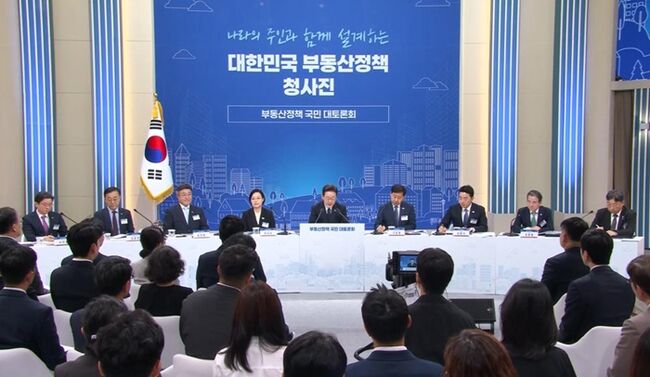 [Liberal Democratic Party Statement] Calling it a Grand Real Estate Debate… It Was Nothing More Than a Private Party Among Themselves
The 'National Grand Debate on Real Estate Policy' held on July 23rd and 27th. [Photo=Yonhap News]The 'National Grand Debate on Real Estate Policy,' hosted by the Lee Jae-myung administration under the
[Liberal Democratic Party Statement] Calling it a Grand Real Estate Debate… It Was Nothing More Than a Private Party Among Themselves
The 'National Grand Debate on Real Estate Policy' held on July 23rd and 27th. [Photo=Yonhap News]The 'National Grand Debate on Real Estate Policy,' hosted by the Lee Jae-myung administration under the
 [Photo] Evidence of Election Fraud Flooding U.S. Media… Trump Had 2.7 Million Votes Stolen
 [Video] U.S. Semiquincentennial Air Show... 'Art in the Sky' streaks across New York
 [Editorial Cartoon] A Draconian Law That Undermines Freedom of Expression

 List
List