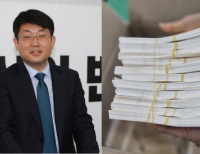
정부는 안보 논란이 발생할 때마다 기능·운영체계 점검보다 조직부터 없애는 위험한 선택을 반복해 왔다. 2012년 사이버사령부 댓글 사건 이후 정부는 문제의 본질이 지휘·감독 실패에 있었음에도, 사이버전(戰)의 핵심 기능을 담당하던 부대의 권한과 역할을 대폭 축소했다. 이는 북한의 사이버 공격이 정교해지는 시점에 오히려 대응 능력을 스스로 약화시킨 자해적 결정이었다.
 A Ukrainian military drone engineer operates a first-person view drone. Ukrainian Minister of Digital Transformation Mykhailo Fedorov cited the achievements of "Mazar's Birds," one of the elite drone units, stating that the performance of drone units is a "mechanism that changes the rules of war." [Photo=EPA Yonhap News]
Cracks in security begin not with gunfire, but with the absence of accountability. While war is waged by the military, security failures invariably unfold quietly, yet lethally, through political and administrative judgments.
The recent drone controversy is not merely a matter of operational errors. It is an incident that starkly reveals the extent to which the foundations of the national security system are being shaken.
The President defined drones used for intelligence gathering across national borders as an act of war. If drones, which were claimed not to be military operations, were operated with the support of intelligence agencies even after the current government took office, this transcends simple illegality. If a national system existed behind an act defined as a grave crime, it signifies not a security failure, but a collapse of the security structure.
A Dangerous Choice of Eliminating Organizations When Controversy Arises
The scene where the President reprimands the military leadership with, "Why didn't you know?" further clarifies the essence of the issue. If the military truly didn't know, it's a failure of control; if they knew but weren't informed, it's a problem with the chain of command.
Either way, it indicates that the nation's security decision-making structure is not functioning properly. Yet, the moment this is downplayed as "suspicion" or "rumor," accountability is blurred, and structural issues are disguised as individual deviations.
Every time a security controversy arises, the government has repeatedly made the dangerous choice of eliminating organizations rather than inspecting their functions and operating systems. Following the 2012 Cyber Command comment controversy, the government significantly reduced the authority and role of units responsible for core cyber warfare functions, despite the issue fundamentally stemming from a failure in command and supervision.
This was a self-inflicted decision that weakened our response capabilities precisely at a time when North Korea's cyberattacks were becoming more sophisticated.
During the Moon Jae-in administration, the same pattern was repeated during the controversy over the Defense Security Command's (DSC) martial law documents. To avoid political repercussions, the DSC was abolished and reorganized, leading to the creation of the Defense Security Agency (DSA).
In this process, a significant portion of intelligence capabilities related to North Korea and air defense was lost, and criticism poured in from within the military, stating, "They severed their own counter-espionage functions to cover up political controversy."
Plans to Abolish Counter-Espionage Agency and Drone Units... Against the Tide of International Affairs and Security Trends
Concerns have further intensified with the government's recent announcement of plans to abolish the Counter-Espionage Agency. Eliminating an organization that has performed special missions such as detecting spies within the military, preventing leaks of military secrets, and countering North Korean espionage, and transferring its functions to external agencies, is essentially a decision to abandon the military's independent counter-espionage capabilities and an act of abandoning security by ceasing to even catch spies.
Furthermore, the abolition of drone units is now being discussed. At a time when North Korean drone infiltrations are repeated, and countries engaged in war with their neighbors consider drone power as future capability and are expanding it comprehensively, our military alone discussing the existence or abolition of drone units due to controversy is a measure that goes against international affairs and security trends.
Unmanned aerial vehicles and drones are already at the center of modern warfare. In the Russia-Ukraine war and Middle Eastern conflicts, drones have become weapons that change the landscape of the battlefield.
In a country like North Korea with a unique security environment, the decision to reduce or abolish drone capabilities is a judgment detached from security realities. The problem is not the drones themselves, but the control and command responsibility structure surrounding them.
Unmanned Aerial Vehicles and Drones... The Core of Future Warfare Determining the Battlefield's Tide
If drone units have caused problems, the command structure and operational principles can be corrected. Eliminating the organization itself only widens the power vacuum. Drone capabilities are central to future warfare, and disbanding units due to controversy is akin to surrendering the battlefield.
This is as illogical as disbanding the police force if an investigator commits misconduct, or disbanding the military if a soldier deserts.
Intelligence gathering is similar. Information on nuclear weapons, missiles, the environment, and radioactivity is directly linked to people's lives. Someone must undertake the risk to collect this information.
However, a structure where the state withdraws and offloads the risk onto civilians is unacceptable. The problem is not the use of civilians for intelligence gathering, but the failure to clarify the command line and accountability when utilizing civilians. In a structure where responsibility is blurred and authority is dispersed, accidents are bound to repeat.
What is needed now is not emotional condemnation or organizational dissolution. It is a comprehensive re-examination of overall security policy. The legal basis and approval system for operating North Korean-bound drones must be clarified, and civilian participation should be placed under direct military command or fundamentally restricted.
Drone capabilities are subject to reorganization, not abolition, and intelligence agencies need normalization, separated from politics, not dissolution.
The Current Chaos is the Result of Choosing Peace Policies Unbacked by Strength
Security should not be shaken by the interests of any administration. Who would trust a country where strategic assets are shaken by a single external remark, and organizations are eliminated instead of internal accountability being enforced? Security without clear accountability ultimately inflicts danger upon the nation.
The current chaos is the result of choosing peace policies that control strength. And the choice of a peace strategy without the backing of strength will inevitably test the nation's credibility and endanger the lives of its people.
Instead of eliminating security organizations to avoid political burdens, the government must establish a strict command structure and accountability relationships and strengthen its forces.
The sentiment of the people and the military is that they hope the military leadership will serve as the nation's last bastion, unshaken by political winds. We hope the military leadership will offer frank advice to prevent the administration from sacrificing the military and self-destructing essential security capabilities.

◆ Park Pil-kyu
Editorial Board Member, Hankook Ilbo
40th Class, Korea Military Academy

 [Statement by the Seo-beo-kka Korea Military Academy Save-the-Nation Comrades Association] ㉛ Recount the Votes Publicly, as the Previous Recount Concealed Election Fraud
Tongyeong Mayoral Election Recount [Photo=Yonhap News]South Korea's liberal democracy is dying. The National Election Commission (NEC) and the judiciary, which have plummeted into criminal syndicates
[Statement by the Seo-beo-kka Korea Military Academy Save-the-Nation Comrades Association] ㉛ Recount the Votes Publicly, as the Previous Recount Concealed Election Fraud
Tongyeong Mayoral Election Recount [Photo=Yonhap News]South Korea's liberal democracy is dying. The National Election Commission (NEC) and the judiciary, which have plummeted into criminal syndicates
 What is the significance of the "Trump 2028" red hats that keep making a comeback?
It is noteworthy that President Donald Trump is "intentionally" fueling controversy over whether he can actually run in the 2028 presidential election, even though it is "highly likely he is seriously
What is the significance of the "Trump 2028" red hats that keep making a comeback?
It is noteworthy that President Donald Trump is "intentionally" fueling controversy over whether he can actually run in the 2028 presidential election, even though it is "highly likely he is seriously
 Jin Cummings: "North Korea says it will increase the number of spies, so what is the government doing?"
U.S. political columnist Gene Cummings has publicly questioned the South Korean government, asking, "North Korea is announcing plans to increase its number of spies, yet what is the South Korean
Jin Cummings: "North Korea says it will increase the number of spies, so what is the government doing?"
U.S. political columnist Gene Cummings has publicly questioned the South Korean government, asking, "North Korea is announcing plans to increase its number of spies, yet what is the South Korean
 Attorney Do Tae-woo: “Discrepancies in Voter Count and Improper Sealing Confirmed in Tongyeong Mayoral Recount… Official Request for Additional Verification Submitted to Gyeongnam Election Commission”
A bundle of mail-in early voting ballots captured by lawyer Do Tae-woo at the Tongyeong mayoral election recount site. A clear solid line, raising suspicions of election fraud, is visible on the side
Attorney Do Tae-woo: “Discrepancies in Voter Count and Improper Sealing Confirmed in Tongyeong Mayoral Recount… Official Request for Additional Verification Submitted to Gyeongnam Election Commission”
A bundle of mail-in early voting ballots captured by lawyer Do Tae-woo at the Tongyeong mayoral election recount site. A clear solid line, raising suspicions of election fraud, is visible on the side
 Stock Market Crash 'Black Tuesday'… KOSPI down 10.8%, KOSDAQ down 7.7%
The KOSPI fell by more than 5% in early trading on the 28th, triggering a sell-side sidecar.On the 28th, the KOSPI plunged by more than 10%.Due to the sharp decline, a sell-side sidecar—a temporary
Stock Market Crash 'Black Tuesday'… KOSPI down 10.8%, KOSDAQ down 7.7%
The KOSPI fell by more than 5% in early trading on the 28th, triggering a sell-side sidecar.On the 28th, the KOSPI plunged by more than 10%.Due to the sharp decline, a sell-side sidecar—a temporary
 [World Heritage Committee] 25 New World Heritage Sites Inscribed in Busan… South Korea Successfully Expands 'Getbol' Listing
The Chairperson of the World Heritage Committee speaks at the plenary session of the 48th session of the World Heritage Committee, held at BEXCO in Busan on the 20th. [Photo: Yonhap News]A total of 25
[World Heritage Committee] 25 New World Heritage Sites Inscribed in Busan… South Korea Successfully Expands 'Getbol' Listing
The Chairperson of the World Heritage Committee speaks at the plenary session of the 48th session of the World Heritage Committee, held at BEXCO in Busan on the 20th. [Photo: Yonhap News]A total of 25
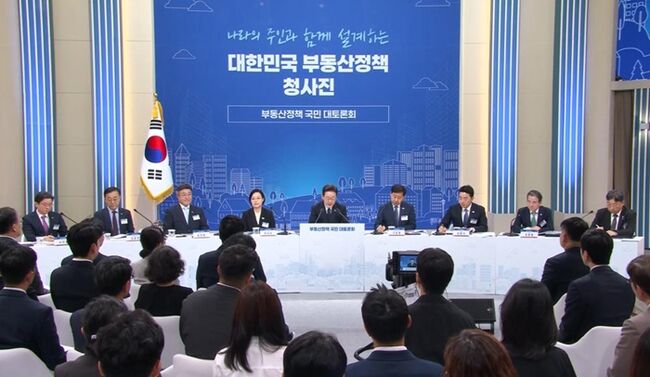 [Liberal Democratic Party Statement] Calling it a Grand Real Estate Debate… It Was Nothing More Than a Private Party Among Themselves
The 'National Grand Debate on Real Estate Policy' held on July 23rd and 27th. [Photo=Yonhap News]The 'National Grand Debate on Real Estate Policy,' hosted by the Lee Jae-myung administration under the
[Liberal Democratic Party Statement] Calling it a Grand Real Estate Debate… It Was Nothing More Than a Private Party Among Themselves
The 'National Grand Debate on Real Estate Policy' held on July 23rd and 27th. [Photo=Yonhap News]The 'National Grand Debate on Real Estate Policy,' hosted by the Lee Jae-myung administration under the
 [Photo] Evidence of Election Fraud Flooding U.S. Media… Trump Had 2.7 Million Votes Stolen
 [Video] U.S. Semiquincentennial Air Show... 'Art in the Sky' streaks across New York
 [Editorial Cartoon] A Draconian Law That Undermines Freedom of Expression

 List
List