 Logic can be refuted, but emotions are difficult to refute. Literature does this very well.
Ideas do not change people through debate. No matter how well someone presents their logic, their thoughts don't change immediately just because they heard it.
People's thoughts respond more strongly to familiarity than to persuasion. Thoughts that are heard often, read often, and encountered often eventually become ingrained as if they were "always that way." This is how ideas enter.
Therefore, the places where ideas enter most are not debate stages or lecture halls. They are books, stories, and sentences. Especially literature.
Literature does not persuade... it only touches emotions
Literature does not assert ideas. Instead, it subtly embeds certain thoughts within the characters' emotions and the flow of events. The reader doesn't perceive it as an idea. They simply accept it as a good story or a relatable scene. This process is important. Ideas do not easily penetrate when one's guard is up.
However, it's different within a story. When the reader's heart connects with the protagonist and emotions are invested in the situation, judgment is deferred. At that moment, a particular worldview enters along with it. Before questioning what is right or wrong, one first feels that way.
The moment an idea takes root is not when one nods in agreement, saying "That's right." It is the moment one feels, "This is familiar."
Words that were initially unfamiliar appear repeatedly, similar emotional structures are echoed, and the world is explained in the same way. Before you know it, that perspective becomes the standard. Without having learned it separately, one finds themselves already thinking that way.
Literature does this very well. Logic can be refuted, but emotions are difficult to refute.
The sympathy, anger, and shame formed within a text remain in the body before the mind. Literature doesn't tell people what to think. Instead, it shows them what to empathize with. Ideas are built upon that empathy.
Therefore, ideas do not reveal themselves. They don't say, "This is an idea." They approach with the guise of "This is human," "This is reality," or "It is natural to feel this way." Literature is the channel that makes that face the most gentle.
The upcoming series of articles is an attempt to explore how ideas hidden within literature become people's thoughts. Rather than focusing on who made what claims, we will follow how certain sentences evoked certain emotions and how those emotions solidified into a thought habit.
Why Does Reading Lower Our Defenses?
When people read books, the first thing they let go of is not judgment, but their guard. These two are different. Judgment can be re-established later, but once a guard is lowered, it's not easily raised again. Reading is an act that lowers that guard. We believe reading is not dangerous.
 Reading is a pleasurable activity. Yet, even within enjoyment, something enters.
In everyday life, people are constantly on guard. They consume news with suspicion of intent, and listen to political statements while dissecting ulterior motives. When someone speaks to them, they first calculate whether they are being persuaded or exploited.
However, it's different in front of a book. A book doesn't speak to you. The moment you hold it and open it, the reader feels that the control is in their hands. They believe they decide whether to read, and how much to read.
This sensation breaks down their defenses. The reader does not perceive the book as an 'opponent.' They consider it a tool for passing time, not a target to contend with. Therefore, their defenses don't activate. They feel no need to refute or distance themselves. The text doesn't attack; it flows quietly.
The timing of reading is also important. Most reading happens during leisure time. It's done after a day's work, to clear the mind, or before sleep. At these times, people are in relaxation mode, not critical mode. They pick up a book wanting to think less. It is precisely at this point that the reader is most open.
Sentences take advantage of this state. When reading begins, the reader entrusts their body to the rhythm of the sentences. They read the next sentence without stopping. This is because they want the story to continue without interruption. This continuity postpones judgment. The attitude of "I'll think about it after I finish reading" is repeated, and thoughts are always pushed to the back.
This is not the reader's weakness. It is the structure of the act of reading. Text flows from front to back, and the reader follows that flow. The moment one stops to doubt or question, reading is interrupted. Therefore, most readers choose the method of reading without questioning, in order to maintain the act of reading.
In this way, reading renders a person defenseless. Not through deception, but through trust. The belief that books are safe, the belief that sentences do not attack, opens the reader's door. Ideas enter precisely through this door.
The Shield of "A Good Story"
"This is just a good story."
Few phrases offer such a powerful免責 (exemption). The moment this phrase appears, many questions disappear. Questions like why such emotions were evoked, why the story flows in this direction, or what it aims to convey become unnecessary. After all, it's a good story, so why bother questioning it?
What people call a "good story" is generally similar. Characters struggle, the world is unfair, and the reader sides with those characters. If sadness, anger, or warmth are appropriately mixed in, the story is considered successful. In this process, the reader becomes a companion rather than a judge.
The problem is that this companionship has direction. Stories do not flow randomly. A character's suffering is linked to specific causes, anger is directed at specific targets, and sympathy is concentrated on certain groups. However, the reader does not perceive this as a presentation of a worldview. They simply accept it as the flow of the story.
The phrase "a good story" protects this flow. If criticism arises, one can say, "It's not political," "It's not about ideas," "Read literature as literature." This statement is convenient. It's convenient for the writer and convenient for the reader.
However, emotions are not neutral. What we empathize with determines what we come to take for granted. When we repeatedly encounter certain kinds of suffering, the way that suffering is explained becomes the standard. The interpretation naturally accepted within a story later becomes the framework for viewing reality.
At this point, the phrase "a good story" acts as a shield. It hides ideology under the claim that it is not ideology. The reader accepts it without suspicion, feeling no need to judge. However, the very fact of not judging becomes a judgment in itself: a judgment to accept.
Therefore, this shield is dangerous. It lingers much longer than aggressive claims. Overt slogans can be rejected, but a good story is difficult to reject. This is because emotions have already been stirred. Ideas grow on this emotion.
The Moments When Critical Reading Fails
Critical reading is not always a possible stance. Rather, the moments when it is possible are limited. It's only possible when one's mind is clear, emotions are calm, and one is reading with a specific purpose. However, most reading is not like this. It happens when one is tired, reading without thinking, or wanting to get lost in a story.
At these times, criticism feels like an obstruction. The thought, "Why do I need to analyze this? Can't I just read it?" comes first. Criticism seems like an act that breaks the enjoyment. Therefore, the reader voluntarily stops being critical.
The smoother the sentences, the stronger this phenomenon becomes. Harsh claims and aggressive language provoke resistance, but calm explanations and personal confessions soften defenses. The more the writer appears to be a person who is struggling, the more the reader withholds judgment. This is because it becomes uncomfortable to be in a position to evaluate such a person.
Another important moment is repetition. When the same emotional structure is repeated across multiple works, the reader no longer recognizes it as an assertion. They simply accept it as a convention of literature. At this point, criticism hardly functions because one has already become accustomed to it.
Criticism begins with unfamiliarity. However, ideas remove unfamiliarity through repetition. Literature is the genre that performs this repetition most naturally. This is because stories and emotions do not become tedious even when repeated.
Therefore, the moments when critical reading fails are not exceptions. They are close to the normal state. Humans are not always vigilant readers. Most of the time, we are comfortable readers. If we don't acknowledge this fact, we cannot understand how ideas enter.
This article is not intended to criticize the reader. Rather, it is an attempt to reveal the structure of the act of reading. We need to understand when we are most vulnerable to be able to move to the next stage.
Reading is a pleasurable activity. Yet, even within enjoyment, something enters. If we fail to see it, our thoughts will always be a step behind.

◆ Songsan (松山)
Poet and researcher of history and philosophy. He served as a director of the Syngman Rhee Institute and currently serves as a research advisor for the Korean Modern and Contemporary History Research Association and CEO of the philosophy forum Lyceion. He has published four poetry collections and co-translated "The Hero of Hook's Hill." Songsan is a pen name.

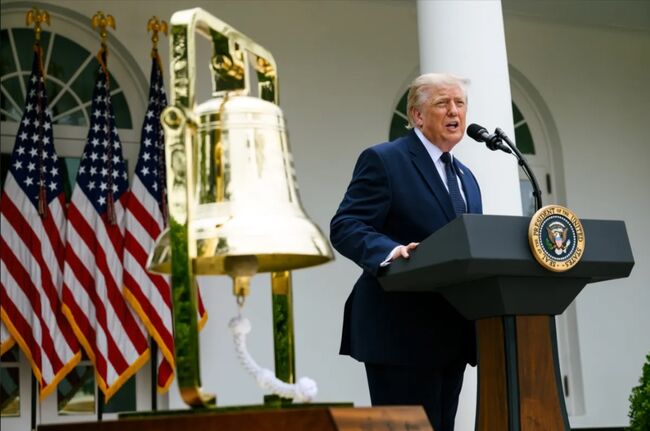 Trump pressures for rate cut again ahead of FOMC... "Should be the lowest in the world"
U.S. President Donald Trump. [Photo = The White House] U.S. President Donald Trump once again pressured the Federal Reserve, the U.S. central bank, to lower interest rates on the 27th (local time
Trump pressures for rate cut again ahead of FOMC... "Should be the lowest in the world"
U.S. President Donald Trump. [Photo = The White House] U.S. President Donald Trump once again pressured the Federal Reserve, the U.S. central bank, to lower interest rates on the 27th (local time
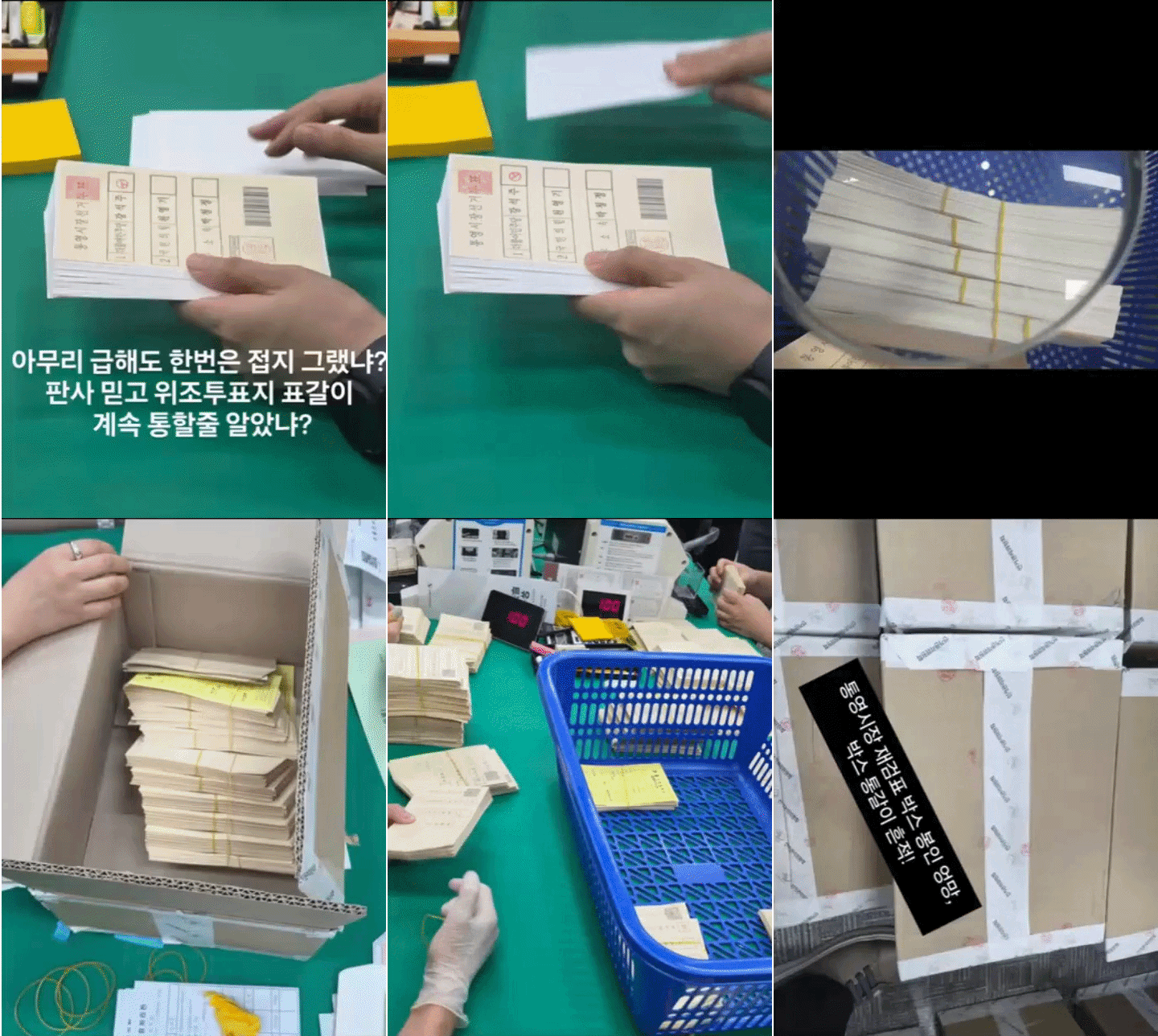 “Ignoring crisp ballots and damaged seals”… Tongyeong mayoral recount concludes with ‘no change in outcome,’ leaving suspicions and public outrage behind
Suspected counterfeit ballots discovered in Tongyeong [GIF from social media of Representative Hwang Kyo-ahn / Attorney Park Joo-hyun]During a recount of the Tongyeong mayoral election in South Gyeong
“Ignoring crisp ballots and damaged seals”… Tongyeong mayoral recount concludes with ‘no change in outcome,’ leaving suspicions and public outrage behind
Suspected counterfeit ballots discovered in Tongyeong [GIF from social media of Representative Hwang Kyo-ahn / Attorney Park Joo-hyun]During a recount of the Tongyeong mayoral election in South Gyeong
 President Yoon, regarding the first-instance ruling on the Public Official Election Act: “An excessive political verdict that distorts the facts… We will appeal immediately.”
The first-instance sentencing hearing for President Yoon Suk Yeol regarding violations of the Public Official Election Act is being broadcast live at Seoul Station on the 27th. [Photo=Yonhap News]Pres
President Yoon, regarding the first-instance ruling on the Public Official Election Act: “An excessive political verdict that distorts the facts… We will appeal immediately.”
The first-instance sentencing hearing for President Yoon Suk Yeol regarding violations of the Public Official Election Act is being broadcast live at Seoul Station on the 27th. [Photo=Yonhap News]Pres
 WSJ: "SK Hynix ADR Premium Is a Sign of AI Trading Overheat"
Advertisement for SK Hynix ADR listing in New York's Times Square [Reuters=Yonhap News file photo]The Wall Street Journal (WSJ) has pointed out that the price of SK Hynix’s American Depositary Recei
WSJ: "SK Hynix ADR Premium Is a Sign of AI Trading Overheat"
Advertisement for SK Hynix ADR listing in New York's Times Square [Reuters=Yonhap News file photo]The Wall Street Journal (WSJ) has pointed out that the price of SK Hynix’s American Depositary Recei
 'Godfather of Japanese Mystery Novels' Keigo Higashino Passes Away After Battle with Cancer at 68
Famous Japanese mystery novelist Keigo Higashino [AFP=Yonhap News]It has been belatedly reported that Keigo Higashino, the "godfather of Japanese mystery novels" and author of bestsellers such as "The
'Godfather of Japanese Mystery Novels' Keigo Higashino Passes Away After Battle with Cancer at 68
Famous Japanese mystery novelist Keigo Higashino [AFP=Yonhap News]It has been belatedly reported that Keigo Higashino, the "godfather of Japanese mystery novels" and author of bestsellers such as "The
 [Park Pil-kyu Security Column] To the Ignorant Trying to Clothe a Beast in Sheep's Clothing
Rep. Kim Byung-joo of the Democratic Party of Korea [Photo=Yonhap News]“The Air Force Academy doesn't teach you how to fly a plane!” “The Army, Navy, and Air Force academies are exactly the
[Park Pil-kyu Security Column] To the Ignorant Trying to Clothe a Beast in Sheep's Clothing
Rep. Kim Byung-joo of the Democratic Party of Korea [Photo=Yonhap News]“The Air Force Academy doesn't teach you how to fly a plane!” “The Army, Navy, and Air Force academies are exactly the
 [Issue Diagnosis] Two Effects of the Election Petition Review
 [Photo] Evidence of Election Fraud Flooding U.S. Media… Trump Had 2.7 Million Votes Stolen
 [Video] U.S. Semiquincentennial Air Show... 'Art in the Sky' streaks across New York
 [Editorial Cartoon] A Draconian Law That Undermines Freedom of Expression

 List
List










