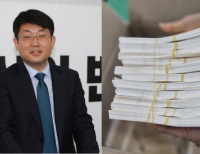
U.S. House Judiciary Committee press release regarding Coupang
As the Korea Fair Trade Commission (KFTC) concluded on the 19th that Coupang did not meet the criteria for a business suspension, some analysts suggest that the U.S. House of Representatives' investigation into whether the "Coupang incident" violated the First Amendment may actually gain momentum.
The reason U.S. political circles are focusing on this issue is not so much the scale of the personal data breach itself, but rather how the remarks made by the South Korean government and political figures have influenced the decision-making environment for a U.S. company.
While the KFTC's conclusion—that no payment information was included and no actual financial damages or instances of identity theft were confirmed—means the incident fell short of the threshold for administrative sanctions in Korea, there is a detectable trend in the U.S. toward reinterpreting this within the context of the debate over freedom of expression.
The KFTC presented three core grounds for its decision.
The points are that no payment information, such as card numbers or account details, was involved; no actual financial damage was verified; and no cases of identity theft were discovered.
Beyond the simple facts of the case, this highlights the structural characteristics of the platform regulatory framework.
Personal information held by telecommunications companies—such as resident registration numbers, identity verification data, and communication records—is considered a form of "identity infrastructure" that can lead to financial access if combined, making the risk itself a subject for sanctions.
In contrast, e-commerce platforms are classified as intermediaries, meaning that strong administrative action is only possible if actual consumer harm is proven. The difference lies in the fact that while telecom firms are subject to preventative sanctions, platform regulation is results-based.
Unlike this legal structure, the initial response to the incident unfolded as if it were a crisis involving a major telecommunications company.
The emergence of a hardline stance, which even included comments from the President, is analyzed as being driven more by political crisis management than by legal judgment.
Because a personal data breach can quickly lead to criticism of government accountability, a consumer protection message was emphasized early on, with the interpretation being that as investigation results were gathered, the administrative judgment was eventually aligned with legal principles.
However, even after the KFTC's announcement, political pressure is continuing in a different direction.
Interpretations may diverge regarding the demand to designate Bom Kim as the "de facto controller"
The Democratic Party of Korea has prioritized the issue of governance responsibility by demanding that Bom Kim, Chairman of Coupang, Inc., be designated as the company's "de facto controller" (equivalent to a "head of a corporate group" in Korean law).
The term "de facto controller" (literally 'identical person') used by the Fair Trade Commission is a legal concept to identify the individual who effectively controls a corporate group, and its meaning differs from the colloquial term "boss" (chongsu) often used by the media and politicians.
Simply put, it is more of an administrative procedure to identify the party responsible for actually operating the corporate group.
The designation is merely an administrative concept to establish a baseline for disclosing internal transactions and governance accountability; the designation itself does not constitute a penalty.
However, the debate persists because, when combined with political pressure, such a move could influence the business environment.
This development is creating a new phase in conjunction with the U.S. House Judiciary Committee's investigation scheduled for the 23rd (local time).
The core issue of concern for U.S. political circles is not the scale of the security incident, but whether the statements made by the South Korean government and political figures have affected the decision-making environment for a U.S. firm.
If the pressure for "de facto controller" designation and presidential remarks continues even after the KFTC has concluded there was no actual damage, some suggest it could be interpreted as an issue of a "chilling effect" on the corporate operating environment.
A chilling effect refers to a situation where, even in the absence of actual punishment, a company becomes overly cautious about its business direction or expressive activities simply due to political rhetoric or the threat of regulation.
The chilling effect is cited as a significant standard in debates over the U.S. First Amendment.
The legal principle holds that even if the government does not directly impose sanctions, if repeated pressure creates a signal that causes a party to self-censor their expression or economic activities, the environment itself can be interpreted as infringing upon freedom of expression.
Analysts suggest that this perspective is precisely why the U.S. House aims to examine this incident not as a simple security failure, but from the viewpoint of free speech.
However, it is also noted that a congressional investigation does not immediately lead to a ruling of a First Amendment violation, as the final authority to determine constitutionality rests with the judiciary.
Nevertheless, the House has a variety of options available.
Through an investigative report, it could challenge the South Korean government's response or request further review by the U.S. Department of Justice and the Federal Trade Commission.
There is also talk of issuing additional subpoenas to expand the scope of data disclosure or the possibility of discussing legislation under the guise of protecting U.S. companies.
Furthermore, analysts suggest that one cannot rule out the possibility that the U.S. Trade Representative (USTR) or the State Department might elevate digital regulation issues to the diplomatic agenda based on the House report.
Ultimately, this situation will remain a case study demonstrating how differences in regulatory philosophy regarding the same personal data breach can produce vastly different political repercussions.
While the trend domestically is to settle the matter as an administrative determination of insufficient legal grounds, the combination of political pressure regarding the "de facto controller" designation and the U.S. House's First Amendment framework has pushed the incident beyond the scope of a simple security breach.
The structural difference has also become clear: while preventative sanctions are possible for telecom companies due to the inherent risk, the platform issue was marked by the emergence of political messaging, followed by a debate over a "chilling effect" on the corporate environment.
If this controversy moves beyond the issue of free speech to become a trade dispute over digital regulation and the corporate climate, the tension between South Korea and the U.S. could emerge as a new trade variable.
The moment a conflict beginning as a political signal expands into a diplomatic and trade risk, the Coupang incident may be recorded not just as a simple personal data breach, but as a litmus test for the economic relationship between the two nations.

 [Statement by the Seo-beo-kka Korea Military Academy Save-the-Nation Comrades Association] ㉛ Recount the Votes Publicly, as the Previous Recount Concealed Election Fraud
Tongyeong Mayoral Election Recount [Photo=Yonhap News]South Korea's liberal democracy is dying. The National Election Commission (NEC) and the judiciary, which have plummeted into criminal syndicates
[Statement by the Seo-beo-kka Korea Military Academy Save-the-Nation Comrades Association] ㉛ Recount the Votes Publicly, as the Previous Recount Concealed Election Fraud
Tongyeong Mayoral Election Recount [Photo=Yonhap News]South Korea's liberal democracy is dying. The National Election Commission (NEC) and the judiciary, which have plummeted into criminal syndicates
 What is the significance of the "Trump 2028" red hats that keep making a comeback?
It is noteworthy that President Donald Trump is "intentionally" fueling controversy over whether he can actually run in the 2028 presidential election, even though it is "highly likely he is seriously
What is the significance of the "Trump 2028" red hats that keep making a comeback?
It is noteworthy that President Donald Trump is "intentionally" fueling controversy over whether he can actually run in the 2028 presidential election, even though it is "highly likely he is seriously
 Jin Cummings: "North Korea says it will increase the number of spies, so what is the government doing?"
U.S. political columnist Gene Cummings has publicly questioned the South Korean government, asking, "North Korea is announcing plans to increase its number of spies, yet what is the South Korean
Jin Cummings: "North Korea says it will increase the number of spies, so what is the government doing?"
U.S. political columnist Gene Cummings has publicly questioned the South Korean government, asking, "North Korea is announcing plans to increase its number of spies, yet what is the South Korean
 Attorney Do Tae-woo: “Discrepancies in Voter Count and Improper Sealing Confirmed in Tongyeong Mayoral Recount… Official Request for Further Verification Filed with Gyeongnam Election Commission”
A bundle of out-of-district early voting ballots photographed by attorney Do Tae-woo at the Tongyeong mayoral election recount site. A clear, solid line visible on the side of the ballots raises suspi
Attorney Do Tae-woo: “Discrepancies in Voter Count and Improper Sealing Confirmed in Tongyeong Mayoral Recount… Official Request for Further Verification Filed with Gyeongnam Election Commission”
A bundle of out-of-district early voting ballots photographed by attorney Do Tae-woo at the Tongyeong mayoral election recount site. A clear, solid line visible on the side of the ballots raises suspi
 Stock Market Crash 'Black Tuesday'… KOSPI down 10.8%, KOSDAQ down 7.7%
The KOSPI fell by more than 5% in early trading on the 28th, triggering a sell-side sidecar.On the 28th, the KOSPI plunged by more than 10%.Due to the sharp decline, a sell-side sidecar—a temporary
Stock Market Crash 'Black Tuesday'… KOSPI down 10.8%, KOSDAQ down 7.7%
The KOSPI fell by more than 5% in early trading on the 28th, triggering a sell-side sidecar.On the 28th, the KOSPI plunged by more than 10%.Due to the sharp decline, a sell-side sidecar—a temporary
 [World Heritage Committee] 25 New World Heritage Sites Inscribed in Busan… South Korea Successfully Expands 'Getbol' Listing
The Chairperson of the World Heritage Committee speaks at the plenary session of the 48th session of the World Heritage Committee, held at BEXCO in Busan on the 20th. [Photo: Yonhap News]A total of 25
[World Heritage Committee] 25 New World Heritage Sites Inscribed in Busan… South Korea Successfully Expands 'Getbol' Listing
The Chairperson of the World Heritage Committee speaks at the plenary session of the 48th session of the World Heritage Committee, held at BEXCO in Busan on the 20th. [Photo: Yonhap News]A total of 25
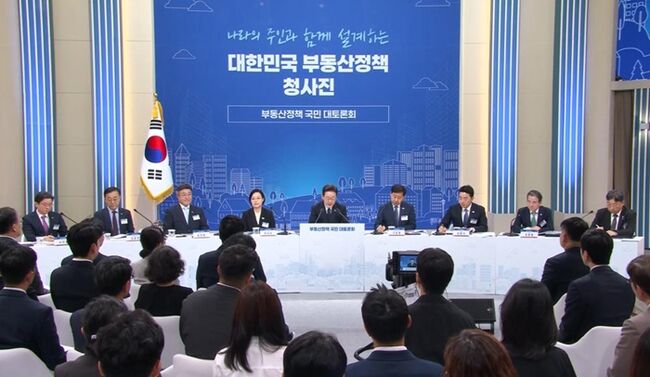 [Liberal Democratic Party Statement] Calling it a Grand Real Estate Debate… It Was Nothing More Than a Private Party Among Themselves
The 'National Grand Debate on Real Estate Policy' held on July 23rd and 27th. [Photo=Yonhap News]The 'National Grand Debate on Real Estate Policy,' hosted by the Lee Jae-myung administration under the
[Liberal Democratic Party Statement] Calling it a Grand Real Estate Debate… It Was Nothing More Than a Private Party Among Themselves
The 'National Grand Debate on Real Estate Policy' held on July 23rd and 27th. [Photo=Yonhap News]The 'National Grand Debate on Real Estate Policy,' hosted by the Lee Jae-myung administration under the
 [Photo] Evidence of Election Fraud Flooding U.S. Media… Trump Had 2.7 Million Votes Stolen
 [Video] U.S. Semiquincentennial Air Show... 'Art in the Sky' streaks across New York
 [Editorial Cartoon] A Draconian Law That Undermines Freedom of Expression

 List
List