Judge Ji Gwi-yeon’s ruling acknowledged the legitimacy of declaring martial law, yet revealed a contradiction by twisting that lawful exercise of authority into the execution of an insurrection. [Photo=Yonhap News]
The "life imprisonment" sentence handed down to President Yoon Suk Yeol in the first trial is not merely a criminal verdict. This ruling has shaken the very foundations of trust in the Republic of Korea’s judicial system.
In particular, Judge Ji Gwi-yeon’s ruling acknowledged the legitimacy of declaring martial law, yet revealed a contradiction by twisting that lawful exercise of authority into the execution of an insurrection.
A close examination of the ruling reveals numerous instances where the judge seems to understand and defend the defendant's position, only to arrive at a contradictory or reversed conclusion.
This suggests the ruling was a hasty revision of an original, perhaps more conscientious, judgment. Let us examine how Judge Ji’s ruling has destroyed and collapsed the fundamental principles of legal logic.
First, the collision between constitutional authority and criminal offense
The ruling explicitly stated that the declaration of martial law was an inherent constitutional power of the President and a measure taken to respond to violence at the National Assembly. It admitted there was no evidence of a conspiracy for long-term rule or preparations for a prolonged period of martial law.
 The court led by Judge Ji Gwi-yeon defined the exercise of legal authority as the starting point for an insurrection. [Photo=Ministry of Education]
Nevertheless, it defined this lawful exercise of authority as the starting point for an insurrection. It reinterpreted a power granted by the Constitution as a crime under the Criminal Act. This is a destruction of legal principles that turns lawful conduct into the execution of a crime, causing a head-on collision between the Constitution and the Criminal Act by converting constitutional authority into a criminal act.
By comparing the President to an executed king, the judge left a mark of infamy upon herself. The execution of Charles I is a historical event where a king, obsessed with strengthening royal power, clashed with Parliament, leading to a civil war and his subsequent execution for treason after his defeat.
After the Restoration, the judges who sentenced him to death were themselves condemned as villains of history. Judge Ji Gwi-yeon rashly used this analogy, oblivious to the lesson that "justice" built on the back of power is not eternal and that political judgments are re-evaluated as eras change.
Second, the collapse of the ‘crime of specific intent’—denying the motive while acknowledging the act
Insurrection is a crime of specific intent. Without the purpose of subverting the constitutional order, an insurrection charge cannot be established. Yet, the ruling clearly denied the motives of insurrection, such as a conspiracy for long-term rule or an intention for dictatorship. Nonetheless, it upheld the conviction for insurrection.
To recognize a crime of specific intent while denying the intent itself is a self-contradiction that undermines the foundation of the criminal law system. It has created a deformed verdict of "insurrection without purpose" and "treason without intent."
Ultimately, it is difficult to avoid the criticism that Judge Ji’s ruling was a decision that forcibly twisted legal principles to maintain a political narrative, despite the lack of any motive or substance for an insurrection.
If the perception spreads that the judiciary has abandoned its own independence to cater to public opinion and political pressure, the rule of law has effectively received a death sentence.
Third, the destruction of constituent elements—acknowledging execution where none occurred
Nowhere in the ruling is there evidence of actual execution, such as the dissolution of the National Assembly, the neutralization of constitutional institutions, or an attempted overthrow of the system. There is no evidence that martial law troops entered the plenary session hall to obstruct legislative proceedings, nor is there a provision in the Martial Law Act prohibiting the military from entering the National Assembly.
Yet, the ruling considered the hypothetical possibility of deployment as the execution of an insurrection. This is a malicious verdict—an "insurrection without a riot" and a "crime of execution without action"—that turns conduct into a crime while knowing full well that evidence is insufficient.
The first-trial verdict excessively interpreted the intent for a riot and constitutional subversion, and failed to sufficiently reflect factual circumstances, such as the lack of live ammunition use or casualties.
It confused the exercise of martial law powers with the constituent elements of insurrection, violating the principles of burden of proof and proportionality. Compared to cases in modern democratic nations like the U.S., it is an excessive verdict. It directly violates the fundamental principle of criminal law regarding the requirement of an act, and it is a rare, egregious judgment that constructs a crime out of abstract danger—a taboo that any lawyer should avoid.
Fourth, conviction despite admitting insufficient evidence… the collision between evidence and conclusion
The ruling acknowledged that the motion to lift martial law was passed normally by the National Assembly and that the President accepted it within four hours.
The logic that someone who triggered an insurrection would immediately lift it themselves is difficult to accept as the writing of a legal professional. The act of constructing a crime by inflating a judge’s inner thoughts and speculations over facts that are not supported by evidence is, in itself, a judicial insurrection and a grave crime.
If the National Assembly functioned normally and the President lifted the measure immediately, then the execution, continuation, and purpose of the insurrection are all refuted. Yet, the ruling used these facts as evidence for the execution of the insurrection.
This is a classic self-contradiction where fact-finding and conclusions clash head-on, and it is a judgment that defies the fundamental principle of criminal trials: that any doubt must be resolved in favor of the defendant.
Fifth, a self-contradictory ruling that selectively applied the logic of popular sovereignty
The ruling defined the attack on the National Assembly as an infringement on popular sovereignty. However, the President is also a constitutional institution entrusted with popular sovereignty.
Why is the act of effectively restricting the President's constitutional authority—through 29 consecutive impeachment attempts and slashing the budget for official activities to zero—not seen as an infringement on popular sovereignty? The moment the logic of popular sovereignty is applied only in one direction (towards the National Assembly), the ruling ceases to be legal logic and becomes parliamentary politics.
Judge Ji’s ruling is difficult to exempt from criticism that it avoided the core issues. It only problematized the deployment of martial law troops to the National Assembly, while failing to judge the issues at the center of the controversy at the time: the orders to secure the National Election Commission servers, the actual purpose of the troop deployment, and the responsibility of the chain of command.
This vacuum ironically makes it possible to interpret the December 3rd measures as not unrelated to the circumstances surrounding electoral fraud, leading to a result that shakes the credibility of the verdict itself. It obscured the essence of the problem by resorting to extreme metaphors about "stealing a candle to read the Bible."
These five legal issues go beyond the judgment of a single court; they touch upon criticisms that the judiciary has long lost its impartiality through its monopoly over election management authority.
Some view that because the judiciary has been deeply involved in the election process, and because acknowledging that structural problem would jeopardize all past rulings—including those on election fraud—the judiciary had no choice but to avoid core issues in this case and choose a ruling that contradicts itself.
In a reality where judicial trust has collapsed, it is difficult to resolve conflicts solely through existing systems. A verdict devoid of conscience will be recorded as the death of the judiciary. There are also voices calling for the search for new institutional solutions.
This will likely serve as a catalyst for calls for AI adjudication, which is immune to emotion and political pressure. The hearts of the people and the military believe that the invisible power of justice is slowly approaching.

◆ Commissioner Park Phil-gyu
Editorial Writer, Han-Mi Ilbo
Korea Military Academy, 40th Class

 Trump pressures for rate cut again ahead of FOMC... "Should be the lowest in the world"
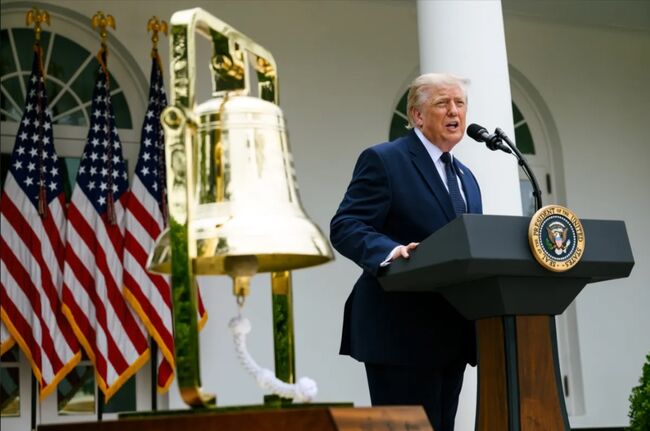
U.S. President Donald Trump. [Photo = The White House] U.S. President Donald Trump once again pressured the Federal Reserve, the U.S. central bank, to lower interest rates on the 27th (local time
Trump pressures for rate cut again ahead of FOMC... "Should be the lowest in the world"
U.S. President Donald Trump. [Photo = The White House] U.S. President Donald Trump once again pressured the Federal Reserve, the U.S. central bank, to lower interest rates on the 27th (local time
 “Ignoring crisp ballots and damaged seals”… Tongyeong mayoral recount concludes with ‘no change in outcome,’ leaving suspicions and public outrage behind
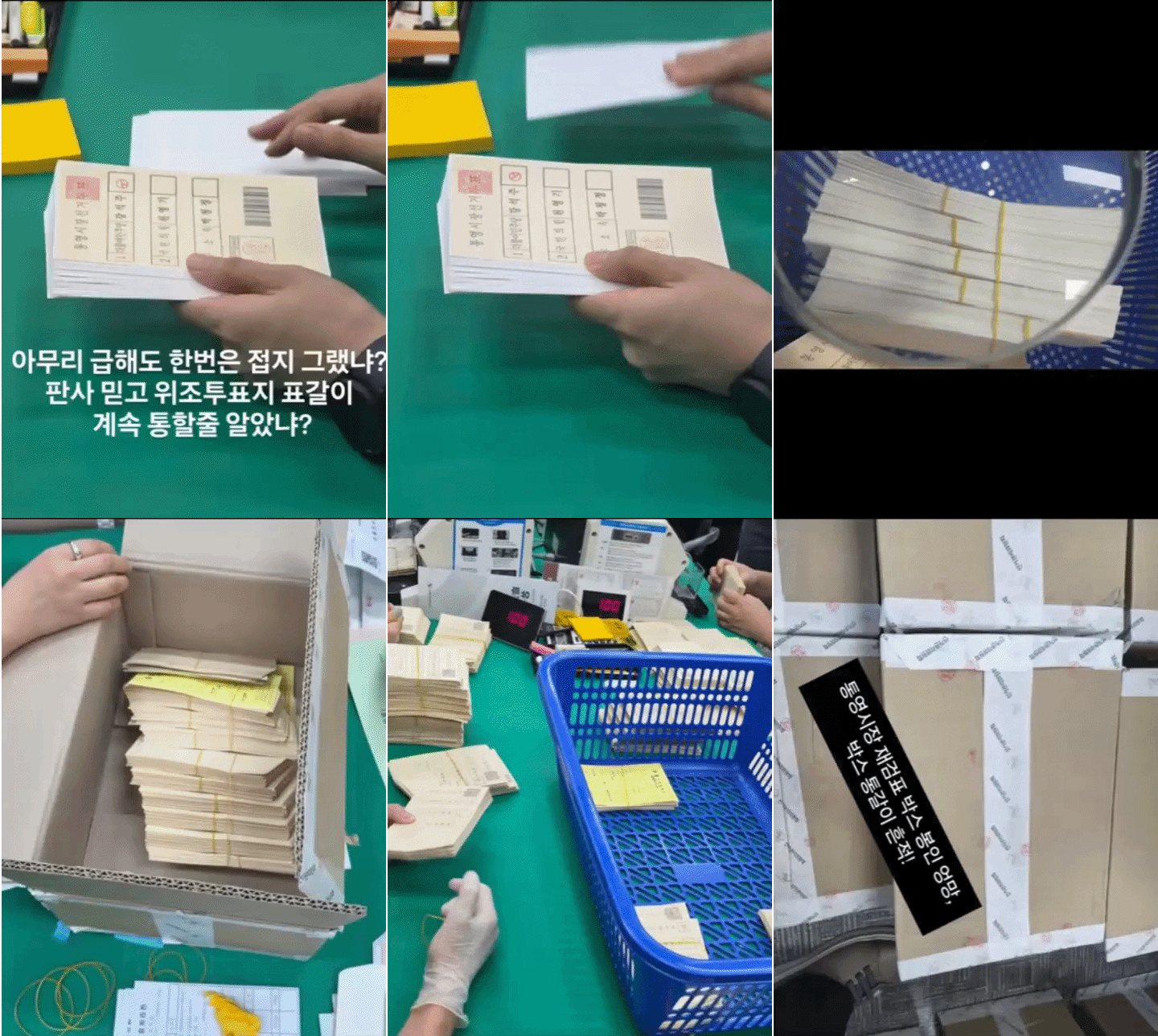
Suspected counterfeit ballots discovered in Tongyeong [GIF from social media of Representative Hwang Kyo-ahn / Attorney Park Joo-hyun]During a recount of the Tongyeong mayoral election in South Gyeong
“Ignoring crisp ballots and damaged seals”… Tongyeong mayoral recount concludes with ‘no change in outcome,’ leaving suspicions and public outrage behind
Suspected counterfeit ballots discovered in Tongyeong [GIF from social media of Representative Hwang Kyo-ahn / Attorney Park Joo-hyun]During a recount of the Tongyeong mayoral election in South Gyeong
 President Yoon, regarding the first-instance ruling on the Public Official Election Act: “An excessive political verdict that distorts the facts… We will appeal immediately.”
The first-instance sentencing hearing for President Yoon Suk Yeol regarding violations of the Public Official Election Act is being broadcast live at Seoul Station on the 27th. [Photo=Yonhap News]Pres
President Yoon, regarding the first-instance ruling on the Public Official Election Act: “An excessive political verdict that distorts the facts… We will appeal immediately.”
The first-instance sentencing hearing for President Yoon Suk Yeol regarding violations of the Public Official Election Act is being broadcast live at Seoul Station on the 27th. [Photo=Yonhap News]Pres
 WSJ: "SK Hynix ADR Premium Is a Sign of AI Trading Overheat"
Advertisement for SK Hynix ADR listing in New York's Times Square [Reuters=Yonhap News file photo]The Wall Street Journal (WSJ) has pointed out that the price of SK Hynix’s American Depositary Recei
WSJ: "SK Hynix ADR Premium Is a Sign of AI Trading Overheat"
Advertisement for SK Hynix ADR listing in New York's Times Square [Reuters=Yonhap News file photo]The Wall Street Journal (WSJ) has pointed out that the price of SK Hynix’s American Depositary Recei
 'Godfather of Japanese Mystery Novels' Keigo Higashino Passes Away After Battle with Cancer at 68
Famous Japanese mystery novelist Keigo Higashino [AFP=Yonhap News]It has been belatedly reported that Keigo Higashino, the "godfather of Japanese mystery novels" and author of bestsellers such as "The
'Godfather of Japanese Mystery Novels' Keigo Higashino Passes Away After Battle with Cancer at 68
Famous Japanese mystery novelist Keigo Higashino [AFP=Yonhap News]It has been belatedly reported that Keigo Higashino, the "godfather of Japanese mystery novels" and author of bestsellers such as "The
 [Park Pil-kyu Security Column] To the Ignorant Trying to Clothe a Beast in Sheep's Clothing
Rep. Kim Byung-joo of the Democratic Party of Korea [Photo=Yonhap News]“The Air Force Academy doesn't teach you how to fly a plane!” “The Army, Navy, and Air Force academies are exactly the
[Park Pil-kyu Security Column] To the Ignorant Trying to Clothe a Beast in Sheep's Clothing
Rep. Kim Byung-joo of the Democratic Party of Korea [Photo=Yonhap News]“The Air Force Academy doesn't teach you how to fly a plane!” “The Army, Navy, and Air Force academies are exactly the
 [Issue Diagnosis] Two Effects of the Election Petition Review
 [Photo] Evidence of Election Fraud Flooding U.S. Media… Trump Had 2.7 Million Votes Stolen
 [Video] U.S. Semiquincentennial Air Show... 'Art in the Sky' streaks across New York
 [Editorial Cartoon] A Draconian Law That Undermines Freedom of Expression

 List
List