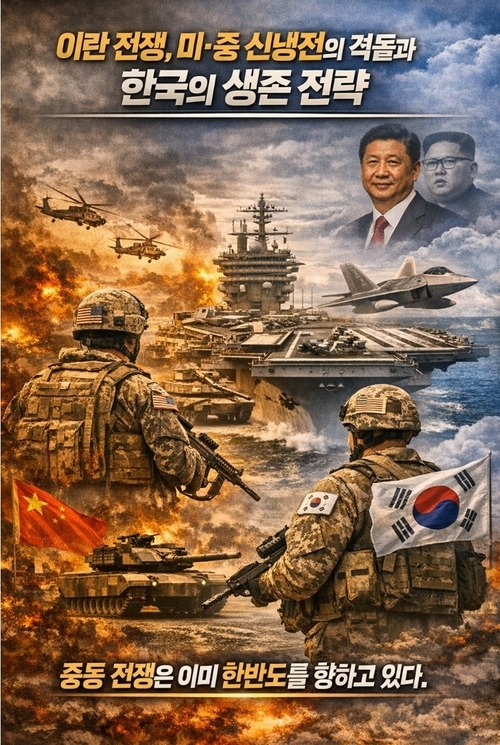
The conflict with Iran has already entered a new phase. The clashes between the US, Israel, and Iran are escalating beyond airstrikes into a quasi-full-scale war involving naval, cyber, and proxy warfare simultaneously. The instability in the Strait of Hormuz is driving up energy and logistics costs, impacting the global economy as a whole. The United States is reallocating its forces in the Middle East, recalibrating its global strategy.
This is highly likely to lead to a dispersion of forces in East Asia and demands for expanded roles from allies. While a prolonged war of attrition is discussed as the most realistic scenario, the possibility of limited ground operations cannot be ruled out. The current situation is not merely a regional conflict but a process of reordering US security strategy, and its repercussions will inevitably extend to the Korean Peninsula.
The United States is seeking to institutionalize allies' military burden-sharing through the Iran conflict. This aligns with a structural shift in US security policy aimed at streamlining global fronts and managing China, Russia, Iran, and North Korea as a single strategic axis.
The Strait of Hormuz, through which approximately 20% of the world's crude oil passes, is a key strategic point that the US defines as an "international public good that allies must protect together." Within this context, South Korea's approach of viewing Middle Eastern issues as external matters is no longer tenable. International politics requires reading the calculations hidden behind the surface of statements.
The message the US is sending to China is a prime example. Amidst the prolonged conflict in the Middle East, the US is demanding China share responsibility for maritime security while simultaneously sending a signal of deterrence, urging China not to escalate tensions in the South China Sea and Taiwan. If China creates new tensions while the US faces increased maritime security burdens in Hormuz and the Red Sea, the US will have to manage both the Middle East and Indo-Pacific fronts simultaneously. Therefore, while the US message may appear as a request for cooperation, it is, in reality, closer to a strategic warning to curb China's maritime expansion and prevent the escalation of fronts.
The message to North Korea should be interpreted in the same vein. President Trump's statement of "dialogue without preconditions" is, on the surface, a conciliatory gesture, but in reality, it is a signal of deterrence, urging North Korea not to escalate tensions during the Middle East conflict. The US needs to focus its strategic capabilities on the Iran conflict and does not want a new military crisis to emerge on the Korean Peninsula. This is not a diplomatic approach to persuade North Korea but a pragmatic judgment to manage the fronts.
The message to South Korea is even more direct. While mentioning dialogue with North Korea, President Trump specifically pointed to South Korea, Japan, and China, demanding their participation in defending the Strait of Hormuz. Furthermore, the US Senate Foreign Relations Committee has clearly communicated the necessity of cooperation in Middle East maritime security to the South Korean government. If South Korea adopts a passive stance, the US is highly likely to interpret it as a lack of commitment to the alliance, which could lead to increased US pressure across all areas, including defense cost negotiations, the operation of US Forces Korea, and trade and technology negotiations.
The US has a precedent of redeploying some US Forces Korea personnel during past operations in Iraq and Afghanistan, and it can move its forces at any time if necessary. This is a prime example illustrating the asymmetry of the alliance structure.
President Trump's recent remarks are not mere diplomatic rhetoric. He is sending a message to the entire West that "the United States remains the world's strongest power, and allies must prove that resolve through action." This is not an individual request directed at a specific country but part of a structural movement by the US to redefine allied burden-sharing in the context of the Middle East conflict.
In the Iran theater, the US is reconfirming its military superiority by applying new warfare methods in practice, such as precision strikes, electronic warfare, and directed energy weapons. These changes are a clear signal to all potential challengers, including North Korea. While North Korea may be tempted to raise tensions by exploiting the US focus on the Middle East, the US's advanced capabilities have reached a level where they can neutralize North Korea's outdated air defense systems in a short period.
If North Korea misjudges this situation, the consequences could be fatal. Ultimately, Trump's remarks are interpreted as a warning to both allies and adversaries, showcasing US power and stating, "Do not test the US's strategic recalibration at this time."
Ultimately, the current situation poses a significant question for South Korea: Will South Korea remain a nation that only receives the protection of its alliance, or will it stand as a nation that shares the responsibilities of the alliance? This question is not about diplomatic rhetoric but about national survival strategy. When the world order is shaken, alliances are tested not by declarations but by actions. And the nation standing on that testing ground right now is none other than the Republic of Korea.
We must prevent a war on the Korean Peninsula due to the misjudgment of a communist state and a power vacuum, similar to the Korean War, as a result of our government's immature policy decisions.
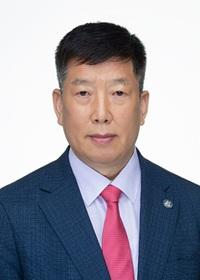
◆ Park Pil-kyu
Editorial Board Member, Hankook Ilbo
ROK Army Academy Class of 40

 [Statement by the Seo-beo-kka Korea Military Academy Save-the-Nation Comrades Association] ㉛ Recount the Votes Publicly, as the Previous Recount Concealed Election Fraud
Tongyeong Mayoral Election Recount [Photo=Yonhap News]South Korea's liberal democracy is dying. The National Election Commission (NEC) and the judiciary, which have plummeted into criminal syndicates
[Statement by the Seo-beo-kka Korea Military Academy Save-the-Nation Comrades Association] ㉛ Recount the Votes Publicly, as the Previous Recount Concealed Election Fraud
Tongyeong Mayoral Election Recount [Photo=Yonhap News]South Korea's liberal democracy is dying. The National Election Commission (NEC) and the judiciary, which have plummeted into criminal syndicates
 What is the significance of the "Trump 2028" red hats that keep making a comeback?
It is noteworthy that President Donald Trump is "intentionally" fueling controversy over whether he can actually run in the 2028 presidential election, even though it is "highly likely he is seriously
What is the significance of the "Trump 2028" red hats that keep making a comeback?
It is noteworthy that President Donald Trump is "intentionally" fueling controversy over whether he can actually run in the 2028 presidential election, even though it is "highly likely he is seriously
 Jin Cummings: "North Korea says it will increase the number of spies, so what is the government doing?"
U.S. political columnist Gene Cummings has publicly questioned the South Korean government, asking, "North Korea is announcing plans to increase its number of spies, yet what is the South Korean
Jin Cummings: "North Korea says it will increase the number of spies, so what is the government doing?"
U.S. political columnist Gene Cummings has publicly questioned the South Korean government, asking, "North Korea is announcing plans to increase its number of spies, yet what is the South Korean
 Attorney Do Tae-woo: “Discrepancies in Voter Count and Improper Sealing Confirmed in Tongyeong Mayoral Recount… Official Request for Additional Verification Submitted to Gyeongnam Election Commission”
A bundle of mail-in early voting ballots captured by lawyer Do Tae-woo at the Tongyeong mayoral election recount site. A clear solid line, raising suspicions of election fraud, is visible on the side
Attorney Do Tae-woo: “Discrepancies in Voter Count and Improper Sealing Confirmed in Tongyeong Mayoral Recount… Official Request for Additional Verification Submitted to Gyeongnam Election Commission”
A bundle of mail-in early voting ballots captured by lawyer Do Tae-woo at the Tongyeong mayoral election recount site. A clear solid line, raising suspicions of election fraud, is visible on the side
 Stock Market Crash 'Black Tuesday'… KOSPI down 10.8%, KOSDAQ down 7.7%
The KOSPI fell by more than 5% in early trading on the 28th, triggering a sell-side sidecar.On the 28th, the KOSPI plunged by more than 10%.Due to the sharp decline, a sell-side sidecar—a temporary
Stock Market Crash 'Black Tuesday'… KOSPI down 10.8%, KOSDAQ down 7.7%
The KOSPI fell by more than 5% in early trading on the 28th, triggering a sell-side sidecar.On the 28th, the KOSPI plunged by more than 10%.Due to the sharp decline, a sell-side sidecar—a temporary
 [World Heritage Committee] 25 New World Heritage Sites Inscribed in Busan… South Korea Successfully Expands 'Getbol' Listing
The Chairperson of the World Heritage Committee speaks at the plenary session of the 48th session of the World Heritage Committee, held at BEXCO in Busan on the 20th. [Photo: Yonhap News]A total of 25
[World Heritage Committee] 25 New World Heritage Sites Inscribed in Busan… South Korea Successfully Expands 'Getbol' Listing
The Chairperson of the World Heritage Committee speaks at the plenary session of the 48th session of the World Heritage Committee, held at BEXCO in Busan on the 20th. [Photo: Yonhap News]A total of 25
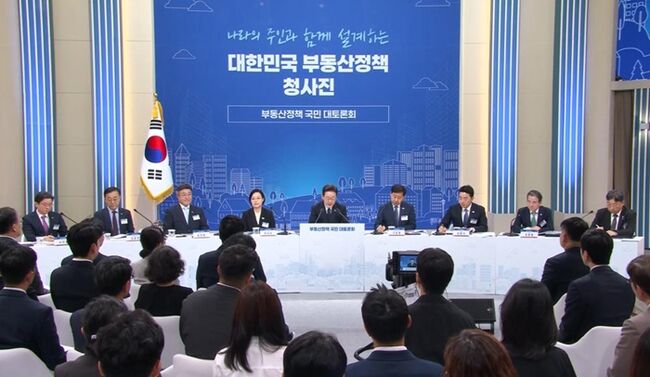 [Liberal Democratic Party Statement] Calling it a Grand Real Estate Debate… It Was Nothing More Than a Private Party Among Themselves
The 'National Grand Debate on Real Estate Policy' held on July 23rd and 27th. [Photo=Yonhap News]The 'National Grand Debate on Real Estate Policy,' hosted by the Lee Jae-myung administration under the
[Liberal Democratic Party Statement] Calling it a Grand Real Estate Debate… It Was Nothing More Than a Private Party Among Themselves
The 'National Grand Debate on Real Estate Policy' held on July 23rd and 27th. [Photo=Yonhap News]The 'National Grand Debate on Real Estate Policy,' hosted by the Lee Jae-myung administration under the
 [Photo] Evidence of Election Fraud Flooding U.S. Media… Trump Had 2.7 Million Votes Stolen
 [Video] U.S. Semiquincentennial Air Show... 'Art in the Sky' streaks across New York
 [Editorial Cartoon] A Draconian Law That Undermines Freedom of Expression

 List
List