 Kim Byung-heon, representative of the National Action to Abolish the Comfort Women Law, arrested for defamation while protesting the demolition of comfort women. [Photo = Kim Byung-heon's Facebook]
On the 20th, Judge Lee Ji-young (34th graduating class of the Judicial Research and Training Institute) of the Seoul Central District Court issued an arrest warrant for Kim Byung-heon, representative of the National Action to Abolish the Comfort Women Law, citing "fear of flight" on charges of defamation of the deceased and defamation under the Information and Communications Network Act.
This case is a criminal case concerning statements and writings, not a crime involving violence or property damage. The decision, which involves a measure of physical detention for a case targeting expression rather than physical harm, prompts reconsideration of the application of the law itself, extending beyond a mere individual case.
Arrest of Kim Byung-heon... The Purpose of the Law is Shaken
First, the premise must be corrected. This case is not, as is often stated, a "violation of the Comfort Women Law." Such a penal provision does not exist.
The Act on the Protection and Support of and Commemoration of the Victims of Japanese Military Comfort Women during the Japanese Colonial Period, often cited as the relevant law, is intended for the protection, support, and commemoration of victims.
Its core provisions concern livelihood support, medical support, and record preservation; it does not include penal provisions. Therefore, the structure of arresting someone for violating this law is not established from the outset.
The actual legal issue lies elsewhere. The question is whether defamation of the deceased under the Criminal Act of the Republic of Korea and defamation under the Act on Promotion and Information Protection of Information and Communications Networks are established.
In other words, the key is whether specific statements constitute false facts and whether they have led to a decline in social evaluation. Ultimately, this case is not about violating a specific law, but about determining whether the expression has crossed the threshold for criminal punishment.
If so, the question of whether detention is an appropriate measure in such a case cannot be avoided. For defamation cases, investigative detention is generally not pursued. Detention is an exception made only when there is a high likelihood of the suspect fleeing or a clear risk of evidence tampering.
Especially in cases involving statements and writings, the scope for destroying physical evidence is limited, and relevant materials are mostly already recorded. Considering these points, the necessity of detention should be scrutinized more strictly.
The reason provided by the court in this case is "fear of flight." However, this judgment gains persuasiveness when based on concrete circumstances. Factors such as whether the individual has been publicly active, has a stable residence and occupation, and has cooperated with the investigation are considered comprehensively.
If these factors are met, the possibility of flight is typically assessed as low. If detention nonetheless occurred, an explanation is needed regarding the extent to which the criteria have been expanded. The less clear the criteria, the weaker the predictability of law application, which in turn leads to a weakening of legal stability.
This issue does not end with the personal detention of an individual. If detention begins to be actively utilized in defamation cases, its impact will spread to the entirety of expressive activities.
Is Historical Interpretation to Be Drawn into the Realm of Criminal Punishment?
This is especially true in areas such as historical issues where interpretations are bound to diverge. In fields where different interpretations of the same materials are natural, if the perception arises that a particular interpretation could lead to criminal charges, the debate itself becomes suppressed. The space for diverse opinions to coexist gradually shrinks.
The case of defamation of the deceased requires even greater caution. As the subject is deceased, the balance between protecting reputation and freedom of expression must be more finely calibrated. Drawing historical evaluations into the realm of criminal punishment is always accompanied by controversy.
Interpretations of past events can change with the times, and existing evaluations may be revised with the discovery of new evidence. If criminal punishment precedes in such areas, the diversity of interpretation will be sharply limited.
Ultimately, the question this case poses is how far we will allow criminal detention for acts of expression. Protection of reputation is undoubtedly a necessary value. However, if it operates in a way that excessively restricts freedom of expression, the law loses its balance. Criminal punishment should be a last resort, and detention, among all measures, should be used with the utmost caution.
The Kim Byung-heon case is not a case of violating a specific law, but a case where the establishment of defamation and the response to it were at issue. And the fact that the response led to the strongest measure, detention, compels us to ask again about the boundaries of the law.
The law exists to protect rights. If its application begins to operate in a way that chills expression, from that moment, the purpose of the law begins to waver.
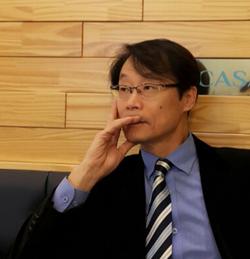
◆ Songsan
Poet and researcher of history and philosophy. Former director of the Syngman Rhee Academy. Currently serves as an advisory board member for the Korean Modern and Contemporary History Research Association and as the representative of the philosophical forum Lyceum. He has published four poetry collections, co-translated "Heroes of Geochie Peak," and authored the historical psychology commentary "Joseon Become a Myth" (2026). He is actively engaged in the research and practice of the liberal cultural movement. Songsan is a pen name.

 Trump pressures for rate cut again ahead of FOMC... "Should be the lowest in the world"
U.S. President Donald Trump. [Photo = The White House] U.S. President Donald Trump once again pressured the Federal Reserve, the U.S. central bank, to lower interest rates on the 27th (local time
Trump pressures for rate cut again ahead of FOMC... "Should be the lowest in the world"
U.S. President Donald Trump. [Photo = The White House] U.S. President Donald Trump once again pressured the Federal Reserve, the U.S. central bank, to lower interest rates on the 27th (local time
 “Ignoring crisp ballots and damaged seals”… Tongyeong mayoral recount concludes with ‘no change in outcome,’ leaving suspicions and public outrage behind
Suspected counterfeit ballots discovered in Tongyeong [GIF from social media of Representative Hwang Kyo-ahn / Attorney Park Joo-hyun]During a recount of the Tongyeong mayoral election in South Gyeong
“Ignoring crisp ballots and damaged seals”… Tongyeong mayoral recount concludes with ‘no change in outcome,’ leaving suspicions and public outrage behind
Suspected counterfeit ballots discovered in Tongyeong [GIF from social media of Representative Hwang Kyo-ahn / Attorney Park Joo-hyun]During a recount of the Tongyeong mayoral election in South Gyeong
 President Yoon, regarding the first-instance ruling on the Public Official Election Act: “An excessive political verdict that distorts the facts… We will appeal immediately.”
The first-instance sentencing hearing for President Yoon Suk Yeol regarding violations of the Public Official Election Act is being broadcast live at Seoul Station on the 27th. [Photo=Yonhap News]Pres
President Yoon, regarding the first-instance ruling on the Public Official Election Act: “An excessive political verdict that distorts the facts… We will appeal immediately.”
The first-instance sentencing hearing for President Yoon Suk Yeol regarding violations of the Public Official Election Act is being broadcast live at Seoul Station on the 27th. [Photo=Yonhap News]Pres
 WSJ: "SK Hynix ADR Premium Is a Sign of AI Trading Overheat"
Advertisement for SK Hynix ADR listing in New York's Times Square [Reuters=Yonhap News file photo]The Wall Street Journal (WSJ) has pointed out that the price of SK Hynix’s American Depositary Recei
WSJ: "SK Hynix ADR Premium Is a Sign of AI Trading Overheat"
Advertisement for SK Hynix ADR listing in New York's Times Square [Reuters=Yonhap News file photo]The Wall Street Journal (WSJ) has pointed out that the price of SK Hynix’s American Depositary Recei
 'Godfather of Japanese Mystery Novels' Keigo Higashino Passes Away After Battle with Cancer at 68
Famous Japanese mystery novelist Keigo Higashino [AFP=Yonhap News]It has been belatedly reported that Keigo Higashino, the "godfather of Japanese mystery novels" and author of bestsellers such as "The
'Godfather of Japanese Mystery Novels' Keigo Higashino Passes Away After Battle with Cancer at 68
Famous Japanese mystery novelist Keigo Higashino [AFP=Yonhap News]It has been belatedly reported that Keigo Higashino, the "godfather of Japanese mystery novels" and author of bestsellers such as "The
 [Park Pil-kyu Security Column] To the Ignorant Trying to Clothe a Beast in Sheep's Clothing
Rep. Kim Byung-joo of the Democratic Party of Korea [Photo=Yonhap News]“The Air Force Academy doesn't teach you how to fly a plane!” “The Army, Navy, and Air Force academies are exactly the
[Park Pil-kyu Security Column] To the Ignorant Trying to Clothe a Beast in Sheep's Clothing
Rep. Kim Byung-joo of the Democratic Party of Korea [Photo=Yonhap News]“The Air Force Academy doesn't teach you how to fly a plane!” “The Army, Navy, and Air Force academies are exactly the
 [Issue Diagnosis] Two Effects of the Election Petition Review
 [Photo] Evidence of Election Fraud Flooding U.S. Media… Trump Had 2.7 Million Votes Stolen
 [Video] U.S. Semiquincentennial Air Show... 'Art in the Sky' streaks across New York
 [Editorial Cartoon] A Draconian Law That Undermines Freedom of Expression

 List
List









