A gas station in Seoul. [Photo=Yonhap News]
In February 2026, producer prices showed an upward trend again, indicating a renewed inflation pressure. Particularly, the surge in prices of livestock products and financial/insurance services suggests a higher likelihood of cost increases at the production stage being passed on to consumer prices.
According to the producer price index released by the Bank of Korea, producer prices in February 2026 rose by 2.4% compared to the same month last year, an increase from the previous month's 1.9%. This signifies that producer prices, which had been on a gradual upward trend since the end of last year, have entered another phase of increase.
The core driver of this rise is agricultural, forestry, and fishery products, especially livestock.
Livestock prices surged by 15.5% year-on-year, acting as a major factor pushing up overall prices. This is analyzed not as a simple supply-demand imbalance, but as a structural outcome stemming from the combined impact of increased feed costs and a decrease in the number of livestock.
Amidst the growing burden of feed costs due to rising international grain prices and exchange rates, farms that experienced losses during the previous price decline have reduced their scale of operations, leading to a decrease in overall supply. Furthermore, the persistent risk of diseases such as African Swine Fever (ASF) and Avian Influenza (AI) appears to have exacerbated the upward price pressure.
Manufactured goods generally continued their gradual upward trend.
Primary metal products increased by 8.3% year-on-year, and computers, electronic and optical equipment also rose by 10.0%, reflecting the cost pressures across the manufacturing sector. This is a typical pattern influenced by global raw material prices and industrial cycles, with the potential for price increases at the production stage to gradually spread to downstream industries.
In the service sector, financial and insurance services stood out the most.
This sector surged by 20.0% year-on-year, driving overall service prices. This is interpreted as a direct reflection of increased financial costs and expanded risk premiums due to rising interest rates.
Transportation, accommodation, and food services also continued their upward trend, influenced by rising labor costs and raw material prices. Notably, the increase in livestock prices is acting as a stimulus for dining-out costs, spreading throughout service prices.
Conversely, electricity, gas, water, and waste management services decreased by 1.1% year-on-year, partially offsetting the overall price increase.
However, this is a result of policy-driven rate controls rather than market prices, and if these suppressed prices are reflected all at once in the future, they could become an additional factor for price increases.
In summary, the current rise in producer prices exhibits characteristics of 'multi-layered inflation,' where different causes are simultaneously at play across various sectors, rather than being a problem of specific items.
In the agricultural and livestock sector, cost increases have combined with supply reductions; in manufacturing, raw material prices and global economic trends have had an impact; and in the service sector, rising interest rates and labor costs are driving up prices.
This structure suggests that price stabilization in the short term will be challenging.
In particular, the rise in producer prices tends to be passed on to consumer prices with a time lag, leading to analyses that it is highly likely to translate into increased perceived inflation pressure going forward.
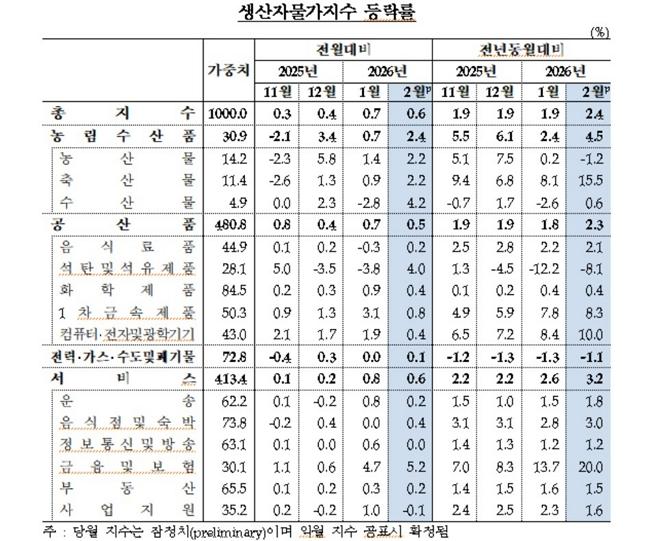 Trends in producer price index fluctuations. [Data=Bank of Korea]

 [Statement by the Seo-beo-kka Korea Military Academy Save-the-Nation Comrades Association] ㉛ Recount the Votes Publicly, as the Previous Recount Concealed Election Fraud
Tongyeong Mayoral Election Recount [Photo=Yonhap News]South Korea's liberal democracy is dying. The National Election Commission (NEC) and the judiciary, which have plummeted into criminal syndicates
[Statement by the Seo-beo-kka Korea Military Academy Save-the-Nation Comrades Association] ㉛ Recount the Votes Publicly, as the Previous Recount Concealed Election Fraud
Tongyeong Mayoral Election Recount [Photo=Yonhap News]South Korea's liberal democracy is dying. The National Election Commission (NEC) and the judiciary, which have plummeted into criminal syndicates
 What is the significance of the "Trump 2028" red hats that keep making a comeback?
It is noteworthy that President Donald Trump is "intentionally" fueling controversy over whether he can actually run in the 2028 presidential election, even though it is "highly likely he is seriously
What is the significance of the "Trump 2028" red hats that keep making a comeback?
It is noteworthy that President Donald Trump is "intentionally" fueling controversy over whether he can actually run in the 2028 presidential election, even though it is "highly likely he is seriously
 Jin Cummings: “North Korea says it will increase the number of spies, so what is the government doing?”
U.S. political columnist Gene Cummings has publicly questioned the South Korean government, asking, "North Korea is declaring that it will increase its number of spies, so what is the South Kore
Jin Cummings: “North Korea says it will increase the number of spies, so what is the government doing?”
U.S. political columnist Gene Cummings has publicly questioned the South Korean government, asking, "North Korea is declaring that it will increase its number of spies, so what is the South Kore
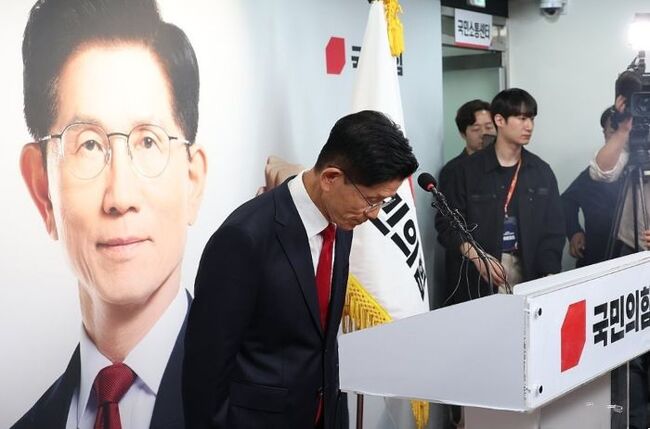 “Too little, too late?…” Kim Moon-soo, who previously conceded his presidential election defeat, now demands a special counsel investigation into ‘allegations of election fraud in the 2025 presidential election’
People Power Party presidential candidate Kim Moon-soo concedes defeat during a press conference at the party headquarters in Yeouido, Seoul, on June 4, 2025. [Joint Press Corps]As allegations emerge
“Too little, too late?…” Kim Moon-soo, who previously conceded his presidential election defeat, now demands a special counsel investigation into ‘allegations of election fraud in the 2025 presidential election’
People Power Party presidential candidate Kim Moon-soo concedes defeat during a press conference at the party headquarters in Yeouido, Seoul, on June 4, 2025. [Joint Press Corps]As allegations emerge
 Stock Market Crash 'Black Tuesday'… KOSPI down 10.8%, KOSDAQ down 7.7%
The KOSPI fell by more than 5% in early trading on the 28th, triggering a sell-side sidecar.On the 28th, the KOSPI plunged by more than 10%.Due to the sharp decline, a sell-side sidecar—a temporary
Stock Market Crash 'Black Tuesday'… KOSPI down 10.8%, KOSDAQ down 7.7%
The KOSPI fell by more than 5% in early trading on the 28th, triggering a sell-side sidecar.On the 28th, the KOSPI plunged by more than 10%.Due to the sharp decline, a sell-side sidecar—a temporary
 [World Heritage Committee] 25 New World Heritage Sites Inscribed in Busan… South Korea Successfully Expands 'Getbol' Listing
The Chairperson of the World Heritage Committee speaks at the plenary session of the 48th session of the World Heritage Committee, held at BEXCO in Busan on the 20th. [Photo: Yonhap News]A total of 25
[World Heritage Committee] 25 New World Heritage Sites Inscribed in Busan… South Korea Successfully Expands 'Getbol' Listing
The Chairperson of the World Heritage Committee speaks at the plenary session of the 48th session of the World Heritage Committee, held at BEXCO in Busan on the 20th. [Photo: Yonhap News]A total of 25
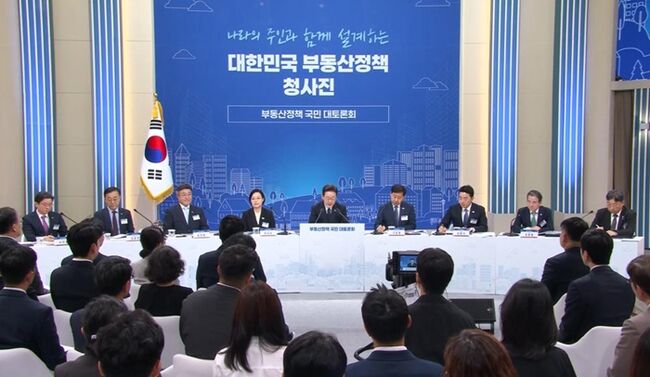 [Liberal Democratic Party Statement] Calling it a Grand Real Estate Debate… It Was Nothing More Than a Private Party Among Themselves
The 'National Grand Debate on Real Estate Policy' held on July 23rd and 27th. [Photo=Yonhap News]The 'National Grand Debate on Real Estate Policy,' hosted by the Lee Jae-myung administration under the
[Liberal Democratic Party Statement] Calling it a Grand Real Estate Debate… It Was Nothing More Than a Private Party Among Themselves
The 'National Grand Debate on Real Estate Policy' held on July 23rd and 27th. [Photo=Yonhap News]The 'National Grand Debate on Real Estate Policy,' hosted by the Lee Jae-myung administration under the
 [Photo] Evidence of Election Fraud Flooding U.S. Media… Trump Had 2.7 Million Votes Stolen
 [Video] U.S. Semiquincentennial Air Show... 'Art in the Sky' streaks across New York
 [Editorial Cartoon] A Draconian Law That Undermines Freedom of Expression

 List
List