Let's have a proper, delicious meal for lunch. Instead, have a light 0.5 meal for dinner and maintain an empty stomach the next morning.
“Do we eat to live, or live to eat?”
This is an age-old philosophical question about human life and eating habits. While humans must eat to sustain life, eating itself is also a joy of life. We eat to live, but humans also enjoy being alive by eating.
However, in modern society where food is abundant, this question is becoming increasingly irrelevant. This is because while it's hard to find people who eat solely to survive, the number of people seeking maximum satisfaction within a limited number of meals is growing.
To Cure Metabolic Diseases, Conserve 'Digestive Enzymes'
As a result, metabolic diseases have become a burden for humanity. Metabolic diseases are, literally, illnesses caused by problems in metabolism, with obesity, high blood pressure, diabetes, and cancer being prime examples. Most metabolic diseases are incurable, making them difficult to treat with just a few pills. So, how can metabolic diseases be cured?
To put it directly, the fastest way to cure metabolic diseases is to conserve digestive enzymes. These two types of enzymes in the body, digestive enzymes and metabolic enzymes, are in a seesaw relationship: when one goes up, the other goes down.
When we eat food, over 70% of our body's enzymes are mobilized to the gastrointestinal tract. Digestive enzymes operate at a ratio of 7, and metabolic enzymes at 3. Conversely, in a fasting state, metabolic enzymes become 7, and digestive enzymes become 3.
This means that prolonging the time your stomach is empty allows metabolic enzymes more time to work, opening a path to treating metabolic diseases.
Fasting therapy is a natural healing method that has been practiced for a long time in human history for religious and therapeutic purposes. Our ancestors also automatically had periods of fasting during times of food scarcity, such as the "barely-getting-by" period (boritgogae). However, modern humans, who have lost this experience, need to intentionally fast to conserve metabolic enzymes.
For severe illnesses, prolonged fasting (requiring expert guidance) ranging from one week to one month is sometimes practiced. However, for metabolic diseases in their early stages, intermittent fasting can be very beneficial. Intermittent fasting typically involves maintaining a 16-hour fasting period per day.
Morning: 0, Lunch: 1, Dinner: 0.5
At our Korean medicine clinic, we recommend intermittent fasting (Bokbeop therapy) with the following eating schedule: △ Breakfast: Fasting △ Lunch: Regular meal △ Dinner: 0.5 meal. A 0.5 meal means not fully eating or not eating at all, but rather having a light meal such as an egg or a few cherry tomatoes.
Furthermore, even with one regular meal a day, overeating is prohibited, and it is fundamental to avoid desserts like snacks and cakes. Snacking thoughtlessly is also a cause of indigestion and should be stopped.
Maintaining a 16-hour fasting period not only increases the time metabolic enzymes have to work, which can lead to disease treatment, but also lowers insulin levels, resulting in weight loss and a clearer complexion as toxins are eliminated.
In addition, fasting therapy and mindful eating (soshik yobeop) activate 'Sirtuin', known as longevity genes, and induce cellular autophagy (self-eating), which has numerous health benefits, including treating inflammatory diseases.
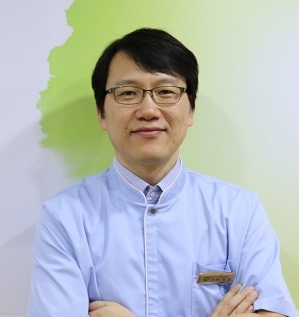
◆ Director Park Chan-young
Director of Eoseongcho Korean Medicine Clinic in Sadang-dong, Seoul. Doctor of Korean Medicine from Dongguk University. He caused a detoxification sensation in Korea by appearing on health programs such as MBN's 'Eomjiui J Wang'. His books include 'Atopy and Acne Cured with Eoseongcho', 'Seasonings are Medicine', and 'The Miracle of Detoxification'.

 [Statement by the Seo-beo-kka Korea Military Academy Save-the-Nation Comrades Association] ㉛ Recount the Votes Publicly, as the Previous Recount Concealed Election Fraud
Tongyeong Mayoral Election Recount [Photo=Yonhap News]South Korea's liberal democracy is dying. The National Election Commission (NEC) and the judiciary, which have plummeted into criminal syndicates
[Statement by the Seo-beo-kka Korea Military Academy Save-the-Nation Comrades Association] ㉛ Recount the Votes Publicly, as the Previous Recount Concealed Election Fraud
Tongyeong Mayoral Election Recount [Photo=Yonhap News]South Korea's liberal democracy is dying. The National Election Commission (NEC) and the judiciary, which have plummeted into criminal syndicates
 What is the significance of the "Trump 2028" red hats that keep making a comeback?
It is noteworthy that President Donald Trump is "intentionally" fueling controversy over whether he can actually run in the 2028 presidential election, even though it is "highly likely he is seriously
What is the significance of the "Trump 2028" red hats that keep making a comeback?
It is noteworthy that President Donald Trump is "intentionally" fueling controversy over whether he can actually run in the 2028 presidential election, even though it is "highly likely he is seriously
 Jin Cummings: "North Korea says it will increase the number of spies, so what is the government doing?"
U.S. political columnist Gene Cummings has publicly questioned the South Korean government, asking, "North Korea is announcing plans to increase its number of spies, yet what is the South Korean
Jin Cummings: "North Korea says it will increase the number of spies, so what is the government doing?"
U.S. political columnist Gene Cummings has publicly questioned the South Korean government, asking, "North Korea is announcing plans to increase its number of spies, yet what is the South Korean
 Attorney Do Tae-woo: “Discrepancies in Voter Count and Improper Sealing Confirmed in Tongyeong Mayoral Recount… Official Request for Additional Verification Submitted to Gyeongnam Election Commission”
A bundle of mail-in early voting ballots captured by lawyer Do Tae-woo at the Tongyeong mayoral election recount site. A clear solid line, raising suspicions of election fraud, is visible on the side
Attorney Do Tae-woo: “Discrepancies in Voter Count and Improper Sealing Confirmed in Tongyeong Mayoral Recount… Official Request for Additional Verification Submitted to Gyeongnam Election Commission”
A bundle of mail-in early voting ballots captured by lawyer Do Tae-woo at the Tongyeong mayoral election recount site. A clear solid line, raising suspicions of election fraud, is visible on the side
 Stock Market Crash 'Black Tuesday'… KOSPI down 10.8%, KOSDAQ down 7.7%
The KOSPI fell by more than 5% in early trading on the 28th, triggering a sell-side sidecar.On the 28th, the KOSPI plunged by more than 10%.Due to the sharp decline, a sell-side sidecar—a temporary
Stock Market Crash 'Black Tuesday'… KOSPI down 10.8%, KOSDAQ down 7.7%
The KOSPI fell by more than 5% in early trading on the 28th, triggering a sell-side sidecar.On the 28th, the KOSPI plunged by more than 10%.Due to the sharp decline, a sell-side sidecar—a temporary
 [World Heritage Committee] 25 New World Heritage Sites Inscribed in Busan… South Korea Successfully Expands 'Getbol' Listing
The Chairperson of the World Heritage Committee speaks at the plenary session of the 48th session of the World Heritage Committee, held at BEXCO in Busan on the 20th. [Photo: Yonhap News]A total of 25
[World Heritage Committee] 25 New World Heritage Sites Inscribed in Busan… South Korea Successfully Expands 'Getbol' Listing
The Chairperson of the World Heritage Committee speaks at the plenary session of the 48th session of the World Heritage Committee, held at BEXCO in Busan on the 20th. [Photo: Yonhap News]A total of 25
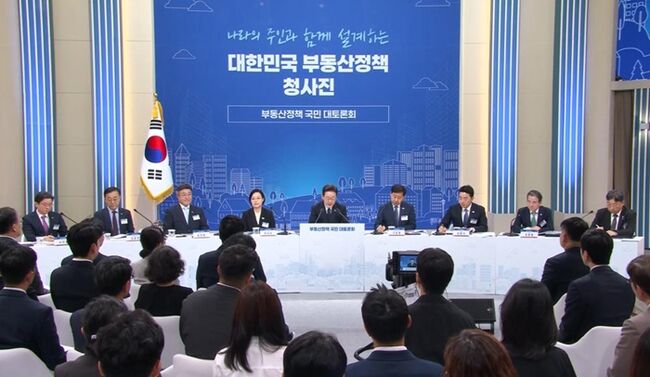 [Liberal Democratic Party Statement] Calling it a Grand Real Estate Debate… It Was Nothing More Than a Private Party Among Themselves
The 'National Grand Debate on Real Estate Policy' held on July 23rd and 27th. [Photo=Yonhap News]The 'National Grand Debate on Real Estate Policy,' hosted by the Lee Jae-myung administration under the
[Liberal Democratic Party Statement] Calling it a Grand Real Estate Debate… It Was Nothing More Than a Private Party Among Themselves
The 'National Grand Debate on Real Estate Policy' held on July 23rd and 27th. [Photo=Yonhap News]The 'National Grand Debate on Real Estate Policy,' hosted by the Lee Jae-myung administration under the
 [Photo] Evidence of Election Fraud Flooding U.S. Media… Trump Had 2.7 Million Votes Stolen
 [Video] U.S. Semiquincentennial Air Show... 'Art in the Sky' streaks across New York
 [Editorial Cartoon] A Draconian Law That Undermines Freedom of Expression

 List
List