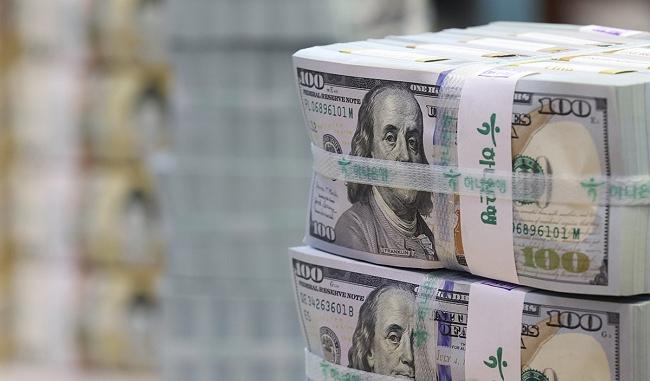
Why is the Korean Market More Sensitive to Exchange Rates Than Good News?
This week, the Korean stock market repeated a familiar pattern: indices rallied on positive news from the U.S., but the sustainability of that rebound ultimately depended on the Won/Dollar exchange rate and foreign investor inflows.
On March 31st, the KOSPI plummeted by 4.26%, and the Korean Won weakened to as much as 1530 per dollar intraday. On April 3rd, as foreign investors turned to net buying for the first time in 12 trading days, the KOSPI rebounded by 2.74%.
Even with the same news, the Seoul market did not interpret it with the same optimism as New York. It first considered how the exchange rate would react and whether foreign investors were returning.
This point is crucial. This week, the Korean market was not shaken by poor fundamentals. In fact, March exports increased by 48.3% year-on-year, the strongest growth rate since August 1988, with semiconductor exports surging by 151.4%. Based on these figures alone, the market should have been strong.
Despite this, at the beginning of the week, the market focused on the exchange rate rather than exports. It wasn't due to a lack of good news, but rather the perception that the good news was not strong enough to offset external shocks.
This week, the Korean market demonstrated the prioritization of price variables that overwhelm fundamentals, rather than a lack of fundamentals.
Why is this the case?
It's because Korea has a structure that is sensitive to Middle Eastern variables. Its high dependence on crude oil imports means that a surge in oil prices directly leads to trade conditions, inflation, and exchange rate pressures. Therefore, Middle Eastern conflicts and the Strait of Hormuz situation are translated not as news for the U.S. market, but as a discount factor for Korean asset prices.
The government's measures to allow oil refiners to use strategic reserves and engage in oil swaps were also responses to manage supply disruptions and cost burdens. This week, the market calculated not whether the war would end, but how long its costs would remain a burden on the Korean economy, with greater sensitivity.
In this process, the exchange rate acted not just as a number, but as a translator of market sentiment.
According to the Bank of Korea, foreign exchange reserves stood at $423.66 billion at the end of March, a decrease of $3.97 billion from the previous month. Authorities attributed this to a strong dollar and market stabilization measures. This ultimately confirmed what the market already knew: that Korea was not merely observing this shock passively.
However, there's another implication. The increasing cost of defending the exchange rate itself is already a part of market anxiety. This week, the Korean market quickly recognized the cost of defense rather than the magnitude of positive factors.
Therefore, this week's rebound was closer to a rebound of confirmation than a rebound of optimism.
As foreign investors returned, the KOSPI rebounded, with semiconductors, shipbuilding, defense, and nuclear power stocks rising together. However, this trend was closer to relief that the "worst seems to have been temporarily avoided" than a conviction that "things are fine now."
What the market is truly asking is not the intensity of war news, but whether the exchange rate stabilizes, whether foreign investor inflows continue, and whether earnings expectations regain their pricing power.
What the KOSPI showed this week was not the index's resilience, but the conditions for a rebound.
Ultimately, the conclusion from this week's Money Insight is clear.
The Korean market currently weighs defense costs more heavily than good news.
Even with strong exports, if the exchange rate fluctuates, the index cannot sustain its gains for long. And even if hopes for an end to the conflict emerge, without foreign investors returning, any rebound will be weak.
This is also why New York's optimism is not directly replicated in Seoul.
The Korean market is now pricing in more quickly how global news translates into exchange rates, foreign investor flows, and policy defense costs, rather than the direction of global news itself.
The essence of the Korean stock market this week was precisely that: a market where the cost of enduring external shocks was perceived to be greater than the power of good news.

 [Statement by the Seo-beo-kka Korea Military Academy Save-the-Nation Comrades Association] ㉛ Recount the Votes Publicly, as the Previous Recount Concealed Election Fraud
Tongyeong Mayoral Election Recount [Photo=Yonhap News]South Korea's liberal democracy is dying. The National Election Commission (NEC) and the judiciary, which have plummeted into criminal syndicates
[Statement by the Seo-beo-kka Korea Military Academy Save-the-Nation Comrades Association] ㉛ Recount the Votes Publicly, as the Previous Recount Concealed Election Fraud
Tongyeong Mayoral Election Recount [Photo=Yonhap News]South Korea's liberal democracy is dying. The National Election Commission (NEC) and the judiciary, which have plummeted into criminal syndicates
 What is the significance of the "Trump 2028" red hats that keep making a comeback?
It is noteworthy that President Donald Trump is "intentionally" fueling controversy over whether he can actually run in the 2028 presidential election, even though it is "highly likely he is seriously
What is the significance of the "Trump 2028" red hats that keep making a comeback?
It is noteworthy that President Donald Trump is "intentionally" fueling controversy over whether he can actually run in the 2028 presidential election, even though it is "highly likely he is seriously
 Jin Cummings: “North Korea says it will increase the number of spies, so what is the government doing?”
U.S. political columnist Gene Cummings has publicly questioned the South Korean government, asking, "North Korea is declaring that it will increase its number of spies, so what is the South Kore
Jin Cummings: “North Korea says it will increase the number of spies, so what is the government doing?”
U.S. political columnist Gene Cummings has publicly questioned the South Korean government, asking, "North Korea is declaring that it will increase its number of spies, so what is the South Kore
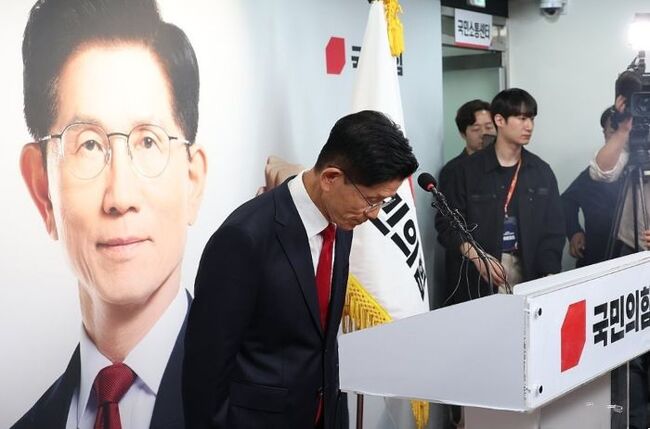 “Too little, too late?…” Kim Moon-soo, who previously conceded his presidential election defeat, now demands a special counsel investigation into ‘allegations of election fraud in the 2025 presidential election’
People Power Party presidential candidate Kim Moon-soo concedes defeat during a press conference at the party headquarters in Yeouido, Seoul, on June 4, 2025. [Joint Press Corps]As allegations emerge
“Too little, too late?…” Kim Moon-soo, who previously conceded his presidential election defeat, now demands a special counsel investigation into ‘allegations of election fraud in the 2025 presidential election’
People Power Party presidential candidate Kim Moon-soo concedes defeat during a press conference at the party headquarters in Yeouido, Seoul, on June 4, 2025. [Joint Press Corps]As allegations emerge
 Stock Market Crash 'Black Tuesday'… KOSPI down 10.8%, KOSDAQ down 7.7%
The KOSPI fell by more than 5% in early trading on the 28th, triggering a sell-side sidecar.On the 28th, the KOSPI plunged by more than 10%.Due to the sharp decline, a sell-side sidecar—a temporary
Stock Market Crash 'Black Tuesday'… KOSPI down 10.8%, KOSDAQ down 7.7%
The KOSPI fell by more than 5% in early trading on the 28th, triggering a sell-side sidecar.On the 28th, the KOSPI plunged by more than 10%.Due to the sharp decline, a sell-side sidecar—a temporary
 [World Heritage Committee] 25 New World Heritage Sites Inscribed in Busan… South Korea Successfully Expands 'Getbol' Listing
The Chairperson of the World Heritage Committee speaks at the plenary session of the 48th session of the World Heritage Committee, held at BEXCO in Busan on the 20th. [Photo: Yonhap News]A total of 25
[World Heritage Committee] 25 New World Heritage Sites Inscribed in Busan… South Korea Successfully Expands 'Getbol' Listing
The Chairperson of the World Heritage Committee speaks at the plenary session of the 48th session of the World Heritage Committee, held at BEXCO in Busan on the 20th. [Photo: Yonhap News]A total of 25
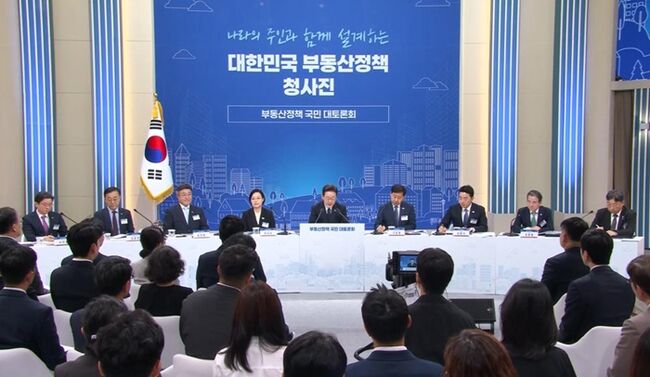 [Liberal Democratic Party Statement] Calling it a Grand Real Estate Debate… It Was Nothing More Than a Private Party Among Themselves
The 'National Grand Debate on Real Estate Policy' held on July 23rd and 27th. [Photo=Yonhap News]The 'National Grand Debate on Real Estate Policy,' hosted by the Lee Jae-myung administration under the
[Liberal Democratic Party Statement] Calling it a Grand Real Estate Debate… It Was Nothing More Than a Private Party Among Themselves
The 'National Grand Debate on Real Estate Policy' held on July 23rd and 27th. [Photo=Yonhap News]The 'National Grand Debate on Real Estate Policy,' hosted by the Lee Jae-myung administration under the
 [Photo] Evidence of Election Fraud Flooding U.S. Media… Trump Had 2.7 Million Votes Stolen
 [Video] U.S. Semiquincentennial Air Show... 'Art in the Sky' streaks across New York
 [Editorial Cartoon] A Draconian Law That Undermines Freedom of Expression

 List
List