When New York priced in the speed of optimism first, Seoul double-checked whether the exchange rate and foreign net demand would recover. This rebound was closer to a conditional normalization toward recovery rather than a relief.New York's question was relatively simple: if war concerns subside and oil prices plummet, can we buy more risk assets?
Thus, on the 17th, the US market saw the S&P 500 and Nasdaq hit new highs again, recording strong gains on a weekly basis.
However, Seoul had one more question: how much would the improved external environment actually alleviate South Korea's weakening won and the instability of foreign net demand?
The Korean market moves more cautiously not because it is always slower than the US, but because it asks one additional question.
This question is important because the Korean market's recovery is not yet a complete normalization.
According to Reuters, after experiencing a large outflow of foreign capital in March, the Korean market saw inflows of $4.2 billion in April, and the KOSPI rose 44.5% year-to-date.
However, at the same time, the Korean market carries structural vulnerabilities of a weak won and high dependence on energy imports. It is difficult to sustain gains with good news alone; the trend will only be established when that news also calms the exchange rate and cost burden.
Therefore, this week, the Seoul market was cautious to the very end even while buying semiconductors again.
Foreign investors returned to the market in April, focusing on large-cap semiconductor stocks, and the KOSPI recovered to the 6200 mark on the 16th. However, the next day, the 17th, foreign net selling increased to the 2 trillion won range, pushing down the index again.
This means that while money has returned, it has not yet fully learned to stay. This is also why this rebound, though strong, was not comfortable.
The fact that margin financing, short selling, and lending balances have also risen to record levels shows how delicate a balance this rally is standing on. It means that money expecting further gains and money aiming for short-term corrections have both increased.
It is a situation where signals of the market regaining strength and warnings of increased volatility coexist. The market is rising, but it is not yet a market of relief.
Ultimately, the conclusion of this week's Money Insight is clear.
Seoul did not buy peace this week, but rather the conditional normalization that peace could bring. Semiconductors have returned to the forefront, and some foreign investors have also returned, but the exchange rate, energy burden, and the nature of short-term profit-taking still remain.
Therefore, it is more accurate to call this rebound a "restoration" rather than "relief." Seoul is not a slower market than New York, but a market that asks one additional question.
The three checkpoints for next week are as follows:
First, we need to see if Seoul continues to delve one question deeper than New York. If the US market continues to strengthen and Korea falters, the difference will likely stem from the exchange rate and the length of foreign capital retention.
Second, we need to distinguish whether foreign capital is engaging in short-term trading or a trend of increasing South Korean holdings again.
Third, the key will be whether the name of this rebound can be changed from "relief" to "normalization." Next week is likely to be the very boundary line for that.
※ This article is a market commentary in the form of an article, not investment advice. Actual stock prices and capital flows may vary depending on exchange rates, oil prices, geopolitical variables, corporate earnings, and policy changes.

 [Statement by the Seobeokka KMA Patriots Association] ㉛ Recount the ballots openly, as the previous recount covered up election fraud
Recount of the Tongyeong mayoral election [Photo=Yonhap News]South Korea's liberal democracy is dying. The National Election Commission (NEC), which has degraded into a criminal organization through t
[Statement by the Seobeokka KMA Patriots Association] ㉛ Recount the ballots openly, as the previous recount covered up election fraud
Recount of the Tongyeong mayoral election [Photo=Yonhap News]South Korea's liberal democracy is dying. The National Election Commission (NEC), which has degraded into a criminal organization through t
 What is the significance of the "Trump 2028" red hat that keeps reappearing?
It is noteworthy that while it is "highly likely" that President Donald Trump is "seriously considering" a run for the presidency in 2028, he is also "deliberately" fueling speculation regarding wheth
What is the significance of the "Trump 2028" red hat that keeps reappearing?
It is noteworthy that while it is "highly likely" that President Donald Trump is "seriously considering" a run for the presidency in 2028, he is also "deliberately" fueling speculation regarding wheth
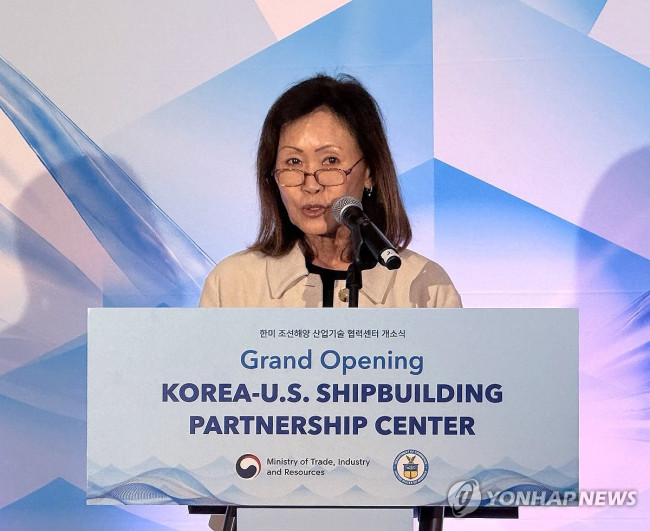 First U.S. Ambassador of Trump's Second Term to Arrive This Week… Will It Provide Momentum to Resolve Pending Issues?
U.S. Ambassador to South Korea Michelle Steel speaks at the opening ceremony of the Korea-U.S. Shipbuilding Cooperation Center held at the Mayflower Hotel in Washington, D.C., on the 23rd (local time)
First U.S. Ambassador of Trump's Second Term to Arrive This Week… Will It Provide Momentum to Resolve Pending Issues?
U.S. Ambassador to South Korea Michelle Steel speaks at the opening ceremony of the Korea-U.S. Shipbuilding Cooperation Center held at the Mayflower Hotel in Washington, D.C., on the 23rd (local time)
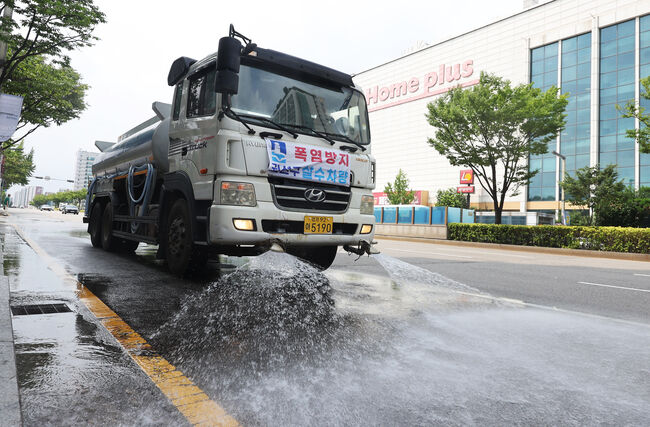 The Korean Peninsula wrapped in a thick blanket of scorching high pressure… Will the 1994 record be broken?
On the 28th, as the heatwave continues, a water sprinkler truck sprays water on Hyowon-ro, Gwonseon-gu, Suwon, Gyeonggi Province. [Photo = Yonhap News]The hottest years on record are considered to be
The Korean Peninsula wrapped in a thick blanket of scorching high pressure… Will the 1994 record be broken?
On the 28th, as the heatwave continues, a water sprinkler truck sprays water on Hyowon-ro, Gwonseon-gu, Suwon, Gyeonggi Province. [Photo = Yonhap News]The hottest years on record are considered to be
 Stock Market Crash 'Black Tuesday'… KOSPI down 10.8%, KOSDAQ down 7.7%
The KOSPI fell by more than 5% in early trading on the 28th, triggering a sell-side sidecar.On the 28th, the KOSPI plunged by more than 10%.Due to the sharp decline, a sell-side sidecar—a temporary
Stock Market Crash 'Black Tuesday'… KOSPI down 10.8%, KOSDAQ down 7.7%
The KOSPI fell by more than 5% in early trading on the 28th, triggering a sell-side sidecar.On the 28th, the KOSPI plunged by more than 10%.Due to the sharp decline, a sell-side sidecar—a temporary
 [World Heritage Committee] 25 New World Heritage Sites Inscribed in Busan… South Korea Successfully Expands 'Getbol' Listing
The Chairperson of the World Heritage Committee speaks at the plenary session of the 48th session of the World Heritage Committee, held at BEXCO in Busan on the 20th. [Photo: Yonhap News]A total of 25
[World Heritage Committee] 25 New World Heritage Sites Inscribed in Busan… South Korea Successfully Expands 'Getbol' Listing
The Chairperson of the World Heritage Committee speaks at the plenary session of the 48th session of the World Heritage Committee, held at BEXCO in Busan on the 20th. [Photo: Yonhap News]A total of 25
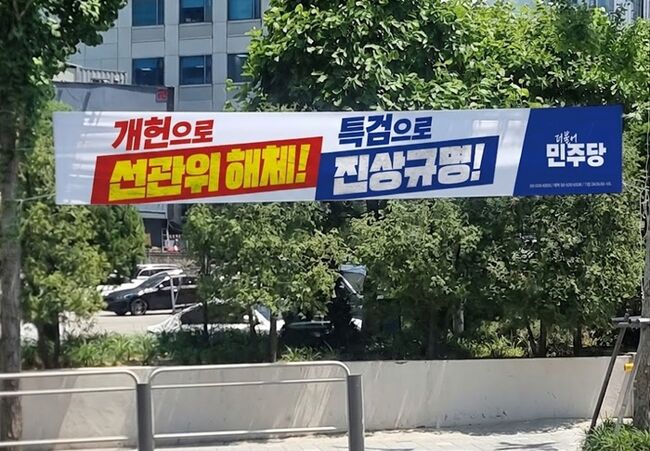 [Cho Yang-geon Column] The NEC: Facing a Fate of "Discarding the Dog After the Hunt"
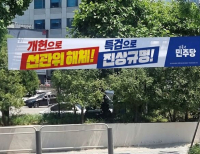
Banner calling for the "dissolution of the NEC" posted by the Democratic Party. [AI-generated image]Banners calling for the "dissolution of the National Election Commission (NEC)" posted by the Democr
[Cho Yang-geon Column] The NEC: Facing a Fate of "Discarding the Dog After the Hunt"
Banner calling for the "dissolution of the NEC" posted by the Democratic Party. [AI-generated image]Banners calling for the "dissolution of the National Election Commission (NEC)" posted by the Democr
 [Photo] Evidence of Election Fraud Flooding U.S. Media… Trump Had 2.7 Million Votes Stolen
 [Video] U.S. Semiquincentennial Air Show... 'Art in the Sky' streaks across New York
 [Editorial Cartoon] A Draconian Law That Undermines Freedom of Expression

 List
List