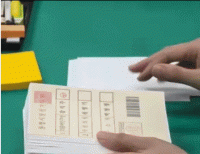
President Chun Doo-hwan (left) and Samsung Group Chairman Lee Kun-hee pointing to one location. Black and white photo changed to color.
The Samsung Electronics union is demanding 45 trillion won in bonuses, which is 15% of the projected annual operating profit of 300 trillion won, and is threatening to go on strike from next month if the company does not accept it.
45 trillion won far exceeds last year's R&D investment of 37.7 trillion won and shareholder dividends of 2.2 trillion won by Samsung Electronics. The direct cause of the Samsung Electronics union's demand is SK Hynix's agreement with its union last year to pay 10% of its operating profit as bonuses.
Semiconductor Crisis Caused by the Leftist Government's "Aristocratic Unions"
Last year, Hynix paid 4.7 trillion won in bonuses, amounting to 140 million won per person, which is 10% of its operating profit of 47 trillion won. This is more than double the shareholder dividends of 2.1 trillion won. Hynix's bonuses for next year are expected to be 700 million won per person.
Even when recording trillions of won in losses due to the downturn in the semiconductor market, Hynix succumbs to union pressure and pays incentives, undermining market economy principles and creating a dangerous precedent in labor negotiations that is difficult for other companies like Samsung Electronics to bear.
This demonstrates the moral hazard of the Hynix union, which receives hundreds of millions of won in annual salaries and bonuses, the highest in Korea. Hynix is a company that barely survived with the injection of 3.5 trillion won in public funds, funded by taxpayers, during the overcome of the 1997 IMF economic crisis.
The problem is not the amount of the bonuses, but their equal distribution. Equal distribution, rather than differentiated payment based on individual performance that motivates a company's continuous development, goes beyond leftist methods and is a communist practice that will lead to the company's downfall.
In the semiconductor industry, where "beyond-gap" technology determines survival, it is unprecedented globally to equally distribute excessive bonuses to production workers, not R&D personnel, in a "divide and share" manner. This is a path to self-destruction that leads to relative deprivation and attrition of researchers and developers who determine the company's fate, as well as a shortage of funds for R&D and large-scale facility investments.
Unlike Hynix, which focuses on HBM, Samsung Electronics is engaged in a tough battle with Taiwan's TSMC not only in HBM technology development and production but also in the foundry sector. Samsung Electronics cannot survive in international competition without securing excellent talent, large-scale facility investments, and vast funds for R&D.
The situation has been created by the leftist government's pro-union, anti-business policies. President Lee Jae-myung, who interferes in every single issue, remains silent on the Samsung Electronics strike, which involves the destiny of the semiconductor industry and the Korean economy. The current performance of Samsung Electronics and Hynix, which are propping up the Korean economy, is a short-term windfall profit due to the semiconductor super-cycle, and the resulting rise in the KOSPI index and economic growth are merely temporary illusions.
Industries other than semiconductors, including automobiles, are experiencing negative or low growth. When the semiconductor super-cycle ends, the anti-business laws and regulations of the leftist government, such as the amendment of the Commercial Act, the Yellow Envelope Law, the Serious Accidents Punishment Act, structural risks due to excessive inheritance tax burdens, and the guarantee of aristocratic unions' job security while neglecting youth unemployment, will inevitably hinder corporate growth, lead to mass unemployment, and cause economic collapse.
Lee Jae-yong's Abandonment of No-Union Management Under Judicial Pressure
The reason for the existence of overwhelmingly powerful unions in Korea is the labor law that does not allow labor flexibility for businesses. The current labor law, which prohibits dismissal except for urgent management reasons, only enriches the "aristocratic unions" of large corporations, led by the pro-North Korean leftist Korean Confederation of Trade Unions, which accounts for only 10% of all workers in Korea, while marginalizing the vast majority of other workers and young job seekers.
Legislation ensuring labor flexibility and the abolition of various regulations, allowing companies to freely hire and dismiss workers, is the only way to break the "iron rice bowls" of aristocratic unions and enable Korean companies, including semiconductors, to survive fierce international competition through technological innovation.
The backdrop to the US's growth into a superpower includes the Taft-Hartley Act of 1947, which restricted the powers of labor unions, and labor laws that allowed companies to hire and dismiss employees without special reasons. "In the intellectual society of the 1930s, the working class and labor unions were seen as synonymous. The belief in the purity and virtue of labor unions was comparable to the belief in family and maternal love.
Extensive legislative measures were enacted to favor labor unions and foster fair labor-management relations. The power of labor unions grew daily. However, by the 1950s, the term "labor union" had become a derogatory term. It was no longer synonymous with the working class and was no longer automatically considered on the side of justice." (From "Capitalism and Freedom" by Milton Friedman, translated by Shim Jun-bo and Byeon Dong-yeol)
Although Samsung Electronics has recently been revived due to the semiconductor super-cycle, for several years, major management decisions could not be made while Chairman Lee Jae-yong was indicted, imprisoned, and on trial for alleged embezzlement and stock manipulation in the valuation of shares related to the merger of Samsung C&T and Cheil Industries. During this period, competitors gained an advantage, and Hynix and TSMC reaped the benefits.
This was the work of Han Dong-hoon and political prosecutors who served the anti-business Moon Jae-in leftist government. Lee Jae-yong was acquitted of all 19 charges by the Supreme Court. Despite the Supreme Court ruling that Lee Jae-yong's merger decision was a reasonable valuation in accordance with international practice, Moon Jae-in and leftist political prosecutors like Han Dong-hoon have no remorse.
Even though most of those investigated and indicted for state corruption, including Chief Justice Yang Seung-tae, high-ranking judges, and three NIS directors under the Park Geun-hye administration, were acquitted, Han Dong-hoon shamelessly claims that his investigation into the Park Geun-hye state corruption case was the highlight of his career.
During the five years of the Moon Jae-in administration, Lee Jae-yong, who repeatedly underwent trials and imprisonment, was forced to comply with the court's demands to avoid detention in the trial for alleged unfair practices and embezzlement during the merger of affiliates. He established a compliance committee, unprecedented in a free democratic market economy, which was like a communist people's committee. This committee, composed of individuals weary from prolonged trials and imprisonment, pressured Lee Jae-yong, who was preoccupied with responding to the judicial crisis, to adopt measures that infringed upon the company's autonomy and management rights, such as abandoning no-union management and foregoing fourth-generation management succession.
The ones who broke Samsung Electronics' decades-long principle of no-union management, which ensured the highest treatment as Korea's top company and was the undisputed number one choice for university students' employment, were the judges in Lee Jae-yong's trial and the compliance committee. They are the cause of the current crisis of the Samsung Electronics union's strike.
The strike at Samsung Electronics, which should be focused on catching up with Taiwan's TSMC, will destroy the domestic semiconductor industry ecosystem by collapsing the global semiconductor supply chain and halting deliveries to thousands of partner companies. It will lead to a fatal weakening of Samsung Electronics' international competitiveness due to damaged trust, causing irreparable harm to the domestic semiconductor industry and the economy as a whole.
As Han Dong-hoon's "highlight of his career" remarks symbolically show, the primary contributors to destroying Korea are legal professionals, including political judges and political prosecutors. These desk-bound legal professionals, who have never done any productive work and know nothing beyond memorizing legal texts, are incompetent and ignorant. They cling to power and covet positions, yet they rule President Yoon Suk-yeol's martial law declaration, made according to constitutional procedures, as rebellion and rule President Park Geun-hye's legitimate execution of duties as abuse of power and bribery.
Although prosecutors and judges should investigate and rule based on law and conscience, they conduct biased investigations and rulings using criminal methods for their own career advancement and ideology. They then secure positions as National Assembly members and ruin Korea.
The impeachment and criminal prosecution of President Park Geun-hye was a typical public trial and witch hunt driven by pro-North Korean leftist propaganda and agitation. Rule of law has disappeared, and it is a resurgence of the barbaric era of medieval European witch trials and burnings, religious trials, and the primitive judgments of Joseon Dynasty magistrates.
The courts and the Constitutional Court, which have devolved into corrupt criminal organizations just like the National Assembly, no longer make rulings based on law and conscience. Even during the impeachment of Park Geun-hye, although conservative judges constituted half of the court, the verdict was a unanimous impeachment approval through collusion, with no dissenting opinions.
They even resort to sophistry, such as the "necessary evil" to prevent national division. The Constitutional Court approved Park Geun-hye's impeachment through sophistry and various procedural illegalities. One conservative judge later confessed that he feared he might burn to death if the Gwanghwamun candlelight protest spread to the Constitutional Court.
The Constitutional Court's unanimous ruling in the impeachment of Yoon Suk-yeol also occurred. There are media reports that the conservative judge Jeong Hyung-sik was threatened and succumbed due to his son's corruption scandal, and the other two conservative judges surrendered because their opposition became meaningless after Jeong Hyung-sik's change of heart, making Yoon Suk-yeol's impeachment possible.
Appealing to or threatening judges constitutes grounds for retrial. The Constitutional Court, filled with judges who use their positions as tools to advance their own interests or implement leftist ideologies, or who are opportunistic by riding the wave of pro-North Korean leftist propaganda and agitation, rather than ruling based on law and conscience, is baseless. The same applies to the Korean judiciary.
Abolishing the Constitutional Court and introducing the American jury system, thereby minimizing the role of incompetent, ignorant, and corrupt judges, is the only way to achieve judicial justice.
Those who acted as lapdogs in the demonization of President Chun Doo-hwan, orchestrated by Kim Young-sam, the host of pro-North Korean leftists, were also political prosecutors and judges who clung to power. Immediately after the launch of the Kim Young-sam administration in 1993, the prosecution investigated the 12.12 incident involving Chun Doo-hwan and Roh Tae-woo for rebellion but concluded that a successful coup could not be punished and closed the case.
However, when the Roh Tae-woo slush fund scandal erupted two years later, Kim Young-sam, in an attempt to cover up his alleged receipt of 300 billion won in illegal political funds from Roh Tae-woo, suddenly created the Special Act on May 18 and prosecuted Chun Doo-hwan and Roh Tae-woo for rebellion and bribery. This was possible thanks to the lapdog role of political prosecutors and judges who parasitically feed on power.
Designing a Semiconductor Powerhouse with President Chun Doo-hwan's Foresight
Chun Doo-hwan, who was demonized by Kim Young-sam and the pro-North Korean leftists through propaganda and manipulation, is at the center of the growth of the semiconductor industry, Korea's biggest revenue generator. President Park Chung-hee laid the foundation for the semiconductor industry, and Chun Doo-hwan set it on the right track. Park Chung-hee, recognizing the importance of the electronics industry, enacted the Electronics Industry Promotion Act in 1969.
He then established the Korea Institute of Science and Technology (KIST) and recruited scientists from overseas, offering them exceptionally high salaries and apartments, thus laying the foundation for electronic nation-building. This is the testimony of Kim Jong-pil regarding the beginnings of Samsung Electronics.
"One day in late 1967, President Park Chung-hee, who was focusing on heavy industries, told me, 'Ask Chairman Lee Byung-chul to get involved in heavy industries now. Go and ask him.' I conveyed the President's words to Chairman Lee. He sat for a long time, deep in thought, and then, as if he had made up his mind, stood up and said, 'Let's go see the President.' We went to the Blue House together.
President Park said to Chairman Lee, as he had told me, 'How about venturing into heavy industries?' When Chairman Lee asked, 'What kind of heavy industries are you referring to?', President Park suggested, 'Try shipbuilding, automobiles, or electronics.' This meeting became the catalyst for Chairman Lee's adoption of the electronics industry. That is the Samsung Electronics of today. The first Samsung Electronics plant was established in Suwon in 1969." ('Kim Jong-pil Testimony: Soi Bup' December 11, 2023, JoongAng Ilbo)
Following Park Chung-hee, Chun Doo-hwan embarked on the systematic design of the semiconductor industry. In 1981, under Chun Doo-hwan's directive, the Presidential Secretariat for Economic Affairs, along with relevant ministries, industry, and research institutes, developed the "Semiconductor Industry Promotion Plan." This is from the memoirs of Oh Myung, then Economic Secretary.
"At that time, very few people understood what a semiconductor was. We believed from the beginning that it was important for the president to have a thorough understanding of semiconductors. Therefore, we created a comic book about semiconductors and submitted it as a report. We even imported a semiconductor model from Japan and used it to explain to the president. President Chun twice instructed at cabinet meetings, 'Whether Korea can become a developed nation depends on how quickly we advance semiconductor technology. All cabinet members shall actively cooperate in the promotion of the semiconductor industry.'"
In accordance with the "Semiconductor Industry Promotion Plan," overseas training for semiconductor technicians, recruitment of foreign talent, modernization of production facilities, financial support for technological development, and expansion of tax incentives were implemented.
"President Chun's determination to promote the semiconductor industry was unwavering. In 1983, the Semiconductor Industry Promotion Committee was expanded and operated as the Information Industry Promotion Committee, chaired by the Chief of the Presidential Secretariat. The government's ambitious semiconductor promotion plan accelerated the entry of domestic conglomerates into the semiconductor business." (ETNews, '[Science and Technology is the Future] <94> Bold Challenge for a Semiconductor Powerhouse,' July 5, 2023)
Chun Doo-hwan, a graduate of Daegu Technical High School, was keenly interested in machinery and equipment manufacturing. Recognizing that semiconductors were the "rice of industry" and a matter of national destiny, he visited the site of Samsung Semiconductor's Giheung plant construction in 1983, provided the necessary support to build the factory on farmland, encouraged the supply of electricity and water, and prioritized overseas loans for the semiconductor industry.
Semiconductors are a National Achievement; Unions Must Have Communal Responsibility
With Chun Doo-hwan's full support, including a 0% import tariff on Japanese semiconductor equipment, the Giheung semiconductor plant was completed at high speed, within six months of groundbreaking. When the plan to build the Hynix semiconductor plant on farmland in Icheon faced opposition from the Ministry of Agriculture and Forestry, Chun Doo-hwan asked, "Which is of greater national interest: rice for farming or the rice of industry?" and made the construction possible.
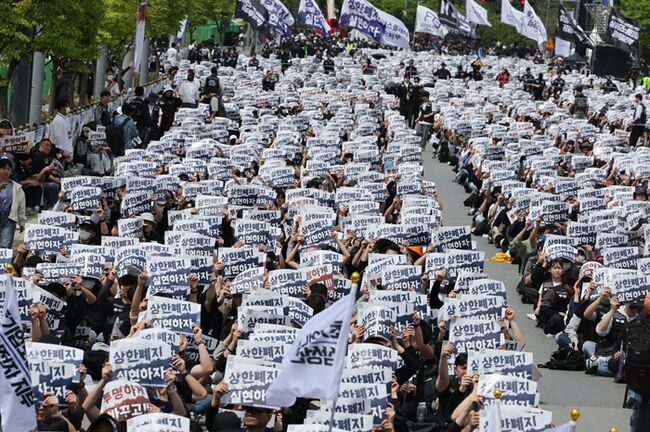 Tensions are at their peak between labor and management as the Samsung Electronics labor union embarks on a large-scale struggle rally at the Samsung Electronics Pyeongtaek campus on the 23rd. [Photo=Yonhap News]
This is from an interview with Kim Yong-gap, former Senior Secretary for Civil Affairs to the President, in Monthly Chosun.
"Early in his term, President Chun actively promoted the semiconductor industry and summoned Chairman Lee Byung-chul of Samsung. Samsung had a company called Samsung Semiconductor, which was renamed after acquiring Korea Semiconductor, the first domestic semiconductor company in 1970. However, Chairman Lee Byung-chul didn't know much about semiconductors. I later learned that it was Lee Kun-hee's decision to acquire the semiconductor company and that Lee Kun-hee used his private funds for the acquisition. Samsung Group had little interest. Nevertheless, the President urged Chairman Lee Byung-chul to look into semiconductors. Chairman Lee went to Silicon Valley to investigate, but semiconductors were still in their early stages there, and there were no major achievements. Despite this, President Chun continued to demand that Samsung pursue the semiconductor industry, and after establishing the Semiconductor Industry Promotion Plan in 1981, he created the Semiconductor Industry Promotion Committee at the Blue House in 1982 to support companies."
After Samsung's Chairman Lee Byung-chul announced the Tokyo Declaration in 1983 to begin developing the 64KDRAM semiconductor and entered the semiconductor industry, Samsung succeeded in developing the 256KDRAM in 1984. Following GoldStar Semiconductor's success in developing the 1MDRAM in 1985, Samsung also succeeded in developing the 1MDRAM the following year.
However, Japan's dumping offensive to counter Korean semiconductors led to a sharp decline in memory semiconductor prices, increasing the losses for Korean semiconductor companies. Companies faltered due to the enormous funds required for facility and technology development investment for the next stage, the 4MDRAM development.
Chun Doo-hwan summoned Samsung's Lee Byung-chul, Hyundai's Chung Ju-yung, and LG's Koo Cha-kyung and proposed joint research on semiconductors under the supervision of the Korea Telecommunications Research Institute, with the government providing 30 billion won of the 40 billion won development cost. Despite opposition from government ministries such as the Economic Planning Board regarding investment and prospects for the Korean semiconductor industry, and critical views from academia and industry both domestically and internationally, Chun Doo-hwan continued his full support for the semiconductor industry.
Just before Chun Doo-hwan's term ended, in February 1988, Korea succeeded in developing the 4MDRAM, narrowing the technological gap with Japan to six months. Four years after Chun Doo-hwan's departure, in 1992, Korea developed the 64MDRAM before the US and Japan, and subsequently led the global semiconductor market.
The success of the Korean semiconductor industry is not solely the result of individual companies' efforts; it is the fruit of a national-level project. Bonuses are not salaries and are not workers' rights. The excessive bonus demands of the Samsung Electronics aristocratic union are unsustainable and represent shameless "hit-and-run" behavior that forgets past dedication and erodes future growth.
The growth of Samsung Electronics and the Korean semiconductor industry is the result of decades of combined efforts from the government, local governments, government research institutes, investors, and the sacrifices of Samsung Electronics' home appliance and mobile divisions, as well as the efforts of numerous partner companies and related industries.
During the development of semiconductor technology, Samsung Electronics has invested profits from its home appliance and mobile phone divisions each year to secure tens of trillions of won in investment funds. The Samsung Electronics union must understand the history of the Korean semiconductor industry and abandon greed, adopting a grateful and humble heart.
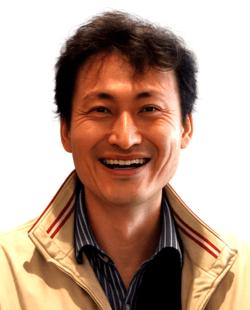
◆ Hwang Doo-hyong
Former Washington Correspondent for Yonhap News
Former Deputy Editor-in-Chief of Yonhap News

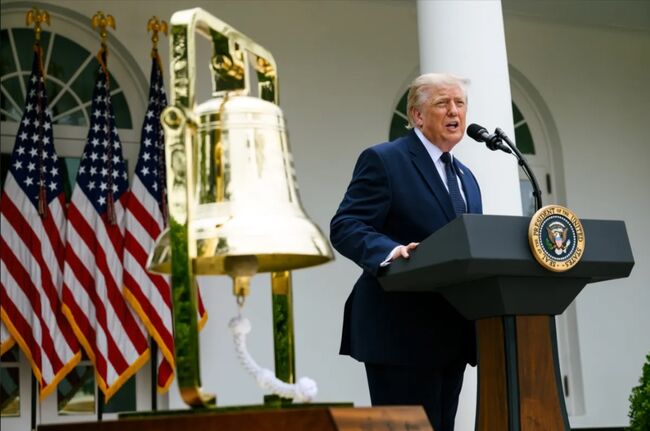 Trump pressures for rate cut again ahead of FOMC... "Should be the lowest in the world"
U.S. President Donald Trump. [Photo = The White House] U.S. President Donald Trump once again pressured the Federal Reserve, the U.S. central bank, to lower interest rates on the 27th (local time
Trump pressures for rate cut again ahead of FOMC... "Should be the lowest in the world"
U.S. President Donald Trump. [Photo = The White House] U.S. President Donald Trump once again pressured the Federal Reserve, the U.S. central bank, to lower interest rates on the 27th (local time
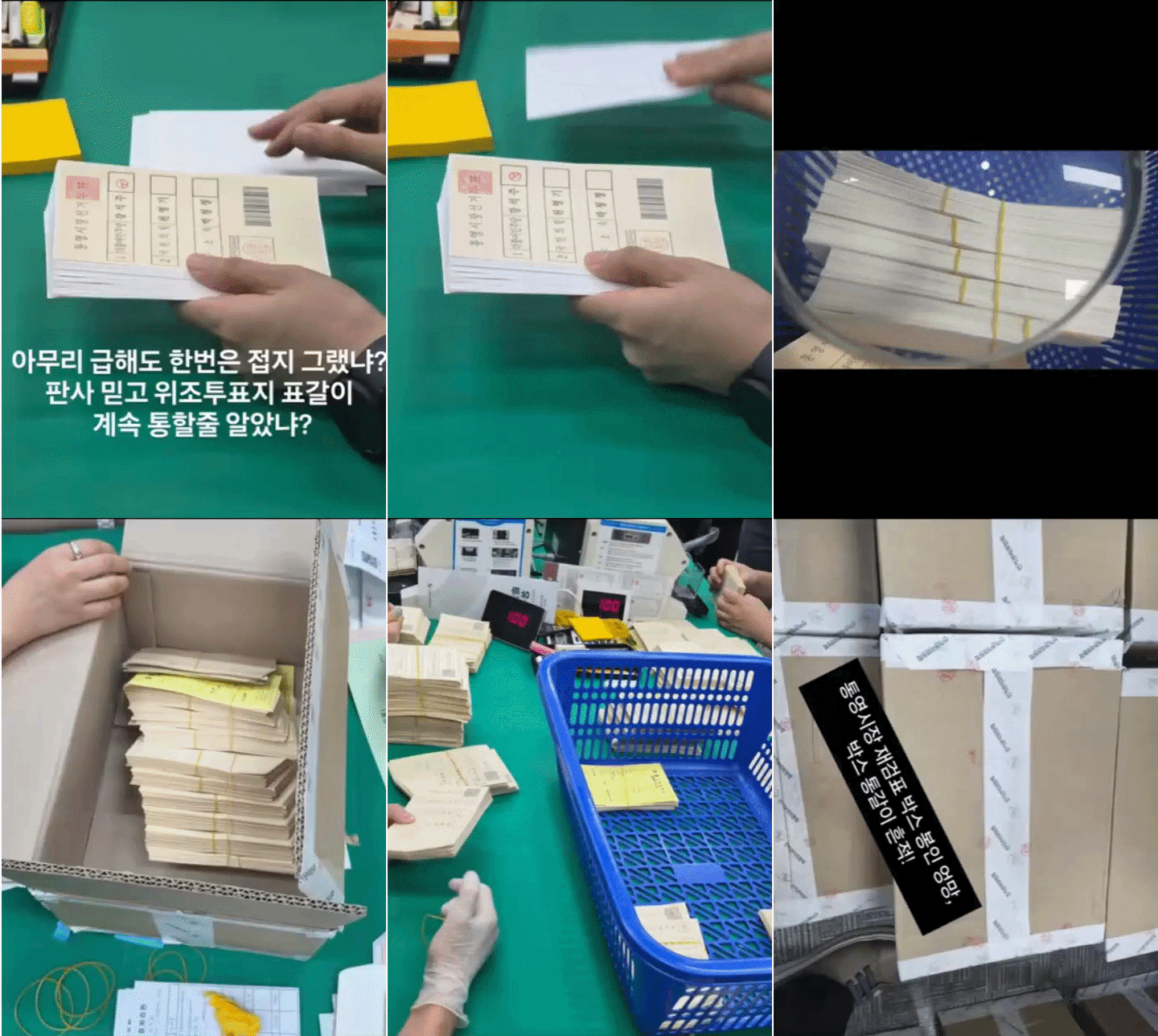 “Ignoring crisp ballots and damaged seals”… Tongyeong mayoral recount concludes with ‘no change in outcome,’ leaving suspicions and public outrage behind
Suspected counterfeit ballots discovered in Tongyeong [GIF from social media of Representative Hwang Kyo-ahn / Attorney Park Joo-hyun]During a recount of the Tongyeong mayoral election in South Gyeong
“Ignoring crisp ballots and damaged seals”… Tongyeong mayoral recount concludes with ‘no change in outcome,’ leaving suspicions and public outrage behind
Suspected counterfeit ballots discovered in Tongyeong [GIF from social media of Representative Hwang Kyo-ahn / Attorney Park Joo-hyun]During a recount of the Tongyeong mayoral election in South Gyeong
 President Yoon, regarding the first-instance ruling on the Public Official Election Act: “An excessive political verdict that distorts the facts… We will appeal immediately.”
The first-instance sentencing hearing for President Yoon Suk Yeol regarding violations of the Public Official Election Act is being broadcast live at Seoul Station on the 27th. [Photo=Yonhap News]Pres
President Yoon, regarding the first-instance ruling on the Public Official Election Act: “An excessive political verdict that distorts the facts… We will appeal immediately.”
The first-instance sentencing hearing for President Yoon Suk Yeol regarding violations of the Public Official Election Act is being broadcast live at Seoul Station on the 27th. [Photo=Yonhap News]Pres
 WSJ: "SK Hynix ADR Premium Is a Sign of AI Trading Overheat"
Advertisement for SK Hynix ADR listing in New York's Times Square [Reuters=Yonhap News file photo]The Wall Street Journal (WSJ) has pointed out that the price of SK Hynix’s American Depositary Recei
WSJ: "SK Hynix ADR Premium Is a Sign of AI Trading Overheat"
Advertisement for SK Hynix ADR listing in New York's Times Square [Reuters=Yonhap News file photo]The Wall Street Journal (WSJ) has pointed out that the price of SK Hynix’s American Depositary Recei
 'Godfather of Japanese Mystery Novels' Keigo Higashino Passes Away After Battle with Cancer at 68
Famous Japanese mystery novelist Keigo Higashino [AFP=Yonhap News]It has been belatedly reported that Keigo Higashino, the "godfather of Japanese mystery novels" and author of bestsellers such as "The
'Godfather of Japanese Mystery Novels' Keigo Higashino Passes Away After Battle with Cancer at 68
Famous Japanese mystery novelist Keigo Higashino [AFP=Yonhap News]It has been belatedly reported that Keigo Higashino, the "godfather of Japanese mystery novels" and author of bestsellers such as "The
 [Park Pil-kyu Security Column] To the Ignorant Trying to Clothe a Beast in Sheep's Clothing
Rep. Kim Byung-joo of the Democratic Party of Korea [Photo=Yonhap News]“The Air Force Academy doesn't teach you how to fly a plane!” “The Army, Navy, and Air Force academies are exactly the
[Park Pil-kyu Security Column] To the Ignorant Trying to Clothe a Beast in Sheep's Clothing
Rep. Kim Byung-joo of the Democratic Party of Korea [Photo=Yonhap News]“The Air Force Academy doesn't teach you how to fly a plane!” “The Army, Navy, and Air Force academies are exactly the
 [Issue Diagnosis] Two Effects of the Election Petition Review
 [Photo] Evidence of Election Fraud Flooding U.S. Media… Trump Had 2.7 Million Votes Stolen
 [Video] U.S. Semiquincentennial Air Show... 'Art in the Sky' streaks across New York
 [Editorial Cartoon] A Draconian Law That Undermines Freedom of Expression

 List
List