Many are injured by inhaling smoke that has accumulated in corridors when evacuating due to apartment fires. Fire and Disaster Headquarters' experimental fire in a villa scheduled for demolition. [Photo=Yonhap News]
The core message of the apartment fire evacuation guidelines recently released by the National Fire Agency is "Evacuate after assessing, not just blindly." This is because approximately 39% of casualties are due to smoke inhalation while evacuating from unaffected households. This is where wireless technology truly shines.
Wireless networks act as a 'nervous system' that delivers real-time information to residents in each household. Specific data, such as whether the fire originated in one's own home or a neighbor's, or if smoke is currently present on the stairs, is instantly transmitted via smartphones and voice beacons. Fear born from a lack of information leads to indiscriminate evacuation, but accurate information enables 'wise waiting.' The real-time visibility provided by wireless technology is the final puzzle piece that completes 'evacuation after assessing.'
1. Institutional Innovation and the Dismantling of Entrenched Cartels
While technology has already surpassed a critical point, institutions often remain in the past. The deeply entrenched vested interests within the fire safety industry and the wired-centric design practices are invisible barriers preventing the entry of new wireless ecosystems.
To leap forward as a true safety powerhouse, structural innovations must accompany flexible laws and systems that embrace technological diversity, along with the introduction of a blockchain-based management system to prove data integrity.
The fire safety industry is undergoing a paradigm shift. While past firefighting focused on physical suppression through 'battles against flames,' modern firefighting is evolving towards intelligent management through 'warfare against data.' The driving force behind this change is undoubtedly AI-based wireless fire safety systems.
The recently revised Fire and Facility Safety Act and the dramatically advanced IoT technology pose a fundamental question: Are we ready to fill the void left by the absence of wires with the trust of 'safety'?
2. Expanding Survival Beyond the Constraints of Wires
Existing wired fire safety systems have long been the standard in terms of reliability. However, the characteristic of physical connectivity reveals clear limitations in the face of the complexity of modern buildings.
The immense cost and time involved in demolishing walls and installing new wiring during renovations of older buildings have created 'blind spots' in fire safety. Wired networks have often led to inflexible responses, especially in locations with unique structural characteristics such as traditional markets, cultural heritage sites, and large logistics warehouses.
Wireless fire safety technology expands the territory of safety by severing these 'wire constraints.' An immediate defense network can be established simply by strategically placing detectors without the need for separate wiring work. This goes beyond installation convenience; it signifies the acquisition of 'strategic flexibility' to place sensors at points where fire indicators can be detected most rapidly.
3. Intelligence That Breaks Down the Wall of Distrust: 'False Alarms'
The primary reasons that have made the adoption of wireless systems hesitant in the field have been communication failures and the fear of 'false alarms (malfunctions).' The distrust on-site, stating "wireless connections are unreliable" and "they are vulnerable to moisture and dust," has solidified technological prejudice. However, as of 2026, we are directly confronting this issue through 'multi-sensor fusion' and 'intelligent control technology.'
Modern wireless detectors go beyond simply detecting smoke; they simultaneously analyze heat, carbon monoxide, and VOCs (Volatile Organic Compounds). AI algorithms can differentiate between the smoke generated when cooking pork belly and smoke from the early stages of a real fire.
This drastically reduces unnecessary dispatches by firefighters, leading to structural efficiency that allows for concentrated efforts on 'real fires' where they are truly needed. Wireless technology is no longer 'unreliable technology'; it is being reborn as 'the smartest surveillance system.'
There is no compromise or pause when it comes to safety
The reason we contemplate the future of firefighting is that the temperature on the ground remains hot. Wireless firefighting is an undeniable calling of the era. To counter modern, unpredictable disasters such as lithium battery fires, we must build a more robust and intelligent wireless defense network.
Safety is never accidental; it is the product of a relentless struggle for innovation. We earnestly hope that 'wireless safety' offered by wireless fire safety technology will more robustly support every aspect of life in Korea and open a 'golden time of trust' that does not miss even a single precious life.

◆ CEO Youngjin Cho
CEO of Roze AI

 [Statement by the Seobeokka KMA Patriots Association] ㉛ Recount the ballots openly, as the previous recount covered up election fraud
Recount of the Tongyeong mayoral election [Photo=Yonhap News]South Korea's liberal democracy is dying. The National Election Commission (NEC), which has degraded into a criminal organization through t
[Statement by the Seobeokka KMA Patriots Association] ㉛ Recount the ballots openly, as the previous recount covered up election fraud
Recount of the Tongyeong mayoral election [Photo=Yonhap News]South Korea's liberal democracy is dying. The National Election Commission (NEC), which has degraded into a criminal organization through t
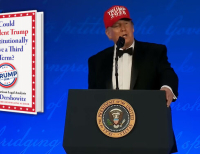
 What is the significance of the "Trump 2028" red hat that keeps reappearing?
It is noteworthy that while it is "highly likely" that President Donald Trump is "seriously considering" a run for the presidency in 2028, he is also "deliberately" fueling speculation regarding wheth
What is the significance of the "Trump 2028" red hat that keeps reappearing?
It is noteworthy that while it is "highly likely" that President Donald Trump is "seriously considering" a run for the presidency in 2028, he is also "deliberately" fueling speculation regarding wheth
 First U.S. Ambassador of Trump's Second Term to Arrive This Week… Will It Provide Momentum to Resolve Pending Issues?
U.S. Ambassador to South Korea Michelle Steel speaks at the opening ceremony of the Korea-U.S. Shipbuilding Cooperation Center held at the Mayflower Hotel in Washington, D.C., on the 23rd (local time)
First U.S. Ambassador of Trump's Second Term to Arrive This Week… Will It Provide Momentum to Resolve Pending Issues?
U.S. Ambassador to South Korea Michelle Steel speaks at the opening ceremony of the Korea-U.S. Shipbuilding Cooperation Center held at the Mayflower Hotel in Washington, D.C., on the 23rd (local time)
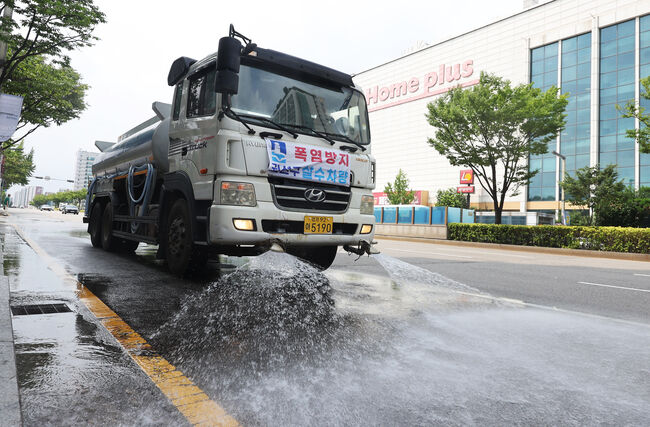 The Korean Peninsula wrapped in a thick blanket of scorching high pressure… Will the 1994 record be broken?
On the 28th, as the heatwave continues, a water sprinkler truck sprays water on Hyowon-ro, Gwonseon-gu, Suwon, Gyeonggi Province. [Photo = Yonhap News]The hottest years on record are considered to be
The Korean Peninsula wrapped in a thick blanket of scorching high pressure… Will the 1994 record be broken?
On the 28th, as the heatwave continues, a water sprinkler truck sprays water on Hyowon-ro, Gwonseon-gu, Suwon, Gyeonggi Province. [Photo = Yonhap News]The hottest years on record are considered to be
 Stock Market Crash 'Black Tuesday'… KOSPI down 10.8%, KOSDAQ down 7.7%
The KOSPI fell by more than 5% in early trading on the 28th, triggering a sell-side sidecar.On the 28th, the KOSPI plunged by more than 10%.Due to the sharp decline, a sell-side sidecar—a temporary
Stock Market Crash 'Black Tuesday'… KOSPI down 10.8%, KOSDAQ down 7.7%
The KOSPI fell by more than 5% in early trading on the 28th, triggering a sell-side sidecar.On the 28th, the KOSPI plunged by more than 10%.Due to the sharp decline, a sell-side sidecar—a temporary
 [World Heritage Committee] 25 New World Heritage Sites Inscribed in Busan… South Korea Successfully Expands 'Getbol' Listing
The Chairperson of the World Heritage Committee speaks at the plenary session of the 48th session of the World Heritage Committee, held at BEXCO in Busan on the 20th. [Photo: Yonhap News]A total of 25
[World Heritage Committee] 25 New World Heritage Sites Inscribed in Busan… South Korea Successfully Expands 'Getbol' Listing
The Chairperson of the World Heritage Committee speaks at the plenary session of the 48th session of the World Heritage Committee, held at BEXCO in Busan on the 20th. [Photo: Yonhap News]A total of 25
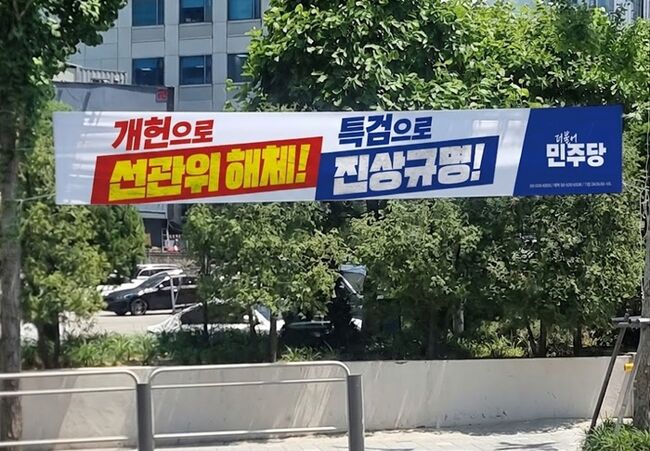 [Cho Yang-geon Column] The NEC: Facing a Fate of "Discarding the Dog After the Hunt"
Banner calling for the "dissolution of the NEC" posted by the Democratic Party. [AI-generated image]Banners calling for the "dissolution of the National Election Commission (NEC)" posted by the Democr
[Cho Yang-geon Column] The NEC: Facing a Fate of "Discarding the Dog After the Hunt"
Banner calling for the "dissolution of the NEC" posted by the Democratic Party. [AI-generated image]Banners calling for the "dissolution of the National Election Commission (NEC)" posted by the Democr
 [Photo] Evidence of Election Fraud Flooding U.S. Media… Trump Had 2.7 Million Votes Stolen
 [Video] U.S. Semiquincentennial Air Show... 'Art in the Sky' streaks across New York
 [Editorial Cartoon] A Draconian Law That Undermines Freedom of Expression

 List
List