The long-standing formula in Korean diplomacy was "security with the United States, economy with China." The idea was to counter North Korea's military threats with the ROK-U.S. alliance and expand growth and exports through the Chinese market.
This formula was realistic for a while. The U.S. served as a security umbrella, and China was a conduit for growth. Korea, in the meantime, enjoyed strategic leeway under the name of balance.
However, that formula has ended. This is because the era where security and economy could be separated has ended.
Today's security is not just a matter of military power. Semiconductors, artificial intelligence, batteries, rare earths, energy, financial sanctions, data, ports, and communication networks have all become part of security.
The economy is also no longer a simple matter of import and export. Which technology standards to follow, within which payment systems to operate, and which supply chains to join have become matters of national survival.
China can certainly shake the Korean economy. It is a vast market and a central axis for the supply chain of essential minerals and intermediate goods. Rare earths, in particular, are China's strategic leverage.
According to the International Energy Agency (IEA), as of 2024, China accounted for 60% of magnet rare earth mining and 91% of refined production. In October 2025, China further strengthened export controls on rare earths and related products, equipment, and technologies, expanding its scope of control by making even some re-exports by foreign companies subject to Chinese approval.
But one should not be mistaken here.
Rare earths, while difficult, are a supply chain issue. Supply chains can be diversified, even if it costs time and money. There are alternative routes through Australia, Canada, the United States, Southeast Asia, Africa, recycling technology, national stockpiling, and the development of alternative materials.
Complete independence is not easy, but risks can be shared. The IEA also suggested that diversification, emergency preparedness, policy and financial support, and international cooperation are necessary to strengthen the resilience of the rare earth supply chain.
The problem is order.
Order cannot be newly dug like a mine, relocated like a factory, or switched like a contract. The dollar payment system, financial sanction regimes, controls on semiconductor equipment and software, AI semiconductor rules, military alliance networks, security of maritime traffic routes, and the operation of international organizations are not supply chains that can be replaced in a short period.
China can exert pressure with resources and markets. However, the U.S. can bind with rules. This difference is decisive.
According to the Bank for International Settlements (BIS), as of April 2025, the U.S. dollar was the overwhelmingly dominant currency, accounting for 89% of global foreign exchange transactions. The dollar is not just a currency; it is the operating system of the global economy. Being excluded from the U.S. order means more than just losing a specific market; it means the very grammar of trade is shaken.
The same applies to semiconductors.
The U.S. has consistently maintained export controls on advanced semiconductors and related equipment and technologies against China. In January 2026, while adjusting its licensing review policy for certain semiconductor items exported to China, the U.S. Department of Commerce's Bureau of Industry and Security (BIS) imposed conditions requiring Chinese buyers to comply with export control procedures and undergo third-party performance and security verification.
This means that the U.S. is not just saying "don't sell," but rather holds the bottleneck and verification rules for advanced industries.
Therefore, the phrase "security with the U.S., economy with China" no longer describes reality. This sentence makes it sound as if Korea can pick and choose what it wants from two worlds.
However, the world no longer works that way. The U.S. has integrated security into the economy, and China has turned the economy into a weapon of security. Security and economy have merged not into two rooms, but into a single battlefield.
This does not mean that Korea should not trade with China.
China remains an important market. Korean companies cannot abandon the Chinese market, nor can they emotionally sever trade with China.
However, the moment China is viewed solely as a market, the strategy collapses. China is both a market and a risk.
While trading, we must build a structure that is not easily shaken. Exports should be maintained, but core materials and intermediate goods should be diversified. Economic relations with China should be managed, not become the basis for survival.
Conversely, relations with the U.S. should also not be viewed in an outdated manner.
The U.S. is no longer just a partner in military alliances. The U.S. is a country that moves together on technology standards, financial networks, export controls, supply chain restructuring, and energy order. The ROK-U.S. alliance is expanding beyond a military alliance to an industrial alliance, a technology alliance, and a financial order alliance.
Entering this order also means accepting costs. It entails costs for U.S. investment, relocation of production bases, cooperation on technology control, and supply chain restructuring. However, these costs must be compared to the cost of being pushed out of the order.
The standard that Korean diplomacy must re-establish is clear.
China is a market to be managed, not an irreplaceable market. Rare earths are a supply chain to be diversified, not an irreplaceable resource.
However, the U.S.-centric order is different. Currently, there is no other order in the world that can simultaneously replace the dollar order, advanced technology standards, military alliance networks, and financial sanction regimes.
What Korea must look at is not just China's rare earths. It is the U.S. order.
A shortage of rare earths can buy time through stockpiling and alternative supply chains. However, if one is pushed out of the order, the very ground on which the national economy stands will shake. China can shake the Korean economy, but the Korean economy will struggle to function outside the U.S. order.
This is why the old formula of "security with the U.S., economy with China" has ended.
China holds resources and markets, but the U.S. holds order. Rare earths can be replaced, but order cannot.
Korea's choice is not a matter of which country it likes. It is a matter of in which order it will survive.

 [Statement by the Seobeokka KMA Patriots Association] ㉛ Recount the ballots openly, as the previous recount covered up election fraud
Recount of the Tongyeong mayoral election [Photo=Yonhap News]South Korea's liberal democracy is dying. The National Election Commission (NEC), which has degraded into a criminal organization through t
[Statement by the Seobeokka KMA Patriots Association] ㉛ Recount the ballots openly, as the previous recount covered up election fraud
Recount of the Tongyeong mayoral election [Photo=Yonhap News]South Korea's liberal democracy is dying. The National Election Commission (NEC), which has degraded into a criminal organization through t
 What is the significance of the "Trump 2028" red hat that keeps reappearing?
It is noteworthy that while it is "highly likely" that President Donald Trump is "seriously considering" a run for the presidency in 2028, he is also "deliberately" fueling speculation regarding wheth
What is the significance of the "Trump 2028" red hat that keeps reappearing?
It is noteworthy that while it is "highly likely" that President Donald Trump is "seriously considering" a run for the presidency in 2028, he is also "deliberately" fueling speculation regarding wheth
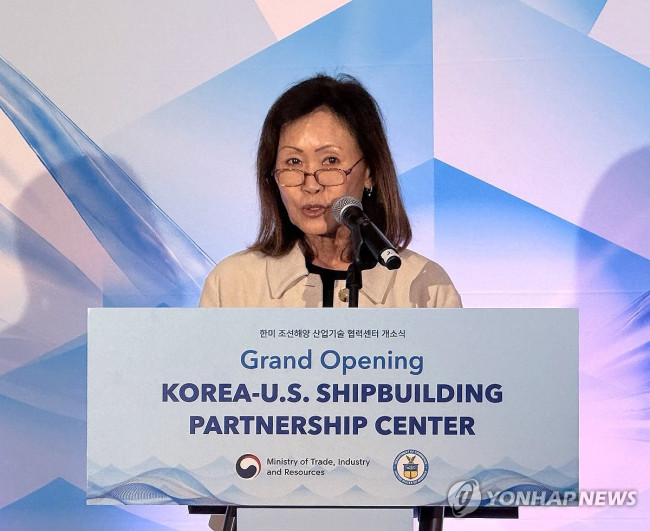 First U.S. Ambassador of Trump's Second Term to Arrive This Week… Will It Provide Momentum to Resolve Pending Issues?
U.S. Ambassador to South Korea Michelle Steel speaks at the opening ceremony of the Korea-U.S. Shipbuilding Cooperation Center held at the Mayflower Hotel in Washington, D.C., on the 23rd (local time)
First U.S. Ambassador of Trump's Second Term to Arrive This Week… Will It Provide Momentum to Resolve Pending Issues?
U.S. Ambassador to South Korea Michelle Steel speaks at the opening ceremony of the Korea-U.S. Shipbuilding Cooperation Center held at the Mayflower Hotel in Washington, D.C., on the 23rd (local time)
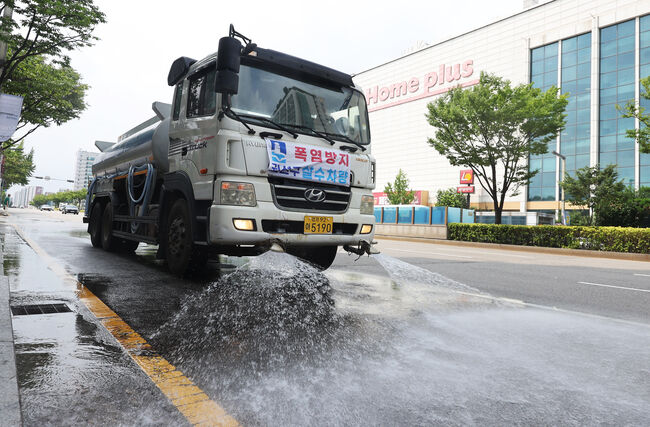 The Korean Peninsula wrapped in a thick blanket of scorching high pressure… Will the 1994 record be broken?
On the 28th, as the heatwave continues, a water sprinkler truck sprays water on Hyowon-ro, Gwonseon-gu, Suwon, Gyeonggi Province. [Photo = Yonhap News]The hottest years on record are considered to be
The Korean Peninsula wrapped in a thick blanket of scorching high pressure… Will the 1994 record be broken?
On the 28th, as the heatwave continues, a water sprinkler truck sprays water on Hyowon-ro, Gwonseon-gu, Suwon, Gyeonggi Province. [Photo = Yonhap News]The hottest years on record are considered to be
 Stock Market Crash 'Black Tuesday'… KOSPI down 10.8%, KOSDAQ down 7.7%
The KOSPI fell by more than 5% in early trading on the 28th, triggering a sell-side sidecar.On the 28th, the KOSPI plunged by more than 10%.Due to the sharp decline, a sell-side sidecar—a temporary
Stock Market Crash 'Black Tuesday'… KOSPI down 10.8%, KOSDAQ down 7.7%
The KOSPI fell by more than 5% in early trading on the 28th, triggering a sell-side sidecar.On the 28th, the KOSPI plunged by more than 10%.Due to the sharp decline, a sell-side sidecar—a temporary
 [World Heritage Committee] 25 New World Heritage Sites Inscribed in Busan… South Korea Successfully Expands 'Getbol' Listing
The Chairperson of the World Heritage Committee speaks at the plenary session of the 48th session of the World Heritage Committee, held at BEXCO in Busan on the 20th. [Photo: Yonhap News]A total of 25
[World Heritage Committee] 25 New World Heritage Sites Inscribed in Busan… South Korea Successfully Expands 'Getbol' Listing
The Chairperson of the World Heritage Committee speaks at the plenary session of the 48th session of the World Heritage Committee, held at BEXCO in Busan on the 20th. [Photo: Yonhap News]A total of 25
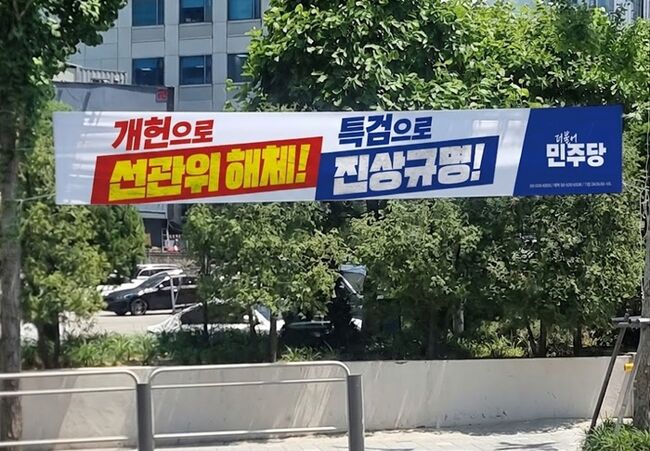 [Cho Yang-geon Column] The NEC: Facing a Fate of "Discarding the Dog After the Hunt"
Banner calling for the "dissolution of the NEC" posted by the Democratic Party. [AI-generated image]Banners calling for the "dissolution of the National Election Commission (NEC)" posted by the Democr
[Cho Yang-geon Column] The NEC: Facing a Fate of "Discarding the Dog After the Hunt"
Banner calling for the "dissolution of the NEC" posted by the Democratic Party. [AI-generated image]Banners calling for the "dissolution of the National Election Commission (NEC)" posted by the Democr
 [Photo] Evidence of Election Fraud Flooding U.S. Media… Trump Had 2.7 Million Votes Stolen
 [Video] U.S. Semiquincentennial Air Show... 'Art in the Sky' streaks across New York
 [Editorial Cartoon] A Draconian Law That Undermines Freedom of Expression

 List
List