 Gen. Paul LaCamera, commander of the UN Command and US Forces Korea (center), walks alongside South Korean and US soldiers during the combined military exercise 'Freedom Shield' held in Yeoncheon, Gyeonggi Province, on March 14. [Photo=Reuters]
Recent ROK-US relations are facing an unprecedentedly complex phase. On one hand, there are strong critical voices from the US political and academic circles regarding South Korea's internal security and social credibility. On the other hand, plans to elevate South Korea's strategic value as a linchpin of the Indo-Pacific strategy are being successively announced.
This is a peculiar situation where South Korea's "elevated strategic status (positive)" and "internal political concerns (negative)" coexist.
This phenomenon is occurring within the US's grand vision to redefine South Korea from a mere protectorate to a key logistical and strategic base supporting America's global strategy. It can be understood as a US 'two-track' strategy that critically examines short-term practical issues facing South Korea microscopically while presenting a macroscopic blueprint for its medium- to long-term strategic future.
Negative Signals from US Political and Academic Circles: The Coupang Incident
The recent 'Coupang incident' has emerged as a significant diplomatic issue shaking the economic and security trust of the ROK-US alliance, going beyond a simple corporate investigation.
Fifty-four US Republican lawmakers sent an open letter to the ROK Ambassador to the US, strongly criticizing, "The South Korean government is systematically targeting and attacking American companies such as Apple, Google, and Coupang." In response, about 80 South Korean lawmakers from both ruling and opposition parties are preparing a letter of protest, stating, "The US Congress's behavior is a clear infringement of judicial sovereignty and interference in internal affairs," escalating an emotional exchange between the legislative bodies of both countries.
The USTR under the Trump administration has recently initiated investigation procedures under 'Section 301 of the Trade Act' targeting 16 countries, including South Korea. The reason Coupang investors withdrew their individual petitions is that the US government had already launched an investigation under the broader framework of "unfair trade practices across South Korea."
While there is an optimistic outlook that a compromise may be found considering South Korea's strategic value as an MRO (Maintenance, Repair, and Operations) base, there is also pessimism that if the investigation results in a "unfair" verdict, the US could impose strong economic sanctions akin to Super 301, such as imposing reciprocal tariffs or halting advanced technology cooperation.
Illegal Inflow of Drugs into the United States
In early May, US law enforcement authorities (DEA), in cooperation with South Korean investigative agencies, busted an international drug trafficking organization that was massively smuggling GBL (gamma-butyrolactone), the raw material for 'liquid ecstasy (GHB),' from South Korea to the US. Eleven individuals, including five South Koreans, were indicted. This organization distributed the mixed drug, known as 'sexchem,' by combining California-produced methamphetamine with Korean-made GBL.
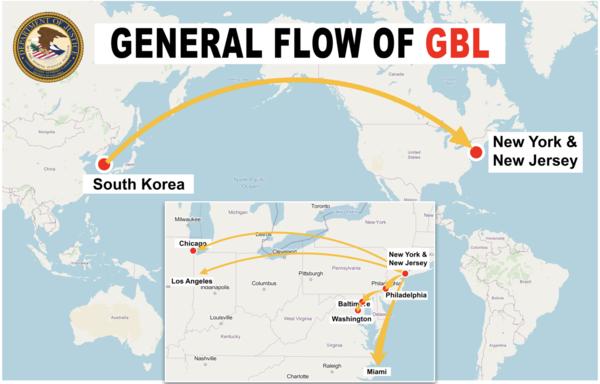 US law enforcement agencies busted an international drug trafficking organization that smuggled Korean-made GBL (raw material for liquid ecstasy) and distributed it along the US East Coast. [Data=US Attorney's Office for the Eastern District of Virginia, Washington D.C.] US prosecutors cite this case as a key example of disrupting an "international supply chain that exploited South Korea's excellent logistics and manufacturing infrastructure." Attorney Gordon Chang recently raised a strong criticism, referring to the spread of drugs within South Korea and the activities of associated international criminal organizations, suggesting that South Korea is becoming a "laundering base" or a "pushover" for international crime. This could lead to a decline in international trust in South Korea's public safety and judicial system.
Concerns about South Korea's Political Situation
At a hearing of the US House Subcommittee on Human Rights, chaired by Representative Chris Smith on April 28, Dr. Tara O made the extraordinary statement, "I am concerned about the North Korean-ization of South Korea."
Representative Smith expressed strong concerns about the situation in South Korea and stated that he would "closely monitor" it in the future. This can be interpreted as a statement of intent to constantly oversee whether South Korea's legislative activities, election processes, and judicial rulings comply with US human rights standards or democratic values.
This is interpreted as a warning from a conservative perspective about the possibility of South Korea's internal political conflicts and ideological orientations deviating from the US's alliance system of free democratic values.
US Restricts Some Key Intelligence on North Korea
When the South Korean Minister of Unification recently specifically mentioned "Kusong City, North Pyongan Province" as a location for North Korea's uranium enrichment facilities, in addition to the existing Yongbyon and Kangson, the US government reportedly viewed this as a leak of classified information shared between the ROK and the US, protested, and consequently strengthened information security by partially limiting regular reports of approximately 50-100 pages and satellite asset information previously provided to South Korea.
Elevated Strategic Status of South Korea
Despite the negative assessments mentioned above, South Korea's value in military and strategic terms is actually being elevated to the level of a massive unsinkable aircraft carrier for the US heading towards the continent.
Revival of Restrictions on US Forces Korea Reductions
The US Congress passed the National Defense Authorization Act (NDAA) for fiscal year 2026, following agreement between the House and the Senate, in late December 2025. This bill explicitly includes a provision prohibiting the use of funds to reduce the US Forces Korea personnel below the current level of 28,500.
This provision was included during the first Trump administration (2019-2021) to prevent unilateral reductions and was deleted during the Biden administration. However, with the advent of the second Trump administration, Congress has revived it to impose a strong brake. It is not merely a resolution; by legally binding budget execution, it has made it virtually impossible for the President to withdraw forces without congressional consent.
Strategic Flexibility and Expanded Domain of US Forces Korea
The United States no longer confines South Korea to the narrow framework of the Korean Peninsula. Based on recent statements by Gen. Xavier Brunson, commander of US Forces Korea, and interviews with experts, South Korea is considered a strategic space, akin to a permanent military platform and an expanded territory.
This is the concretization of strategic flexibility, aiming to operate US Forces Korea as a rapid response force and a mobile aircraft carrier that can be immediately deployed to regional conflicts, such as in the Taiwan Strait, if necessary.
Concept of Building a Kill Web
This is a plan to utilize South Korea as a key link in a network to counter China, connecting Seoul, Tokyo, and Manila. Whereas the existing Kill Chain involved vertical and linear stages of "detect, decide, strike," the Kill Web is a system that connects these stages like a dense spiderweb, operating simultaneously and non-linearly.
While the existing Kill Chain is a single link that can paralyze the entire system if broken, the Kill Web is an organic neural network where, if one part is severed, a strike can be immediately delivered through another path.
The Kill Chain has the weakness that the entire system can be paralyzed if even one link is broken, but the Kill Web organically connects land, sea, air, space, and cyber forces through artificial intelligence (AI) and data links.
It is much more effective for real-time tracking and striking targets whose locations are difficult to pinpoint, such as North Korea's mobile launchers (TELs). This can be considered the Korean Peninsula version of the Joint All-Domain Command and Control (JADC2) initiative pursued by the US.
Appointment of the Commander of the US 7th Air Force in Korea
Recently, the US promoted Major General David Shoemaker, who successfully led operations to strike Iranian military assets and missile defense and counterattack operations during Operation Epic Fury in Iran, to the rank of Lieutenant General and appointed him as the commander of the US 7th Air Force in Korea. This appointment can be seen as having deeply layered strategic implications.
He has extensive experience serving in Korea, including as commander of the 8th Fighter Wing at Kunsan Air Base, and is a veteran with over 2,000 hours of flight experience in fighter jets like the F-16. His experience in directly defending against Iranian drone and missile attacks is interpreted as an intention to transplant this expertise to the Korean Peninsula theater.
The appointment of Commander Shoemaker can be seen as a move to enhance practical response capabilities against North Korea's Iranian-style missile threats, while also organically integrating US Air Force assets in Korea into the US's global strategy.
South Korea as a Regional Support Hub (RSF)
The US is paying attention to South Korea's world-class manufacturing and defense industry infrastructure. The Regional Support Framework (RSF) alluded to by Commander Brunson is a plan to maintain, repair, and overhaul not only US Forces Korea equipment but also equipment of US forces in the Indo-Pacific region directly in South Korea.
This aims to minimize power vacuums by shortening the time it takes to send equipment back to the US mainland and fully integrate South Korea's defense capabilities into the US military's global logistical system.
Deployment of Cutting-Edge Capabilities
The recent deployment of the 'Sentinel A4,' a state-of-the-art radar that is rarely deployed outside the US mainland, to US Forces Korea is a symbolic event.
This is an attempt to build a multi-layered defense network beyond existing THAAD or Patriot systems, simultaneously dismissing rumors of US Forces Korea reductions and demonstrating the will to maintain the Korean Peninsula as a strategic hub where the US military's cutting-edge technology is concentrated.
Changes in the Nature of the ROK-US Alliance and Our Challenges
Moving forward, South Korea must solidify its internal values of the rule of law and democracy to dispel external concerns. Simultaneously, it must establish a sophisticated diplomatic and security strategy to maximize national interests within the framework of evolving US strategy. The transfer of wartime operational control and defense cost-sharing negotiations also need to be reinterpreted within this new framework of a partner in the Indo-Pacific strategy.
Complete and Peaceful Unification of the Korean Peninsula as the Fundamental Solution
On April 27, the Foundation for Defense of Democracies (FDD) in Washington published a policy report titled "Toward a Free and Unified Korea: Resolving the Korea Challenge at Its Source."
The report points out the failure of North Korean nuclear negotiations over the past 30 years and asserts that the fundamental solution to the North Korean nuclear issue is 'free unification' accompanied by 'regime change.'
It analyzes that the reason denuclearization negotiations have failed is the oversight of the fact that the 'hand holding the nuclear weapons (the nature of the regime)' is the core of the problem, rather than the nuclear weapons themselves.
In other words, as long as a totalitarian dictatorship persists, abandoning nuclear weapons is impossible. Furthermore, the report warns that not only North Korea's "two-state theory" but also the "peaceful coexistence" argument raised in some quarters within South Korea will ultimately lead to the solidification of division, which poses a dangerous risk of perpetuating the nuclear threat.
This report defines unification not merely as a national task but as America's most powerful security strategy to end instability in Northeast Asia.
These conclusions confirm the alignment between the goals of the National Association for Free Unification, which I represent, and the free unification strategy of Washington experts. I am confident that all problems on the Korean Peninsula can only be solved through free unification.
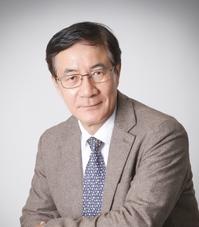
◆ Dr. Shin Dong-chun
Ph.D. in Public Administration, Representative of the National Association for Free Unification. After passing the 21st Higher Civil Service Examination, he had a career in public service, followed by active roles as a corporate CEO, university professor, media contributor, author, and chairman of the Global Aerospace Industry Association.

 Iranian Foreign Ministry: "Continuing Message Exchanges with the U.S. and Activities of Mediating Countries"
Esmaeil Baghaei, Spokesperson for the Iranian Ministry of Foreign Affairs [Xinhua, Yonhap News file photo]Esmaeil Baghaei, spokesperson for the Iranian Ministry of Foreign Affairs, stated on the 26th
Iranian Foreign Ministry: "Continuing Message Exchanges with the U.S. and Activities of Mediating Countries"
Esmaeil Baghaei, Spokesperson for the Iranian Ministry of Foreign Affairs [Xinhua, Yonhap News file photo]Esmaeil Baghaei, spokesperson for the Iranian Ministry of Foreign Affairs, stated on the 26th
 President Yoon: "Do You Think You Are Safe from the Special Counsel?"... Final Statement Video Released
President Yoon Suk Yeol rebuking the special prosecutor on the 24th. [Court video / @birds_justice X account subtitle GIF] A video of President Yoon Suk Yeol's closing statement at his trial rega
President Yoon: "Do You Think You Are Safe from the Special Counsel?"... Final Statement Video Released
President Yoon Suk Yeol rebuking the special prosecutor on the 24th. [Court video / @birds_justice X account subtitle GIF] A video of President Yoon Suk Yeol's closing statement at his trial rega
 President Yoon, regarding the first-instance ruling on the Public Official Election Act: “An excessive political verdict that distorts the facts… We will appeal immediately.”
The first-instance sentencing hearing for President Yoon Suk Yeol regarding violations of the Public Official Election Act is being broadcast live at Seoul Station on the 27th. [Photo=Yonhap News]Pres
President Yoon, regarding the first-instance ruling on the Public Official Election Act: “An excessive political verdict that distorts the facts… We will appeal immediately.”
The first-instance sentencing hearing for President Yoon Suk Yeol regarding violations of the Public Official Election Act is being broadcast live at Seoul Station on the 27th. [Photo=Yonhap News]Pres
 WSJ: "SK Hynix ADR Premium Is a Sign of AI Trading Overheat"
Advertisement for SK Hynix ADR listing in New York's Times Square [Reuters=Yonhap News file photo]The Wall Street Journal (WSJ) has pointed out that the price of SK Hynix’s American Depositary Recei
WSJ: "SK Hynix ADR Premium Is a Sign of AI Trading Overheat"
Advertisement for SK Hynix ADR listing in New York's Times Square [Reuters=Yonhap News file photo]The Wall Street Journal (WSJ) has pointed out that the price of SK Hynix’s American Depositary Recei
 'Godfather of Japanese Mystery Novels' Keigo Higashino Passes Away After Battle with Cancer at 68
Famous Japanese mystery novelist Keigo Higashino [AFP=Yonhap News]It has been belatedly reported that Keigo Higashino, the "godfather of Japanese mystery novels" and author of bestsellers such as "The
'Godfather of Japanese Mystery Novels' Keigo Higashino Passes Away After Battle with Cancer at 68
Famous Japanese mystery novelist Keigo Higashino [AFP=Yonhap News]It has been belatedly reported that Keigo Higashino, the "godfather of Japanese mystery novels" and author of bestsellers such as "The
 [Park Pil-kyu Security Column] To the Ignorant Trying to Clothe a Beast in Sheep's Clothing
Rep. Kim Byung-joo of the Democratic Party of Korea [Photo=Yonhap News]“The Air Force Academy doesn't teach you how to fly a plane!” “The Army, Navy, and Air Force academies are exactly the
[Park Pil-kyu Security Column] To the Ignorant Trying to Clothe a Beast in Sheep's Clothing
Rep. Kim Byung-joo of the Democratic Party of Korea [Photo=Yonhap News]“The Air Force Academy doesn't teach you how to fly a plane!” “The Army, Navy, and Air Force academies are exactly the
 [Issue Diagnosis] Two Effects of the Election Petition Review
 [Photo] Evidence of Election Fraud Flooding U.S. Media… Trump Had 2.7 Million Votes Stolen
 [Video] U.S. Semiquincentennial Air Show... 'Art in the Sky' streaks across New York
 [Editorial Cartoon] A Draconian Law That Undermines Freedom of Expression

 List
List









