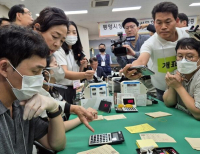
May 16th Support March by the National Veterans Association
History is like a flowing river, it never stops, but sometimes it encounters a rough waterfall and changes its course. May 16, 1961, was a tumultuous moment in our modern history, a point of inflection.
While some may try to evaluate this solely by academic standards, from the perspective of patriotism that has worried about the nation's survival, the reality of the homeland was precarious. Therefore, the author is convinced that the May 16th event was not a mere change of regime, but an 'unavoidable decision to save the nation' to rescue the suffering populace and set the nation's foundation right.
The Vicious Cycle of Poverty and Ruined Livelihoods
The social landscape of South Korea at the time was one of sheer misery. In the early 1960s, South Korea's per capita GNP was only around $80. Korea was one of the poorest countries in the world, and on the land still bearing the scars of Japanese colonial rule and the Korean War, the cries of the common people were incessant.
The 'barley hump' season, which arrived every spring, was accepted as fate, and the streets were filled with people who could not bear starvation. In a state of economic dependence, the ideal of democracy was merely an empty echo for a hungry populace. From the perspective of patriotic Buddhism, a situation where the people's right to survival is threatened is an emergency where the state fails to fulfill its role.
At the Peak of Disorder and Security Threats
The Second Republic, established after the April 19 Revolution, had high democratic aspirations but had lost the control to manage social chaos. With daily protests and political infighting, administration was paralyzed, and social order was completely shaken. Especially in a situation where North Korea's constant provocations and ambitions for communist unification persisted, internal division and incompetence were driving the nation towards extinction.
The patriotic Buddhist order adheres to the value of 'nation first,' believing that there can be no religion or people without a nation. They viewed the disorder at the time not as mere chaos but as a crisis where the nation's heart was stopping, and allowing it to continue was a path to becoming a sinner of history.
The Decision, and the Dawn of Reconstruction
The May 16th event, carried out in this desperate situation, was the last choice for the nation's survival. The 'anti-communism' and 'economic reconstruction' banners raised by the coup leaders offered the following hopes to a populace trembling with hunger and anxiety.
First, the establishment of national discipline. Corruption and incompetence were eradicated, and the administrative system was reorganized to maximize the efficiency of national management.
Second, laying the foundation for economic development. The economic development plan, initiated under the slogan 'Let's live well,' became the bedrock for the subsequent 'Miracle on the Han River.'
Third, fostering a spirit of self-reliance. It instilled in the hearts of the people a spirit of self-reliance, of standing on their own feet through their own strength, moving away from a life dependent on aid.
Above all, the people responded to the leader's strong will, and the spirit of 'When the pine trees flourish, the cypresses rejoice' (송무백열) filled the entire land. This singleheartedness, that national prosperity is personal happiness, became the driving force of reconstruction.
Reflecting on the Path of Protecting the Nation and Pacifying the People
Of course, the merits and demerits of the individual Park Chung-hee cannot be separated. It is undeniable that the nostalgia for him today may be a psychological anesthetic to soothe present deficiencies. However, what we must truly reflect on is not nostalgia for past figures, but the resolute will and the spirit of national salvation that characterized that era.
The Buddha taught us not to turn away from the suffering of sentient beings. The May 16th event was a decision to end the suffering of the masses – extreme poverty and chaos at the time. Although there was the pain of the interruption of the constitutional order, history proves that it was an unavoidable measure to prevent a greater catastrophe.
The prosperity and freedom we enjoy today are possible because of the decisions made at that time and the sweat and toil of the people. Now, using the past as a mirror, we must walk the path of protecting the nation and pacifying the people without wavering when the nation faces a crisis.
The spirit of May 16th lay in the earnest sincerity of wanting to save the nation. Reflecting once again on that noble decision, I deliver the following admonition to today's society, lulled into complacency.
When the nation faces a precarious crisis, adhering only to procedures is like measuring the depth of a river while a person is drowning. To enjoy the fruits of today, grown from the seeds of past decisions, while denying those roots is to forget one's own foundation. Now, we must move beyond division and political strife towards introspection and responsibility. That is the spirit of the 21st century.
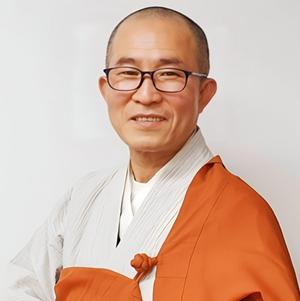
◆ Monk Eungcheon
Chief Secretary of the Jogye Order of Korean Buddhism
First Commander of the Patriotic Monk Corps

 [Statement by the Seobeokka KMA Patriots Association] ㉛ Recount the ballots openly, as the previous recount covered up election fraud
Recount of the Tongyeong mayoral election [Photo=Yonhap News]South Korea's liberal democracy is dying. The National Election Commission (NEC), which has degraded into a criminal organization through t
[Statement by the Seobeokka KMA Patriots Association] ㉛ Recount the ballots openly, as the previous recount covered up election fraud
Recount of the Tongyeong mayoral election [Photo=Yonhap News]South Korea's liberal democracy is dying. The National Election Commission (NEC), which has degraded into a criminal organization through t
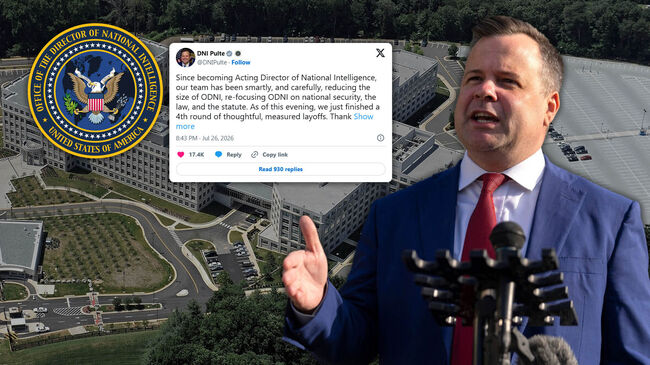 Bill Pulte to Restructure ‘Deep State’… Announces 4th Round of Layoffs at the Office of the Director of National Intelligence
Acting Director of National Intelligence Bill Pulte announced Sunday that he has carried out a fourth "deliberate and measured" reduction in personnel since taking office on June 19, as part of the Tr
Bill Pulte to Restructure ‘Deep State’… Announces 4th Round of Layoffs at the Office of the Director of National Intelligence
Acting Director of National Intelligence Bill Pulte announced Sunday that he has carried out a fourth "deliberate and measured" reduction in personnel since taking office on June 19, as part of the Tr
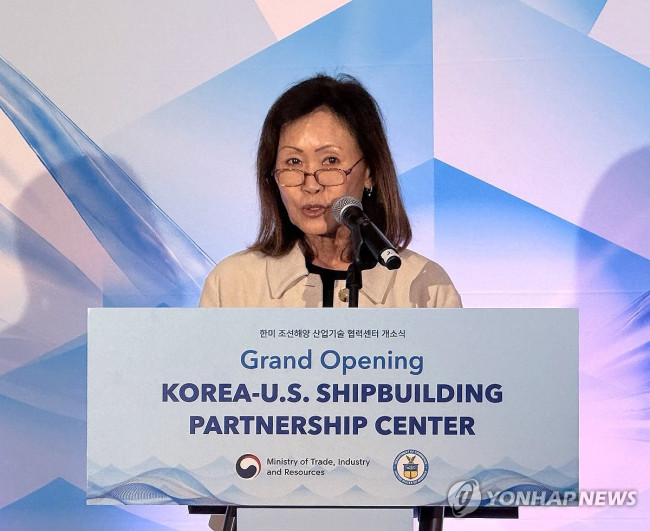 First U.S. Ambassador of Trump's Second Term to Arrive This Week… Will It Provide Momentum to Resolve Pending Issues?
U.S. Ambassador to South Korea Michelle Steel speaks at the opening ceremony of the Korea-U.S. Shipbuilding Cooperation Center held at the Mayflower Hotel in Washington, D.C., on the 23rd (local time)
First U.S. Ambassador of Trump's Second Term to Arrive This Week… Will It Provide Momentum to Resolve Pending Issues?
U.S. Ambassador to South Korea Michelle Steel speaks at the opening ceremony of the Korea-U.S. Shipbuilding Cooperation Center held at the Mayflower Hotel in Washington, D.C., on the 23rd (local time)
 President Yoon, regarding the first-instance ruling on the Public Official Election Act: “An excessive political verdict that distorts the facts… We will appeal immediately.”
The first-instance sentencing hearing for President Yoon Suk Yeol regarding violations of the Public Official Election Act is being broadcast live at Seoul Station on the 27th. [Photo=Yonhap News]Pres
President Yoon, regarding the first-instance ruling on the Public Official Election Act: “An excessive political verdict that distorts the facts… We will appeal immediately.”
The first-instance sentencing hearing for President Yoon Suk Yeol regarding violations of the Public Official Election Act is being broadcast live at Seoul Station on the 27th. [Photo=Yonhap News]Pres
 91% of Net Influx of MZ Generation Goes to Seoul Metropolitan Area… Population Migration Also Shows 'K-shaped Polarization' by Industry
[Provided by Leaders Index]Over the past four years, the MZ generation population has become increasingly concentrated in the Seoul metropolitan area and the Chungcheong region. While cities cen
91% of Net Influx of MZ Generation Goes to Seoul Metropolitan Area… Population Migration Also Shows 'K-shaped Polarization' by Industry
[Provided by Leaders Index]Over the past four years, the MZ generation population has become increasingly concentrated in the Seoul metropolitan area and the Chungcheong region. While cities cen
 'Godfather of Japanese Mystery Novels' Keigo Higashino Passes Away After Battle with Cancer at 68
Famous Japanese mystery novelist Keigo Higashino [AFP=Yonhap News]It has been belatedly reported that Keigo Higashino, the "godfather of Japanese mystery novels" and author of bestsellers such as "The
'Godfather of Japanese Mystery Novels' Keigo Higashino Passes Away After Battle with Cancer at 68
Famous Japanese mystery novelist Keigo Higashino [AFP=Yonhap News]It has been belatedly reported that Keigo Higashino, the "godfather of Japanese mystery novels" and author of bestsellers such as "The
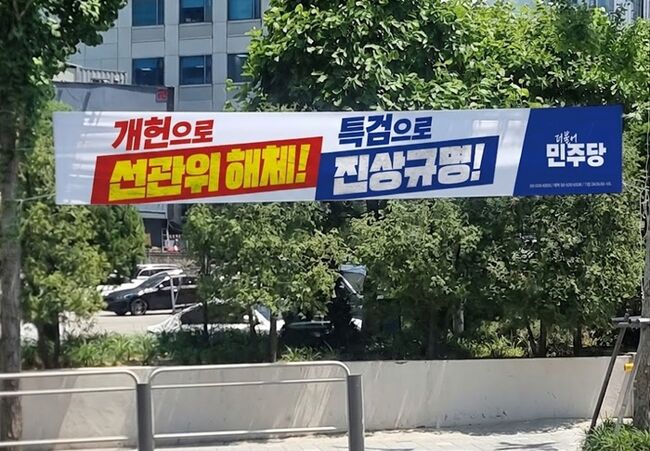 [Cho Yang-geon Column] The NEC: Facing a Fate of "Discarding the Dog After the Hunt"
Banner calling for the "dissolution of the NEC" posted by the Democratic Party. [AI-generated image]Banners calling for the "dissolution of the National Election Commission (NEC)" posted by the Democr
[Cho Yang-geon Column] The NEC: Facing a Fate of "Discarding the Dog After the Hunt"
Banner calling for the "dissolution of the NEC" posted by the Democratic Party. [AI-generated image]Banners calling for the "dissolution of the National Election Commission (NEC)" posted by the Democr
 [Photo] Evidence of Election Fraud Flooding U.S. Media… Trump Had 2.7 Million Votes Stolen
 [Video] U.S. Semiquincentennial Air Show... 'Art in the Sky' streaks across New York
 [Editorial Cartoon] A Draconian Law That Undermines Freedom of Expression

 List
List