July 24, 1959, Moscow, Soviet Union, one day before the opening of the American National Exhibition. On this day, U.S. Vice President Richard Nixon (right) and Nikita Khrushchev, General Secretary of the Communist Party of the Soviet Union, visited the exhibition grounds.
Immediately after liberation, America's foreign strategy shifted dramatically. Just after its defeat in 1945, the U.S. aimed to prevent Germany and Japan from becoming military and industrial powers again. The key measures for Germany were division and demilitarization, and for Japan, the dissolution of zaibatsu and a reduction in heavy industry. In fact, early in the U.S. occupation of Japan, a shift to an agriculture-centered economy and restrictions on heavy and chemical industries were considered.
However, within just a few years, the global situation was reversed. The Cold War with the Soviet Union had fully ignited. The U.S. quickly began to view Germany and Japan not as "punishment targets" but as "anti-communist outposts." This change was definitively a product of Cold War strategy.
America's Strategic Shift Brought by the Cold War
The case of Germany is the most symbolic. Initially, after the war, the U.S. strongly pushed for the denazification of Germany. However, soon, containing the Soviet Union became more important. Reinhard Gehlen emerged as a key figure in this process. He was an officer who operated a spy network targeting the Soviet Union within Nazi Germany's military intelligence organization. At the end of the war, he handed over intelligence network data related to Eastern Europe and the Soviet Union to the U.S. side and formed a cooperative relationship with the precursor organization to the CIA.
The U.S. did not dismantle Gehlen's organization. Instead, it utilized it. In 1946, the "Gehlen Organization" was operated with U.S. support, and it later became the foundation for West Germany's Federal Intelligence Service (BND). Research suggests that a considerable portion of the early personnel in West German intelligence agencies were individuals with experience under the Nazi regime.
From the U.S. perspective, "the ability to stop the Soviet Union" was more important than "past purity." The Cold War prioritized strategy over morality.
The situation was similar in Japan. The early U.S. military government pursued the eradication of militarism and the dissolution of zaibatsu. However, after 1947, the policy direction changed drastically. This was the so-called "reverse course." As the Chinese Communist Party gained momentum and Soviet influence grew in East Asia, the U.S. decided to revive the Japanese economy.
As a result, even individuals who were war crime suspects were reinstated. A prime example is Nobusuke Kishi. He was a key bureaucrat in the Japanese wartime cabinet and was deeply involved in the economic management of Manchukuo. After the war, he was arrested as a Class-A war crime suspect but was not indicted and was released as the Cold War intensified. He later rose to the position of Prime Minister of Japan.
This was not a unique phenomenon in Japan. The U.S. was restructuring Japan into an anti-communist industrial base. The Korean War further accelerated this trend. During the war, Japan served as a logistical base and production hub for the U.S. military. Japan's economy rapidly recovered due to the special circumstances of the Korean War. Many scholars in Japan and Korean researchers explain this as the "Korean War boom" or "base state formation."
Both North and South Utilized Japanese Assets for State Operations
Korea was not unrelated to this trend. The U.S. military government was ill-prepared to directly govern Joseon immediately after liberation. While the Government-General of Korea had disappeared, there was also a simultaneous shortage of experienced personnel to manage taxes, railways, police, and administration.
According to research from Seoul National University's Graduate School of Public Administration, 54.6% of central Korean officials during the U.S. military government period had prior experience as officials during the Japan-Korea annexation period. Among Seoul city officials, 74.4% had such experience, and over 40% of provincial officials also had administrative experience under Japanese rule. An analysis indicates that approximately 70% of county governors and about 70% of judges and prosecutors also had careers during the colonial period.
In other words, South Korean administration immediately after liberation operated not on a "complete break" but on a significant continuity. This was not simply because the issue of pro-Japanese collaboration was treated lightly, but because the very operation of the state was at risk of collapse.
North Korea was essentially not much different. North Korea also could not operate its regime solely with pure anti-Japanese partisans. The early North Korean regime continued to utilize some technicians, railway personnel, and administrative staff from the Japanese colonial era. There was an absolute shortage of skilled personnel, especially in factories, power generation, and railways. Realistically, the Soviet military could not exclude these individuals.
Ultimately, both North and South created their states by absorbing some of the human capital from the colonial period. The difference lay in the methods of utilization and political justification.
The problem is that subsequent Korean society has often explained this complex reality solely through a "framework of absolute good versus evil." Of course, the responsibility for pro-Japanese collaboration clearly exists. Indeed, there were forces that gained wealth and power by actively participating in colonial rule. However, the reality immediately after liberation did not unfold in a way that "all the villains were removed and a new state was established," as in a movie.
The Cold War made building an anti-communist bloc more important for the U.S. than pursuing past accountability. Gehlen's organization in Germany, the return of Nobusuke Kishi in Japan, and the recycling of officials from the Japan-Korea annexation period in South Korea should all be understood within that context.
And the Korean War was the decisive event that solidified that trend.
◆ Songsan
A poet and researcher of history and philosophy. Former director of the Syngman Rhee Institute. Currently serves as a research advisor for the Korean Modern and Contemporary History Research Association and as the representative of the philosophical forum Lyceum. He has published four poetry collections, co-translated "Heroes of Cape Hope," and authored the humanities books "Joseon, the Mythologized," "Humanities on a Tatami Mat," and "A Liberal's Reading of Gramsci." Songsan is a pen name.

 [Statement by the Seobeokka KMA Patriots Association] ㉛ Recount the ballots openly, as the previous recount covered up election fraud
Recount of the Tongyeong mayoral election [Photo=Yonhap News]South Korea's liberal democracy is dying. The National Election Commission (NEC), which has degraded into a criminal organization through t
[Statement by the Seobeokka KMA Patriots Association] ㉛ Recount the ballots openly, as the previous recount covered up election fraud
Recount of the Tongyeong mayoral election [Photo=Yonhap News]South Korea's liberal democracy is dying. The National Election Commission (NEC), which has degraded into a criminal organization through t
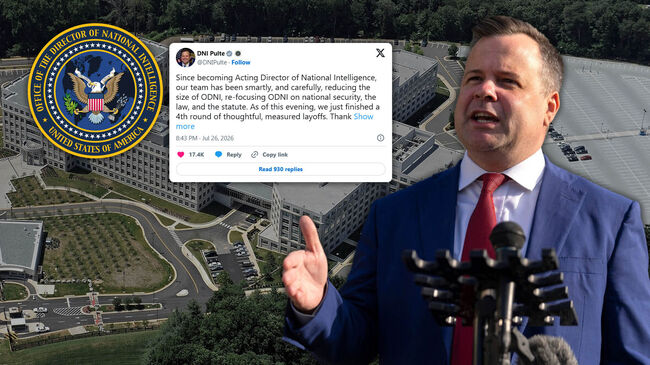 Bill Pulte to Restructure ‘Deep State’… Announces 4th Round of Layoffs at the Office of the Director of National Intelligence
Acting Director of National Intelligence Bill Pulte announced Sunday that he has carried out a fourth "deliberate and measured" reduction in personnel since taking office on June 19, as part of the Tr
Bill Pulte to Restructure ‘Deep State’… Announces 4th Round of Layoffs at the Office of the Director of National Intelligence
Acting Director of National Intelligence Bill Pulte announced Sunday that he has carried out a fourth "deliberate and measured" reduction in personnel since taking office on June 19, as part of the Tr
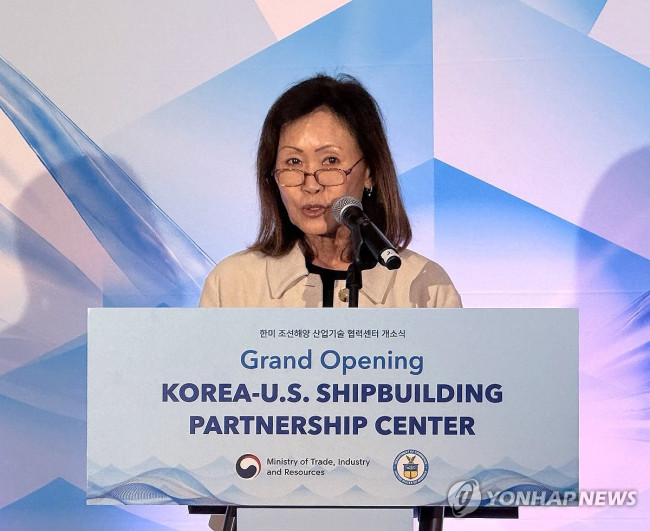 First U.S. Ambassador of Trump's Second Term to Arrive This Week… Will It Provide Momentum to Resolve Pending Issues?
U.S. Ambassador to South Korea Michelle Steel speaks at the opening ceremony of the Korea-U.S. Shipbuilding Cooperation Center held at the Mayflower Hotel in Washington, D.C., on the 23rd (local time)
First U.S. Ambassador of Trump's Second Term to Arrive This Week… Will It Provide Momentum to Resolve Pending Issues?
U.S. Ambassador to South Korea Michelle Steel speaks at the opening ceremony of the Korea-U.S. Shipbuilding Cooperation Center held at the Mayflower Hotel in Washington, D.C., on the 23rd (local time)
 President Yoon, regarding the first-instance ruling on the Public Official Election Act: “An excessive political verdict that distorts the facts… We will appeal immediately.”
The first-instance sentencing hearing for President Yoon Suk Yeol regarding violations of the Public Official Election Act is being broadcast live at Seoul Station on the 27th. [Photo=Yonhap News]Pres
President Yoon, regarding the first-instance ruling on the Public Official Election Act: “An excessive political verdict that distorts the facts… We will appeal immediately.”
The first-instance sentencing hearing for President Yoon Suk Yeol regarding violations of the Public Official Election Act is being broadcast live at Seoul Station on the 27th. [Photo=Yonhap News]Pres
 91% of Net Influx of MZ Generation Goes to Seoul Metropolitan Area… Population Migration Also Shows 'K-shaped Polarization' by Industry
[Provided by Leaders Index]Over the past four years, the MZ generation population has become increasingly concentrated in the Seoul metropolitan area and the Chungcheong region. While cities cen
91% of Net Influx of MZ Generation Goes to Seoul Metropolitan Area… Population Migration Also Shows 'K-shaped Polarization' by Industry
[Provided by Leaders Index]Over the past four years, the MZ generation population has become increasingly concentrated in the Seoul metropolitan area and the Chungcheong region. While cities cen
 'Godfather of Japanese Mystery Novels' Keigo Higashino Passes Away After Battle with Cancer at 68
Famous Japanese mystery novelist Keigo Higashino [AFP=Yonhap News]It has been belatedly reported that Keigo Higashino, the "godfather of Japanese mystery novels" and author of bestsellers such as "The
'Godfather of Japanese Mystery Novels' Keigo Higashino Passes Away After Battle with Cancer at 68
Famous Japanese mystery novelist Keigo Higashino [AFP=Yonhap News]It has been belatedly reported that Keigo Higashino, the "godfather of Japanese mystery novels" and author of bestsellers such as "The
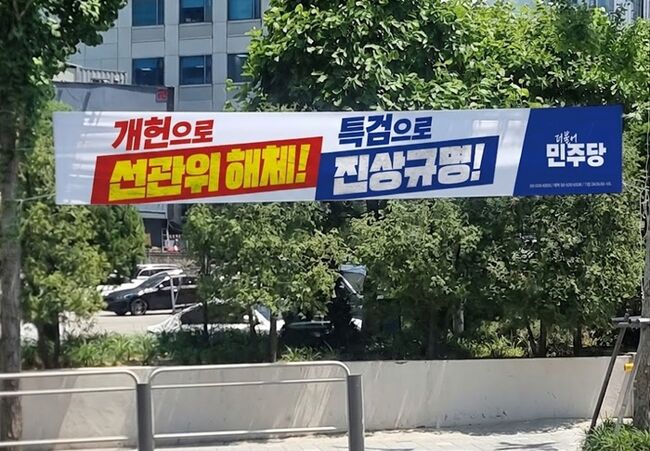 [Cho Yang-geon Column] The NEC: Facing a Fate of "Discarding the Dog After the Hunt"
Banner calling for the "dissolution of the NEC" posted by the Democratic Party. [AI-generated image]Banners calling for the "dissolution of the National Election Commission (NEC)" posted by the Democr
[Cho Yang-geon Column] The NEC: Facing a Fate of "Discarding the Dog After the Hunt"
Banner calling for the "dissolution of the NEC" posted by the Democratic Party. [AI-generated image]Banners calling for the "dissolution of the National Election Commission (NEC)" posted by the Democr
 [Photo] Evidence of Election Fraud Flooding U.S. Media… Trump Had 2.7 Million Votes Stolen
 [Video] U.S. Semiquincentennial Air Show... 'Art in the Sky' streaks across New York
 [Editorial Cartoon] A Draconian Law That Undermines Freedom of Expression

 List
List