 In the broadcast of Lee Young-don TV on the 16th, a current National Election Commission official exposes the reality of the 6.3 local elections based on direct experience. [Photo=Screenshot from Lee Young-don TV]Questions surrounding the actual structure of the preliminary voting communication network are growing, as a current National Election Commission official testified that during the preliminary voting period for the 6.3 local elections, the wired communication equipment malfunctioned, forcing them to connect to Wi-Fi to operate the integrated voter registry terminal.
The official, appearing on Lee Young-don TV, stated that a state of emergency arose minutes before the commencement of preliminary voting on the morning of the first day due to the communication equipment failure. At one polling station, they proceeded with the preliminary voting for two days by connecting to Wi-Fi.
He claimed that this information is also documented in the NEC's internal group chat.
Whether the whistleblower's statement is accurate requires verification through equipment and communication records. However, if the testimony is true, the NEC must answer at least three fundamental questions.
Why Did the Wired Network, Inspected Three Times, Fail Just Before Voting?
The first question is why the primary wired communication network, which had undergone three preliminary simulations and a final test the day before voting, failed to operate just before voting commenced.
The NEC stated that they conducted three simulations ahead of the local elections, focusing on equipment operation, how to use the integrated voter registry system, and procedures for responding to malfunctions. These simulations included response drills assuming unexpected situations such as communication failures and power outages.[1]
On May 28th, the day before the preliminary voting, the National Election Commission conducted a final simulation at 3,571 preliminary polling stations nationwide, assuming actual voting environments. The inspection targeted not only the preliminary voting equipment but also the integrity of the communication network.[2]
Despite this, if the communication equipment failed minutes before voting was scheduled to begin at 6 a.m. the following day, the NEC must clarify what was inspected and what results were deemed normal.
The claim of a simple malfunction is insufficient. The time and cause of the failure, the initial point of awareness, and the process of reporting and repairing the issue must all be disclosed through records.
Why Was There an Emergency on-site When the System is Designed for Automatic Switching?
The second question is why there was a connection mix-up on-site, even though the system is designed to automatically switch to a backup wireless network when the wired network fails.
The preliminary voting communication network is bifurcated into a primary wired network and a backup wireless network. The structure is designed to ensure uninterrupted communication by rapidly and automatically switching to the backup wireless network in case of a wired network failure.[3]
Actual preliminary voting simulations have tested the automatic switching between wired and wireless communication networks and the failover procedures to disaster recovery centers in the event of a central server failure.
In a properly redundant system, there would be no need for on-site staff to seek alternative connection methods or declare an emergency, stating they "might not be able to start voting." This is because the communication equipment detecting the wired network failure should automatically switch to the approved election-dedicated wireless network.
If, however, separate measures were necessary on-site, it is possible that at least one of the following did not function properly: wired network failure detection, backup network automatic switching, wireless communication equipment, or central server authentication.
Furthermore, the three simulations included drills for responding to communication failures. If the automatic switching that succeeded during the simulations failed on the actual voting day, the simulation methods and inspection results themselves must also be re-verified.
If It Was 'Wi-Fi' and Not the Wireless Network, It Conflicts with National Standards
The third question is whether the connection method mentioned by the whistleblower was actual Wi-Fi, not the election-dedicated wireless network.
These two are not the same. The election-dedicated wireless network is a backup communication channel utilizing a private LTE/5G network from a mobile carrier. In contrast, Wi-Fi is a short-range wireless communication method connecting a laptop to a router or wireless access point.
The current national standard, KS X 3264 "Standard for the Construction of Communication Systems for Polling Stations Using Integrated Voter Registry," is still in the "maintained" status and stipulates that "Wi-Fi shall not be supported" for wired and wireless communication equipment.[4]
Therefore, if the Wi-Fi mentioned by the whistleblower was actual Wi-Fi connection and not simply a misspoken term for the election-dedicated LTE/5G backup network, then both scenarios present a problem.
If the official election wired and wireless communication equipment provided Wi-Fi, it directly conflicts with the wording of the national standard. Conversely, if the official communication equipment failed and the registry terminal was connected to a separate Wi-Fi, such as a general router or a mobile phone hotspot, it means the election-dedicated communication path established according to the national standard was bypassed.
If the integrated voter registry terminal directly connected to Wi-Fi, it implies that the laptop had a functional built-in or external wireless LAN device. If the system was designed to connect to the central server only through election-dedicated communication equipment, then the reason for leaving the registry terminal with the capability to connect to external Wi-Fi must also be clarified.
KakaoTalk Originals and Connection Logs Must Be Preserved First
At present, it is not possible to conclude that actual hacking or manipulation of election data occurred based solely on the whistleblower's testimony. The possibility that the term 'Wi-Fi' used by the whistleblower referred to the election-dedicated wireless backup network also needs to be investigated.
However, this is not an issue that can be dismissed simply with the NEC stating, "It was a dedicated wireless network." The whistleblower claims that the wired equipment failure and the use of Wi-Fi are documented in internal group chats.
The NEC must immediately preserve the original contents of the chat room, the communication failure reports, records of wired/wireless automatic switching, the models and serial numbers of routers and access points used, the SSID/BSSID of the connection devices, the network connection logs of the registry terminals, and the central server authentication logs.
The core of this issue is not to immediately conclude whether hacking occurred. It lies in clarifying why the wired network, which passed three simulations and the final inspection, failed just before voting, why the automatically operating wireless backup network failed to prevent on-site confusion, and whether Wi-Fi, which is excluded by national standards, was actually used in the preliminary voting.
Elections gain trust not solely through their results. If the NEC cannot disclose communication records and equipment data, the existing explanations of "closed network," "automatic switching," and "thorough preliminary inspection" will remain mere claims by the NEC, rather than verified facts.
Basis for Reporting
[1] The Daejeon Election Commission explained that ahead of the 2026 local elections, they conducted three simulations, including equipment operation, the use of the integrated voter registry, and procedures for responding to malfunctions, which also included drills assuming communication failures and power outages.
[2] On May 28, 2026, the National Election Commission conducted a final simulation targeting the preliminary voting communication network at 3,571 preliminary polling stations nationwide. The Ministry of the Interior and Safety also stated that it was an equipment operation inspection assuming actual preliminary voting environments.
[3] It is confirmed through related project documents and simulation reports that the preliminary voting communication network is bifurcated into a wired primary communication network and a wireless backup network, and is constructed to automatically switch to the backup network in case of failure of the primary network.
[4] KS X 3264 is displayed as "maintained" in the National Radio Research Institute's standard list, having been revised on November 2, 2021. The standard disclosed by the Election Commission excludes Wi-Fi support for wired and wireless communication equipment for preliminary voting.
|

 US Ambassador to Korea Nominated to Senate: Final Countdown
The Senate confirmation of Michelle Steel, the nominee for U.S. Ambassador to South Korea, is imminent. The Senate is scheduled to vote on the confirmation resolution for nominee Steel on Wednesday, t
US Ambassador to Korea Nominated to Senate: Final Countdown
The Senate confirmation of Michelle Steel, the nominee for U.S. Ambassador to South Korea, is imminent. The Senate is scheduled to vote on the confirmation resolution for nominee Steel on Wednesday, t
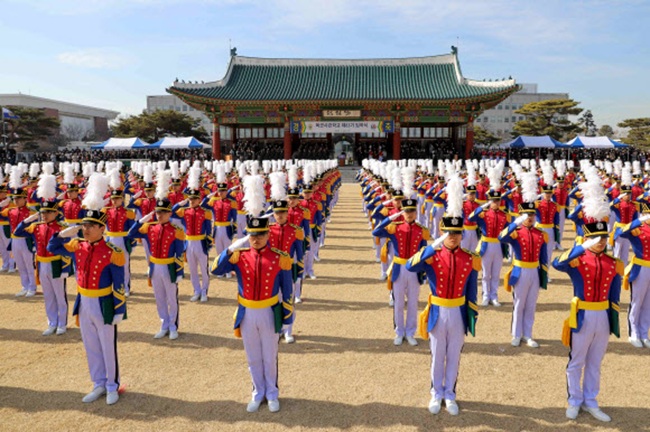 "Prioritizing Prudence Over Speed for ROTC Reorganization and Integration"... Former ROTC Superintendents Issue Public Appeal
The alumni of the Korea Military Academy emphasized that 'Hwarangdae' in Taereung, Seoul, is not merely an educational facility but a historical asset imbued with the legitimacy of the ROK Armed Force
"Prioritizing Prudence Over Speed for ROTC Reorganization and Integration"... Former ROTC Superintendents Issue Public Appeal
The alumni of the Korea Military Academy emphasized that 'Hwarangdae' in Taereung, Seoul, is not merely an educational facility but a historical asset imbued with the legitimacy of the ROK Armed Force
 People's Power Party, Seoul Metropolitan Police Agency Commissioner & Security Division Chief involved in 'assaulting aides' controversy, charged with embezzlement and assault
Floor Leader Chung Jin-sik criticized on social media, stating, "During our party's lawmakers' protest visit to the Seoul Metropolitan Police Agency, the head of the SMPA's security division committed
People's Power Party, Seoul Metropolitan Police Agency Commissioner & Security Division Chief involved in 'assaulting aides' controversy, charged with embezzlement and assault
Floor Leader Chung Jin-sik criticized on social media, stating, "During our party's lawmakers' protest visit to the Seoul Metropolitan Police Agency, the head of the SMPA's security division committed
 "US government finds Korean telecom companies with 'suspected China ties' on Mythos pre-use list"
Anthropic Logo [Reuters=Yonhap News]The Trump administration in the United States had considered export controls after identifying an issue where Anthropic allowed a company with suspected ties to Chi
"US government finds Korean telecom companies with 'suspected China ties' on Mythos pre-use list"
Anthropic Logo [Reuters=Yonhap News]The Trump administration in the United States had considered export controls after identifying an issue where Anthropic allowed a company with suspected ties to Chi
 Jang Won-young sparks controversy over airport ID check while wearing a mask… Airport Corporation "Strengthening procedural guidance"
Jang Won-young of IVE [Yonhap News] The Korea Airports Corporation will strengthen guidance on identity verification procedures following a recent controversy involving idol group IVE's Jang Won-
Jang Won-young sparks controversy over airport ID check while wearing a mask… Airport Corporation "Strengthening procedural guidance"
Jang Won-young of IVE [Yonhap News] The Korea Airports Corporation will strengthen guidance on identity verification procedures following a recent controversy involving idol group IVE's Jang Won-
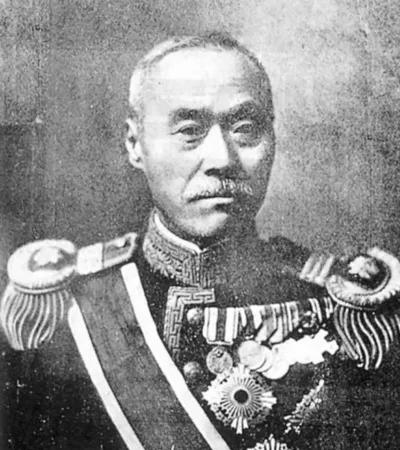 [Special Contribution: Matsuyama] "Why I Signed the Unification Treaty"... The 21st Century Yi Wan-yong's White Paper (Apologia)
Yi Wanjong in his old ageYi Wanjong. My name has already been set in stone as a traitor to history. Schools teach that I was a traitor, and people remember me as the quintessential figure who sold out
[Special Contribution: Matsuyama] "Why I Signed the Unification Treaty"... The 21st Century Yi Wan-yong's White Paper (Apologia)
Yi Wanjong in his old ageYi Wanjong. My name has already been set in stone as a traitor to history. Schools teach that I was a traitor, and people remember me as the quintessential figure who sold out
 [Photo] Election Commission staff, deeply absorbed in 'golf swing practice' amidst all this
 [영상] ‘트럼프 절친’ 린델 “한국 부정선거 트럼프에게 알려주겠다”
 [시사만화] 인도적 지원

 List
List